
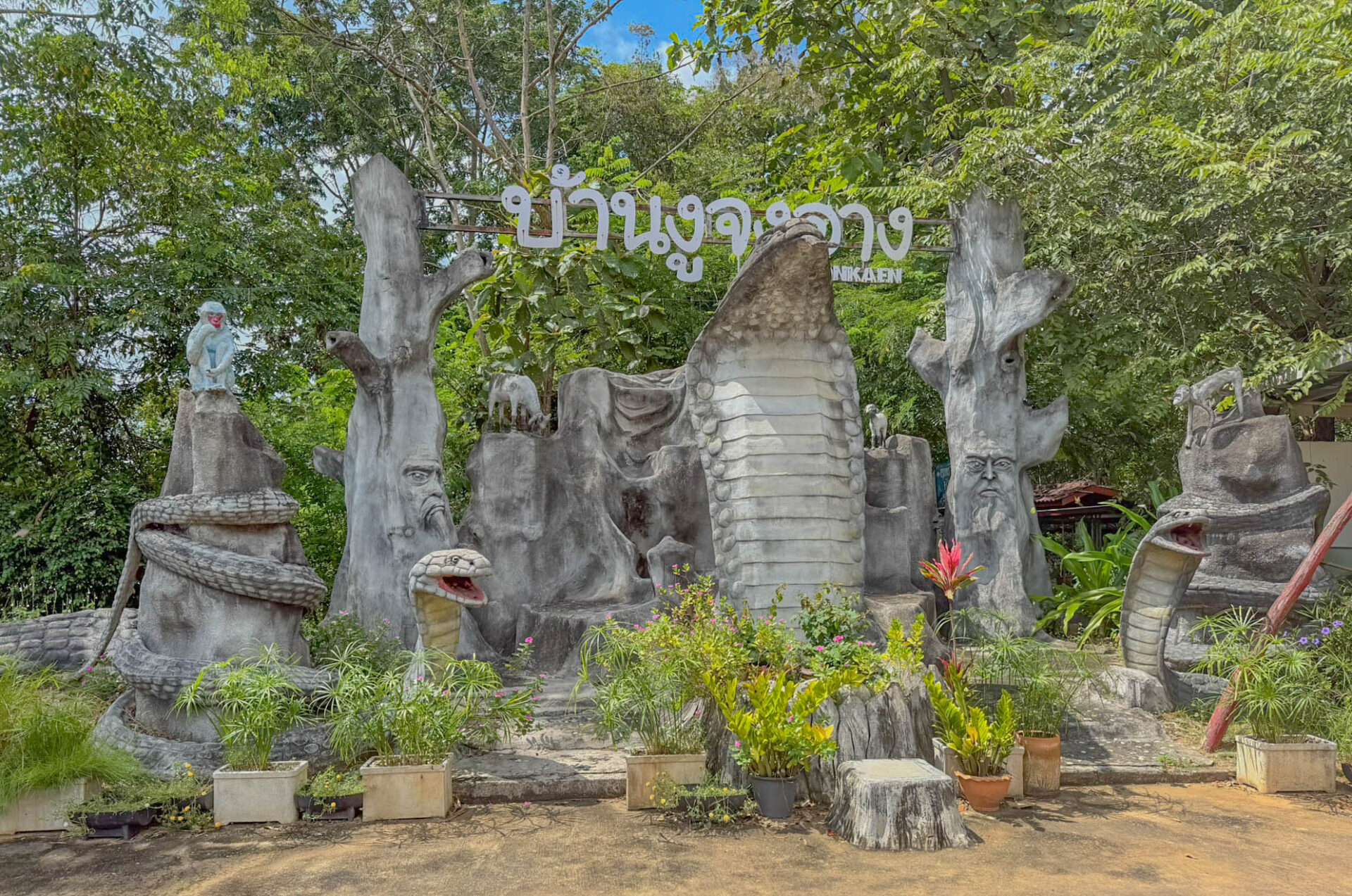

We flew here for the snakes. The rest just happened.
Khon Kaen wasn’t an accidental stop on our trip. We flew there on purpose. Why? My son likes snakes, and at some point during our trip planning he came across something called the King Cobra Village, about an hour outside a city we’d never even heard of called Khon Kaen (roughly pronounced “cone gan”).
Once we realized it was out in the boonies and would take a bit of effort to get to, that pretty much sealed it. Places like this, often tied to wildlife, pull us off the usual path. More often than not, those are the stops we remember long after the trip is over.
This one definitely delivered. Between the King Cobra Village, quiet temples without tourists, and a few unexpected moments around Khon Kaen that gave us plenty to laugh about, it turned out to be one of the more memorable stops of the trip.
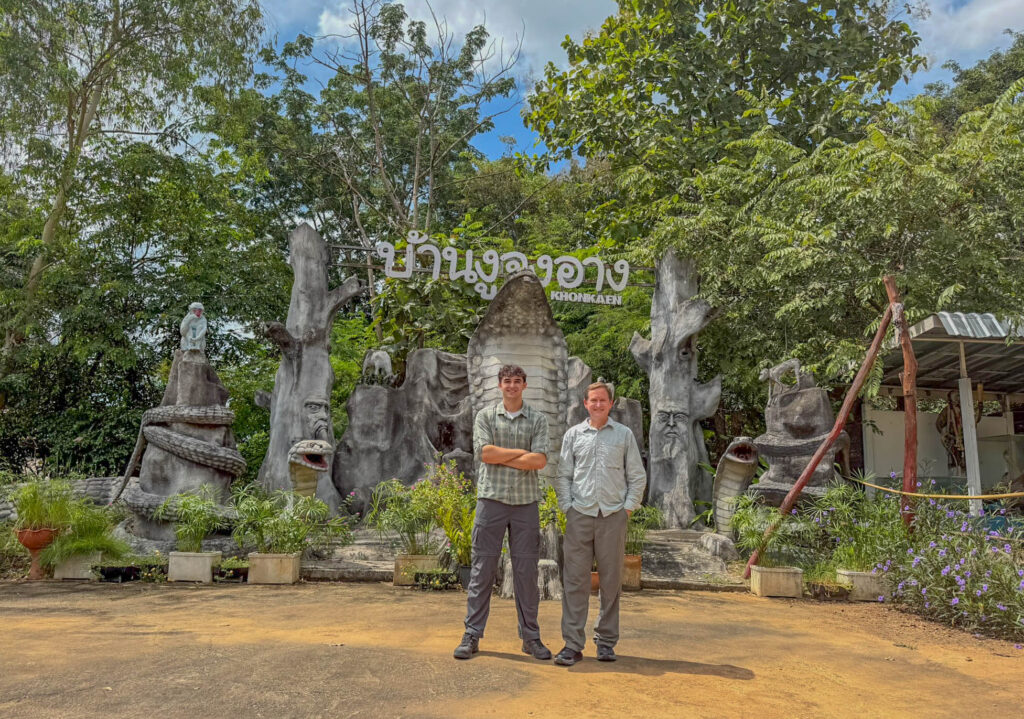
Table of Contents
Heads up: Some of the links in this post are affiliate links. If you buy something through them, it helps support this site, at no extra cost to you. I only recommend stuff I genuinely use and trust.
A Different Side of Thailand
We flew from Bangkok in the afternoon on a direct Thai Airways flight. It’s only about an hour in the air, but by the time we landed, everything already felt a little less built for visitors and more reflective of everyday life in Thailand’s northeastern Isan region.
Khon Kaen is one of the main cities in this part of the country, a regional hub with a major university and a long history tied to agriculture and trade. It’s not a place most international travelers spend much time in, and that became pretty clear within the first hour.
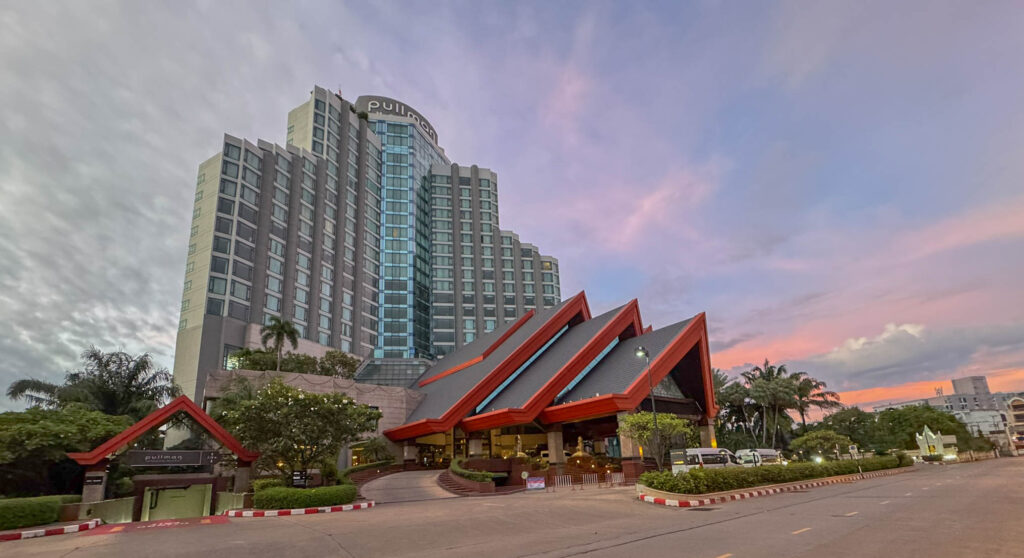
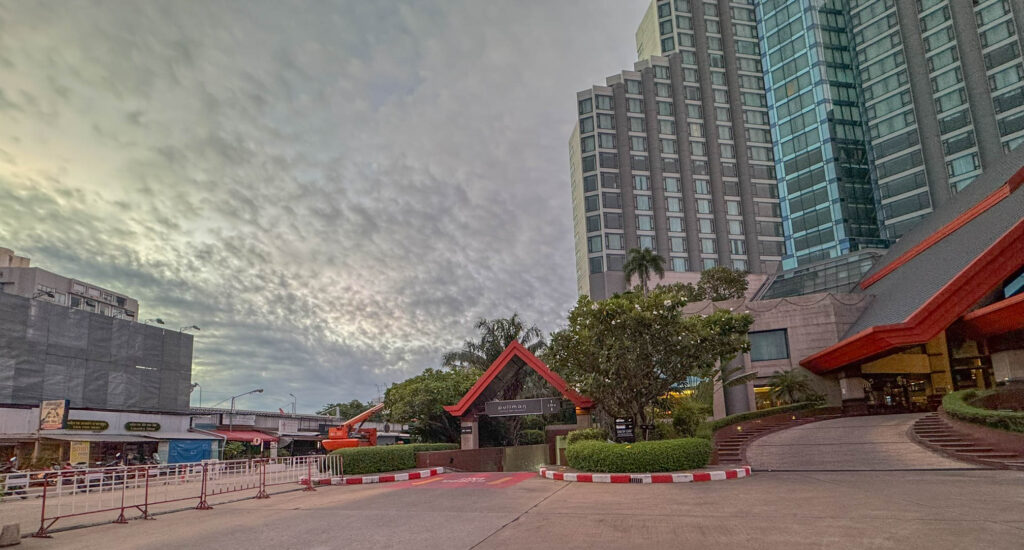
We grabbed a taxi from the airport and headed to our hotel, the Pullman Khon Kaen Raja Orchid, later rebranded as the Heritage Grand Khon Kaen Hotel, about a 20 minute drive away. At first glance, everything seemed normal. The hotel was a bit older but still nice enough, the kind of place that probably felt more upscale twenty years ago but still holds together. This was before the recent rebrand, so the overall experience may be different now.
We checked in, dropped our bags, and walked down the street to a 7-11 to grab some bottled water, as is our custom. It was a short walk, but it gave us our first real sense of the place.
The Part You Don’t See in Travel Guides
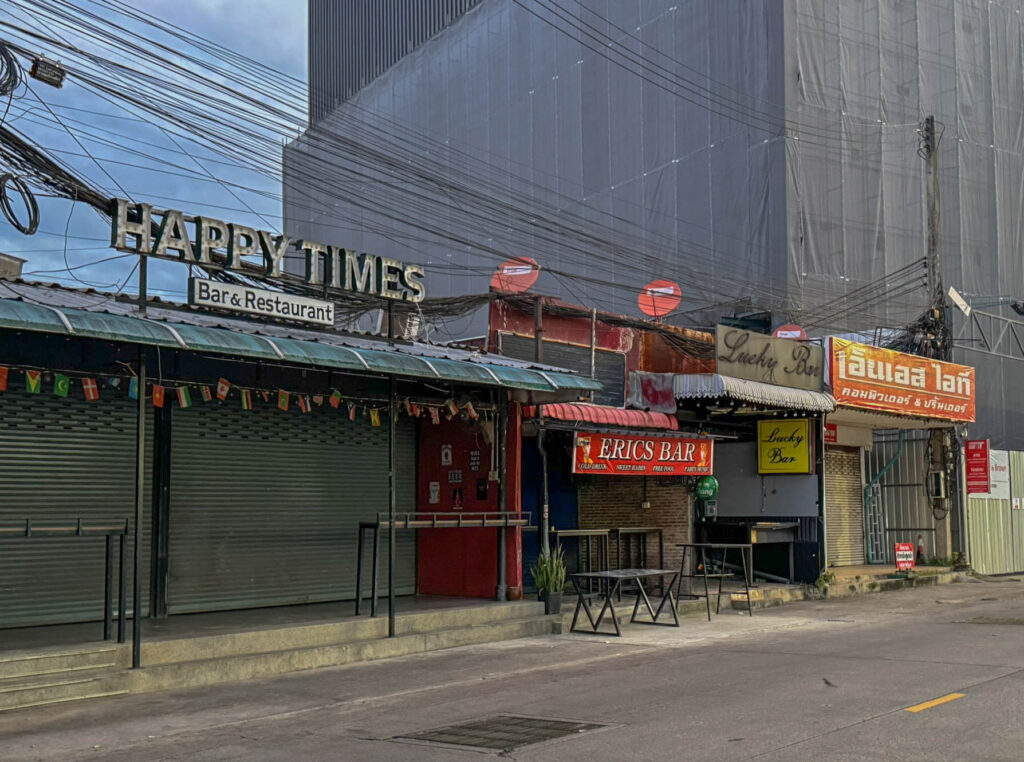
We left the hotel and walked up the street, passing a strip of bars that seemed to be strategically positioned near the hotel. As we walked by, I noticed some of the women were making more eye contact than usual, the kind that lingers just long enough that you know it’s intentional.
My first thought was prostitution, although I later learned that many of the women earn a commission for each drink a customer buys. Still, I had a suspicion that other services may also be on offer.
My son attracted a particularly enthusiastic response from one bar, where a group of ladyboys toward the back eagerly hooted and gyrated as he walked by. A nice father and son bonding moment. And this was in the middle of the afternoon. We didn’t feel the need to repeat that walk late at night.
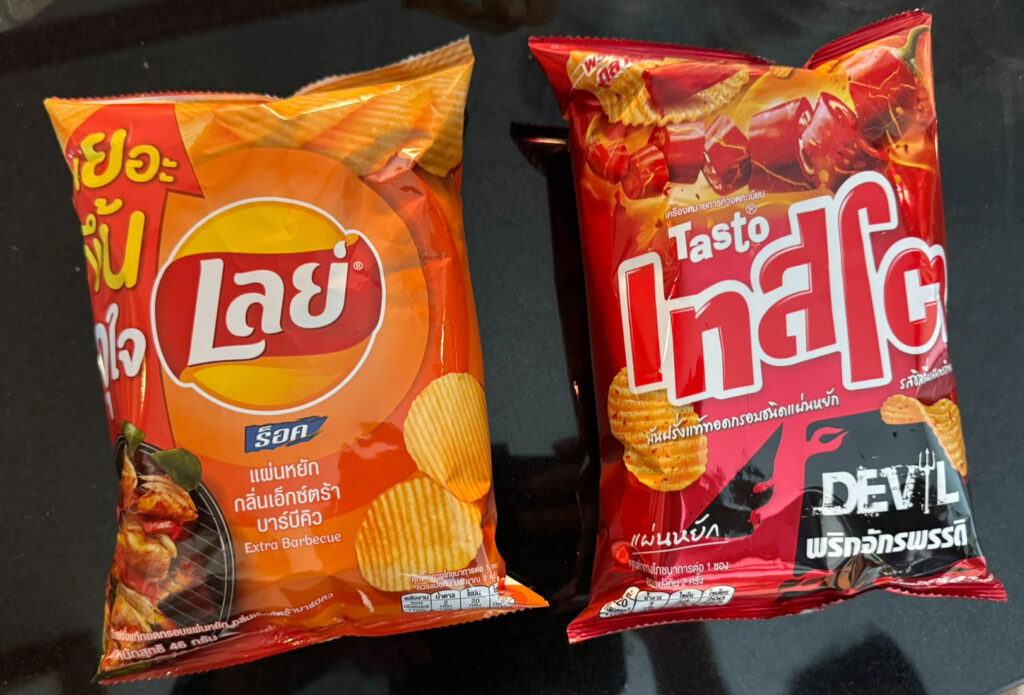
We made it to 7-11, grabbed some bottled water and two bags of what looked like interesting flavors of chips, and headed back to the room. The chip taste test was short but entertaining. The two barely eaten bags ended up in the trash. Taste test over.
Over the next 24 hours, we started to notice a pattern in the hotel. Several older Western men were with younger Thai women in the lobby at happy hour. The next morning at breakfast, we saw a few men sitting with women who appeared to be local and not spouses or long-term travel companions. No one was being overt about it, but there was an unspoken understanding of what was going on. It shaped our initial impression of Khon Kaen, but we realized it was just one small part of the story.
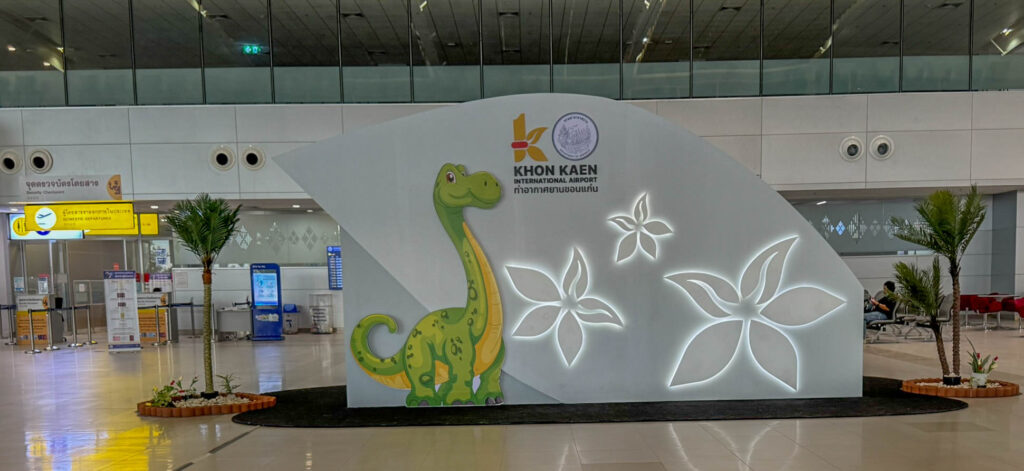
Another thing we started to notice pretty quickly were dinosaurs. The first one I saw was outside the airport as we were driving into town. At the time, I didn’t think much of it. Then we saw another one. And then another.
Later that night, my son and I went to a nice restaurant at a different hotel and ended up walking through an art exhibit in the lobby. Dinosaurs showed up there too, including a few pieces I was tempted to buy for my brother. I’m pretty sure he would have appreciated them, but they didn’t appear to be for sale.
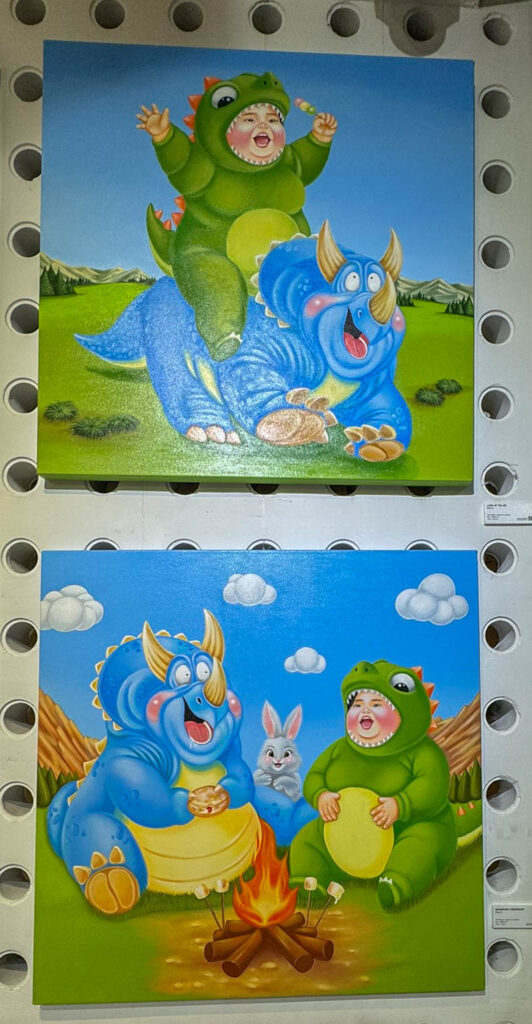
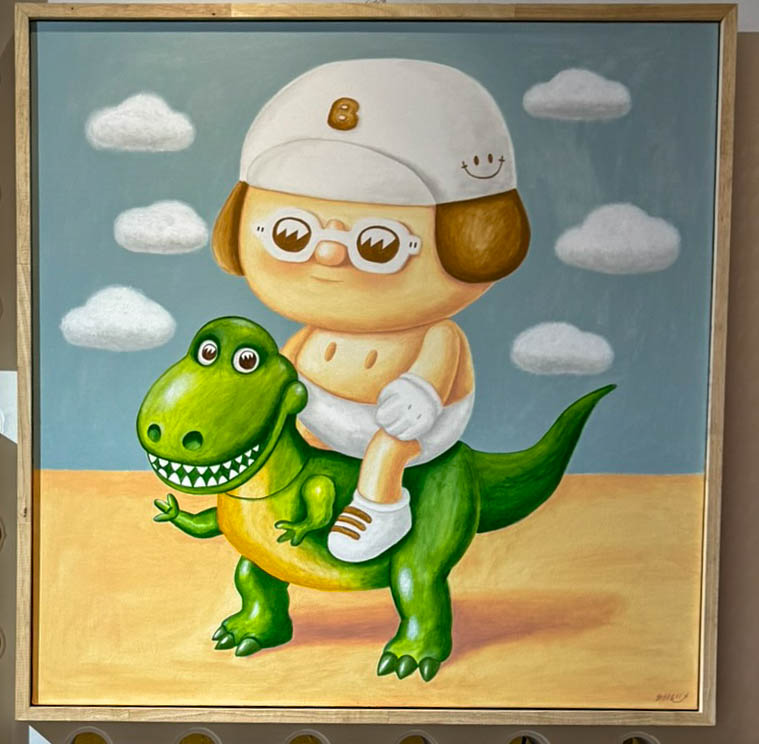
By the next day, it was clear this wasn’t random. The area around Khon Kaen is known for significant dinosaur fossil discoveries, particularly in nearby Phu Wiang National Park. Those finds have become a point of local pride and help explain why dinosaurs show up in unexpected places throughout the city.
A Little History of Khon Kaen
Khon Kaen dates back to the late 1700s, when it began as a small settlement in what is now Thailand’s northeastern Isan region. Like much of this part of the country, its early history is tied to migration, agriculture, and trade routes connecting what is now Thailand and Laos.
For most of its history, Khon Kaen remained a relatively quiet provincial town. That started to change in the 20th century, particularly with the founding of Khon Kaen University in the 1960s, which helped turn the city into a regional center for education and development.
Today, it’s one of the main cities in northeastern Thailand, even if it still flies under the radar for most international travelers.
King Cobra Village: Exactly What It Sounds Like (and a Little Bit More)
Note: If you’re not a fan of snakes, you may want to skip ahead to the temples section.
The next morning, we asked the front desk to arrange a driver for half a day to take us to the King Cobra Village, also known as Ban Khok Sa-Nga (บ้านโคกสะง่า). The driver cost 1,500 baht (about $47) for four hours, which gave us plenty of time and turned out to be quite a bit cheaper than using ride-hailing apps.
King Cobra Village is about an hour’s drive from Khon Kaen, in a small rural area where snake handling has been part of the local culture for generations.
When we arrived, no one was seated around the performance area, although a few people were walking the trails. As soon as we entered, they started the music and began the show just for the two of us. The first act involved a woman dancing with a large python. After a few minutes, they stopped and waited for people on the trails to come over. Then they started the show again once everyone was seated.
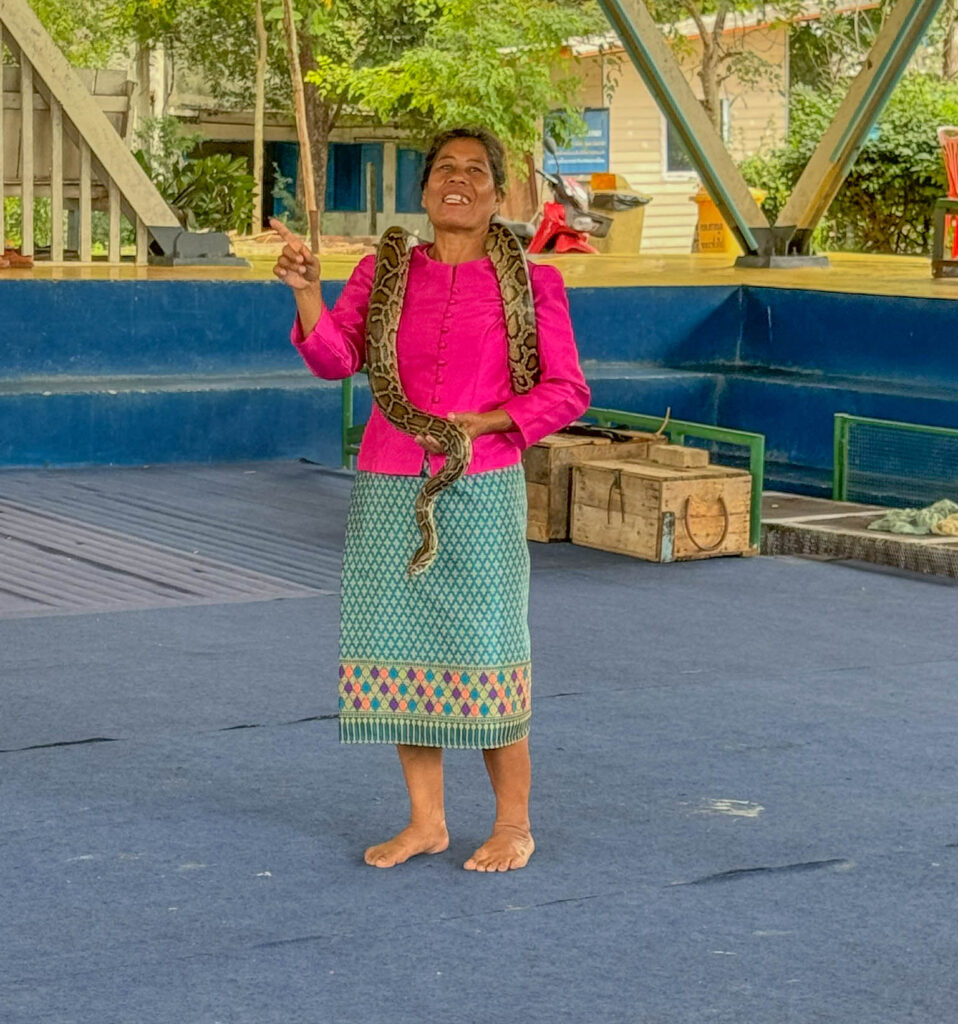
During the wait, we saw the python bite the woman’s hand. She didn’t react much, but she did rub it from time to time, so it must have hurt. I’m guessing it’s not her first snake bite. Maybe not even that day.
The music came back on and she started dancing again. About a minute later, she lifted the python’s head and placed it in her mouth while continuing to dance, which is probably not something you’ll find in most snake handling safety manuals. It worked, but it didn’t feel like something the snake had signed up for.
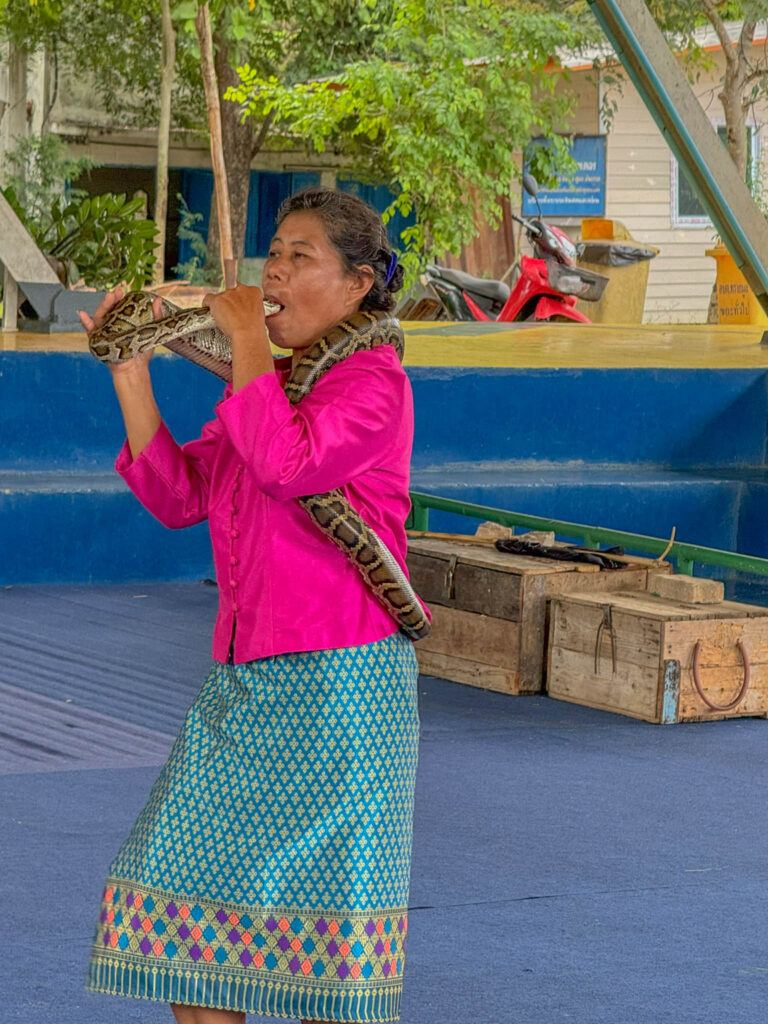
Here’s a very short (2 second) video clip to give you a better idea.
Part of me was impressed, part of me felt bad for the snake, and part of me was just trying to process what I was watching. I also found myself wondering what that experience would be like for the snake. Calming and dark, or another opportunity to bite?
That line of thinking didn’t last long. A man soon brought out a very large and alert king cobra that initially seemed more interested in leaving the stage. There were two different handlers, each spending several minutes interacting with it. They controlled the snake through distracting body movements and occasionally tapping down on the top of its flared, upright head. It worked, but it was one of those situations where you can appreciate the skill involved while also wondering what it takes to make it happen.
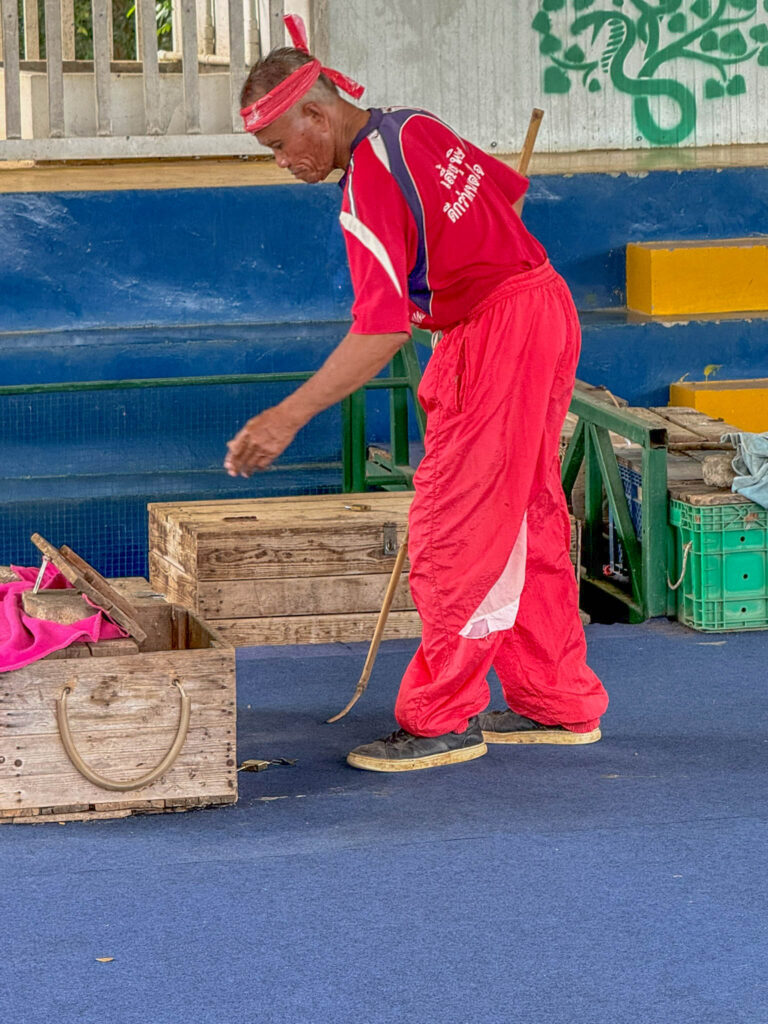
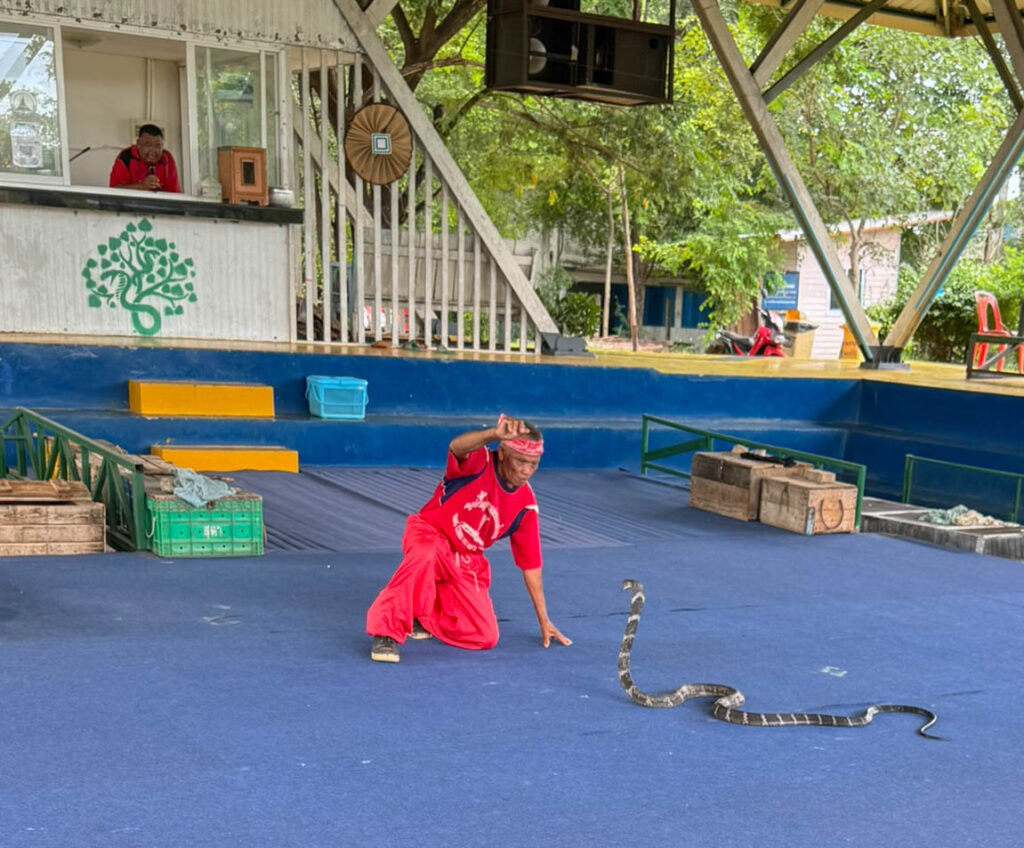
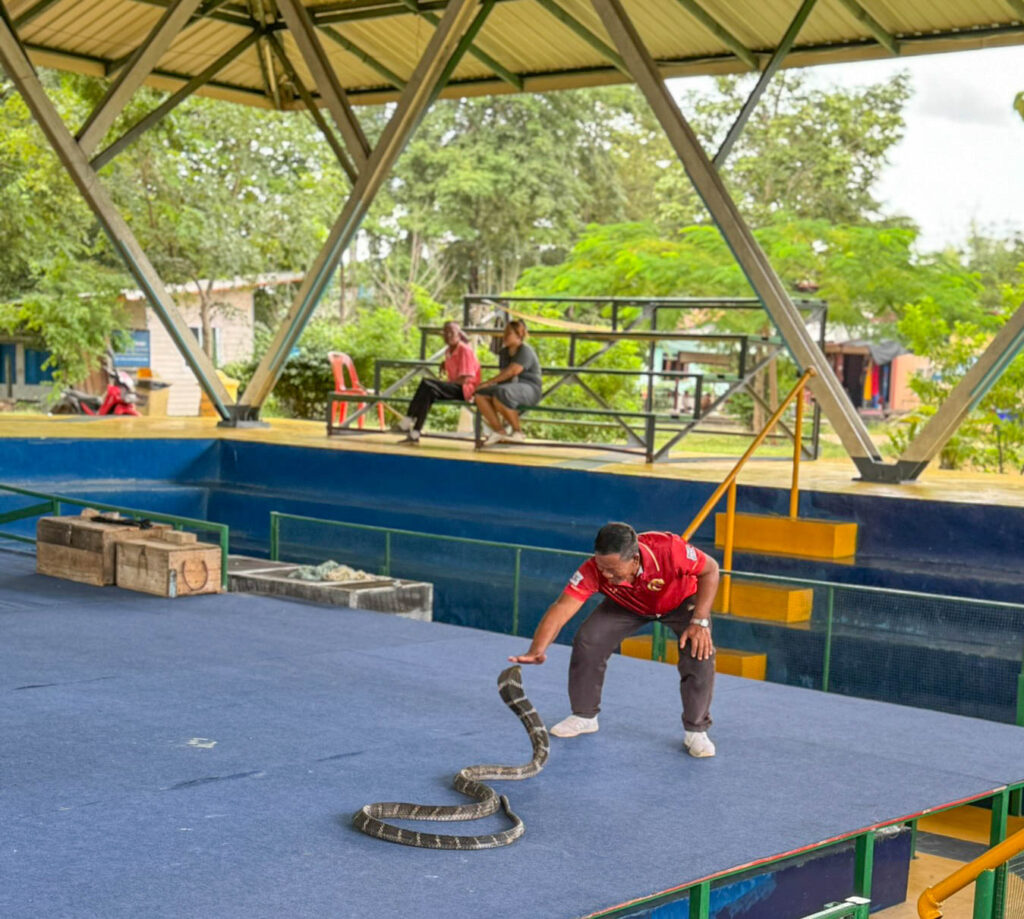
Here’s a short clip (below) to give you a better sense of what the king cobra show is like.
Next up was a young boy with a non-venomous but extremely lively and aggressive snake. He appeared to get struck multiple times during the act, although it was hard to tell because he didn’t react at all. Just another day at King Cobra Village.
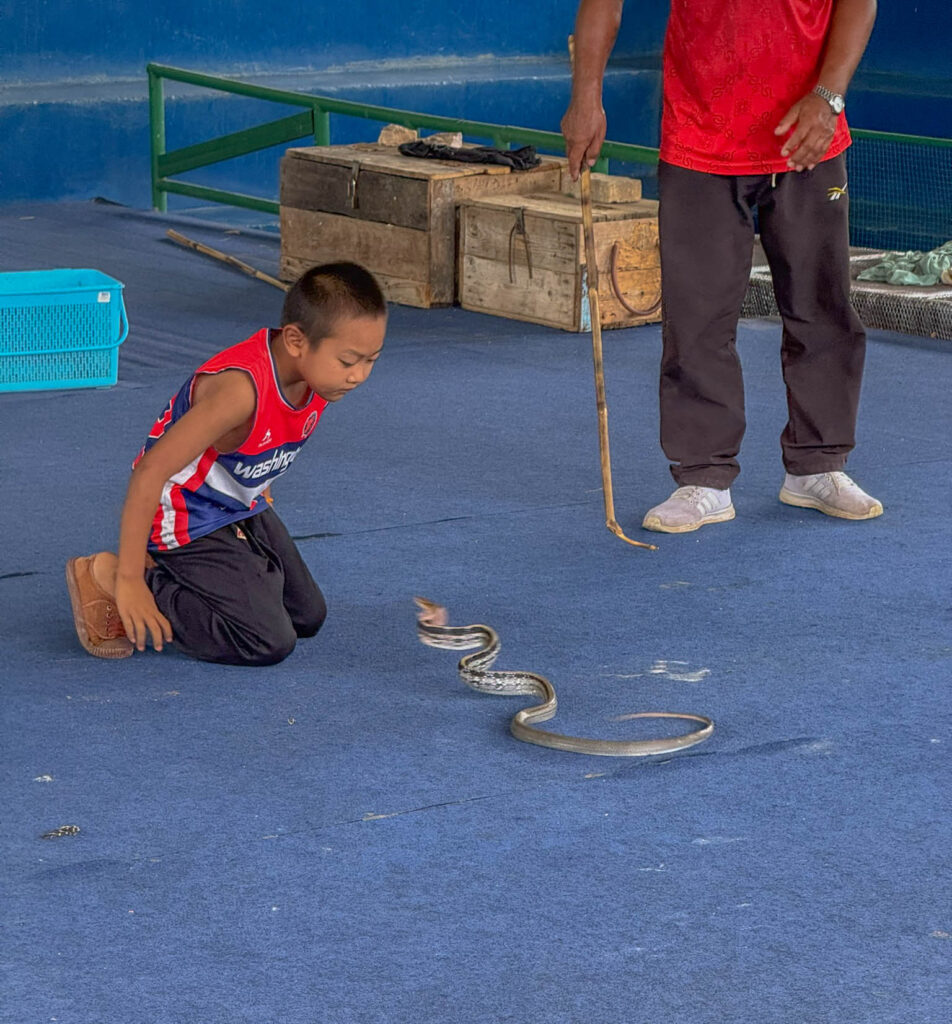
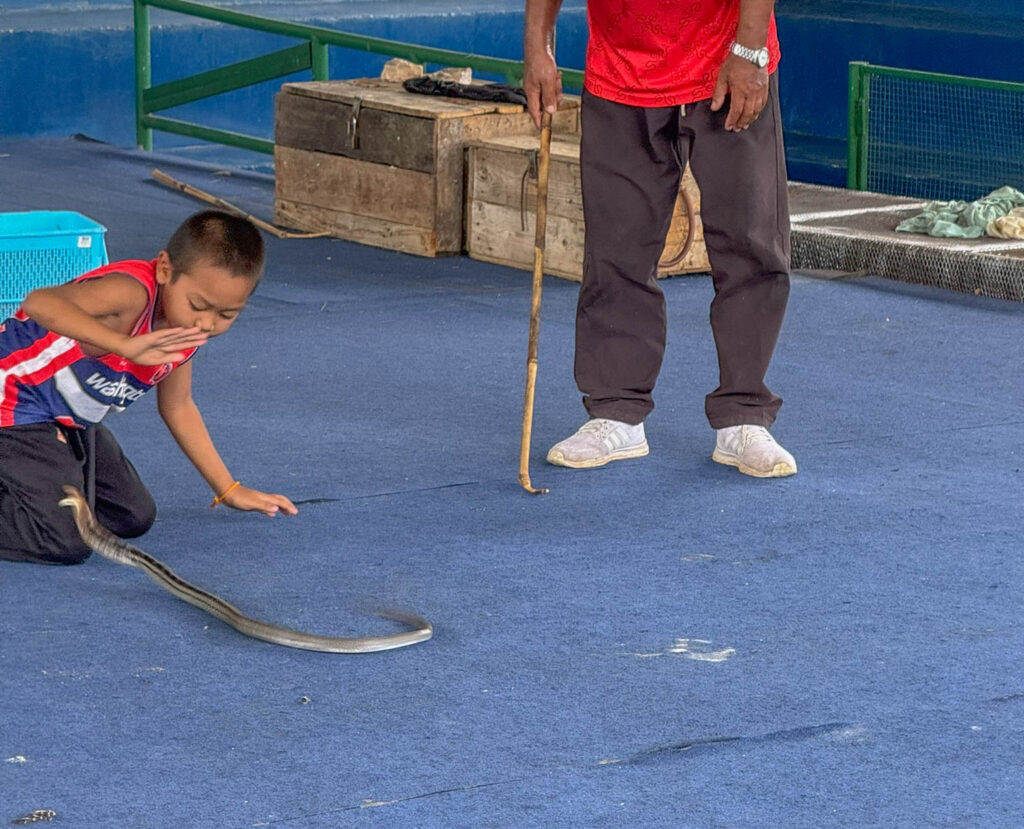
Here’s a short clip below of the lively non-venomous snake and the boy.
Then came the part I definitely wasn’t expecting.
A man wearing glasses stepped forward, and they brought out a spitting cobra. He used similar distracting movements while staring directly at the snake, essentially daring it to spit venom at his face, which it did multiple times. The venom hit his glasses more than once, which appeared to be the only thing protecting him. It was one of the craziest things I’ve seen when it comes to interacting with venomous snakes.
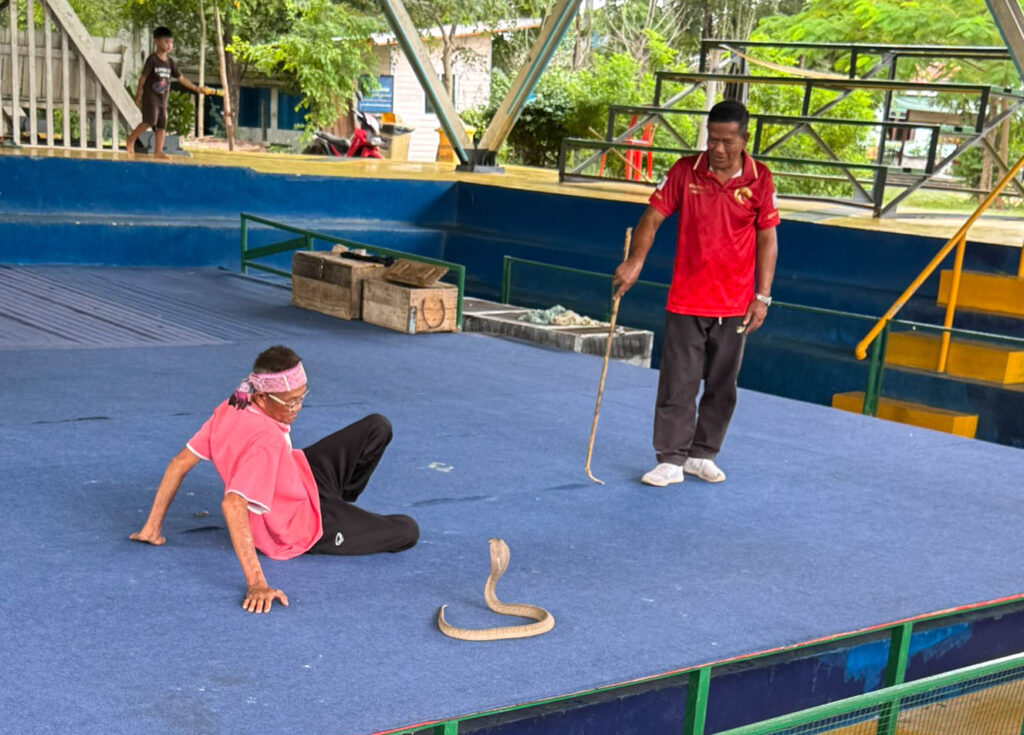
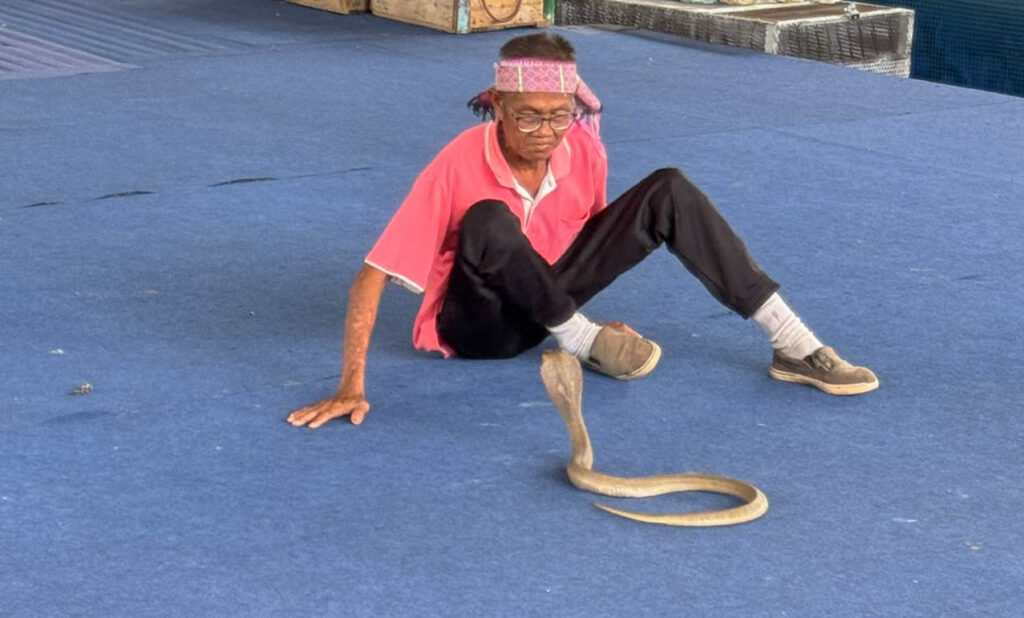
At the end, they brought out a python with its mouth taped shut and offered visitors the chance to take photos with the snake. I wasn’t thrilled to see the tape over its mouth, although after watching the earlier bite, I could understand why they might do it. Still, my son and I passed on the opportunity to hold the snake or pose for a photo.
They also brought out a tip jar. There’s no set fee for the performance. It is entirely tip based, but given what we had just witnessed, they definitely earned a generous one.
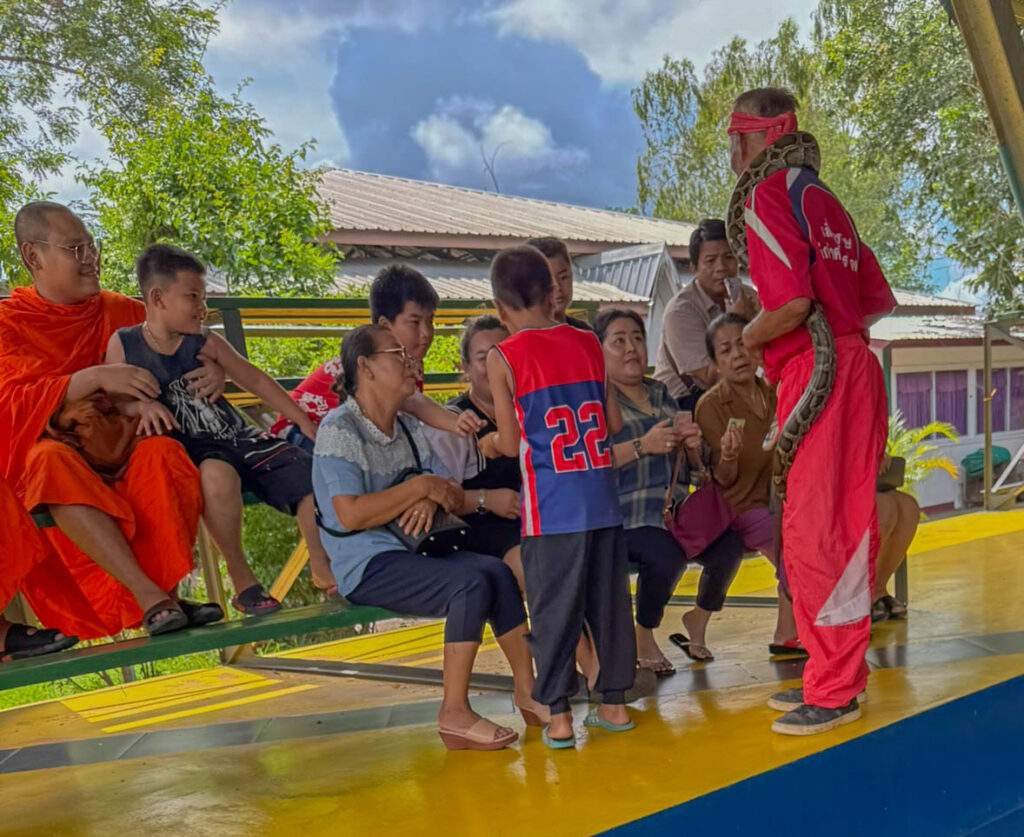
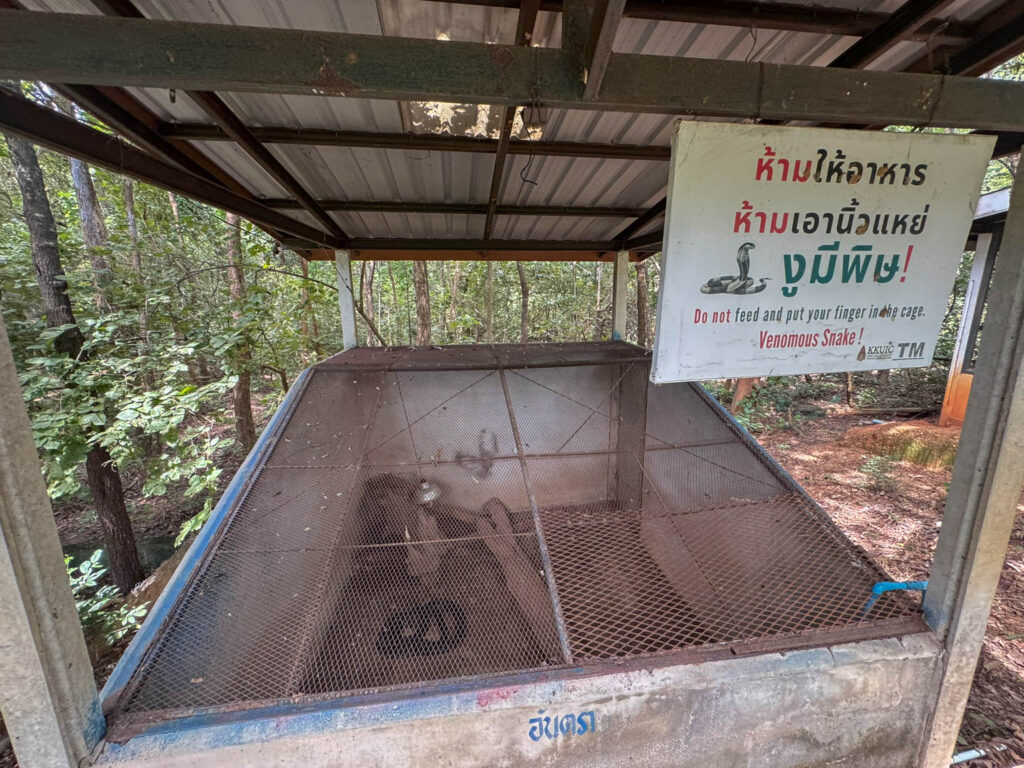
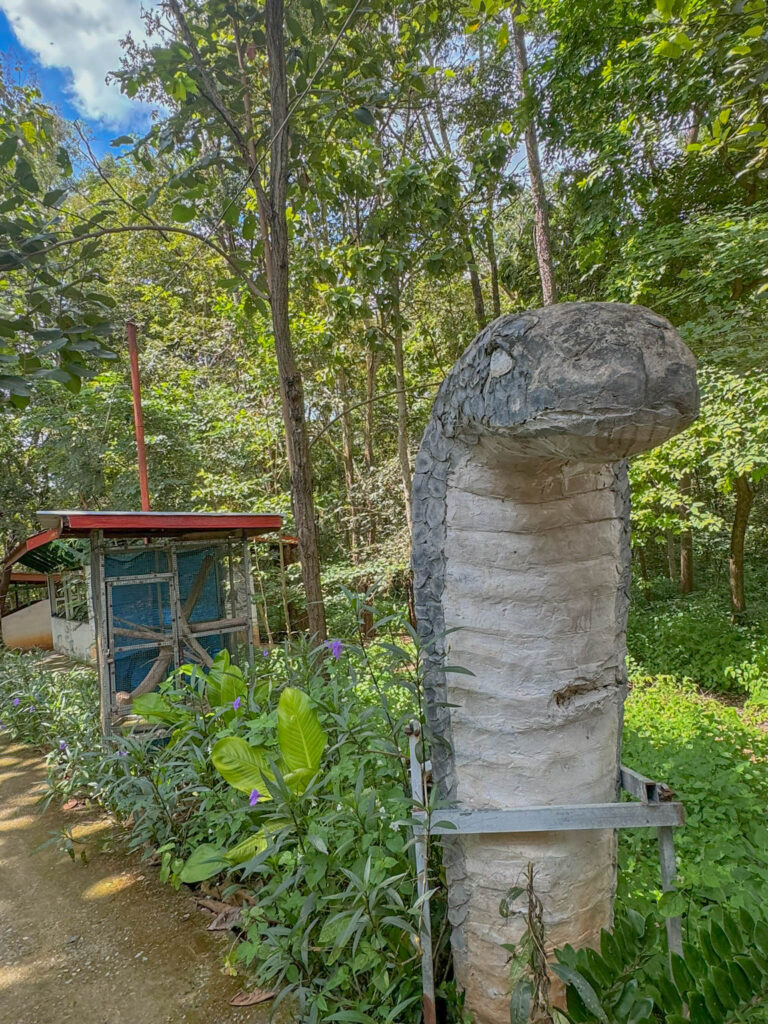
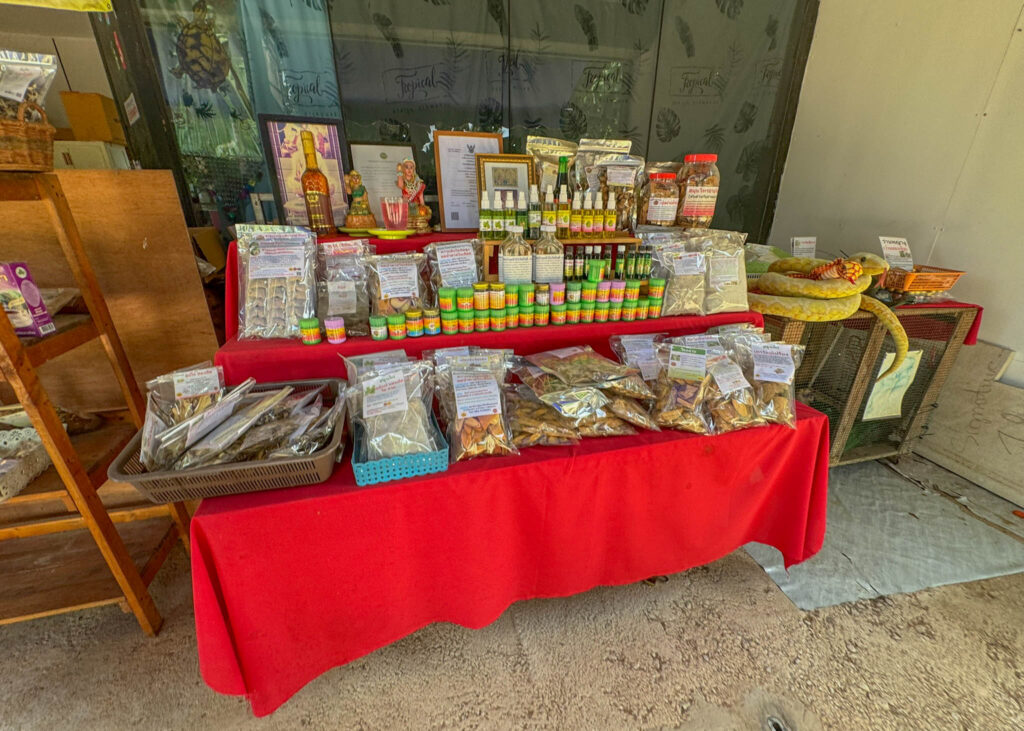
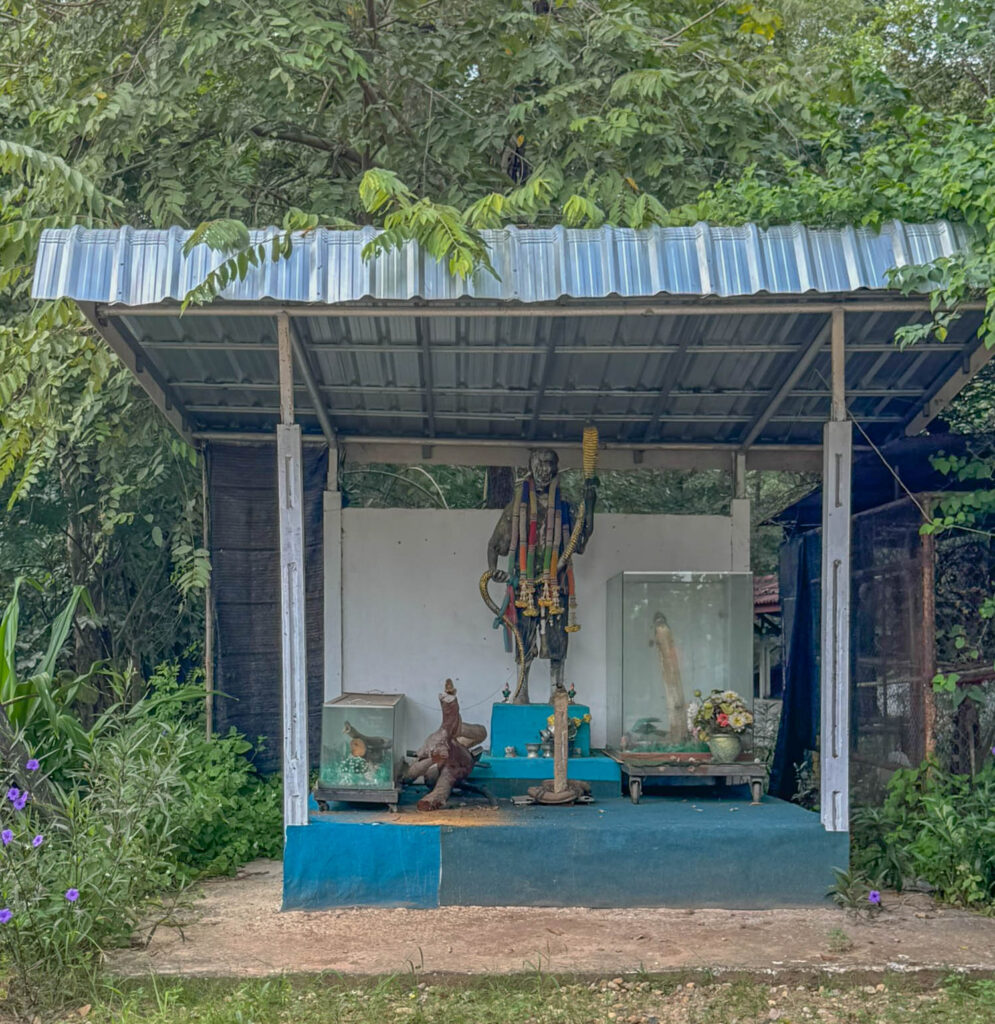
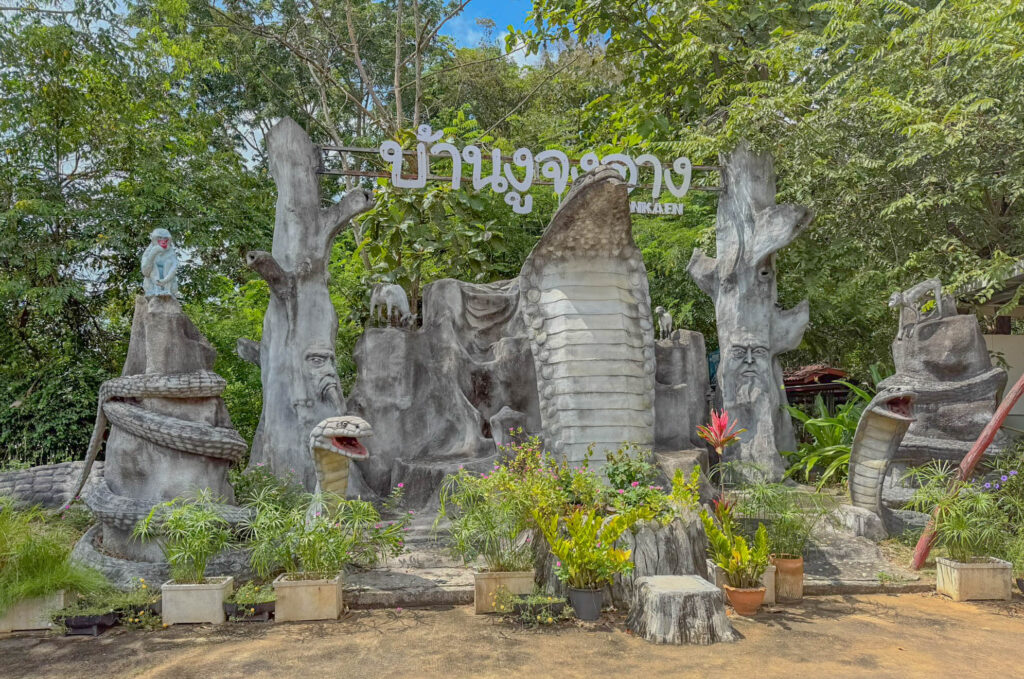
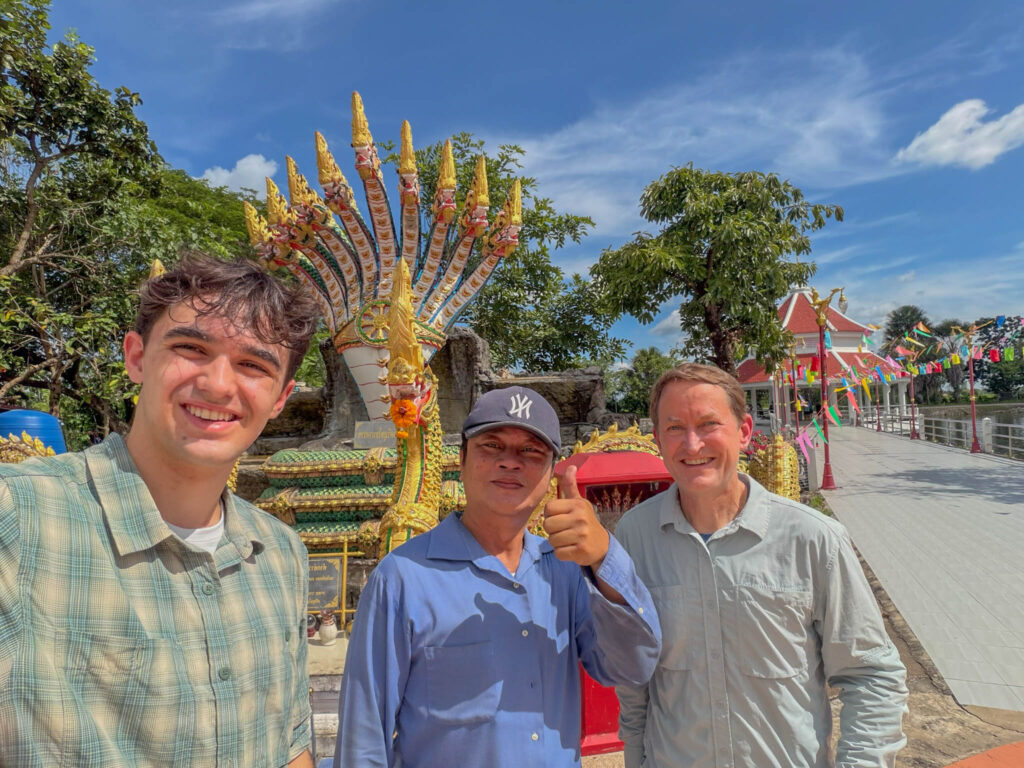
After the show, we walked through the snake farm, which was fairly basic, with enclosures for cobras and other snakes but nothing that looked particularly modern or well funded. We tried to buy a T-shirt, but they didn’t sell any. For a place called King Cobra Village, it feels like it’s practically begging for one. We wrapped up with a few more photos in front of the giant cobra statues and called it good.
Two Temples We Didn’t Plan to Visit: Ku Prapha Chai and Phra That Kham Kaen
We wrapped up at the King Cobra Village a little sooner than expected. The show lasted about 30 minutes, and after another 30 minutes walking around and taking photos, we still had time left on our four-hour booking.
Our driver asked if we wanted to stop at a couple of nearby temples on the way back to Khon Kaen. We weren’t exactly sure what that meant, but at that point we were in.
That turned out to be a good decision.
Ku Prapha Chai
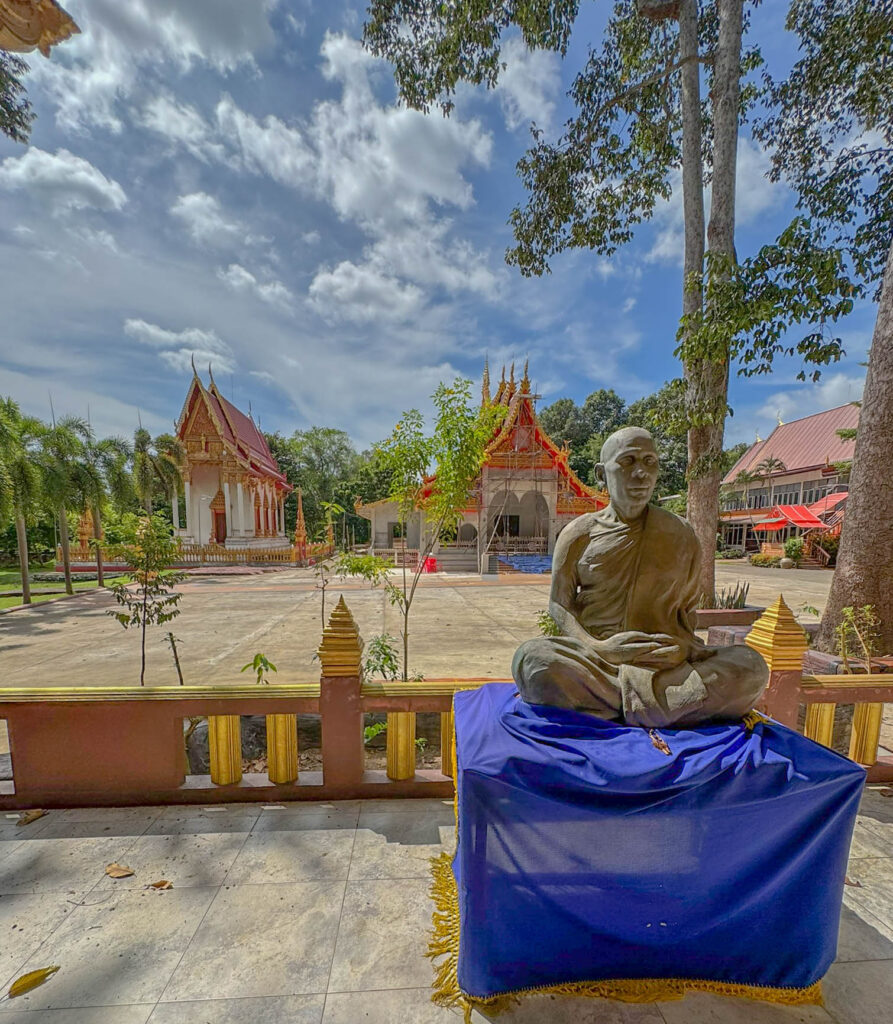
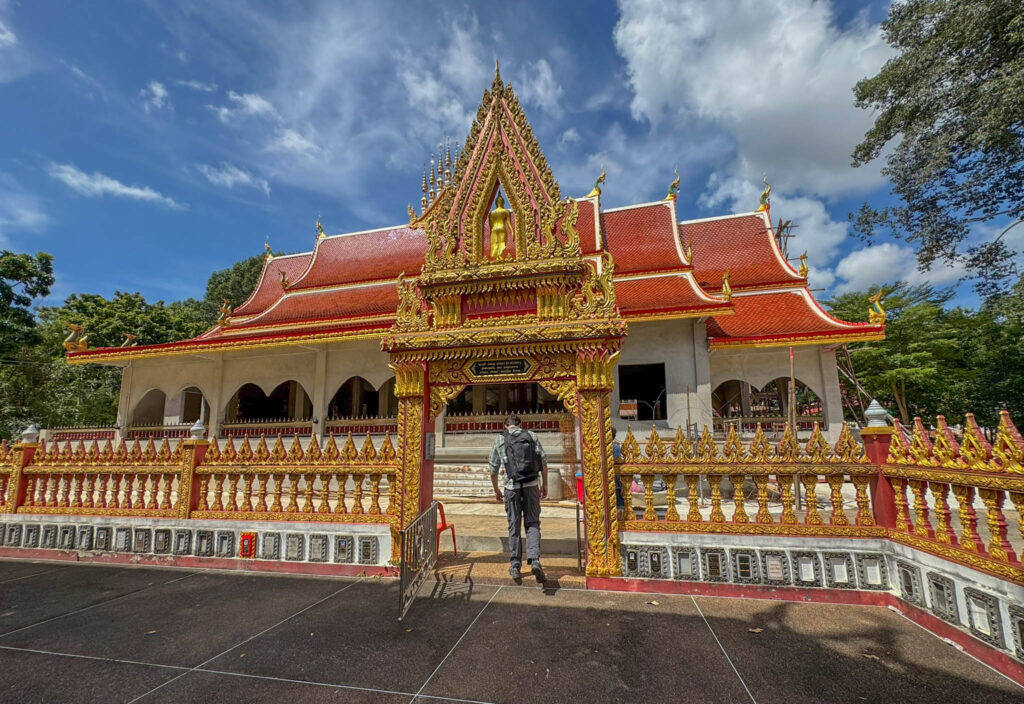
For our first stop, we pulled into a quiet temple complex and found that we were the only ones there. That seemed hard to believe given the setting. There was an impressive temple with a bright red and gold entrance gate, intricate carvings, and a main hall that looked like it had either just been finished or was still in progress. It had that polished, slightly over-the-top look you see at a lot of Thai temples, where every surface seems to have some kind of detail worked into it.
So at this point, we assumed we were going to walk toward the temple.
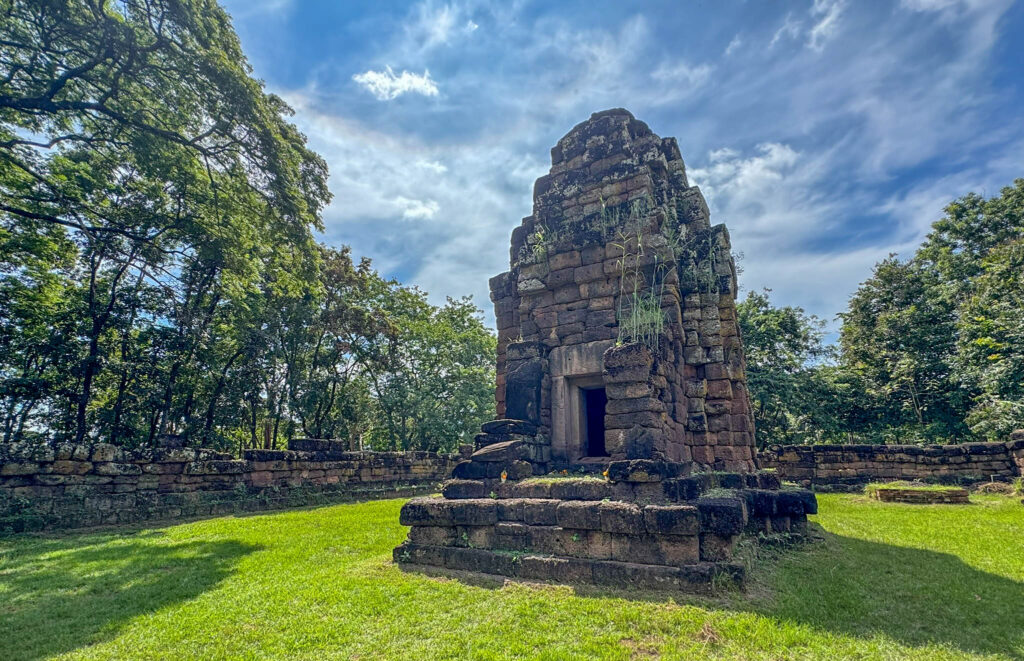
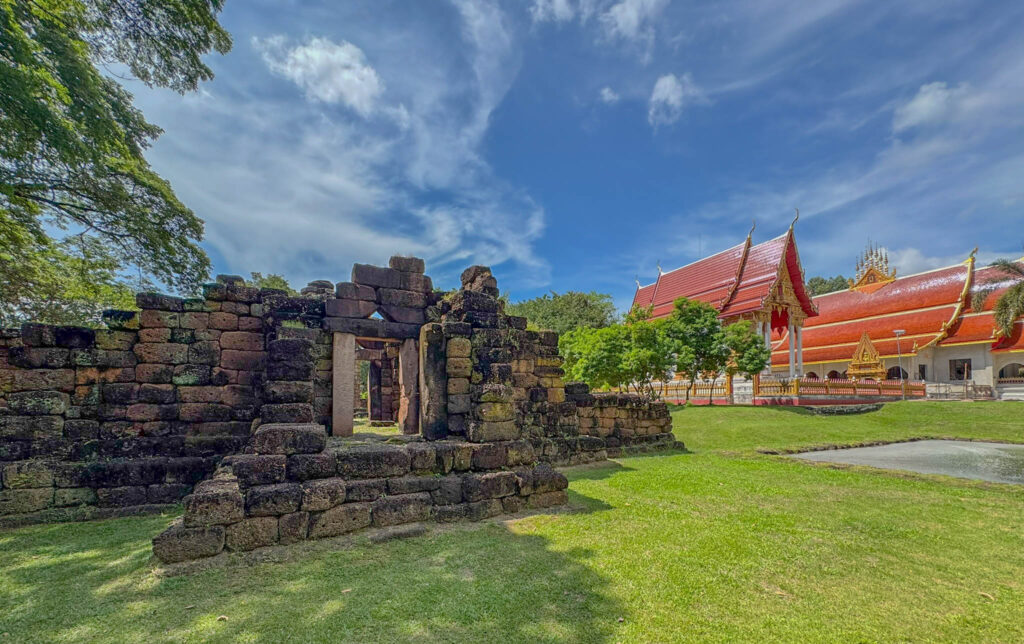
The funny thing is our driver led us in the opposite direction, away from everything that looked new and carefully maintained. A minute later, we were standing in front of what turned out to be an 800-year-old Khmer ruin called Ku Prapha Chai (กู่ประภาชัย).
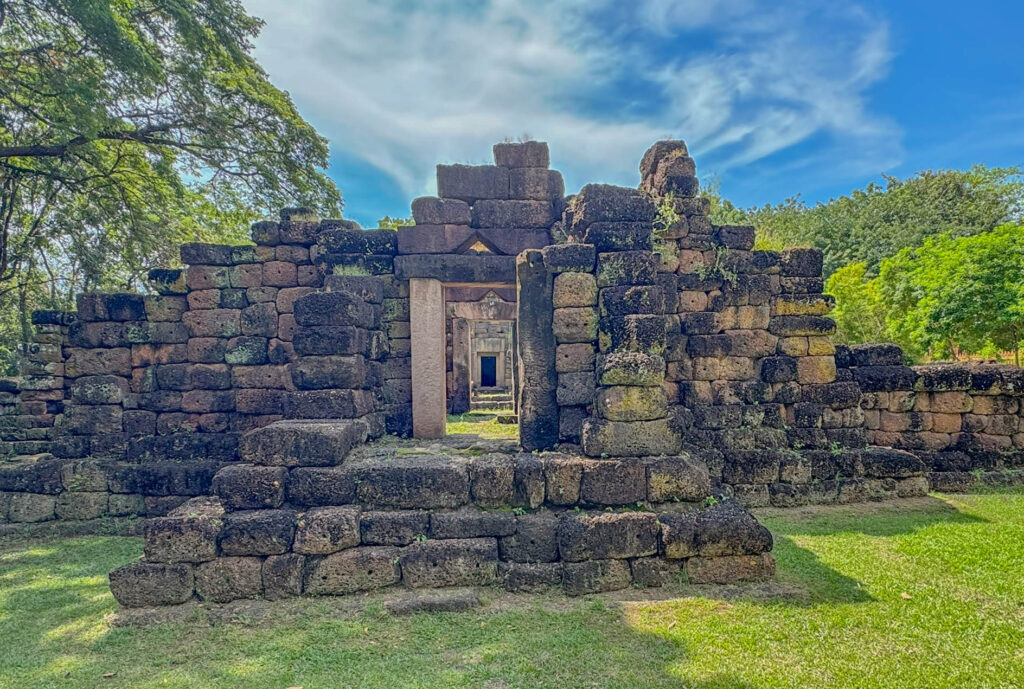
Ku Prapha Chai sits right on the same grounds, but it dates back to the late 1100s or early 1200s, when this area was part of the Khmer Empire, which was based in what is now Cambodia. The structure is built from laterite blocks, an iron-rich soil that’s cut into blocks and hardens into stone over time. There’s a rectangular outer wall, an entrance gate, and a central tower that’s still standing. If you line yourself up with the entrance, you can look straight through the aligned doorways into the inner chamber.
It was built during the reign of King Jayavarman VII, who was responsible for a network of temple hospitals across the empire. This was likely one of them. None of that is explained on site. Without that context, it just looks like an old stone structure sitting off to the side of a modern temple.
Our driver encouraged us to explore the ruins and take photos. Then, just to be sure, he asked for my phone and proceeded to take a lot of photos of us at the ruins.
From there, we walked over to the modern temple for more photos.
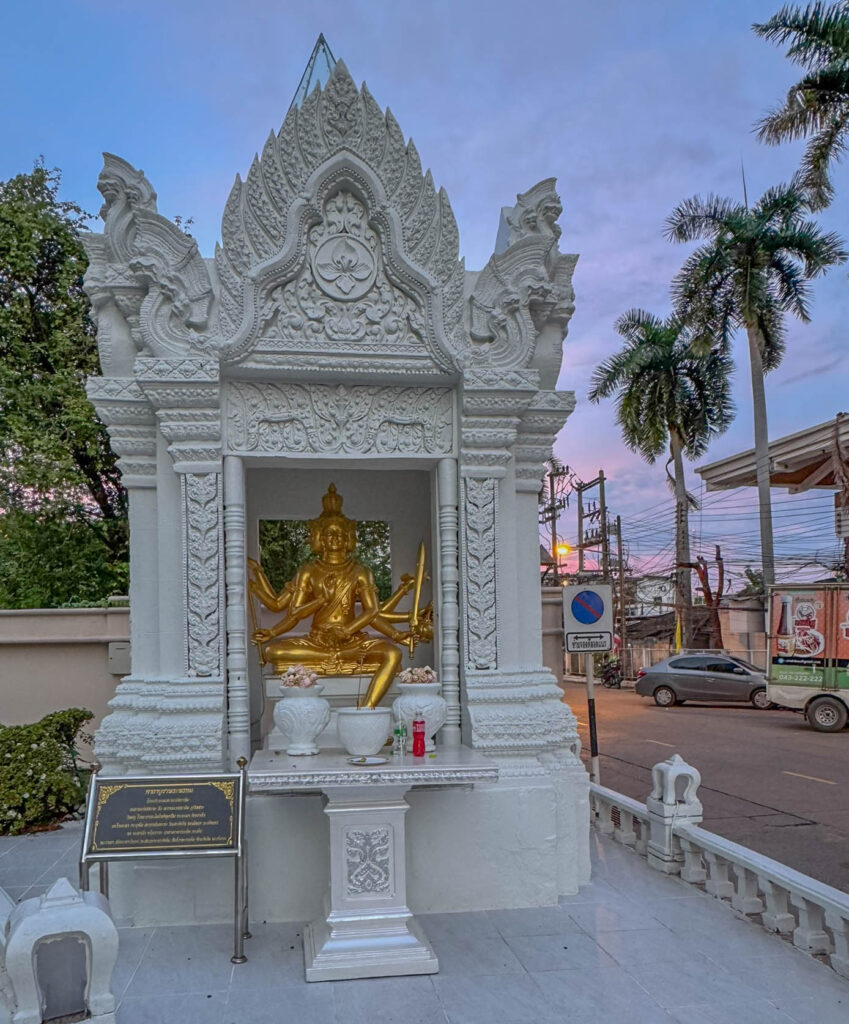
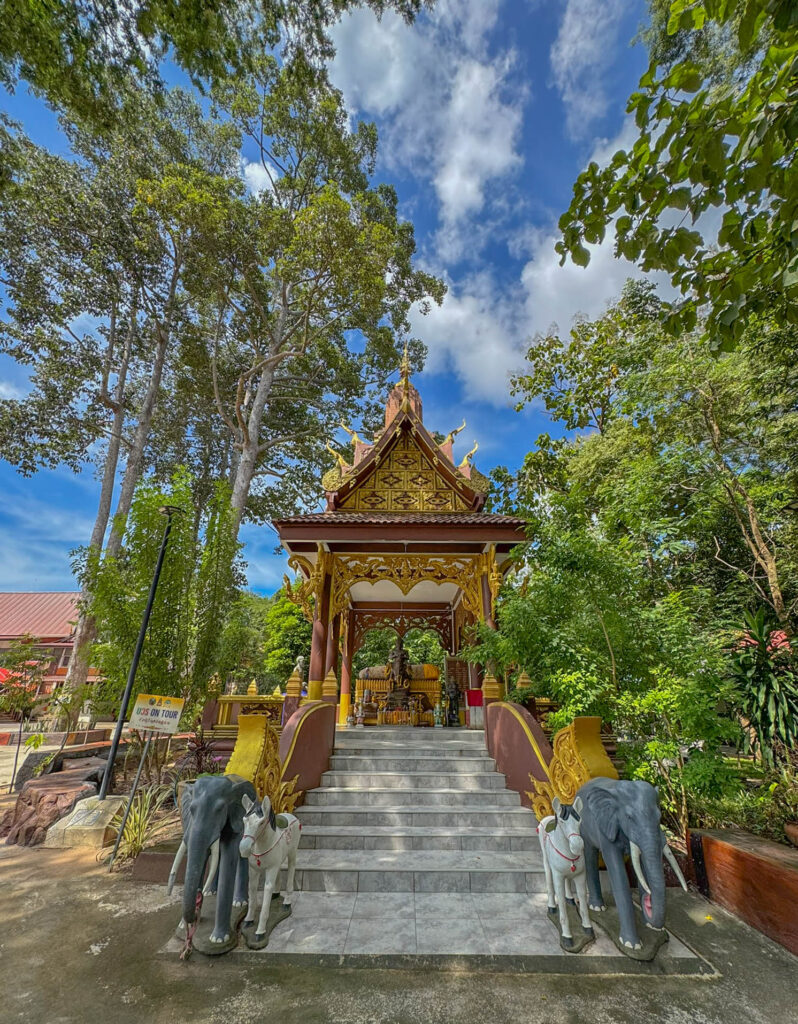
For our next stop, we walked towards our car and stopped at a small shrine. The next thing we knew, we were taking off our shoes and offering a coin. There was no explanation, just a sequence of steps we tried to imitate without doing anything wrong. Then he had us kneel in front of the shrine while he took more photos. We ended up with pictures we would’ve actively avoided taking on our own.
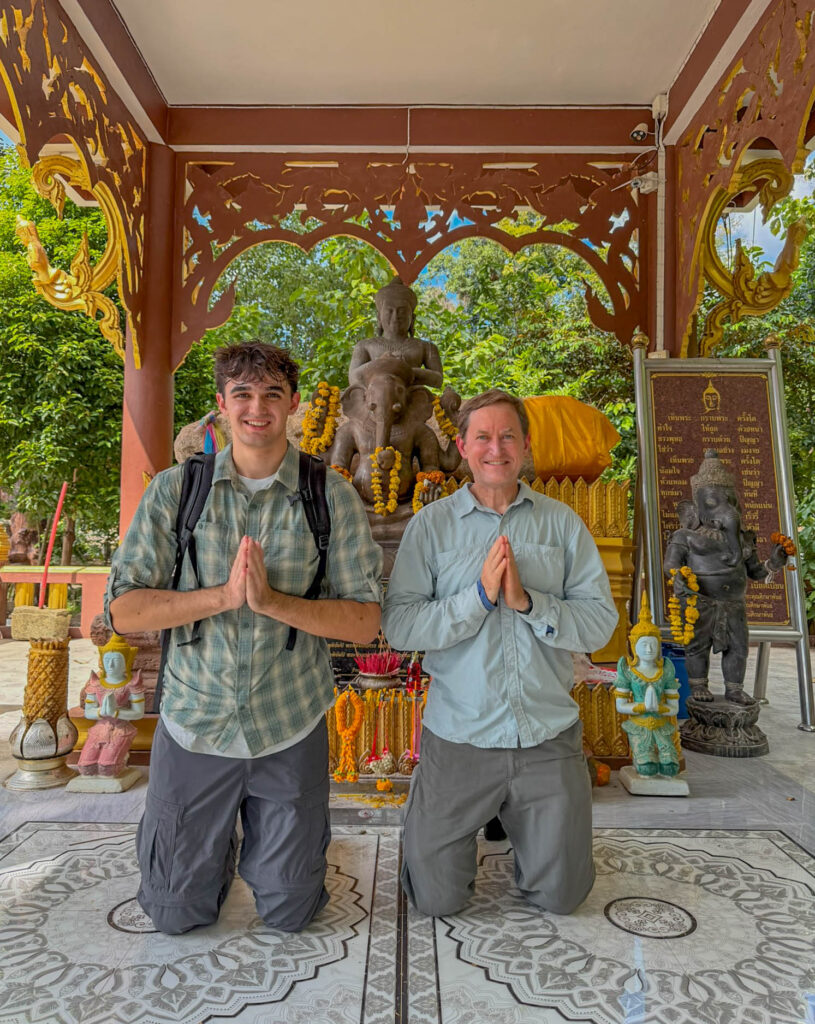
What makes the place interesting is the contrast. On one side, you have a fully active Thai temple, bright, polished, and meticulously maintained. A short walk away, you have this older Khmer structure that has been sitting there for centuries. No crowds, no ticket booth, and no real effort to turn it into a destination.
It’s not large, and it would be easy to miss if you didn’t know it was there. But if you stop, there’s a good chance you’ll have the entire place to yourself.
Phra That Kham Kaen
A few minutes down the road, we pulled into Phra That Kham Kaen (พระมหาธาตุแก่นนคร), one of the more important temples in the area. The grounds opened up into a wide, clean space with a white chedi, a dome-shaped structure that holds religious relics, and a gold spire rising above everything else. This stop felt completely different, except for one thing. We still had no idea what we were doing, and our driver was once again walking us through it step by step while taking a lot of photos. This time, it was taken up a notch.
It felt organized, but not overly formal.
Our driver walked us through how to make a few simple offerings. He handed us flowers to place at the shrine, and then small squares of gold leaf wrapped in paper. We had no idea what those were or what to do with them. Thankfully, he walked us over to a statue and showed us how to press them onto the surface, something I never would’ve thought was permitted, let alone standard practice.
It was simple, but also one of those situations where you’re paying close attention to what everyone else is doing so you don’t get it wrong.
There were almost no tourists around. Just Thai people moving quietly through the space, doing the same rituals.
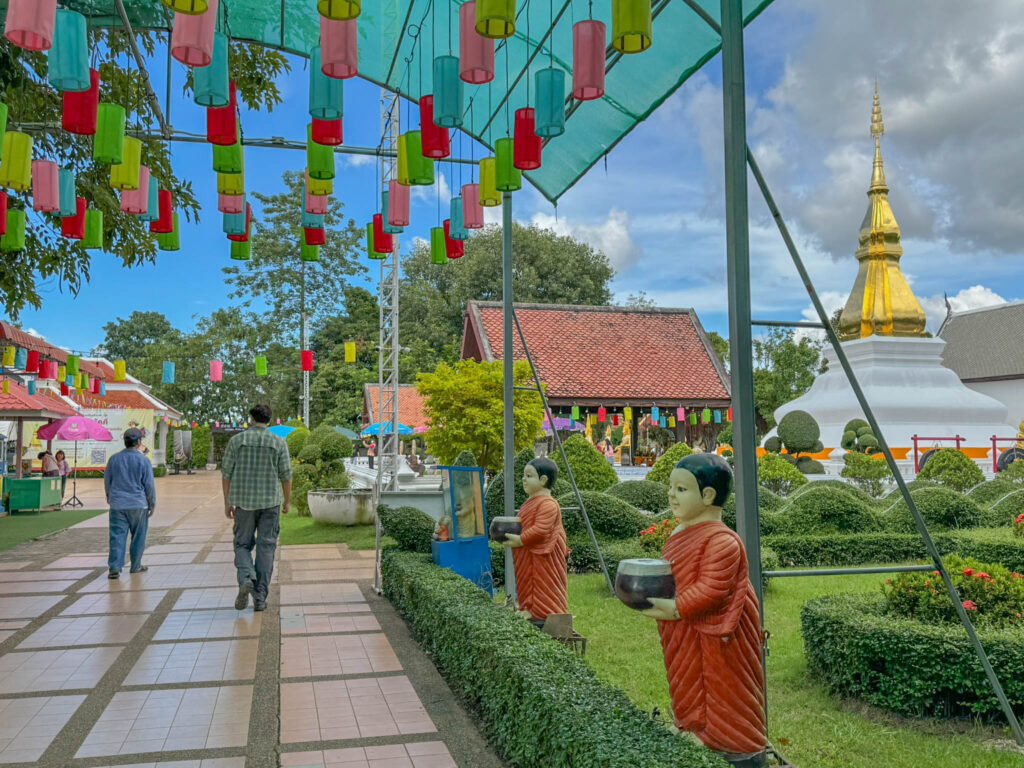
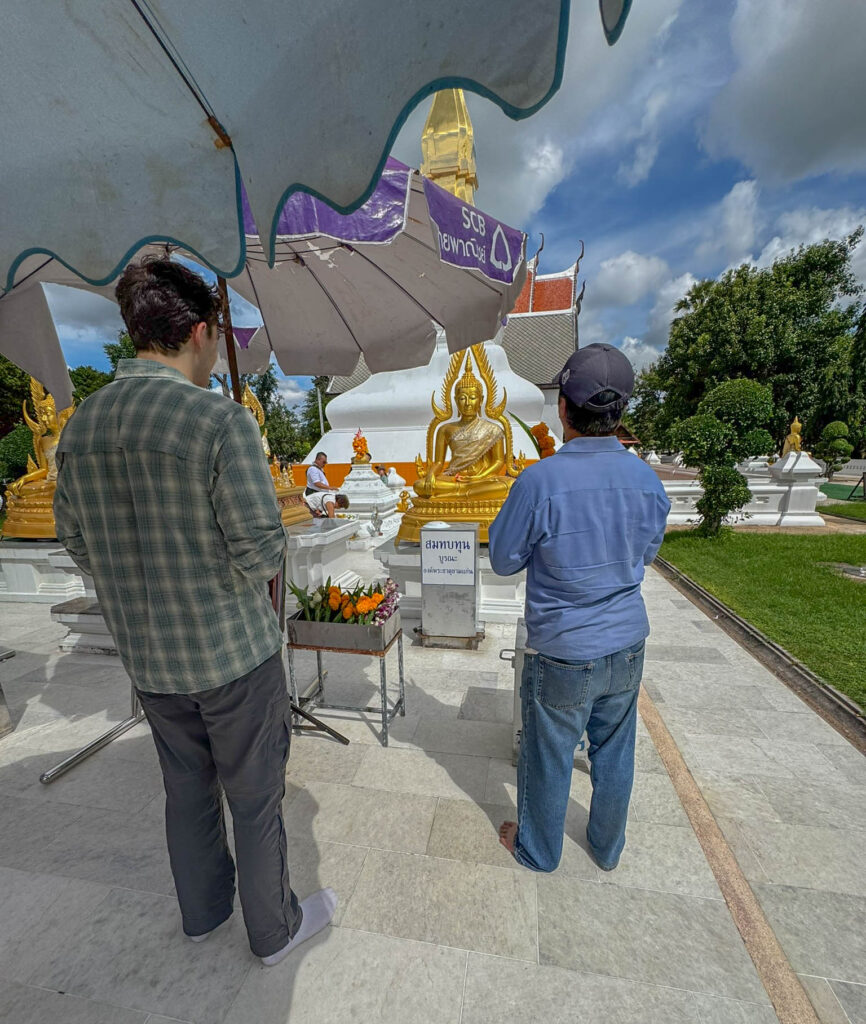
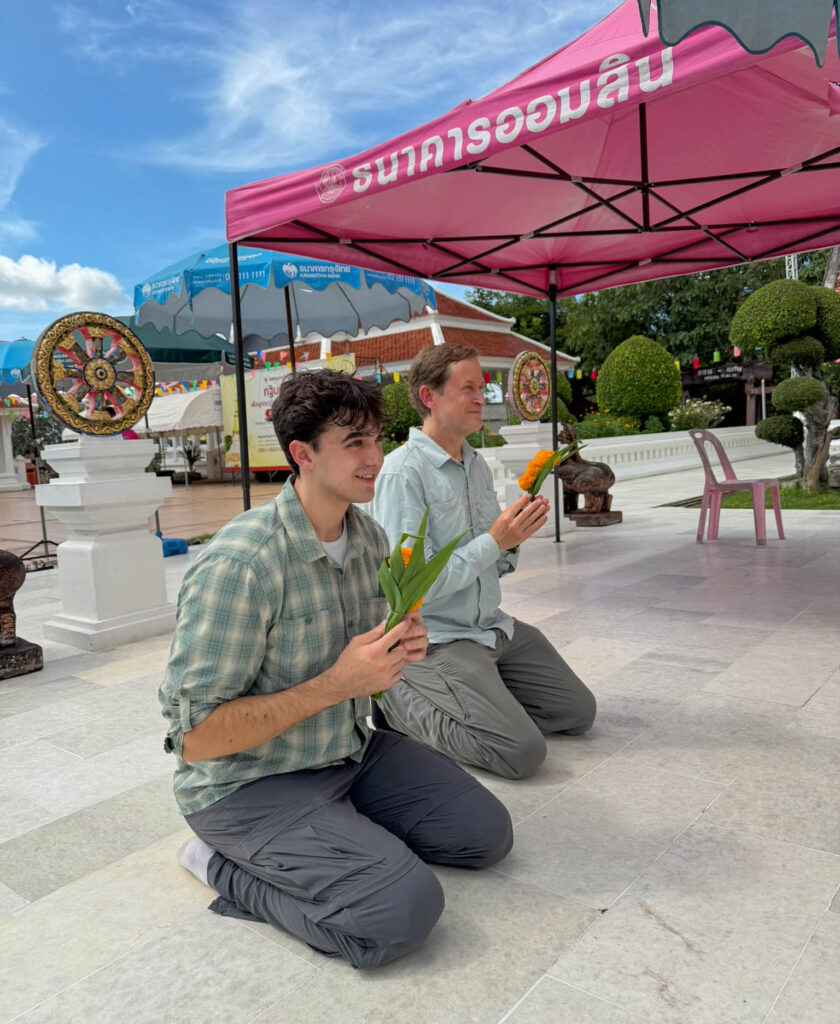
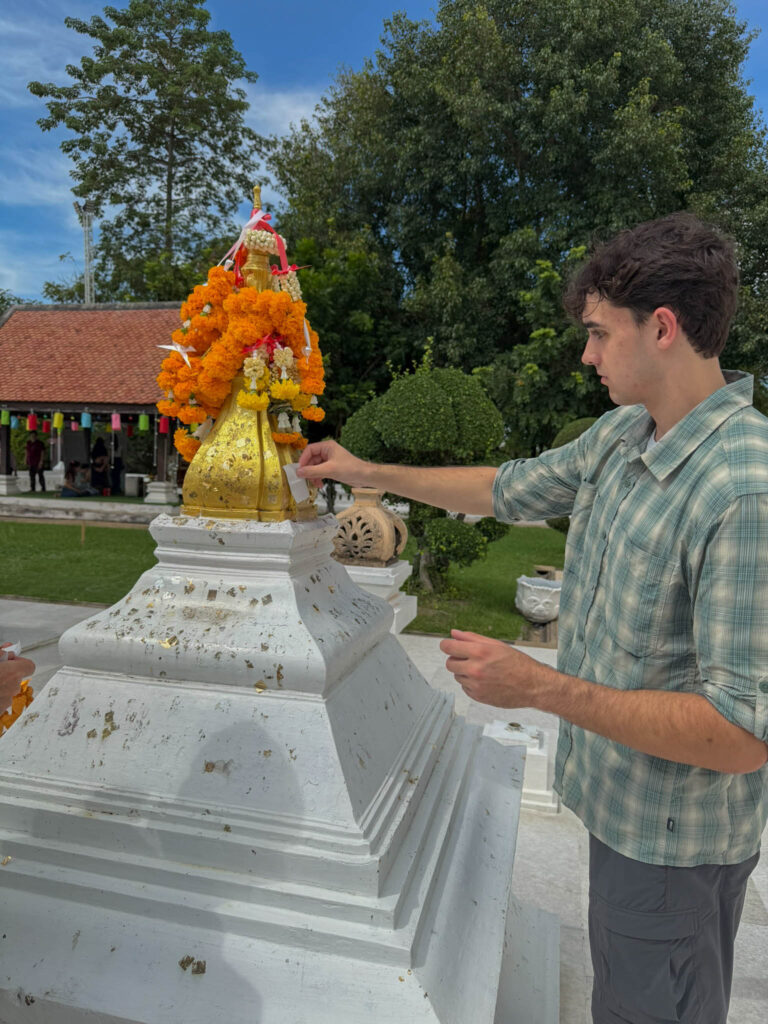
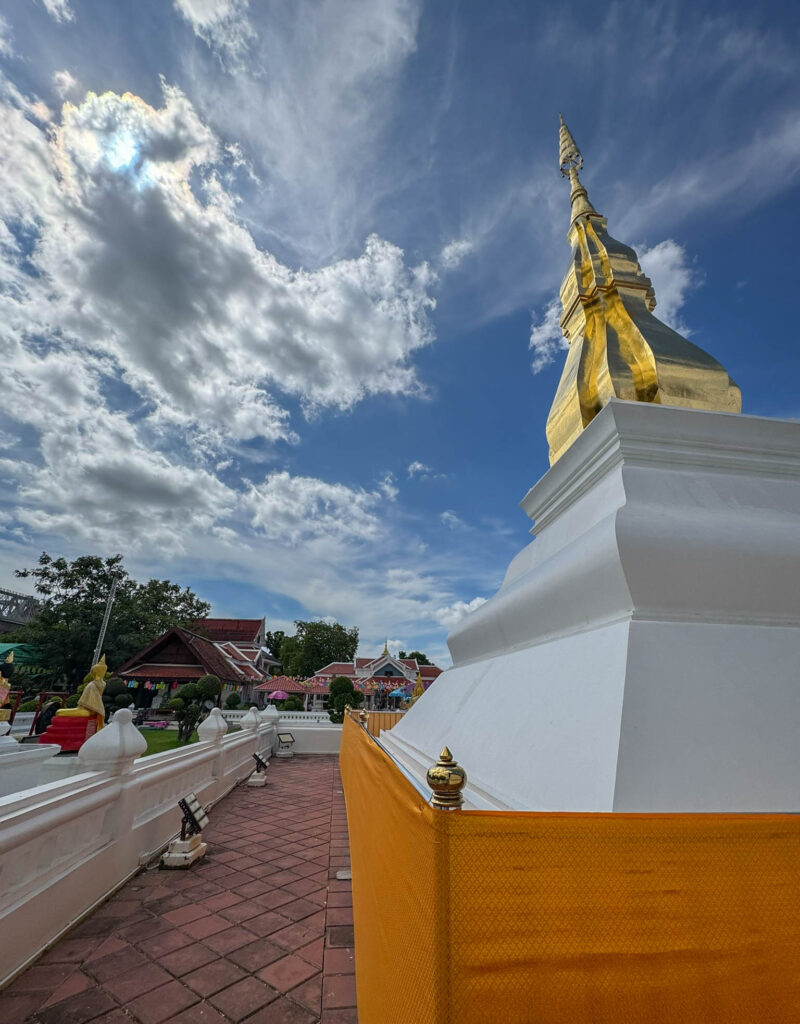
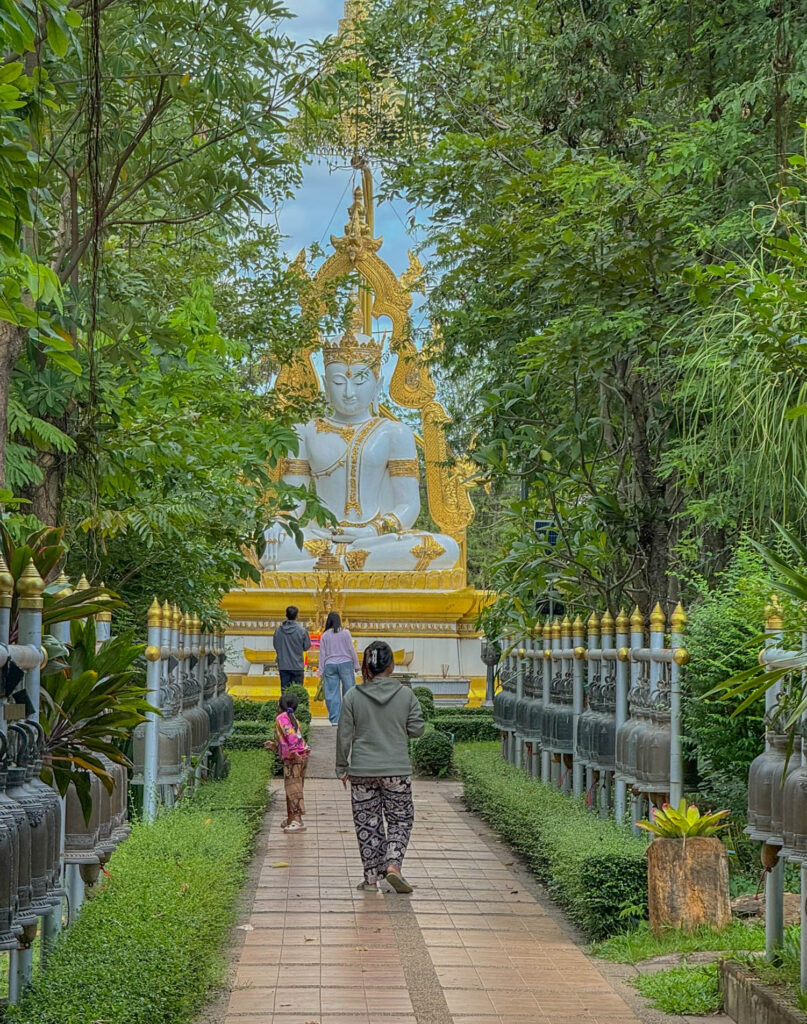
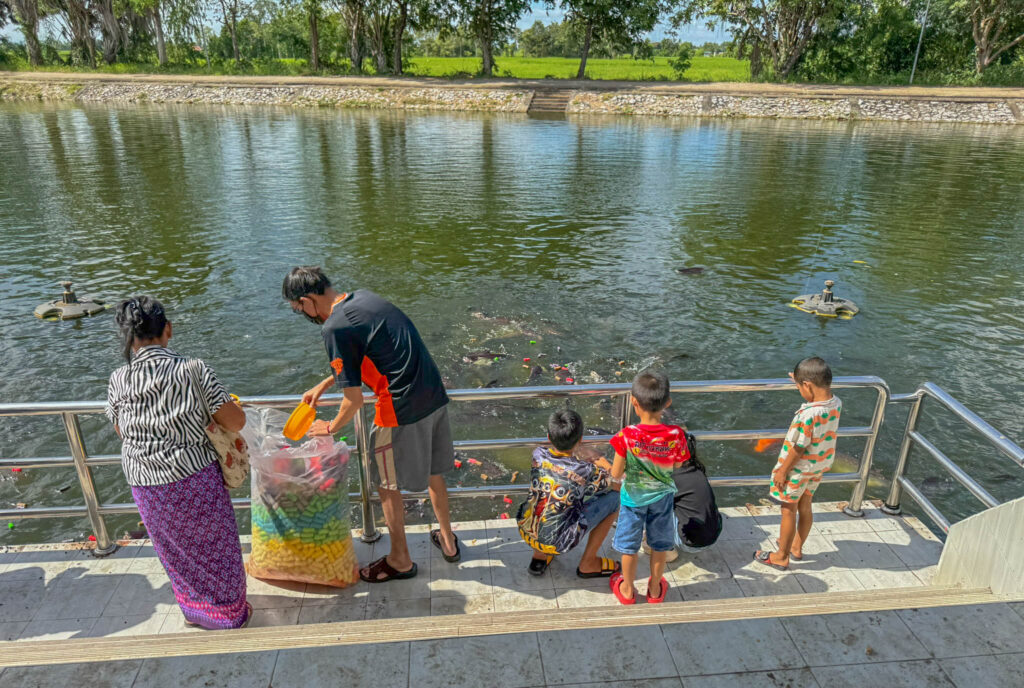
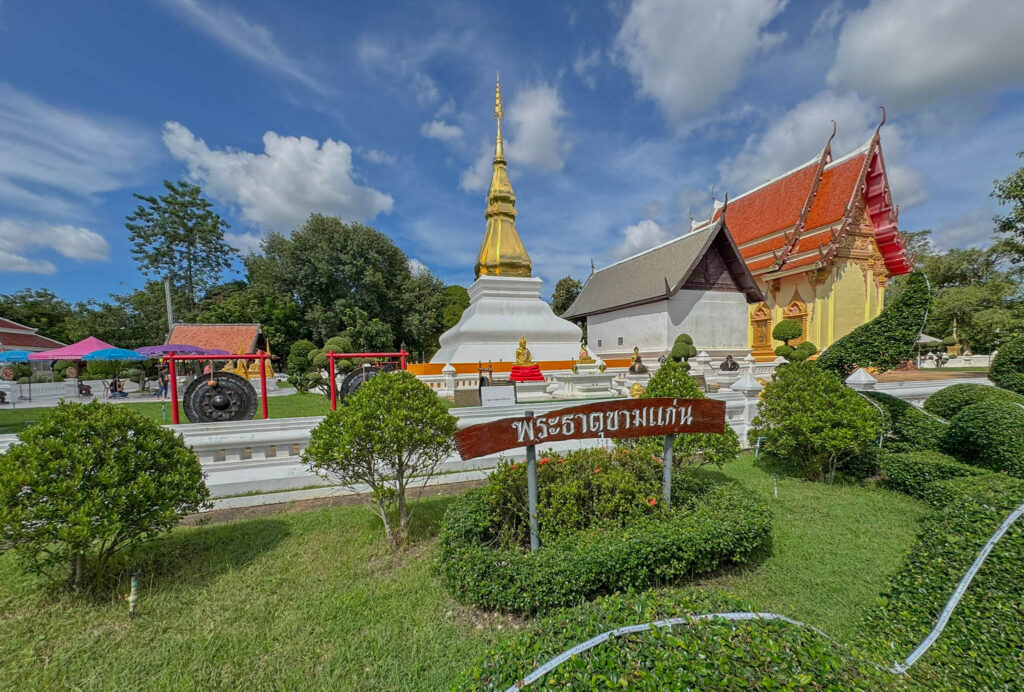
After the cobra village, this felt like a completely different kind of stop. Same morning, same general area, but a very different experience. Going from king cobras and spitting venom to quiet temples and gold leaf offerings in the span of a few hours was not something we’d planned, but it ended up being one of the more interesting parts of the day.
We made it back to the hotel after just over four hours and gave our driver a 500 baht tip on top of the 1,500 we had agreed on. He didn’t have to suggest those extra stops, and we definitely wouldn’t have found them on our own.
Wat Nong Wang (Phra Mahathat Kaen Nakhon)
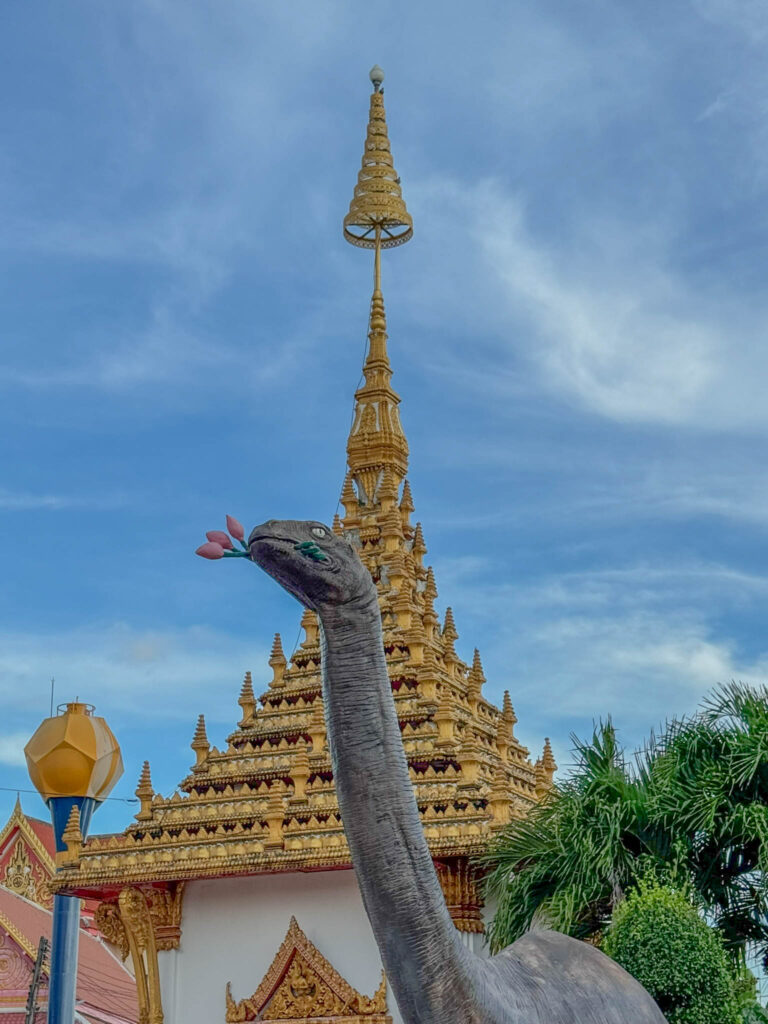
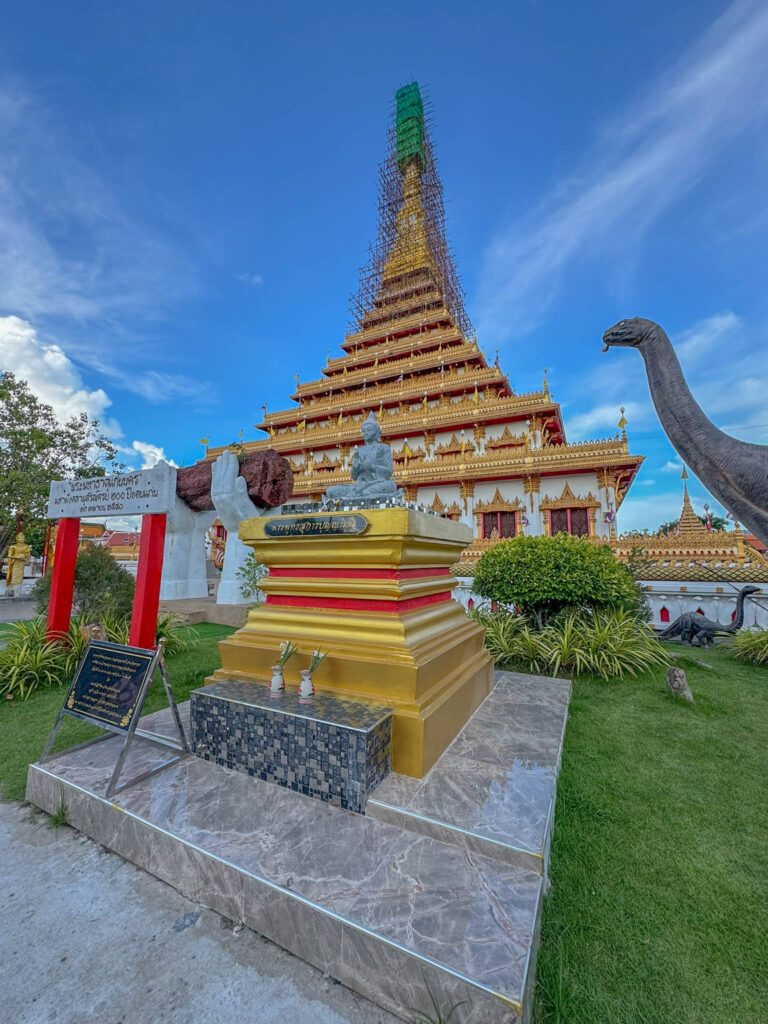
By this point, the dinosaur theme in Khon Kaen wasn’t surprising anymore, but it still caught my attention when I saw a very large dinosaur standing in front of the city’s main landmark, Wat Nong Wang, a prominent Buddhist temple.
Wat Nong Wang is home to the Phra Mahathat Kaen Nakhon (พระมหาธาตุแก่นนคร), the nine-story stupa that dominates the site.
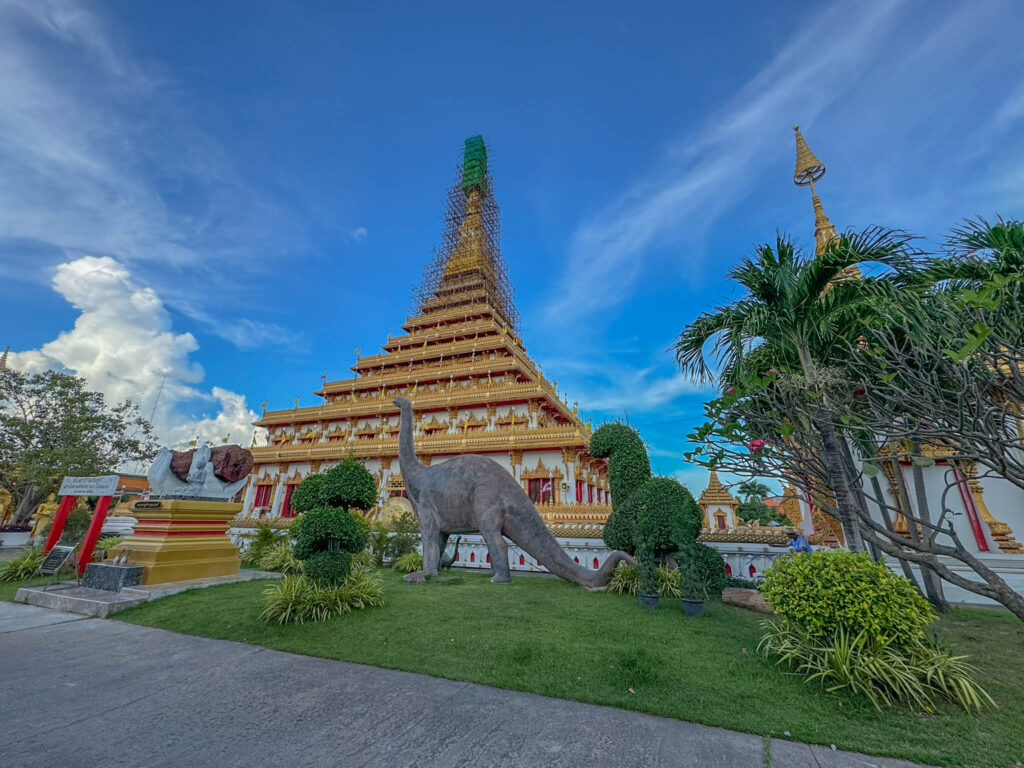
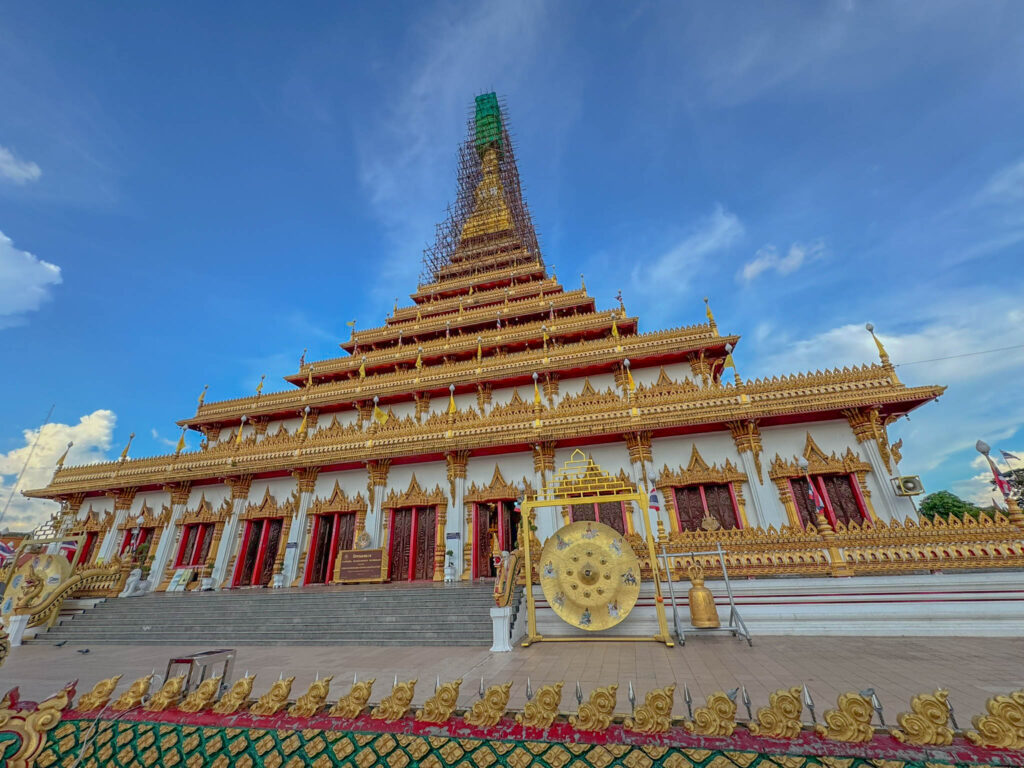
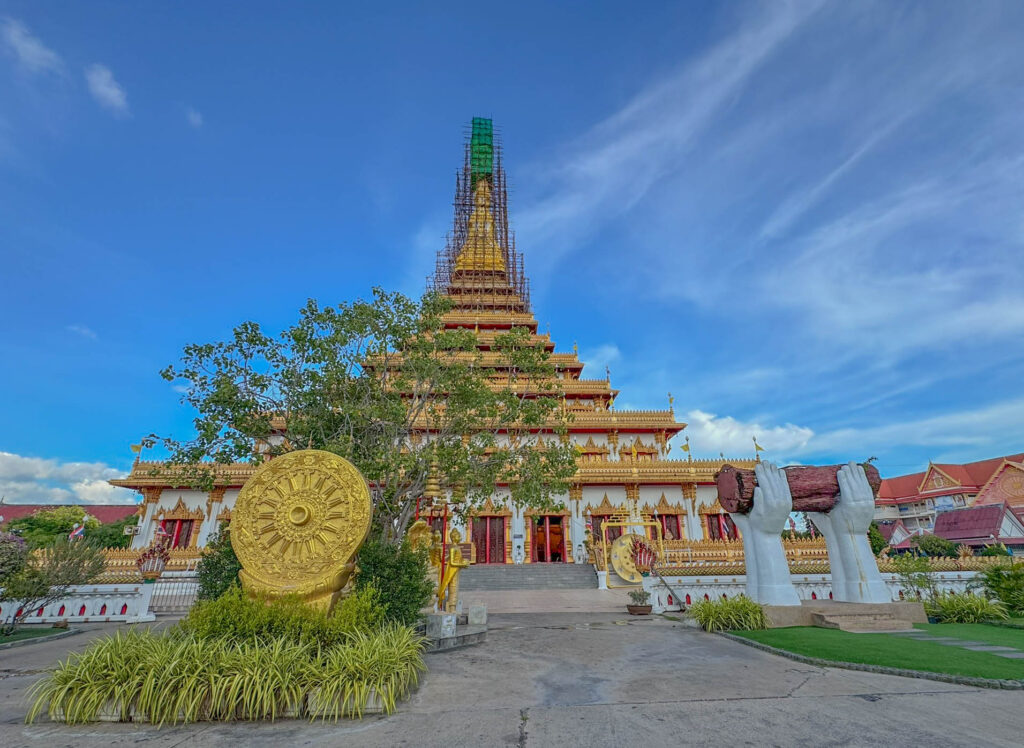
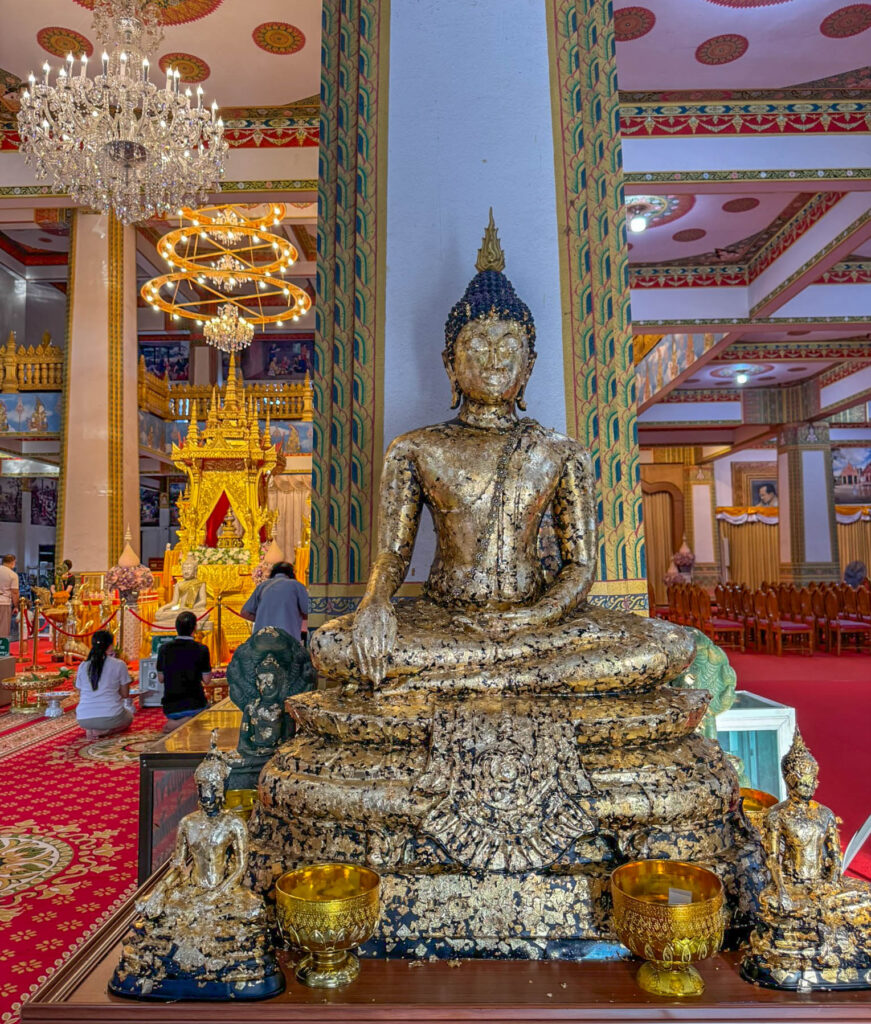
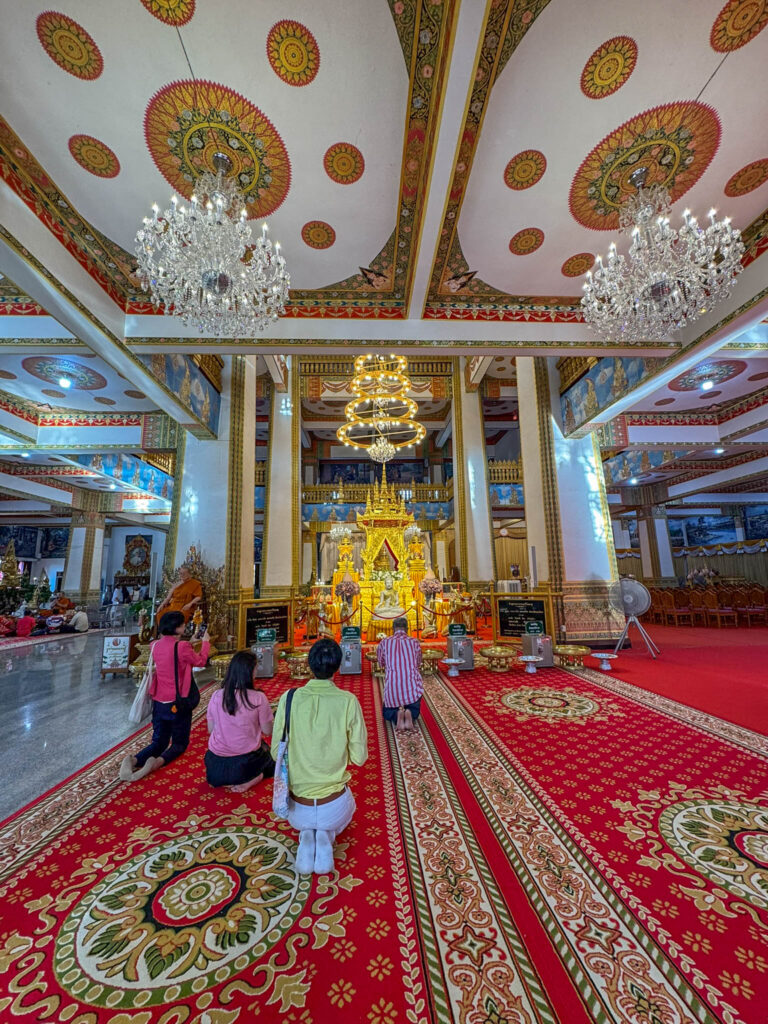
The temple sits next to Kaen Nakhon Lake and is hard to miss. Built in the 1990s to mark Khon Kaen’s bicentennial, it houses Buddhist relics and also functions as a museum, with each floor covering different aspects of Buddhism, local history, and regional culture.
As you move up through the building, you pass carved panels and displays that walk through the life of the Buddha, along with Jataka stories depicting his earlier lives. In those stories, he appears as kings, ordinary people, and even animals like monkeys, deer, and elephants, each one tied to a lesson about things like generosity, compassion, or patience.
From what I understand, you can go all the way to the top, where there’s a view over the city and the lake. I didn’t know that at the time, so I missed it.
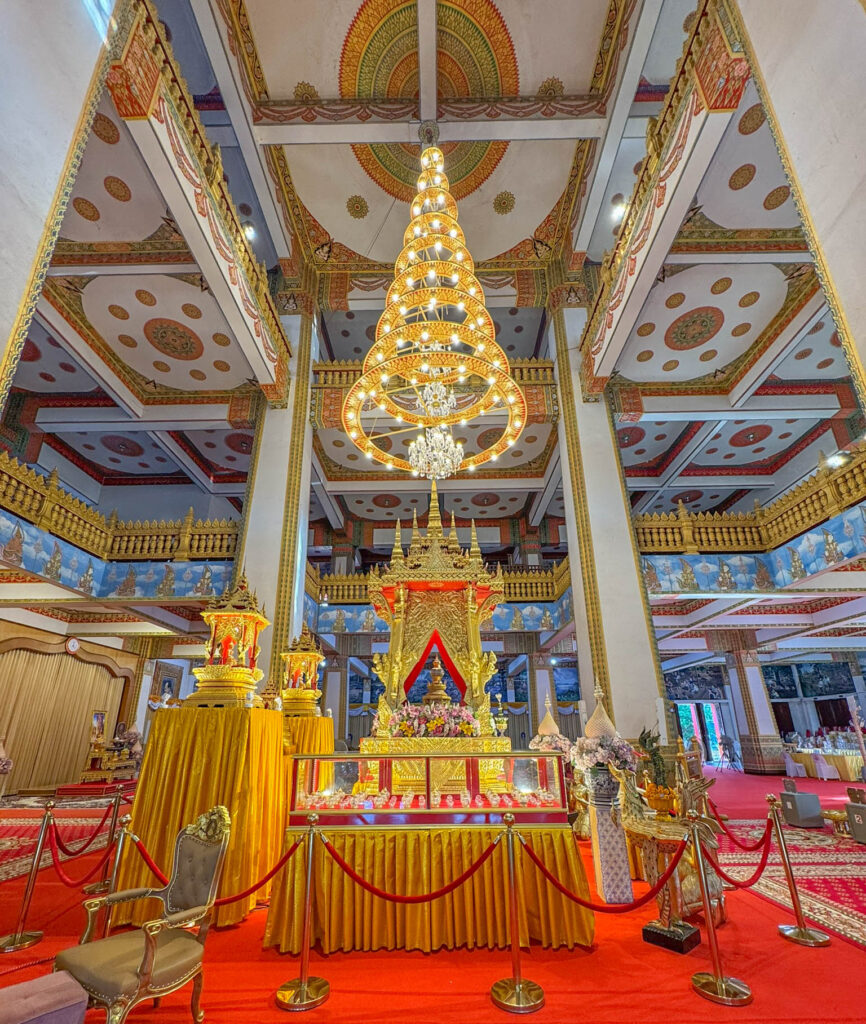
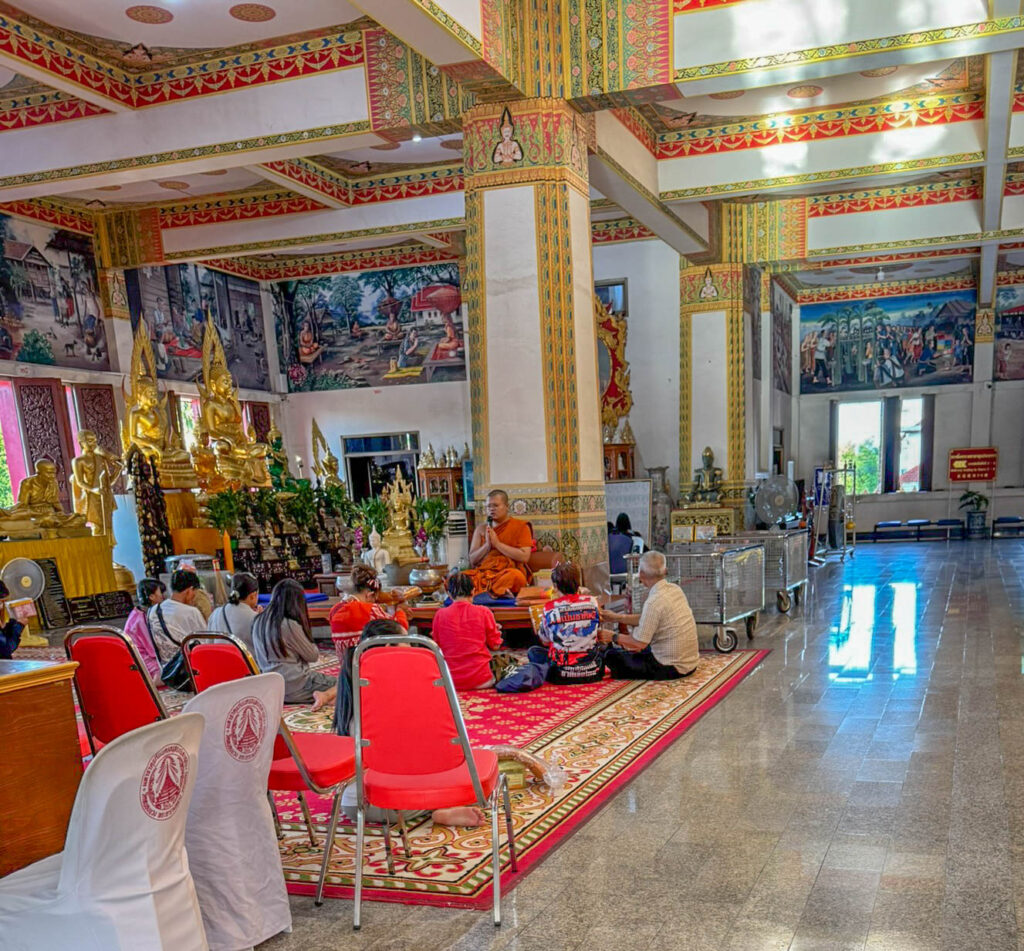
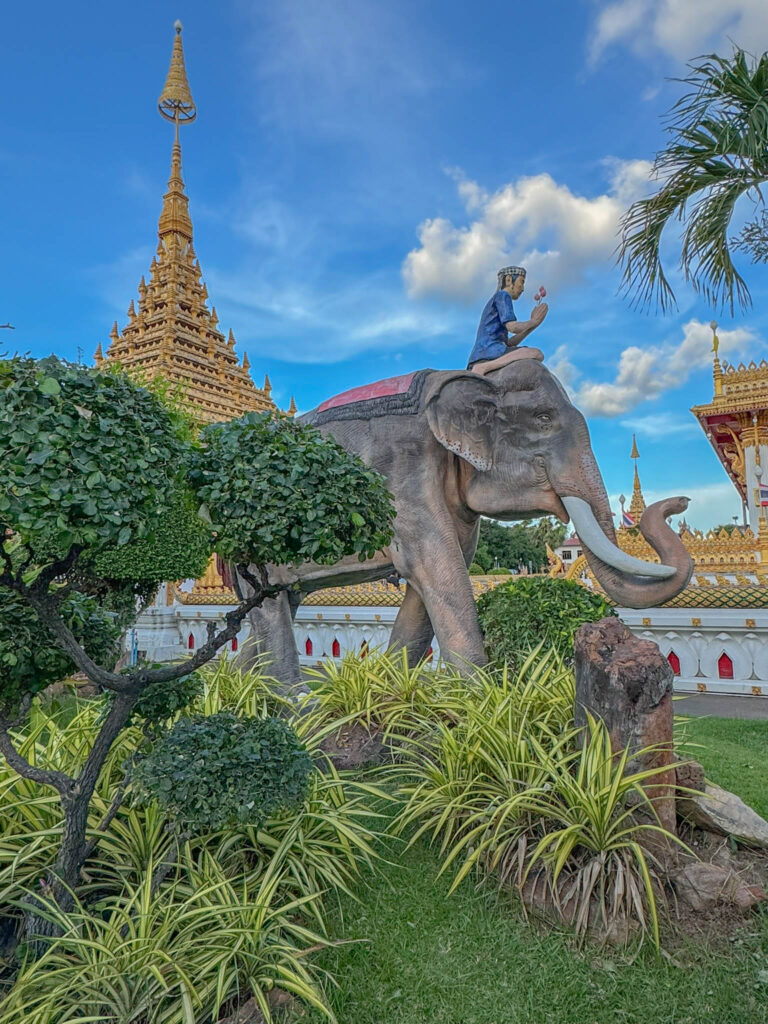
Out front, I was also surprised to see a large elephant and rider statue near the entrance, along with the dinosaur nearby. It’s an unusual combination, but by that point it didn’t feel out of place. Just another mix of things you don’t expect to see together.
We Ordered Peking Duck. Check please.
After a good gym workout, we decided to have dinner at the hotel. We saw a sign for Peking duck. I had it once in Beijing, where it’s carved tableside and served with thin pancakes. It was a first for my son, so we figured we’d give it a try.
It’s a decision that still makes us laugh.
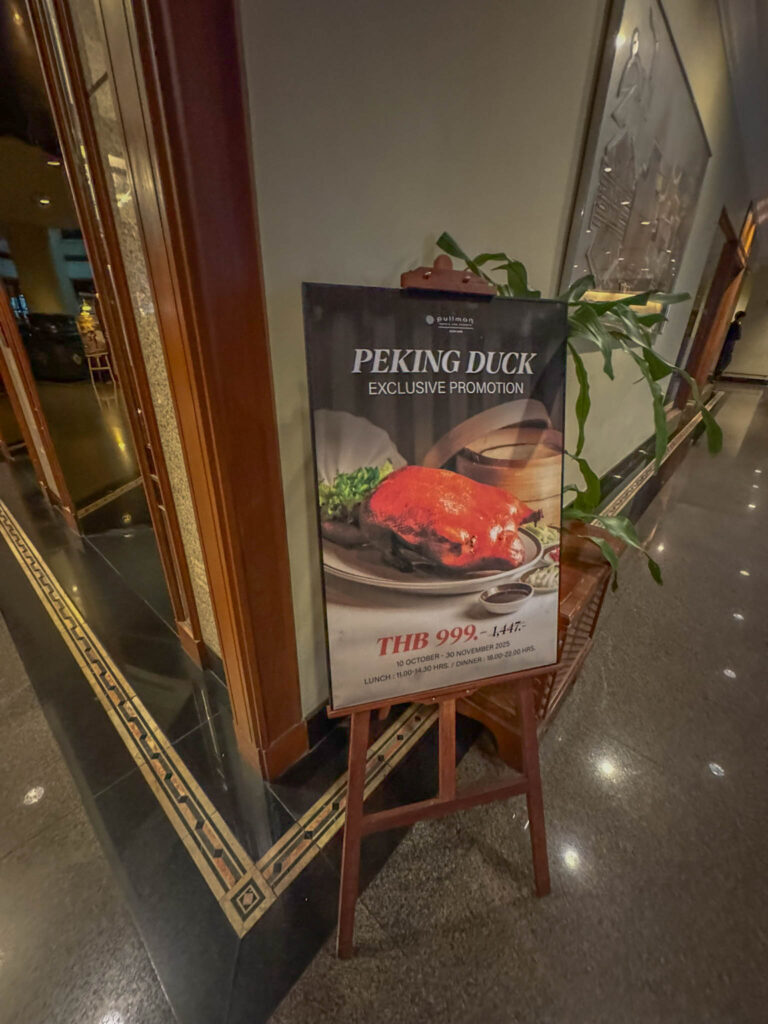
We ordered the Peking duck, and the waiter asked if we wanted soup or something else that we didn’t understand. We weren’t entirely sure what he meant by the second option, so we went with the soup.
They brought out what looked like large pieces of duck. My son and I both like simple “meat on a plate” meals, so this seemed promising.
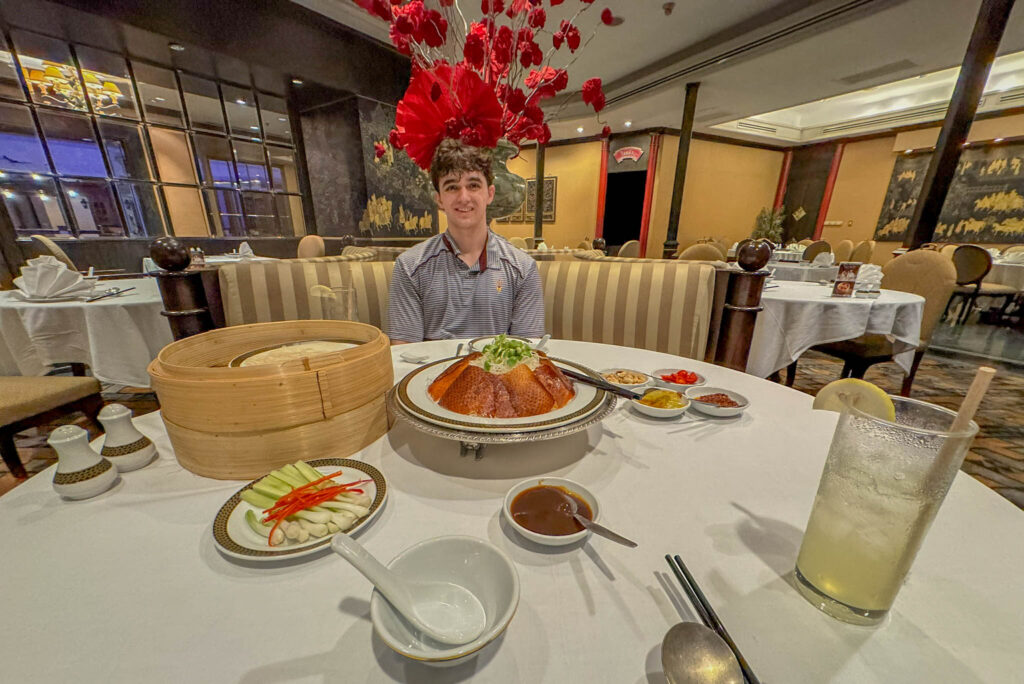
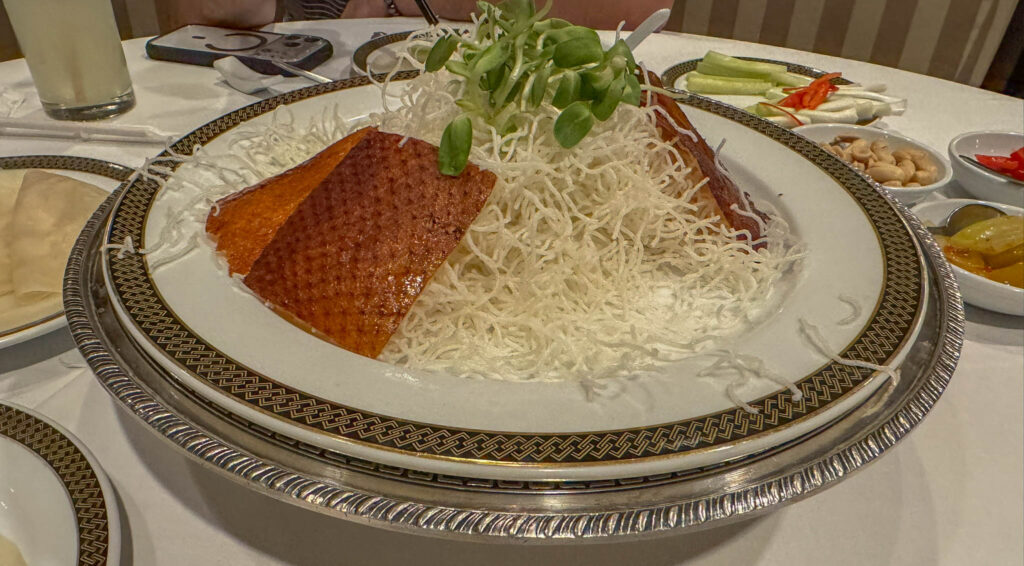
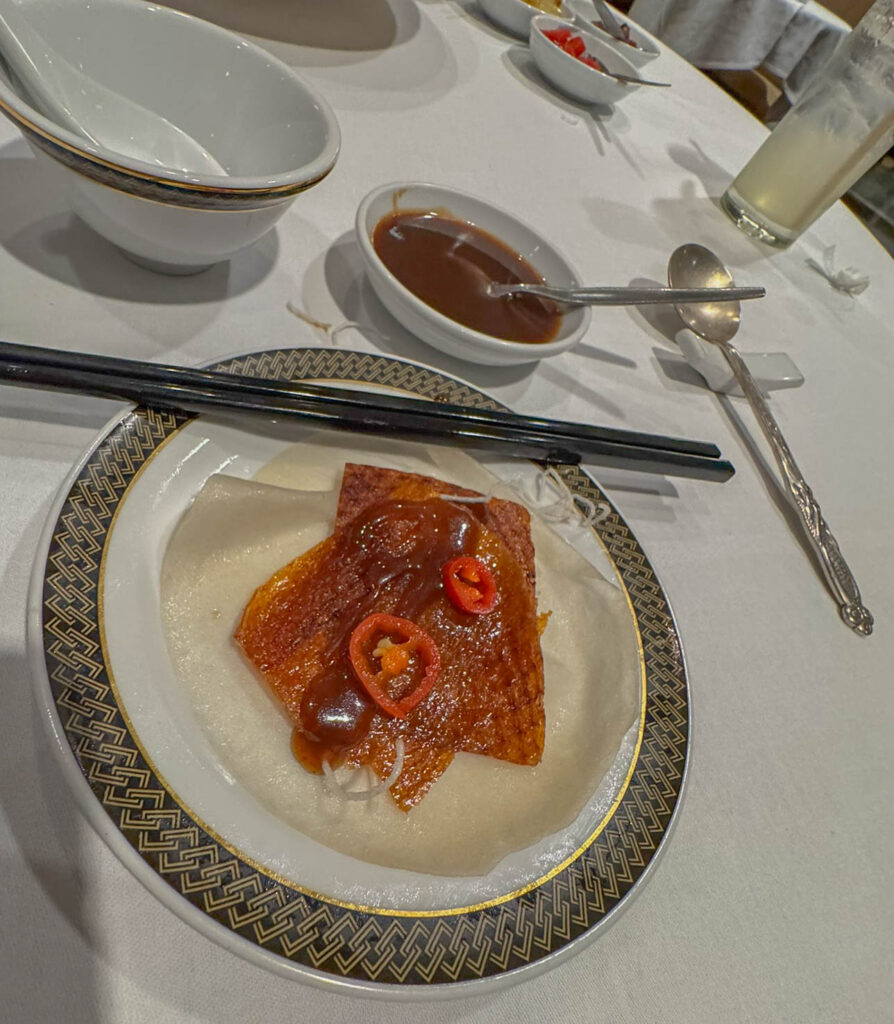
There was just one problem. After picking up a piece with chopsticks, we realized it was nothing but crispy skin. We were a bit confused, but had a good laugh over it. For a moment, it felt like we were missing something obvious, so we poked around the plate and nearby dishes, even lifting them to see if any duck was hiding underneath.
The waiter explained that we were supposed to wrap the skin in thin pancakes with sauce and scallions. Not exactly what we had in mind, but we went with it and had a few pieces.
Then the soup arrived in a large, shared bowl. It technically had duck in it, but not the kind you’re hoping for. It had a strong smell that immediately made me assume it was organ meat. A duck curry appetizer of sorts showed up next, but it was similarly confusing.
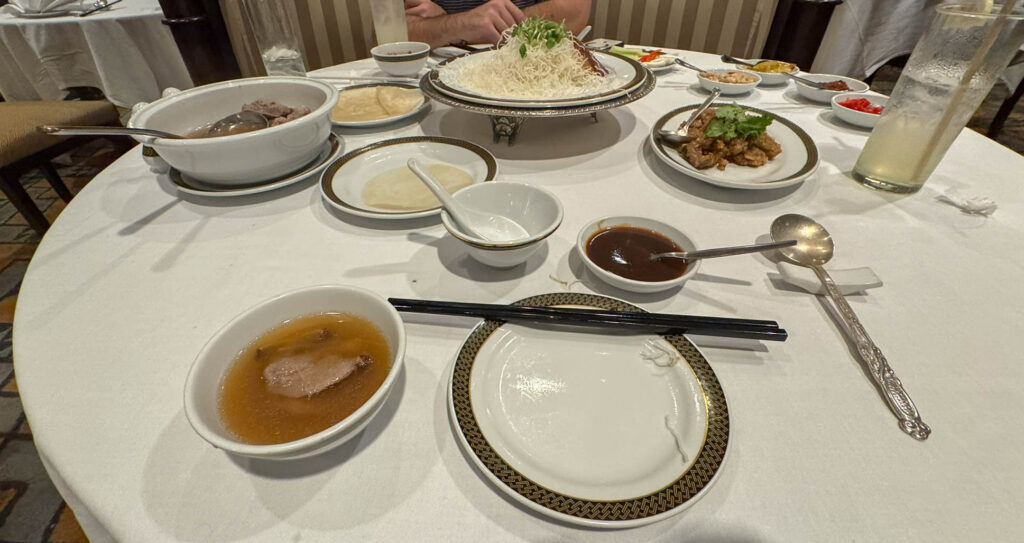
At that point, we were still waiting for what we assumed would be the actual duck. We sat there for a while, taking small bites here and there, mostly out of obligation, and regretting it each time. The staff kept glancing over at us, probably wondering why we weren’t making much progress.
Finally, the waiter came over and asked how we were enjoying the meal. My son asked, “Where’s the duck?”
The waiter pointed to the soup and the curry.
My son looked at him for about a second and said, “Check please.”
That was it. As soon as he stepped away, we both lost it.
We ended up going downstairs to another restaurant in the hotel and ordered something predictable. Nothing special, but at that point it felt like a win. We did our best to hold it together whenever anyone came near the table, but as soon as we were on our own again, we’d start laughing.
Our Peking duck experience probably says more about our own ineptitude than anything about the restaurant. It turned out to be one of my favorite meals of the trip, just because of the laughs.
Final Thoughts
Khon Kaen is not a place most people will go out of their way to visit, and I understand why. It’s not polished, it’s not built around tourism, and parts of it can feel a little uncomfortable if you’re not expecting it. But that’s also what made it memorable. You get a side of Thailand that isn’t curated, whether that’s a cobra village that feels equal parts fascinating and questionable, or a quiet visit to a temple that reminds you why you travel in the first place.
It’s not for everyone, but if you’re willing to step a little outside the usual path, it’s the kind of place that sticks with you. And for me, that’s usually the point.
📚 Want to Learn More
Khon Kaen isn’t the kind of place that fills shelves in bookstores. But if you’re interested in learning more about Thailand, its culture, and its wildlife, here are a few books worth checking out:
- A History of Thailand by Chris Baker. A clear, readable look at how Thailand became what it is today.
- Snake Charmer by Jamie James – A fascinating look into the world of snakes and the people who study them.
- Buddhist Temples of Thailand by Joe Cummings. A straightforward guide to temple design, symbolism, and what you’re actually looking at.
- Very Thai: Everyday Popular Culture by Philip Cornwel-Smith and John Goss. A great way to make sense of the small details and cultural quirks you notice once you’re there.
- Isaan: Forgotten Provinces of Thailand by Ben Davies – A closer look at the region Khon Kaen is part of, with a focus on lesser-visited places and local traditions.
- Ancient Khmer Sites in Northeastern Thailand by Asger Mollerup – Useful context for the Khmer ruins you’ll come across in this part of the country.
Thought for the Week
This week’s “Thought for the Week” comes from Ajahn Chah, one of Thailand’s most influential meditation teachers and a key figure in bringing Thai Forest Buddhism to the West.
Ajahn Chah spent much of his life in rural northeastern Thailand, not far from the region around Khon Kaen. He taught in simple monasteries, often using direct, practical language that focused less on theory and more on how people actually experience the world. His emphasis was on awareness, patience, and seeing things clearly without adding expectations on top of what’s already there.
Khon Kaen has a way of testing your expectations. It’s not a place that grabs you right away. There’s no big reveal or obvious highlight, and for a while it can feel like you’re missing something. But if you give it a little time and pay attention, it starts to come together.
Which brings us to this week’s quote:
“The mind is like water. When it’s still, it reflects things clearly.”
— Ajahn Chah
Thanks for reading and happy travels!
Mark (The New Mexico Travel Guy)

Mark Aspelin, The New Mexico Travel Guy (www.newmexicotravelguy.com), is a travel writer, conservation biologist, project manager, and author of two books. He’s visited over 100 countries and all 50 U.S. states, just enough to land in the Travelers’ Century Club and make choosing a favorite place nearly impossible. He’s currently on a questionable mission to visit every town in New Mexico (there are over 500) and write a story about each one, with plans to wrap it up sometime before his early to mid 100s. Mark balances his writing with conservation and project work from his home base in the East Mountains near Albuquerque, New Mexico.

Leave a reply