
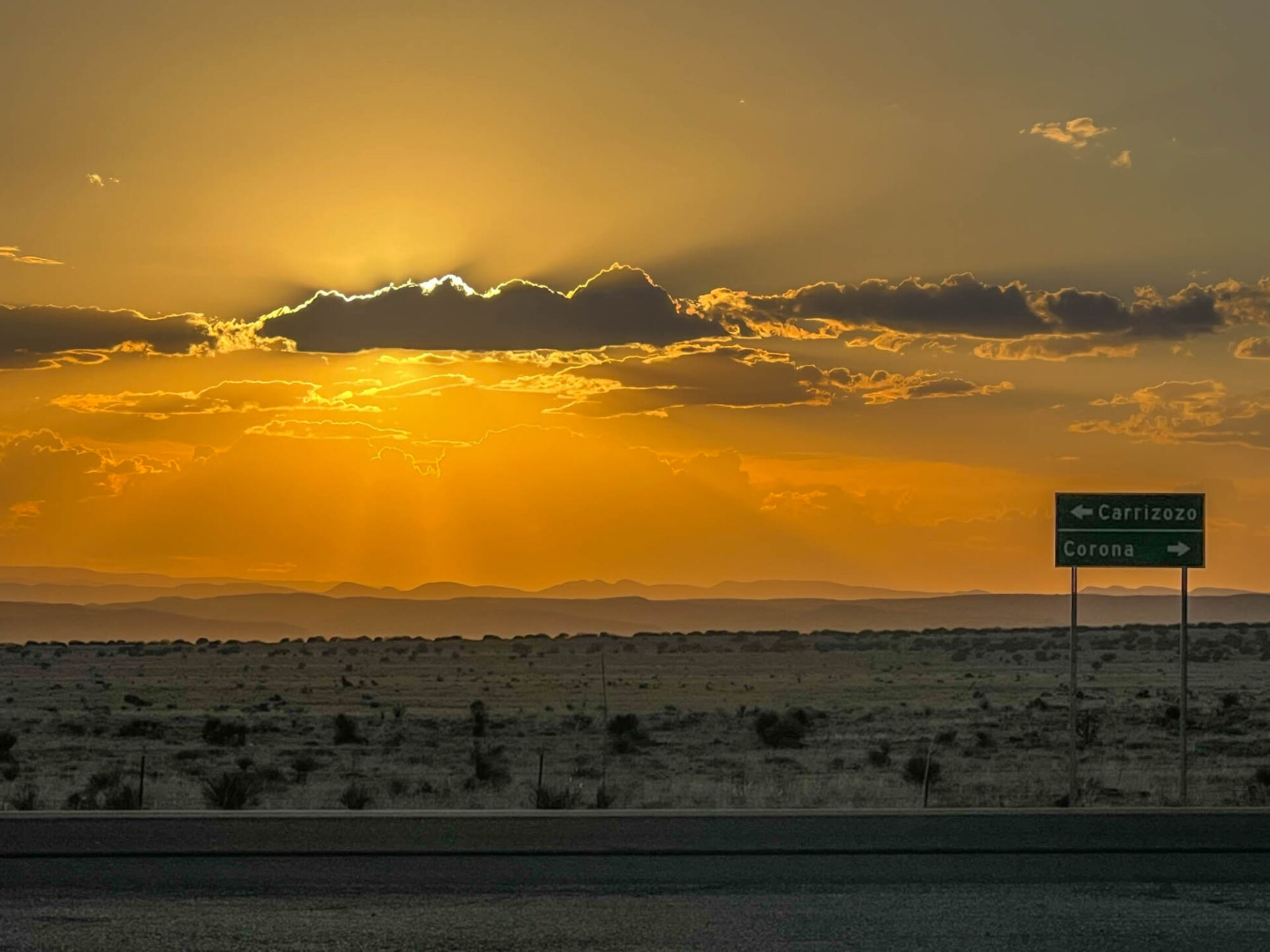

Painted burros, Photozozo, World Art Day 2026, and a restorative stop at the Valley of Fires Recreation Area.
Updated April 2026
The experience most people have in Carrizozo, New Mexico goes something like this. You slow down at the four-way stop where Highway 54 meets Highway 380, maybe fill up your gas tank, and then keep going.
To most people, Carrizozo is a pit stop, not a destination.
A local resident told me Carrizozo is “about two hours” from just about everywhere. Albuquerque? About two hours (2 hours 11 minutes). Santa Fe? About two hours (2 hours 35 minutes). Las Cruces? About two hours (2 hours 2 minutes). El Paso? About two hours (2 hours 15 minutes). You get the idea.
Another shop owner summed it up this way: Carrizozo isn’t in the middle of nowhere, it’s in the middle of everywhere.
But there are enough things to do here to justify more than a quick stop. For starters, you can visit the Valley of Fires Recreation Area for a quick hike to stretch your legs, wander through town looking for painted burros, or spend some time in places like the Tularosa Basin Gallery of Photography (aka Photozozo) and the Carrizozo Heritage Museum. If you’re looking for live music, there’s a solid concert series during the year. And if you want to experience a bit of everything in one visit, plan your trip around the annual World Art Day celebration that’s held each April.
Many visitors also pair Carrizozo with a trip to the nearby ghost town of White Oaks (population of 14 people). White Oaks hosts an annual Miner’s Day and is home to the “No Scum Allowed Saloon“, considered to be one of the top “cowboy bars” in the United States.
And that’s exactly what I did. I came out for White Oaks Miner’s Day and ended up spending the night in Carrizozo. I recently returned for World Art Day (April 2026) and it was a good time to visit, since just about everything was open and easy to see in one trip.
Here’s what I found after giving the town a little more time.

Table of Contents
Heads up: Some of the links in this post are affiliate links. If you buy something through them, it helps support this site, at no extra cost to you. I only recommend stuff I genuinely use and trust.
History of Carrizozo
Carrizozo is a town of about 850 people in south-central New Mexico. You already know how far away it is from everything.
The name “Carrizozo” comes from the Spanish word carrizo, a tall reed that once grew in abundance in the area and was used as cattle feed. To emphasize just how much of it there was, an extra “zo” was added at the end. Locals call it “Zozo” for short.
Before Carrizozo was founded in 1899, the area was mostly cattle ranches and a stagecoach route connecting to the mining town of White Oaks. That changed with the arrival of the railroad, when Carrizozo became a terminal town. The surrounding land opened up for homesteading, and people and businesses began shifting over from White Oaks. The Lincoln County seat eventually moved here as well.
But when I say growth, don’t picture a booming town. The population peaked at around 2,000 in 1920.
One of Carrizozo’s most notable residents was Albert Fall, a U.S. Senator who later became Secretary of the Interior. He owned the Three Rivers Ranch nearby and holds the distinction of being the first U.S. cabinet official sent to prison, thanks to his role in the Teapot Dome scandal.
If you’re not familiar with that one, here’s the short version.
Fall leased Navy petroleum reserves to private oil companies. The leases themselves were legal. The problem was that he received “loans” and “gifts” in return, totaling $404,000, which would be about $6.6 million today. He tried to keep it quiet, but raised suspicion when he suddenly paid off a decade of overdue ranch taxes.
A Senate investigation followed. Fall was convicted of accepting bribes in exchange for access to the reserves without competitive bidding. He served a year in prison, sold his ranch, and eventually moved to El Paso, where he lived until his death in 1944.
At the time, the Teapot Dome scandal was considered the gold standard for government corruption, often compared to Watergate. By today’s standards, it barely registers on the scale.
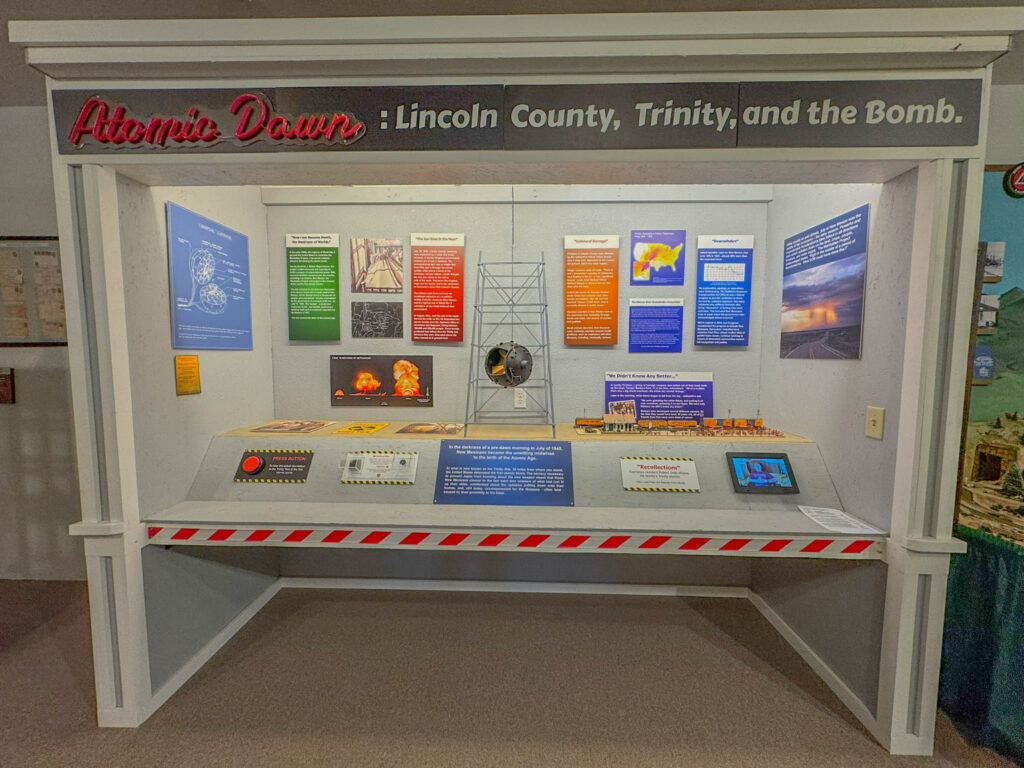
Another unfortunate bit of Carrizozo trivia is that it was the first major town located downwind from the infamous nuclear bomb test that took place at White Sands Missile Range’s Trinity Site on July 16, 1945. As a result, Carrizozo received some of the mushroom cloud fallout, contaminating the surrounding area, including one of Carrizozo’s water sources, Bonito Lake.
With the rise of automobiles in the 1950s, passenger rail declined and Carrizozo’s population followed. The last passenger train passed through town in 1968, and the population eventually settled to where it is today.
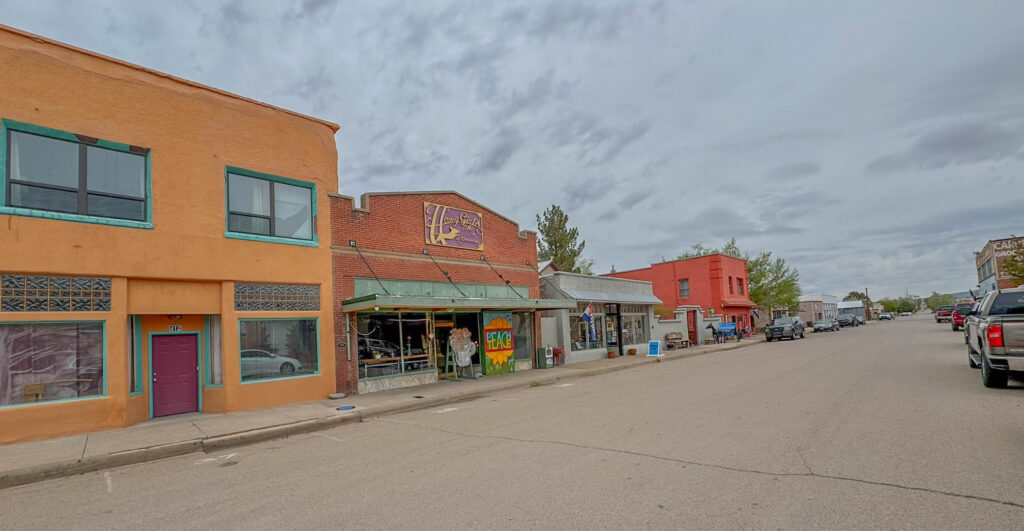
These days, ranching is still part of life here, but Carrizozo has also developed a reputation as an art town. About 70 artists live here, and you’ll find galleries, painted burros scattered around town, an annual World Art Day celebration each April, and a surprisingly good lineup of free concerts through Carrizozo Music.
Best things to do in Carrizozo
Carrizozo isn’t packed with attractions, but if you spend a little time here, you’ll find there’s more going on than you might expect.
Some of the main highlights include the Valley of Fires Recreation Area, the Tularosa Basin Gallery of Photography (Photozozo), and the annual World Art Day celebration. I’d add White Oaks to that list as well but, since it’s technically a different town, I’ll cover that in a separate post.
There’s also a local museum, a free concert series during the year, and enough going on here to make it worth more than a quick stop.
Here are a few ways to spend your time in Carrizozo.
Valley of Fires Recreation Area

If you drive west from Carrizozo, you’ll run into a 40-mile-long lava flow known as the Carrizozo Malpais. “Malpais” means “badlands” in Spanish, which is a pretty accurate description. The area is also home to Valley of Fires Recreation Area, named for the molten rock that once flowed across this landscape and hardened into the jagged black terrain you see today.
This wouldn’t have been a fun place to cross back in the day. As one brochure politely puts it, “The lava is like walking on broken glass and is unforgiving to skin and clothing if you slip and fall.”
The lava flow formed about 1,500 years ago, making it one of the youngest in the United States. If you want to experience it without testing your balance and pain tolerance, the Valley of Fires Recreation Area is the place to do it.
There’s a small day-use fee to enter. It was pretty minimal when I visited, but you’ll want to check the official site for current pricing.

Malpais Nature Trail
If you’re visiting Carrizozo, there’s a pretty good chance that you’ve either been driving for a few hours, or you will be driving for a few hours that day. This is a great place to get out and stretch your legs. I was short on time, so I decided to do an easy, one-mile loop known as the Malpais Nature Trail.

At first glance, it looks like a whole lot of nothing. Over time, I’ve learned that the Chihuahuan Desert tends to work that way. Give it a few minutes and things start to stand out.

There are 14 interpretive stations along the trail with information about the lava flow and the plants and animals that live here. You can also grab a brochure at the visitor center or download an electronic version ahead of time.


If you’re wondering what those large stalk-like things are in the photos, that would be sotol, also known as desert spoon (Dasylirion wheeleri). The spoon theme in the name is because indigenous people used to roast it and chew on the spoon-shaped ends, similar to what we do today with artichokes. The sotol plant can also be used to create an alcohol that’s also known as sotol, not to be confused with agave-based alcohols such as tequila and mezcal. Similar outcome, different plant.

In addition to the surprising variety of plants that you’ll see in the Chihuahuan Desert, you may also come across cottontail rabbits, mule deer, Barbary sheep, lizards, and snakes. For birders, you may see or hear owls (great horned owls and burrowing owls), cactus and rock wrens, gnatcatchers, sparrows, turkey vultures, hawks, and golden eagles. During my short visit, I only saw house finches, rock wrens, and a few lizards.

Camping
You may want to consider camping at the Valley of Fires Recreation Area. The campsites have some space between them, but not much vegetation, so there isn’t much privacy. Many of the sites also have covered picnic tables for shade, which you’ll likely appreciate in the summer, especially out here.
There are options ranging from basic tent sites to full-hookup RV spots.
Some of the sites can be reserved in advance through the Recreation.gov website, and others are first-come, first served. Check Recreation.gov for current availability and pricing.

Tularosa Basin Gallery of Photography (aka Photozozo)
If you want a break from the sun and something other than lava, this is worth a stop.
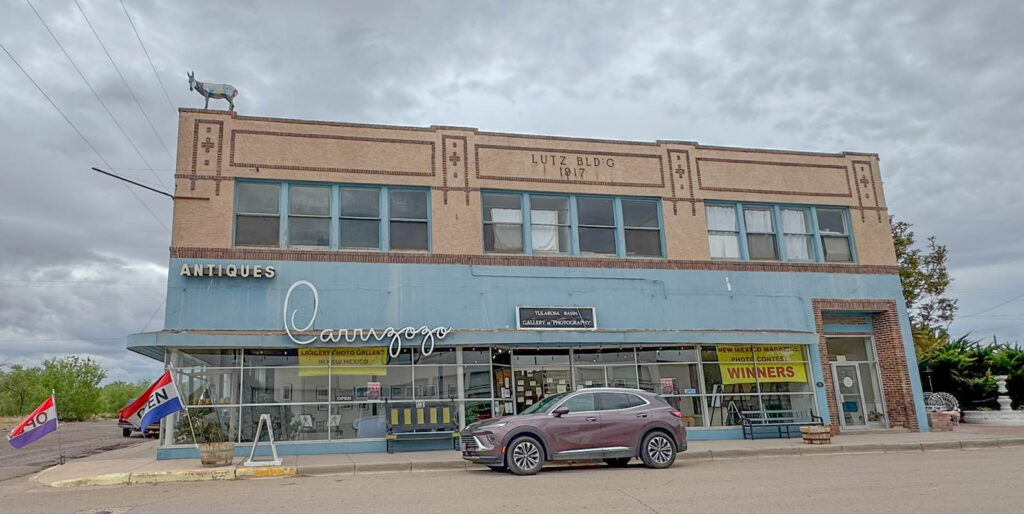
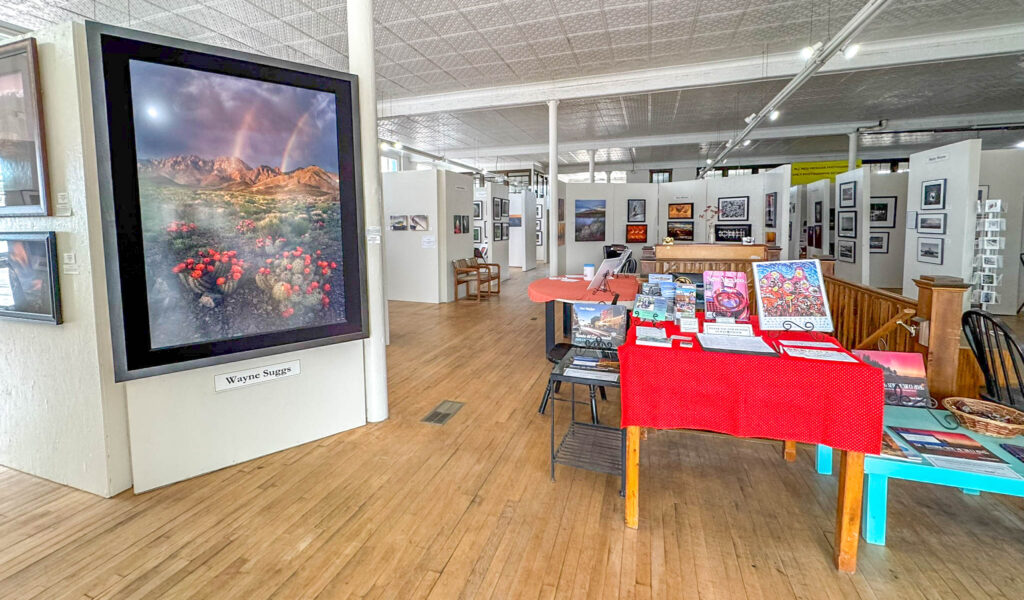
The Tularosa Basin Gallery of Photography, also known as Photozozo, features work from more than 40 photographers and around 1,000 images focused on New Mexico landscapes and culture, making it the largest photo gallery in the state. There’s plenty to look through if you’re into photography or just want a better feel for New Mexico.
I had the opportunity to speak with owners Joan and Warren Malkerson and hear how they ended up in Carrizozo.
They met while attending Colorado College and later married. Warren went on to Harvard Business School and a career as an executive with companies like General Mills, Pillsbury, PepsiCo, and L.L.Bean, while Joan developed her career as an accomplished artist.
In 2005, they decided they wanted to leave an art legacy and chose New Mexico. They initially settled in Ruidoso, but eventually made their way to Carrizozo, where they purchased six buildings and turned them into art studios. Along the way, they created artist-in-residence spaces, giving other artists a place to live and work, and were also behind the idea of the painted burros, more on that shortly.
Today, Photozozo attracts over 2,000 visitors each year, many of whom come to see the winning photos from the New Mexico Magazine Photo Awards. The gallery is typically open Friday through Sunday, but it’s worth checking the Photozozo website for current hours.
Carrizozo Rock & Roll Hall of Fame Museum
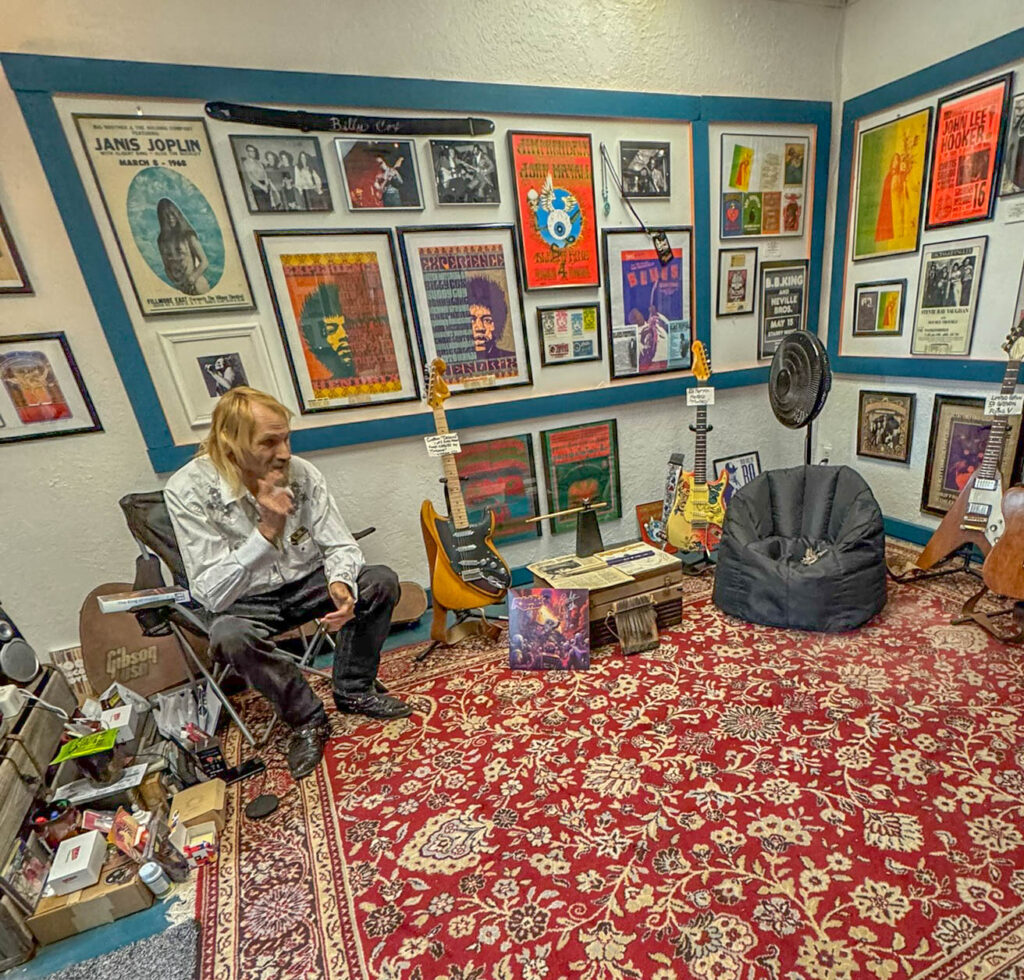
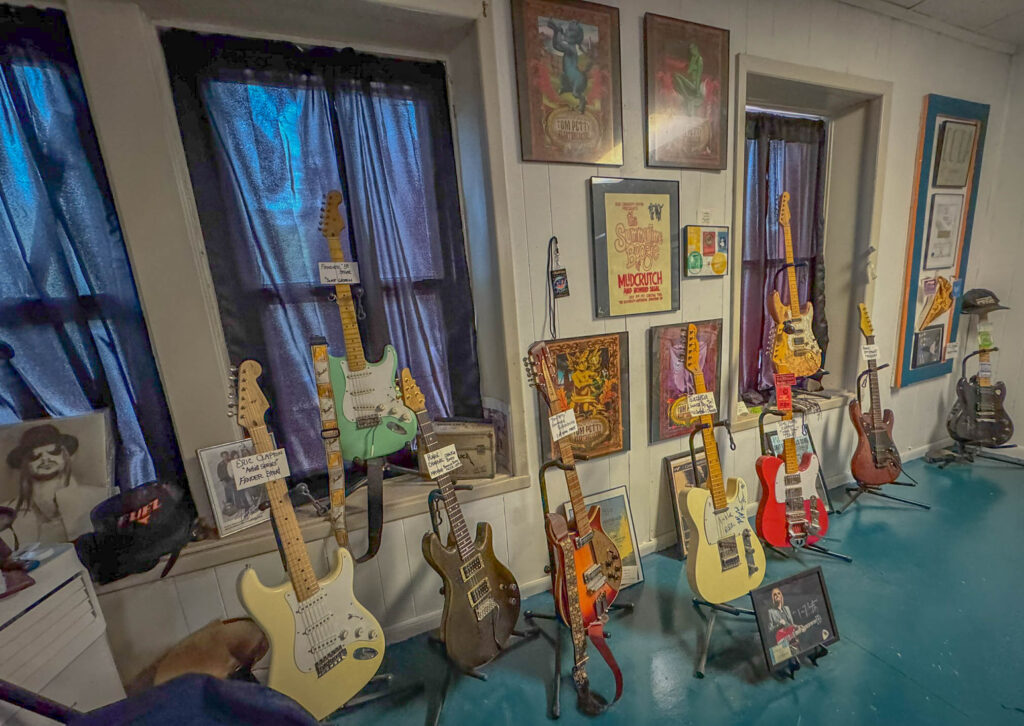
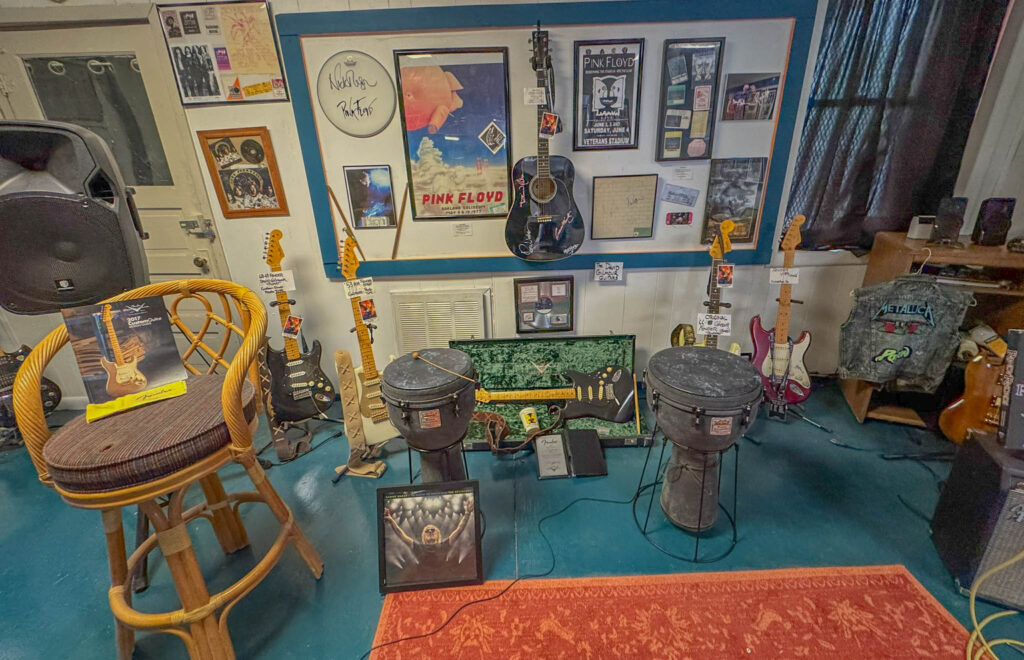
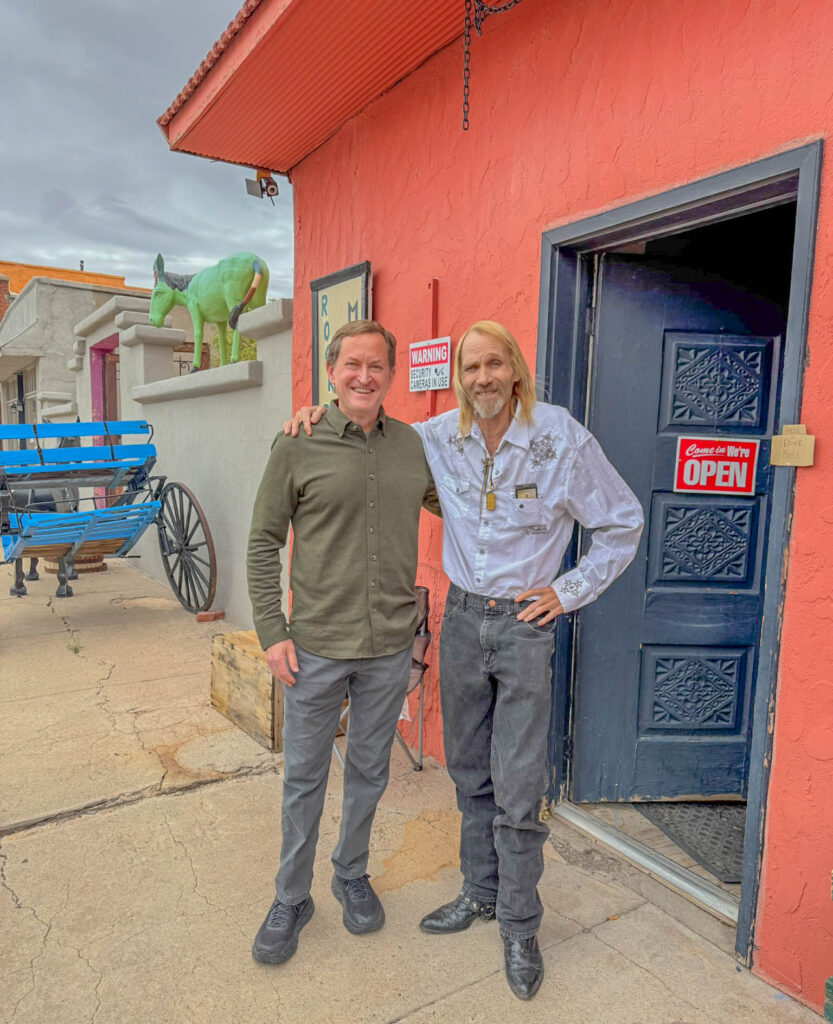
Another worthwhile stop is the Carrizozo Rock & Roll Hall of Fame Museum, featuring James E. Lane’s personal collection of more than 200 pieces of rock and roll memorabilia that he’s been collecting since the 1960s.
As the son of a preacher, James followed the predictable career path of becoming a rock band roadie for bands like Pink Floyd, along with stints as a hotshot firefighter, an actor, and a job in federal transportation. At some point, during train stops, he started pulling concert flyers off poles. A lot of those flyers ended up in the museum, and many of them are now considered collectibles in their own right.
James has plenty of stories, from growing up around people like Eddie Van Halen (a neighbor), to crossing paths with Stevie Nicks and Lindsey Buckingham in school, to sitting next to Tom Petty at a bar. Add in stories involving Pink Floyd, Alice Cooper, Jerry Garcia, Bob Weir, Sammy Hagar, and many others, and you get a sense of how deep his connections run.
Over the years, he’s also acquired signed guitars and photos from a surprisingly large number of artists. Even better, he’ll sometimes let visitors plug in and play guitars signed by some of these legends.
More than anything, James is just a great guy to talk to. Well worth a visit. The Carrizozo Rock & Roll Museum is usually open Friday through Sunday from noon to 4:00, but I’d confirm before heading out, just to be safe.
Carrizozo Heritage Museum
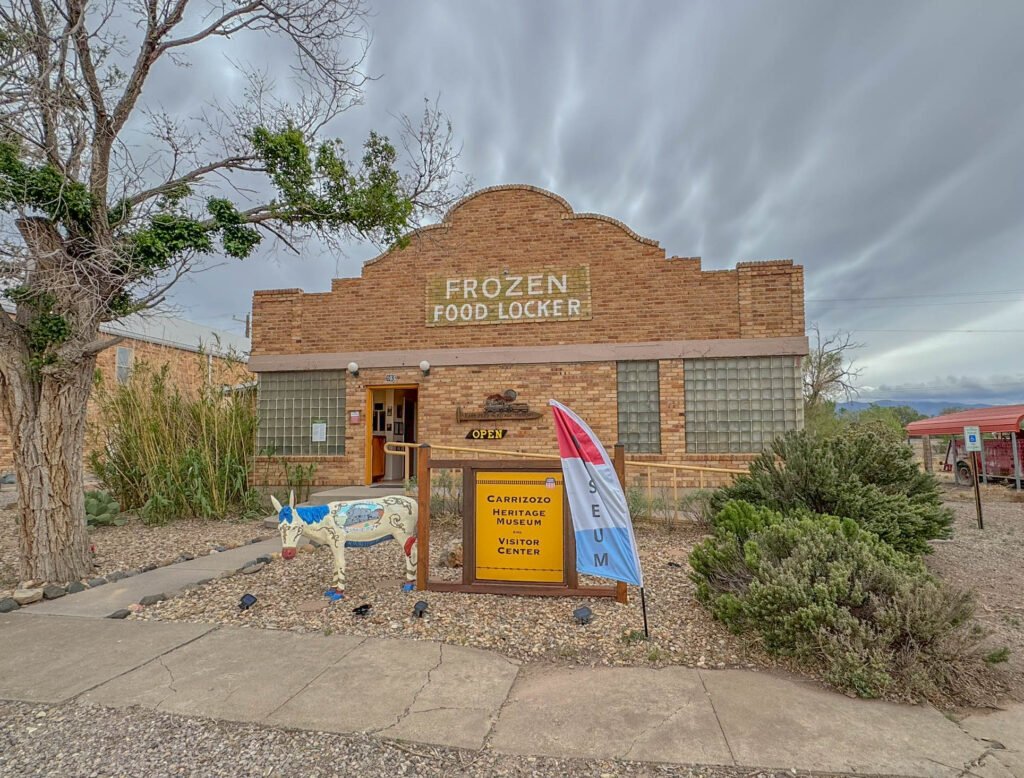
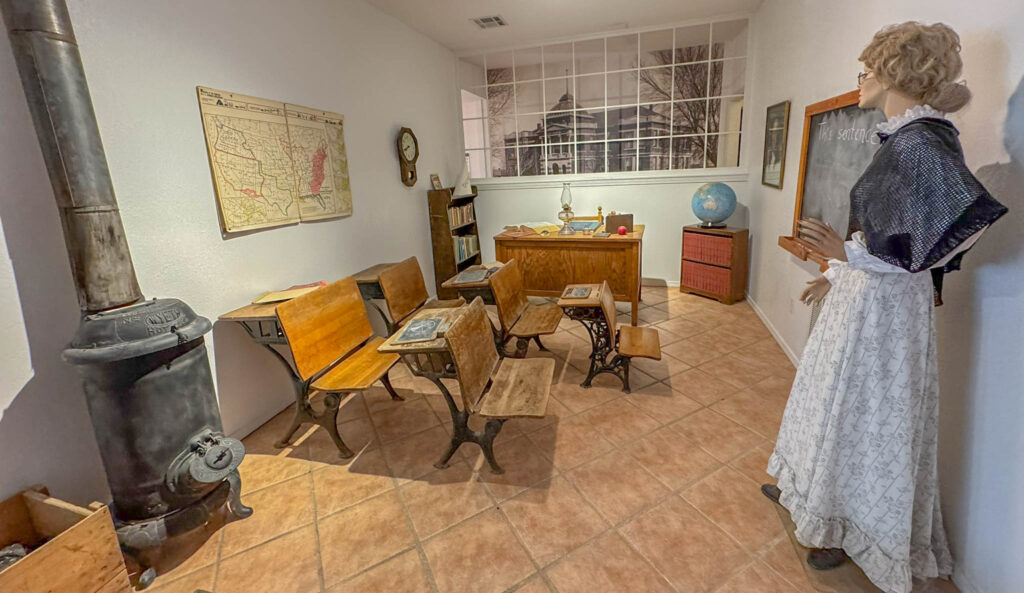
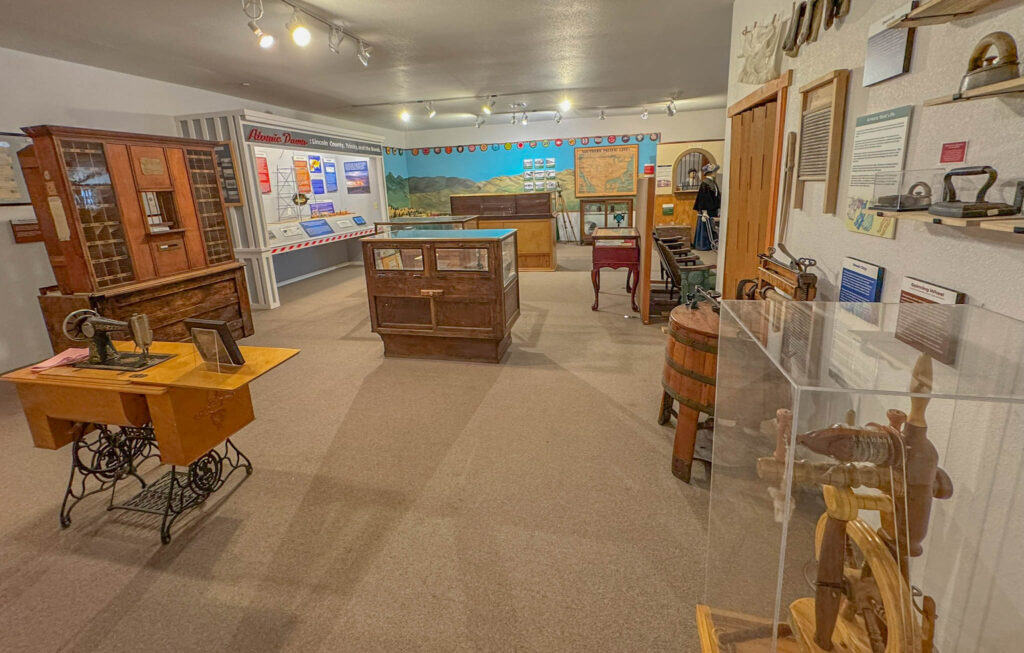
For a primer on the history of Carrizozo and the surrounding area, visit the Carrizozo Heritage Museum, which traces how the town developed over time.
The museum has been updated in recent years, with efforts to better reflect the full story of the region, including Native and Spanish influences alongside early settlers. You’ll find a mix of exhibits, from old tools and everyday items to displays on the Trinity Site and how it shaped the area. It’s not a large museum, but it’s worth a stop if you’re interested in the area’s history.
The Carrizozo Heritage Museum runs a seasonal schedule, typically open Thursday through Saturday from 10:00 to 3:00 and Sunday from noon to 4:00, from mid-March through mid-October.
World Art Day Carrizozo
World Art Day is celebrated each year on April 15 in honor of Leonardo da Vinci’s birthday. In Carrizozo, they turn it into something a little more interesting than you might expect from a town of 1,200 people.
This year (2026), the celebration is happening on Saturday, April 11, which makes it easy to plan a weekend around it if you’re within driving distance. And in New Mexico, that usually means about two hours.
The event itself is a mix of local art, music, and whatever else the town decides to add to the lineup. Galleries are open, artists are around, and there’s usually something going on as you walk through town. It’s not a big, polished festival, and that’s part of the appeal.
If you’ve ever driven through Carrizozo and wondered why there are so many galleries in such a small place, this is probably the best time to stop and find out. If you want the latest details, you can check the Carrizozo World Art Day page or their Facebook page before you go.
Carrizozo Music Concert Series
Carrizozo is home to a free music concert series put on by Carrizozo Music, a non-profit that brings live performances to the area throughout the year.
The lineup varies, but it typically includes a mix of local favorites and visiting musicians across different styles, which is not something you necessarily expect in a town this size.
If you’re planning a visit, it’s worth checking the Carrizozo Music website to see if anything lines up with your trip.
The Painted Burros of Carrizozo / Malkerson Gallery 408
Ok, it’s finally time to talk about the painted burros of Carrizozo.
In 2006, Joan and Warren Malkerson decided to create a “herd” of aluminum burros. Burros used to be common in the area, so the idea wasn’t completely out of nowhere. Still, I would’ve enjoyed hearing the conversation that led up to it. It turned out to be a great decision.
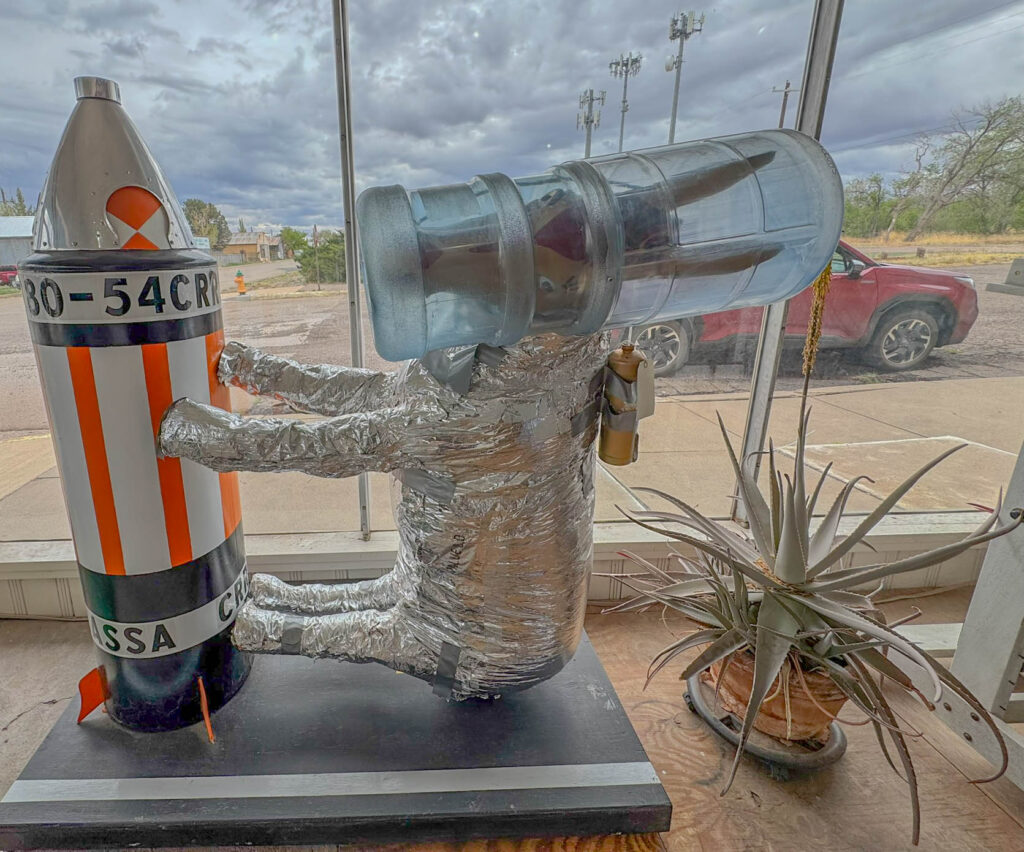
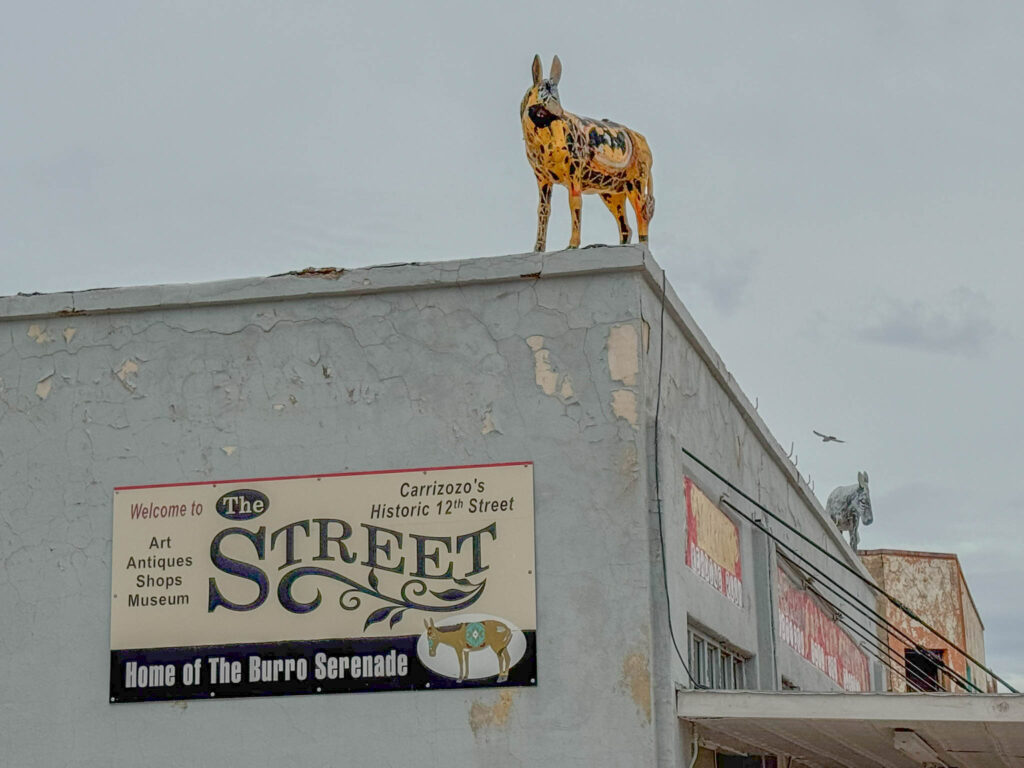
The Malkersons encouraged local artists to paint them and place them around town, along roads, on buildings, even on rooftops.
More than 75 local artists have taken part, along with contributions from local schoolchildren. Over time, they’ve become one of the more recognizable features of Carrizozo.
Travelers passing through started noticing them, and asking if they were for sale. As a result, the Malkersons have now sold more than 400 burros, typically priced somewhere in the $500 to $1,300 range.
I believe there were roughly 28 scattered throughout town when I visited. It’s kind of like an easy version of Where’s Waldo, although finding all of them might take a little effort.
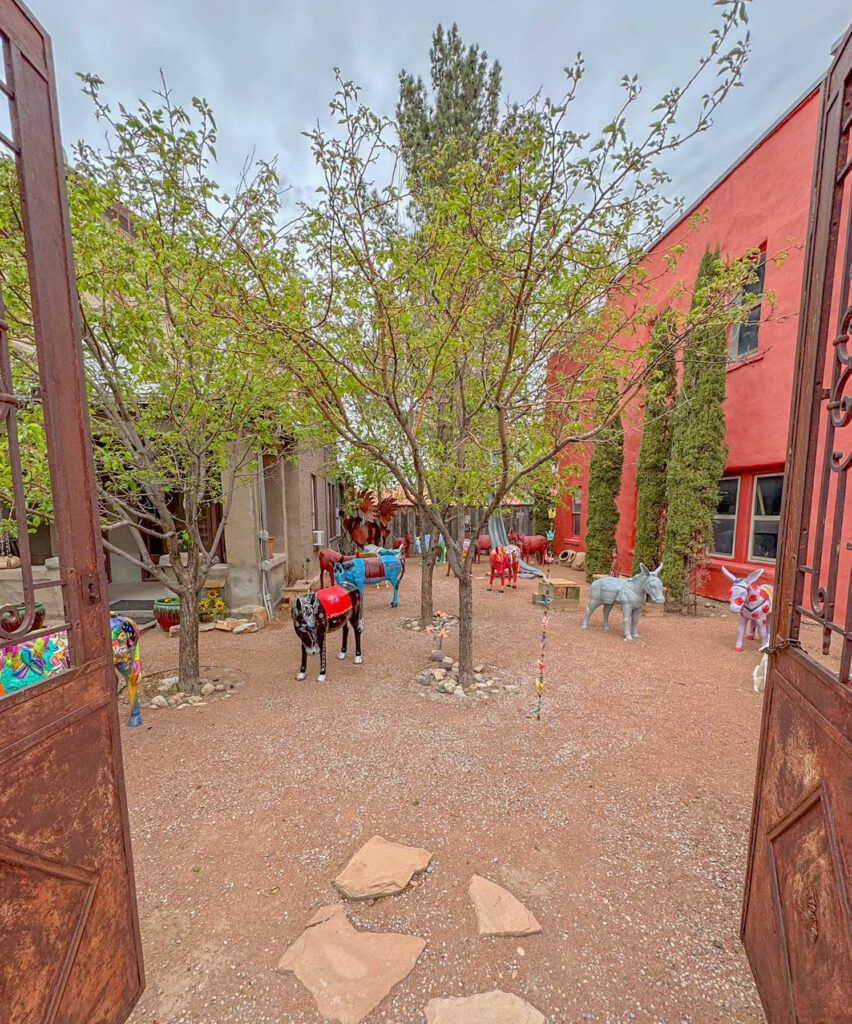
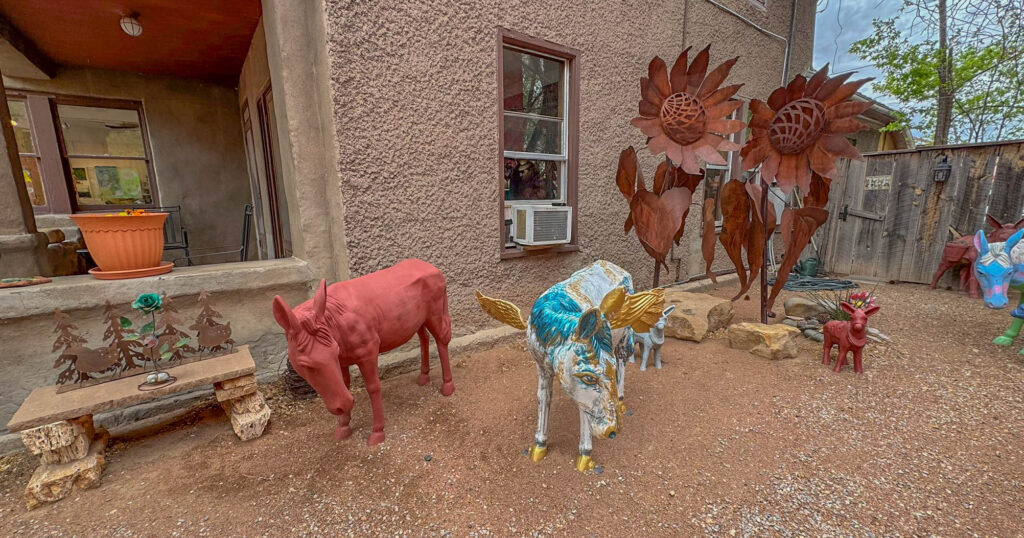
The best place to see the burros is the source of it all, the Malkerson Gallery 408. The gallery is set inside a restored 1929 home, with different rooms featuring a mix of local art, from paintings and ceramics to jewelry and sculpture. Out back, there’s a sculpture garden with several of the burros, along with a few larger pieces that are hard to miss.
Malkerson Gallery 408 is typically open Friday through Sunday, though hours may vary.
Four Winds Motel & RV Park
While talking with the owner (Mital) of the Four Winds Motel & RV Park, I mentioned something about the painted burro standing in front of his motel. He pulled out his phone and showed me a security video from the motel.
In the video, everything looks normal at first. Then a tire suddenly rolls into the frame, bouncing down the road at a pretty good speed, and slams directly into the burro, knocking it over. No truck, no explanation. Just a rogue tire doing damage.
We had a good laugh over that random video. Thankfully, the burro wasn’t injured.

Later that day, I had a long conversation with Mital and asked how he ended up in Carrizozo. Around 2010, he came to the U.S. from Gujarat, India, with $150 in his pocket, no English, and a plan to get into the hotel business.
He eventually ended up in Wichita, Kansas where he worked as a hotel manager. Two years later, Mital learned about an opportunity to buy and manage his own motel in Carrizozo, New Mexico.
After the purchase, he invested time and money upgrading the motel into clean, modern, and comfortable rooms. At the time of my visit, Mital was running the motel by himself, handling everything from cleaning to reception. It’s the kind of schedule that starts early and ends late. Talking with him, it’s clear he’s built this place through a lot of hard work.

📚 Want to learn more?
If your stop in Carrizozo sparks a deeper interest in New Mexico art, photography, or the surrounding landscapes, these books are a good place to start:
The Art of New Mexico: How the West Is One by Joseph Traugott. A solid overview of how New Mexico became one of the more important art hubs in the country, with a focus on the artists and movements that shaped places like Santa Fe and smaller communities like Carrizozo.
New Mexico: A Photographic Tribute by Lynn Saville. A visual look at the state’s landscapes, light, and character. A good complement to a visit to places like the Tularosa Basin Gallery of Photography.
Historic Carrizozo: Where the Rail Met the Trail by Elizabeth Hobbs. A focused look at how Carrizozo grew as a railroad town and what shaped it over time.
The Teapot Dome Scandal: How Big Oil Bought the Harding White House and Tried to Steal the Country by Laton McCartney. A clear, engaging account of the scandal involving Albert Fall, a former Secretary of the Interior who once owned land near Carrizozo. It adds context to one of the more surprising pieces of the town’s history.
Leonardo da Vinci by Walter Isaacson. Slightly off topic, but a fitting choice if you’re visiting around World Art Day, which honors Leonardo da Vinci’s birthday. It’s a good reminder of why we celebrate art in the first place.
Thought for the Week
During my conversation with Mital, he mentioned a Hindu quote about focusing on the goal instead of the obstacle. I wasn’t able to track down the exact wording, but the idea stuck with me.
This version from Robert Brault, a writer known for short, thoughtful quotes, gets at a similar point:
“We’re kept from our goal not by obstacles, but by a clear path to a lesser goal.”
— Robert Brault, based on his interpretation of the “Bhagavad Gita”
Thanks for reading and happy travels!
Mark (The New Mexico Travel Guy)
Mark Aspelin, The New Mexico Travel Guy (www.newmexicotravelguy.com), is a travel writer, conservation biologist, project manager, and author of two books. He’s visited over 100 countries and all 50 U.S. states, just enough to land in the Travelers’ Century Club and make choosing a favorite place nearly impossible. He’s currently on a questionable mission to visit every town in New Mexico (there are over 500) and write a story about each one, with plans to wrap it up sometime before his early to mid 100s. Mark balances his writing with conservation and project work from his home base in the East Mountains near Albuquerque, New Mexico.
Loved your descriptions. When last in zozo, we met a person who told us all about how the town was used in a film. Can’t remember the name but it was about the last Bible. Loved the burros; the rv park was still primitive but the gallery and arittss were amazing. Thank you for happy memories
Thanks Joanne! I’m glad this brought back some good memories for you. Zozo has a way of sticking with people… a little rough around the edges, but full of character, creativity, and some unforgettable burros. Thanks for taking the time to share this.
In 2010, it was The Book of Eli starring Denzel Washington.
Thank you Mark for your Carrizozo post, well written and photographed.
Thank you, Ray, much appreciated! Glad you enjoyed it.