
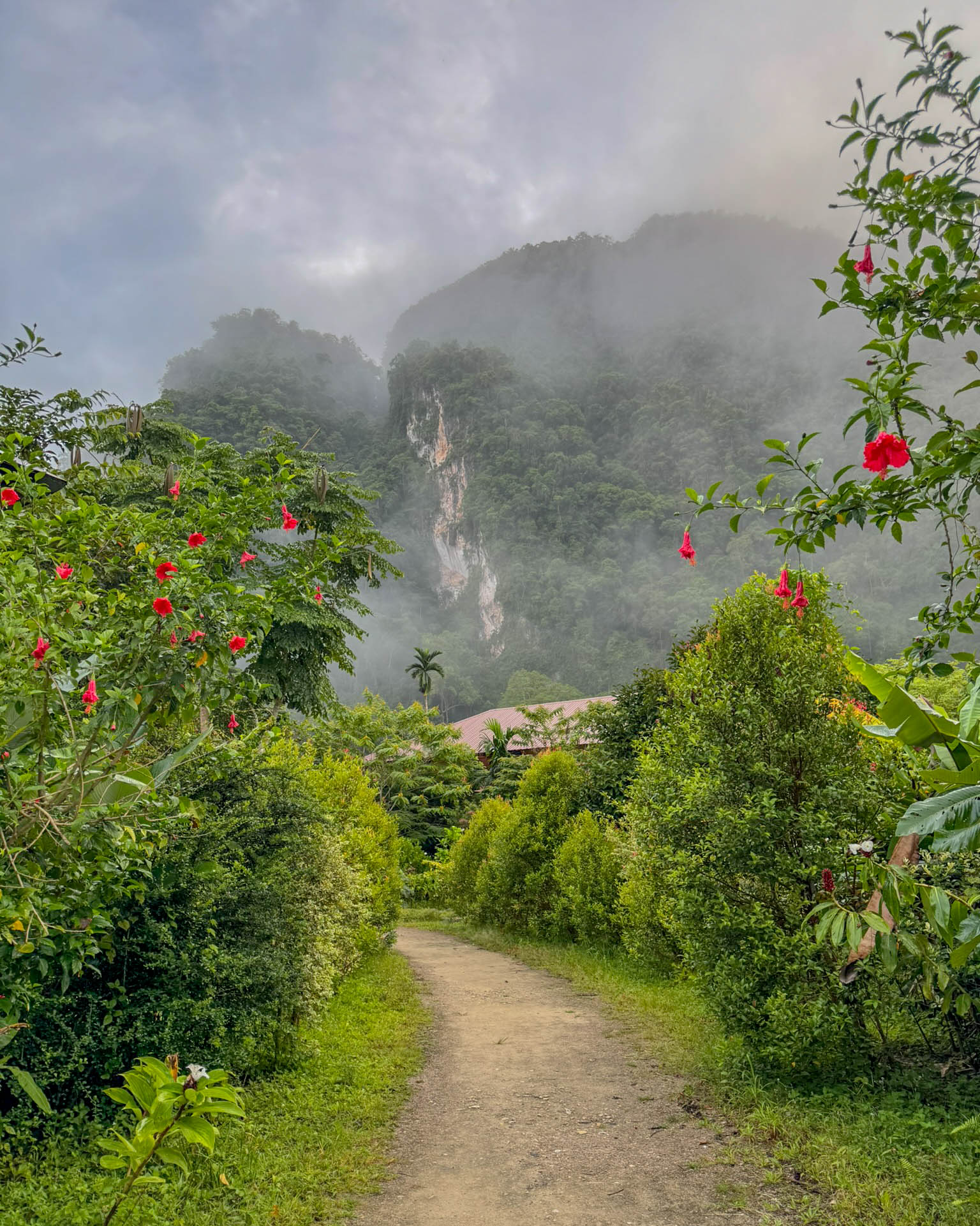

Night herping, sunrise birding, an unforgettable elephant encounter, and one very welcome shower.
Khao Sok National Park was one of the destinations we’d built our Thailand trip around. My son and I came for three reasons: rainforest herping after dark, birding with a local guide, and an elephant experience at an ethical sanctuary. We originally planned to spend two nights there, but after looking at the rest of our itinerary, we decided to trim it to one night so we could spend an extra day in Singapore later in the trip.
That left us with just 24 hours to experience one of Thailand’s most remarkable national parks. Somehow, we managed to pack in four hours of night herping, four hours of birding the following morning, and an unforgettable elephant encounter before heading to Rawai, Phuket.
It was a whirlwind visit, but one we won’t soon forget.
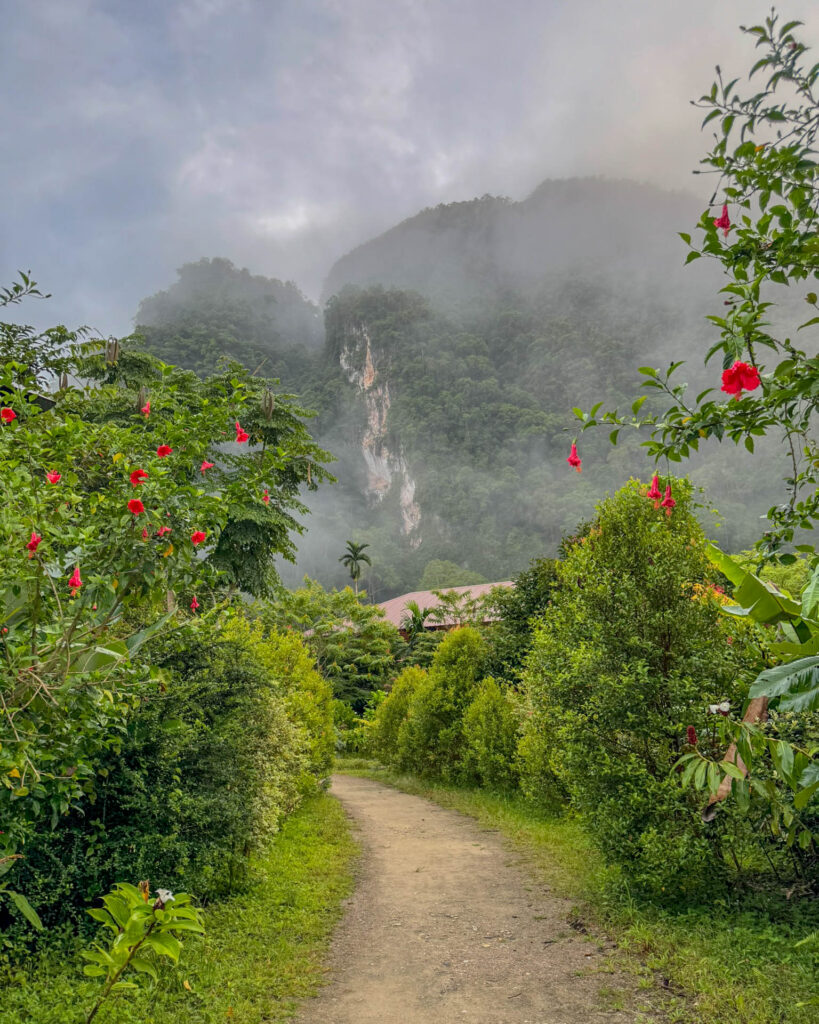
Table of Contents
Heads up: Some of the links in this post are affiliate links. If you buy something through them, it helps support this site, at no extra cost to you. I only recommend stuff I genuinely use and trust.
Into Thailand’s Oldest Rainforest
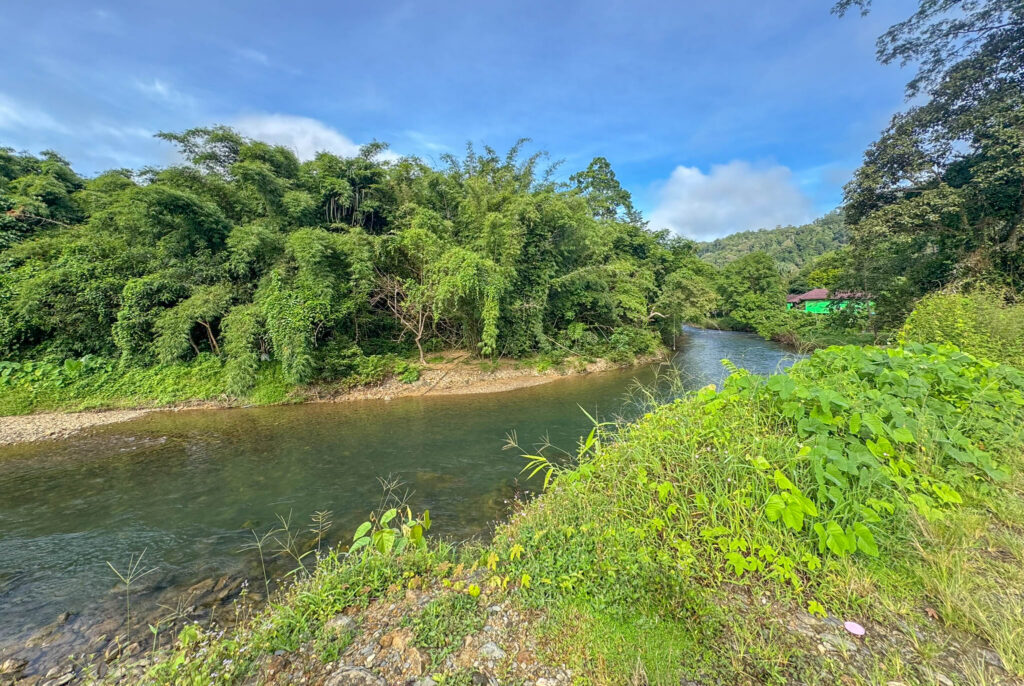
After flying from Khon Kaen to Phuket via Bangkok, we still had another two-and-a-half-hour drive into the rainforest. As the miles passed, the scenery gradually changed. Rubber plantations gave way to dense jungle, and steep limestone cliffs began rising out of the trees. It didn’t take long before it was obvious we weren’t in the beach resorts of Phuket.
Our home for the night was at Monkey Mansion, a small lodge just outside Khao Sok National Park. It’s owned by a German named Bastian, who’s an avid herper, and many of the staff members are from Myanmar. Monkey Mansion also organized all three of our activities in Khao Sok: the night herping, morning birding, and elephant sanctuary visit. Once we told them we’d shortened our stay from two nights to one, they did everything they could to help us pull it off, even if they may have been quietly questioning our sanity.
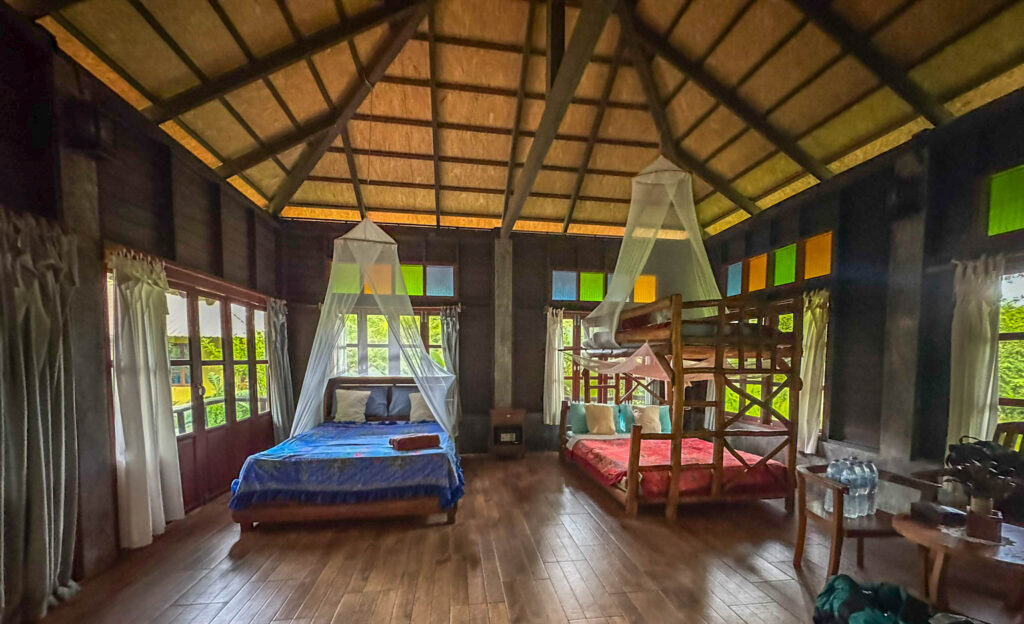
We stayed in what the lodge called a “family jungalow,” essentially a rustic cabin with two beds, mosquito nets, a hot shower (which honestly surprised us), and no air conditioning (which didn’t surprise us). The walls were made of wooden shutters with enough gaps to convince us that leaving the lights off at night was probably the wiser strategy. Fortunately, the local insects seemed to respect our decision. Aside from a small gang of large Nicobar carpenter ants that briefly declared our toilet to be strategic territory, we didn’t have many unexpected visitors. Our no-lights-at-night policy no doubt helped.
The food at the lodge was tasty, and I somehow managed to order Pad Prik Gaeng, a spicy Thai stir-fry made with red curry paste, three or four times during our stay. When I find something I like on a menu, my willingness to experiment drops off dramatically on days spent in the field.
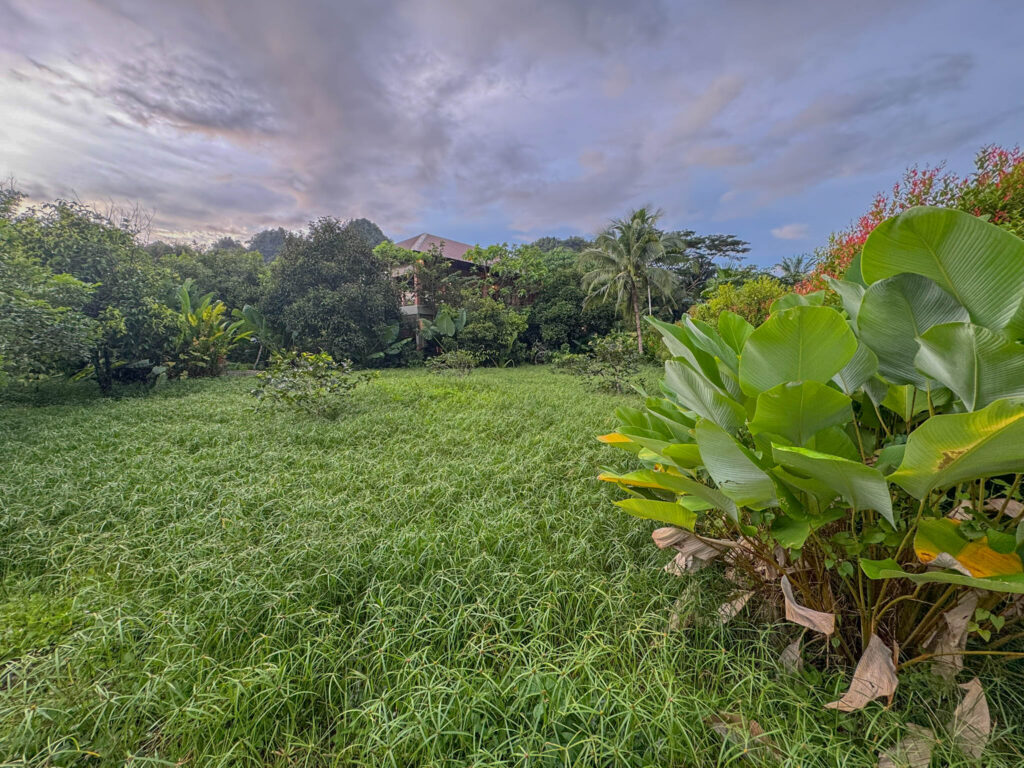
Before dinner, we wandered around the property to stretch our legs. A bat zipped overhead, a few unfamiliar birds called from the forest, and the rainforest felt peaceful enough, although it was pretty obvious there were plenty of things watching us that we hadn’t noticed yet.
At 6:30 that evening, it was time to find out what some of those things were.

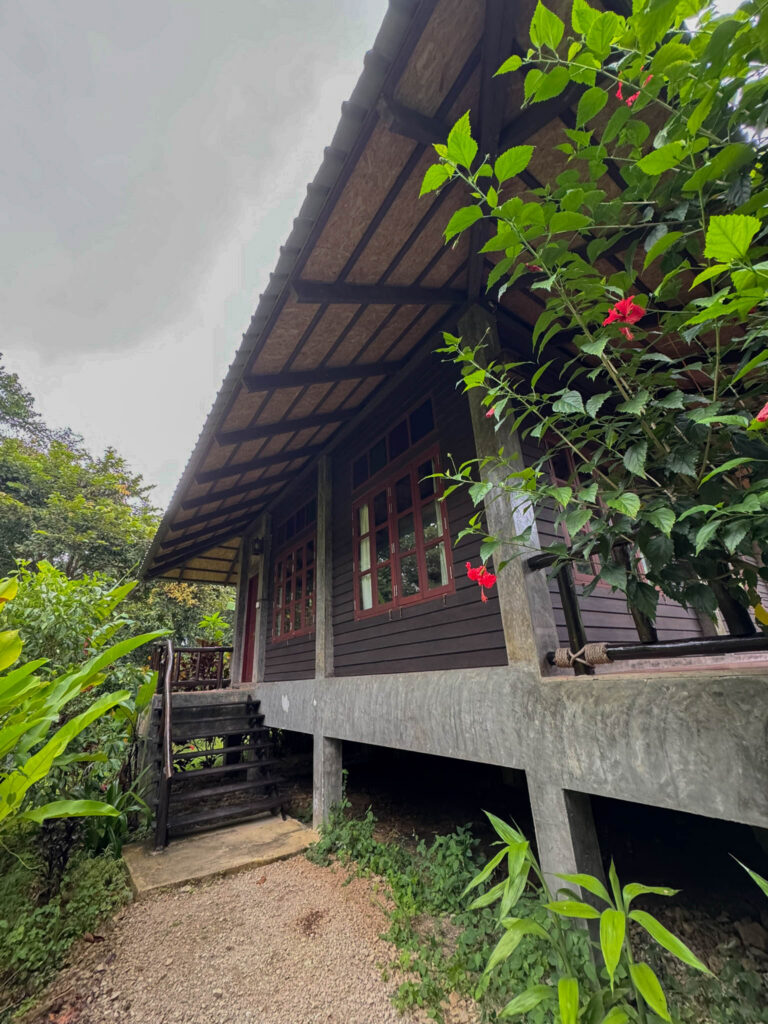
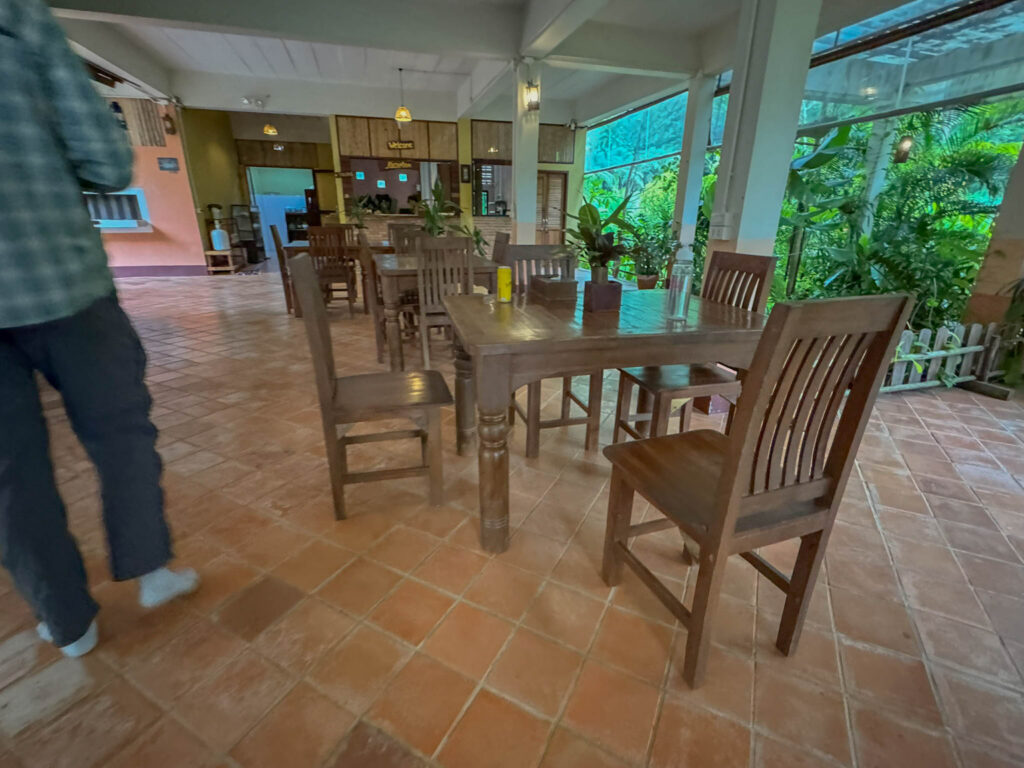
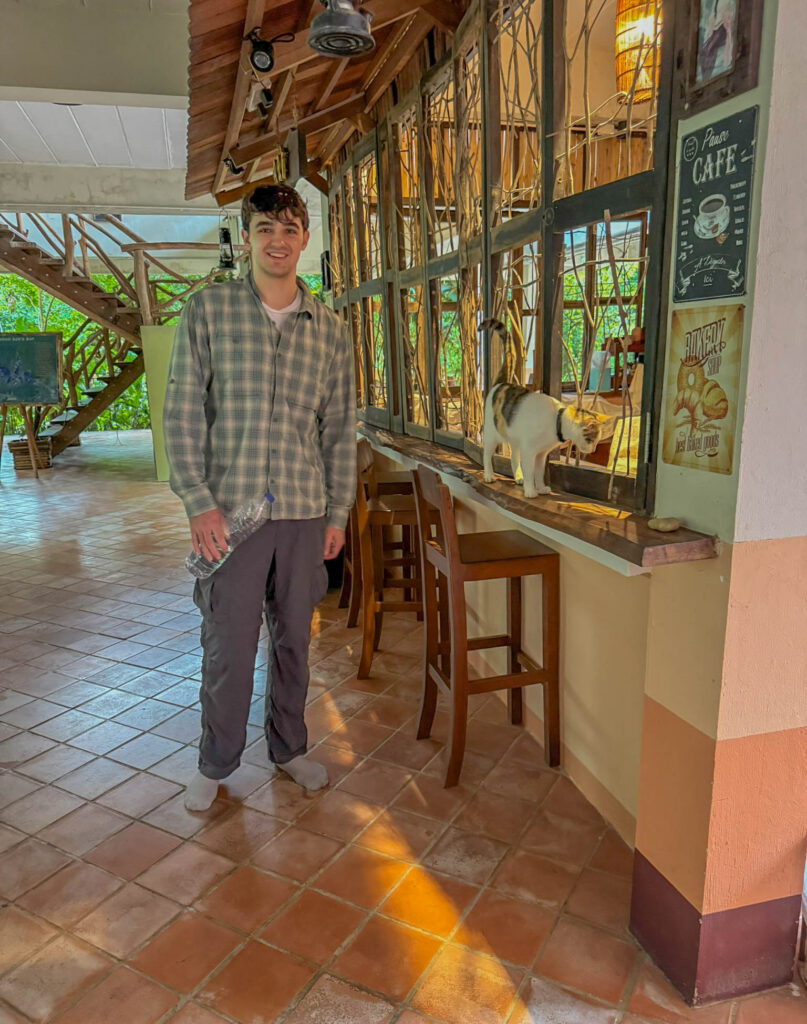
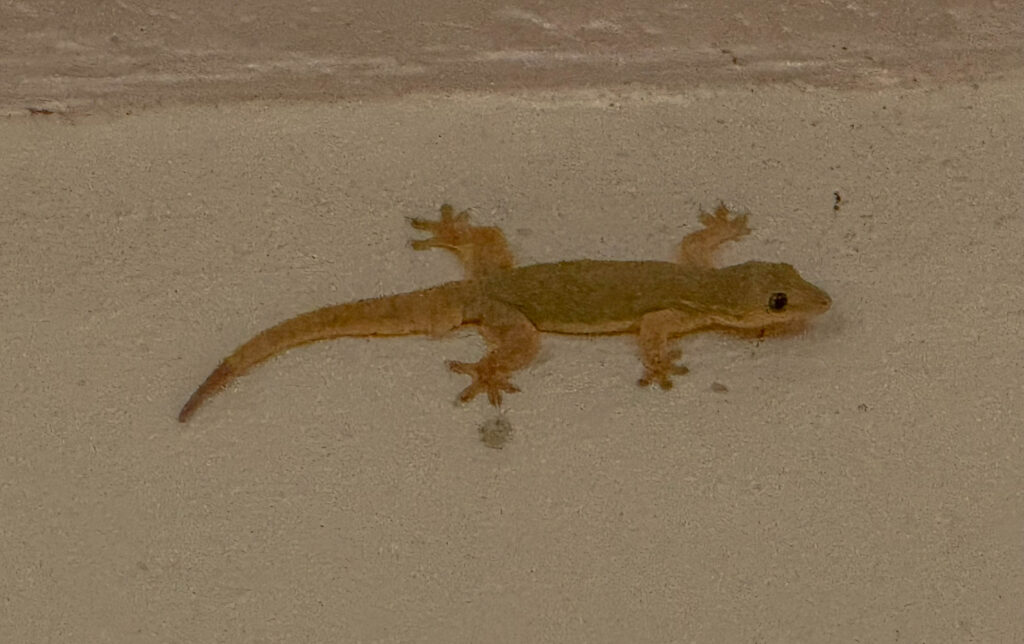
A Brief History of Khao Sok National Park
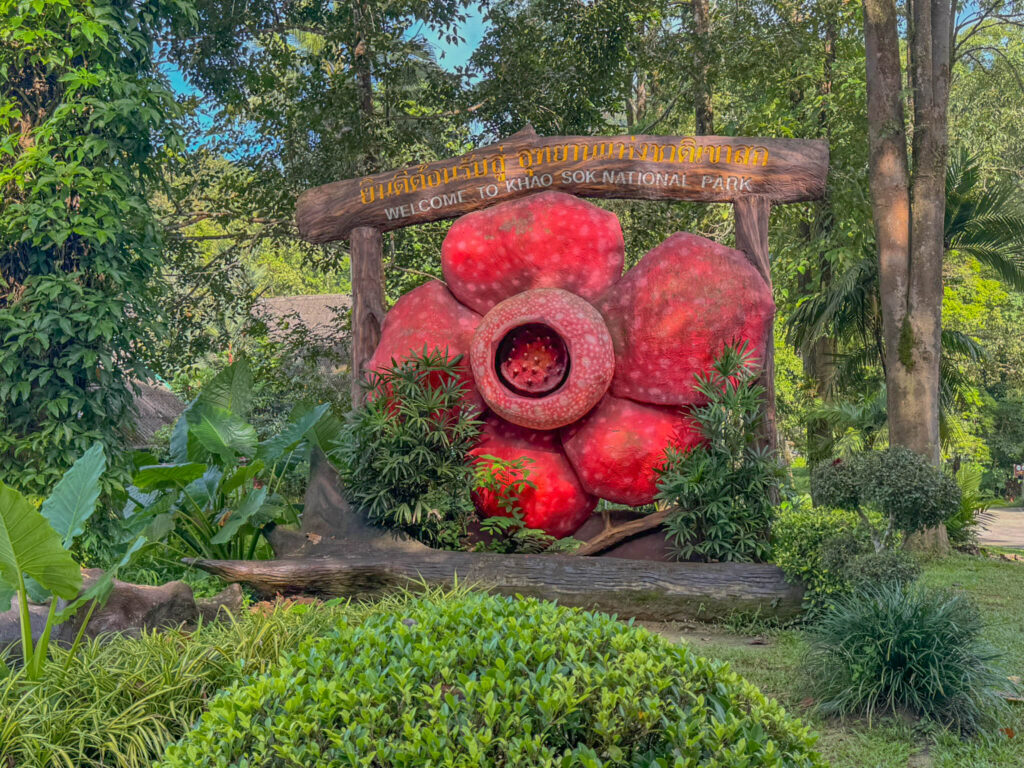
Khao Sok National Park was established in 1980 and protects more than 280 square miles (725 square kilometers) of rainforest in southern Thailand. Khao Sok is often described as one of the oldest tropical rainforests on Earth, and some sources claim it’s even older than the Amazon. Whether it’s actually the oldest depends on which scientist you ask, but it’s certainly been around long enough to make me feel like a newcomer.
Ironically, the rainforest may owe some of its survival to a communist insurgency. During the 1970s, communist fighters used the rugged terrain as a base of operations, which had the unintended effect of keeping loggers, miners, and hunters out of much of the forest. The park was officially established in 1980, helping preserve what remained.
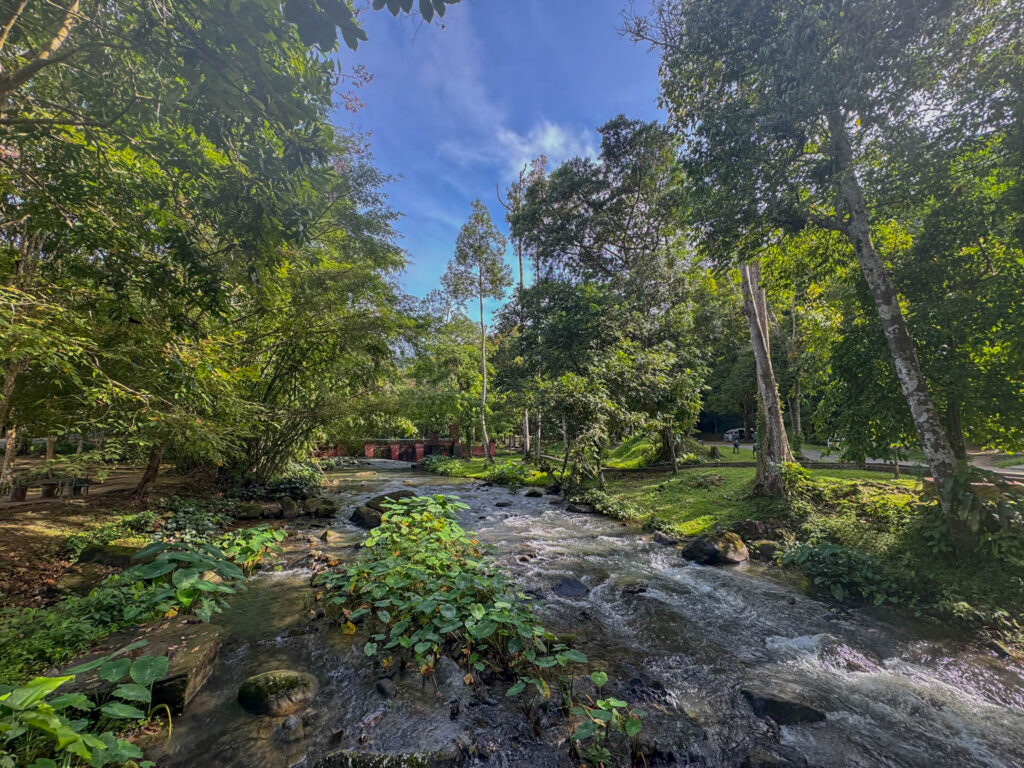
The park is best known for its towering limestone karst cliffs, caves, waterfalls, and wildlife. More than 300 bird species and nearly 100 reptile species have been recorded here, along with Asian elephants, Malayan tapirs, sun bears, gaurs (massive wild cattle), and clouded leopards.
Despite feeling remote, Khao Sok is only a couple of hours from Phuket, making it possible to go from crowded beaches to one of the world’s oldest rainforests in a single afternoon.
Looking for Snakes After Dark
Note: If you’re not a fan of snakes, you may want to skip ahead to the next section.
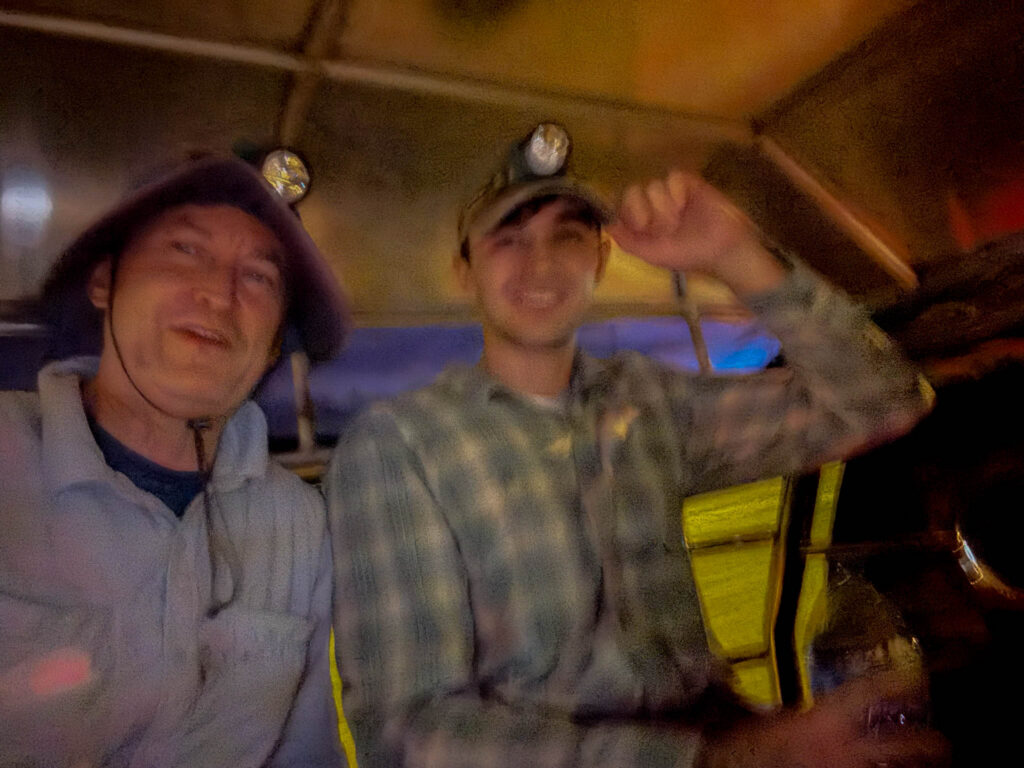
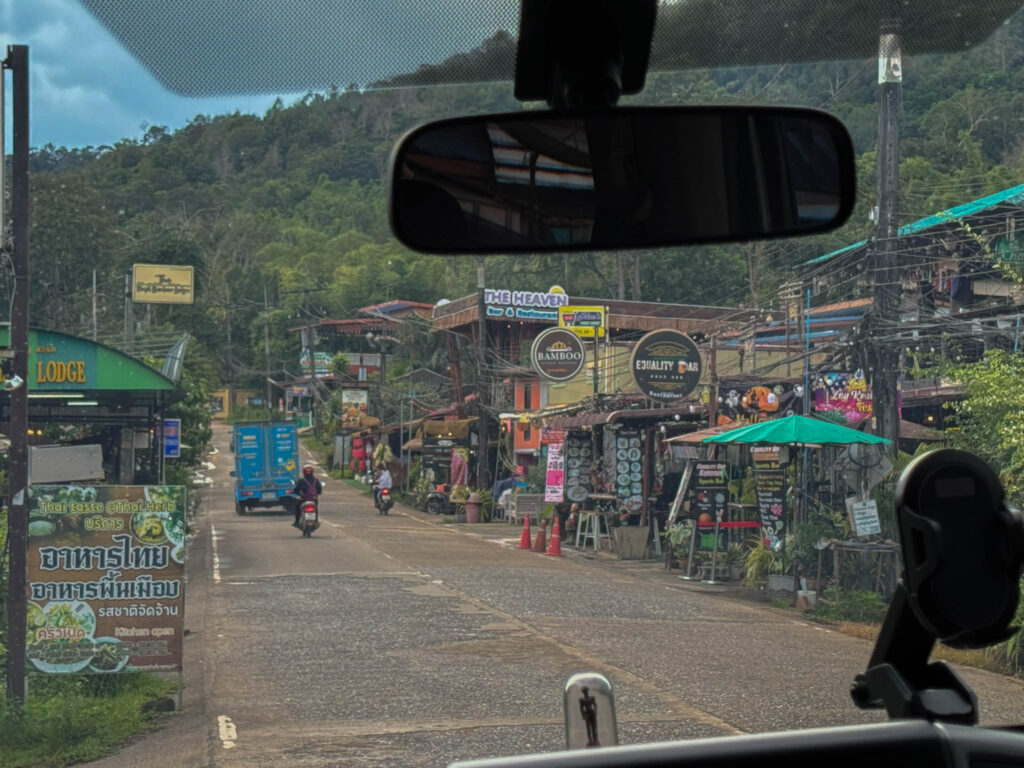
Our herping tour began at 6:30 that evening. We climbed into the back of an open pickup truck with a roof overhead but no doors or sides, then bounced down the dirt road toward Khao Sok. Once we reached pavement, it was another ten minutes through the small town, passing outdoor restaurants, cafés, and shops before arriving at the entrance to the national park.
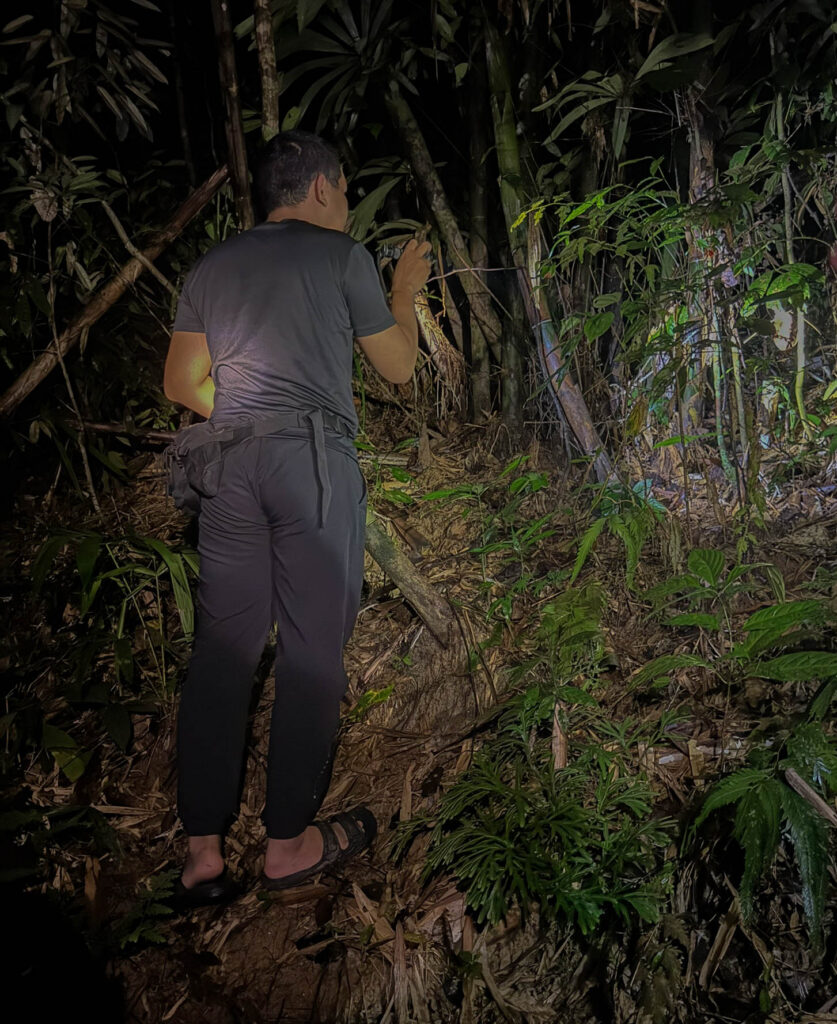
After paying the entrance fee, we met our guide and headed down one of the park trails. The first thing I noticed was that he was wearing sandals. My son and I, meanwhile, had shown up in snake gaiters and rubber boots based on our previous jungle adventures. The gaiters turned out to be unnecessary, but you never know. I’d rather pack them and not need them than spend the evening wishing I’d brought them. The rubber boots, however, turned out to be one of the better packing decisions we made.
Some sections of the trail were wide and easy to follow, while others narrowed into muddy paths where we picked our way through standing water, hoping not to discover anything interesting with our boots before our guide found it with his flashlight.
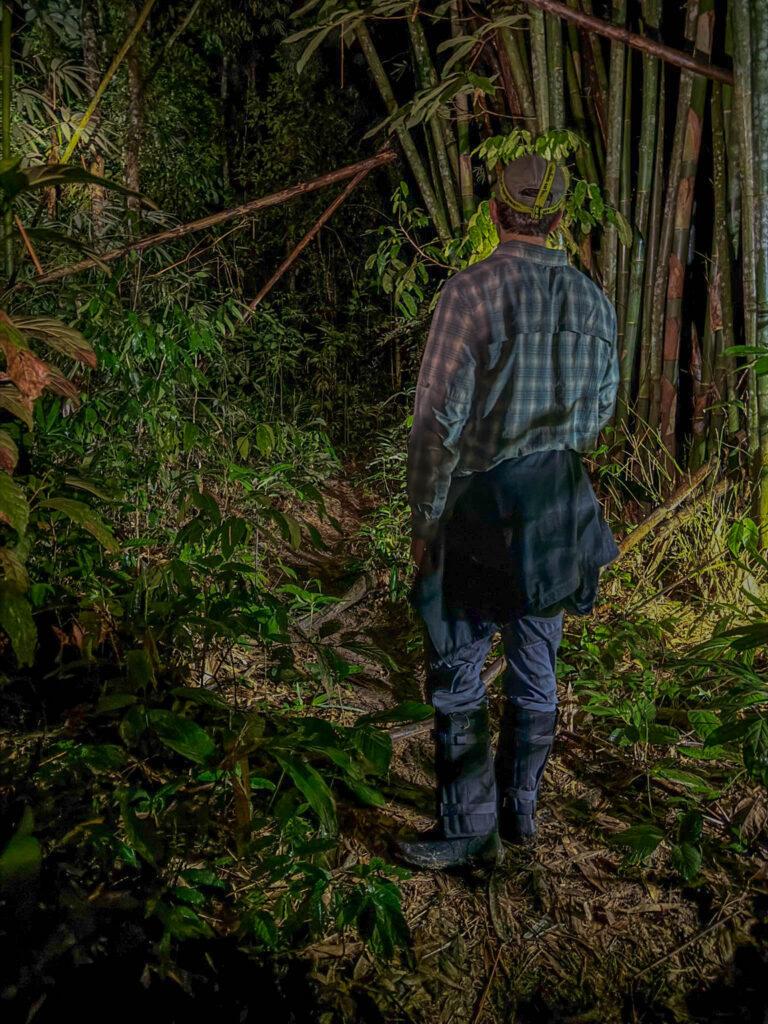
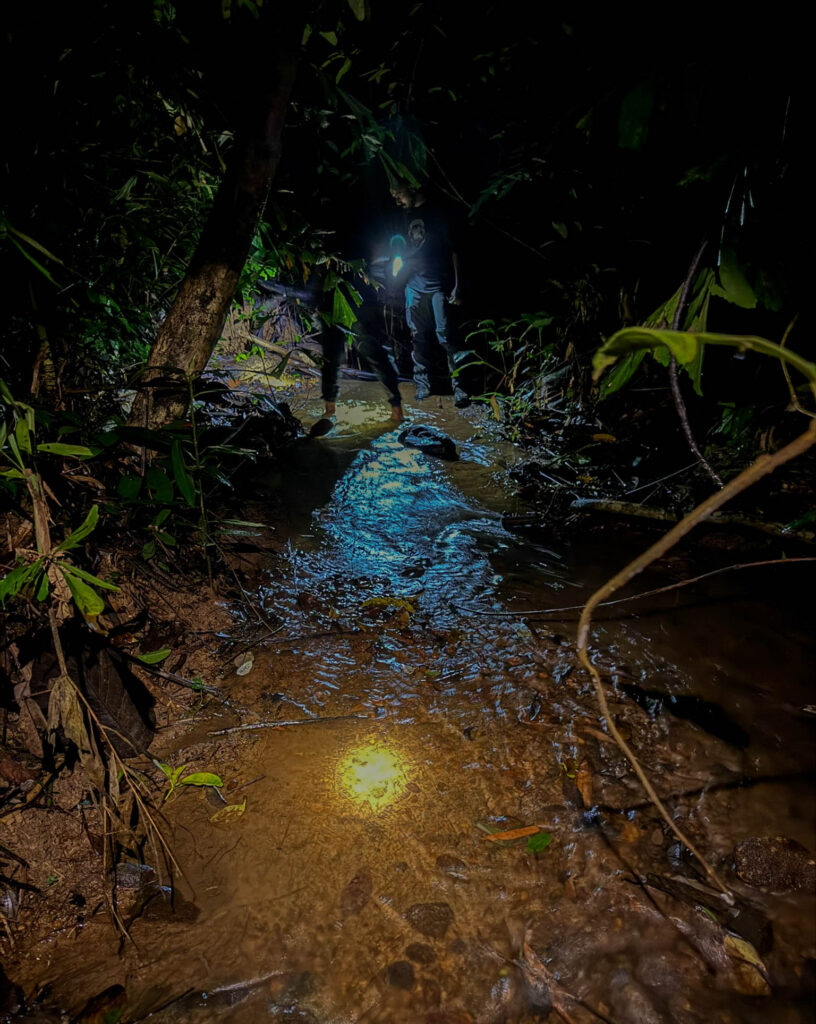
Most night herping adventures seem to produce at least one memorable story, and this trip was no exception. Our guide spotted a Wagler’s pit viper coiled on a branch above the trail. Rather than admire it from below, he disappeared into the forest and returned carrying a long bamboo pole. His plan was to balance on top of a fence post while my son held his legs for support, gently coax the snake onto the pole, and bring it down for photographs.
It actually worked. Right up until it didn’t.
The ground was wet, and he lost his footing while attempting to balance on top of the fence post. As he slipped, he dropped the bamboo pole, launching the pit viper out of the tree. It landed almost exactly where I’d been standing about ten seconds earlier. Moving a few feet turned out to be one of the better decisions I made that day. Or maybe all year.
Fortunately, the snake was unharmed. Our guide calmly placed it back on the bamboo pole for a few photographs before returning it to its perch in the tree.
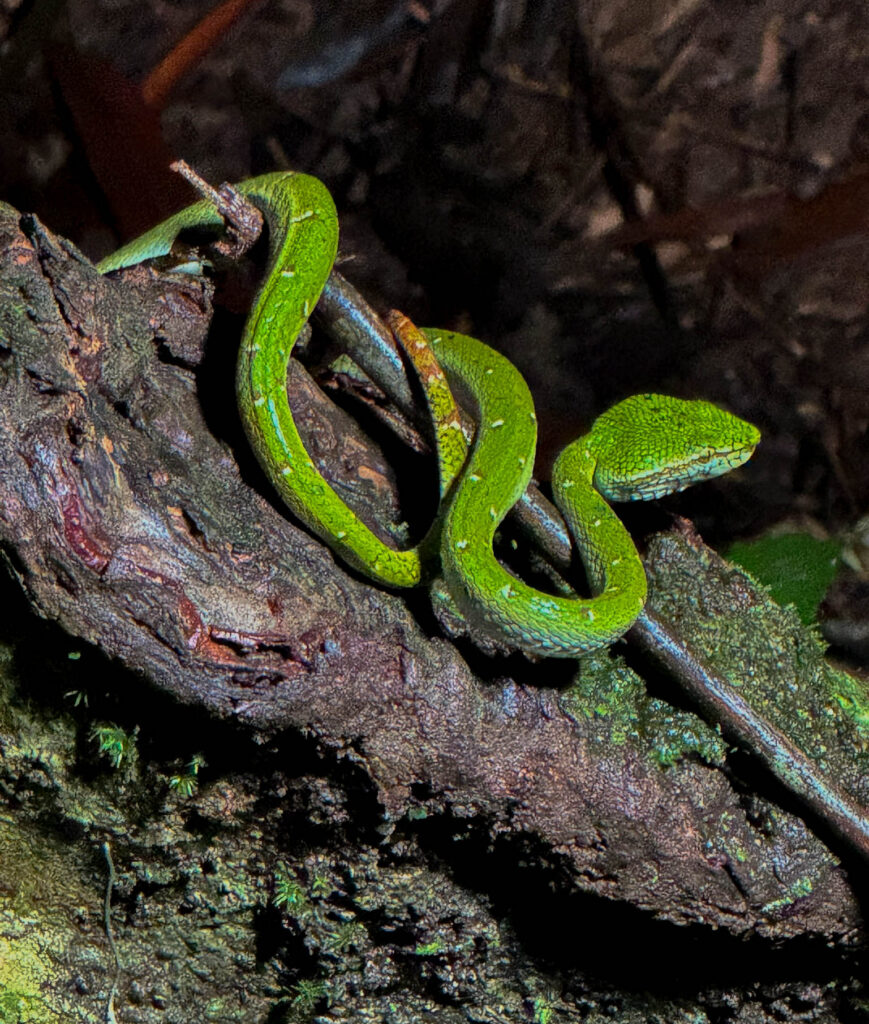
We weren’t finished yet. Before the night was over we’d found both a male and female Wagler’s pit viper, which look so different from each other that they could easily be mistaken for different species, along with an elegant bronzeback, a Laotian wolf snake, and a very large reticulated python that appeared to bite our guide as he chased after it through the thick vegetation. He didn’t seem particularly concerned, which suggested this wasn’t his first encounter with an uncooperative python.
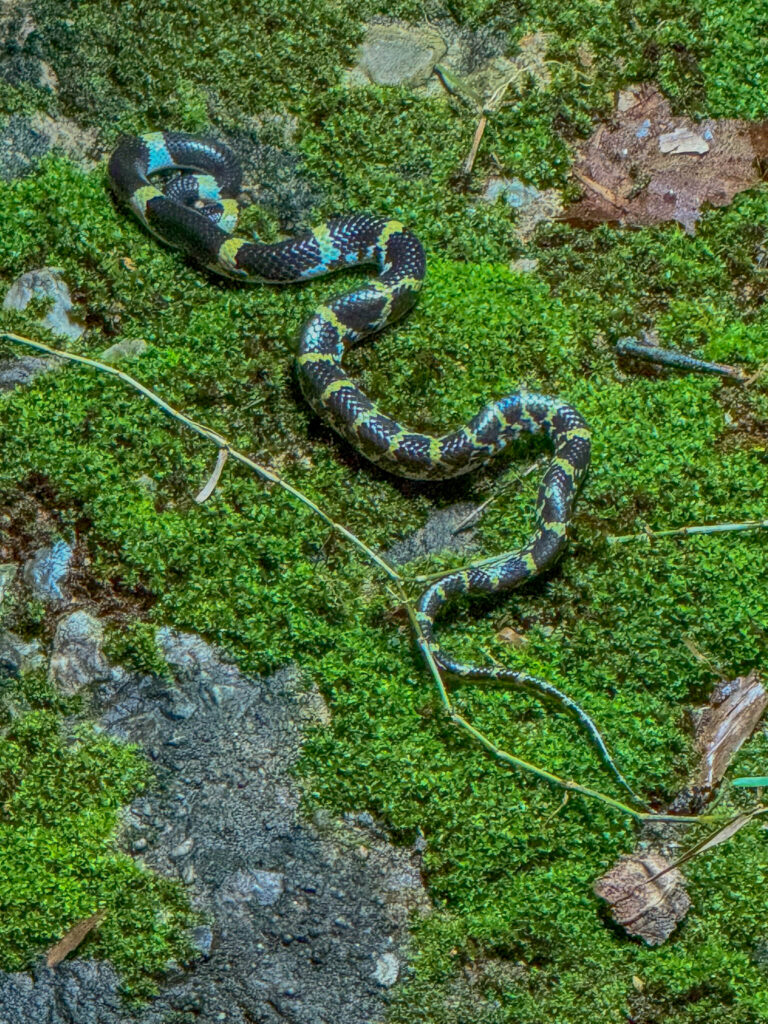
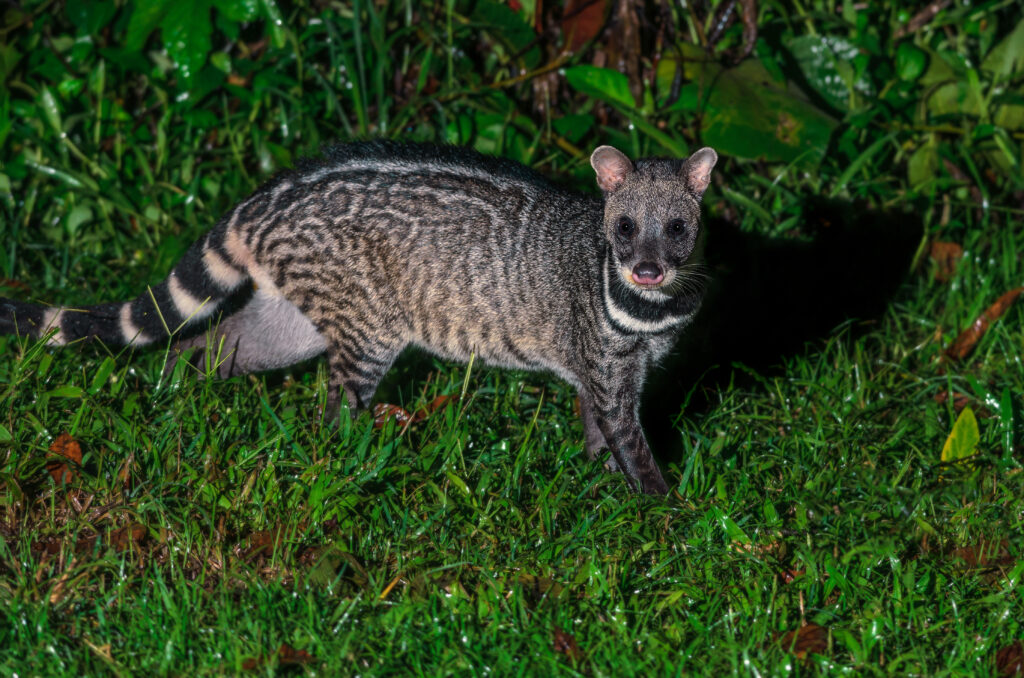
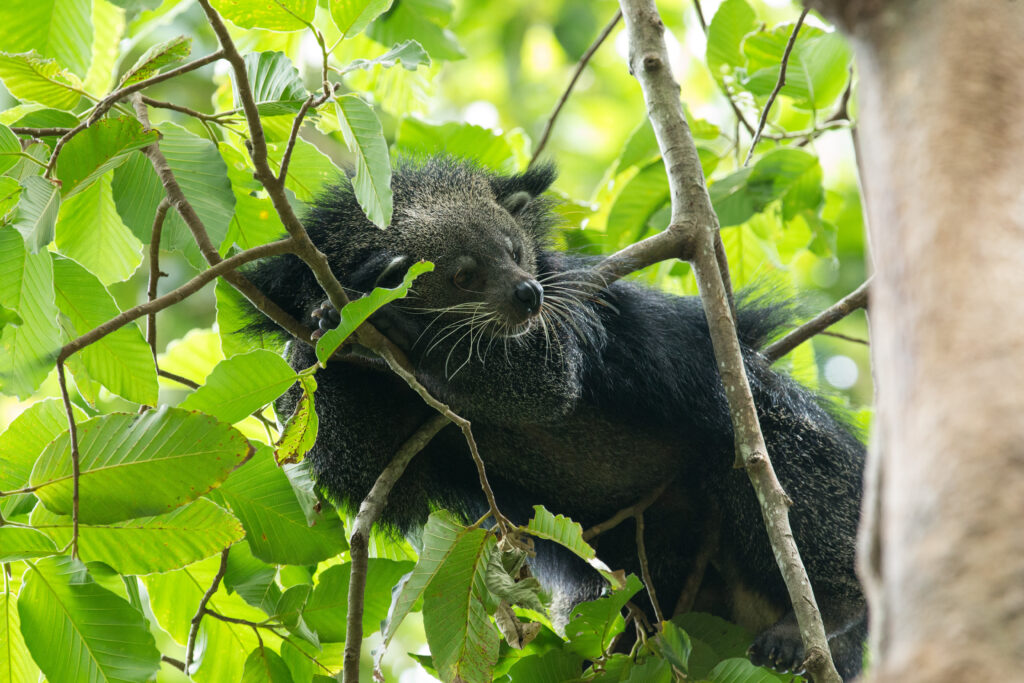
One surprise was how many mammals we encountered. I expected snakes, frogs, and insects. I wasn’t expecting to see both a common palm civet and a large Indian civet. If you’ve never seen a civet, think of something vaguely resembling a cross between a cat and a mongoose. We also spotted a binturong, sometimes called a bearcat. Despite the name, a binturong is neither a bear nor a cat. It’s actually a member of the civet family and is famous for smelling like buttered popcorn. Ours kept its distance, but seeing one in the wild was one of the highlights of the evening.
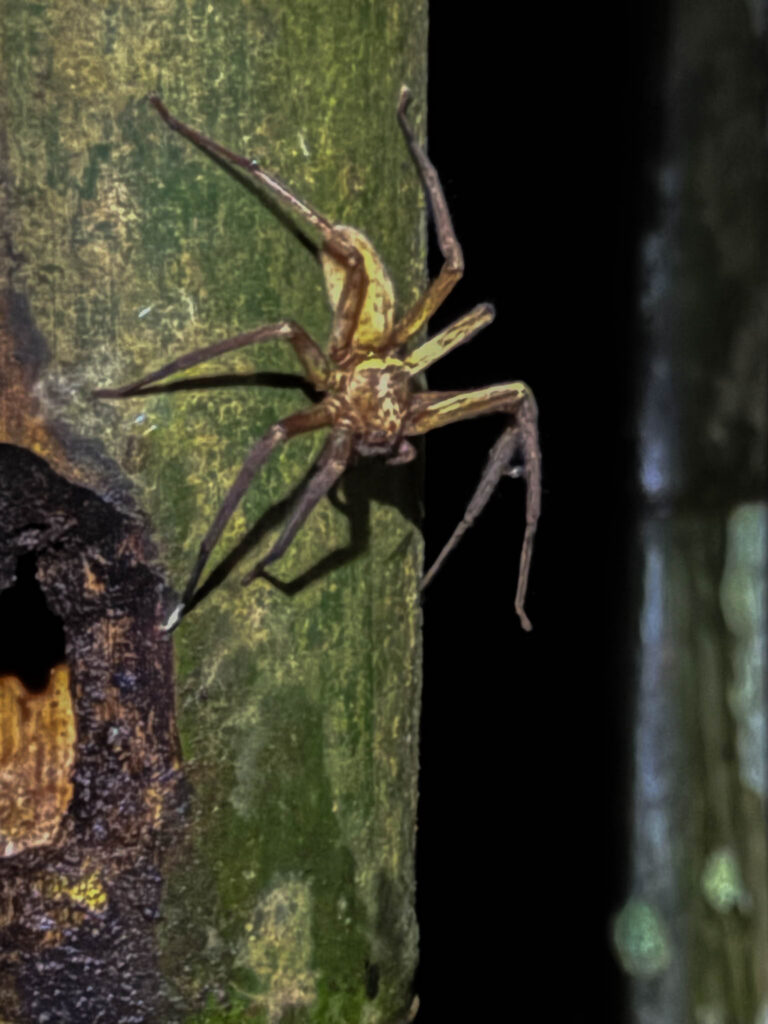
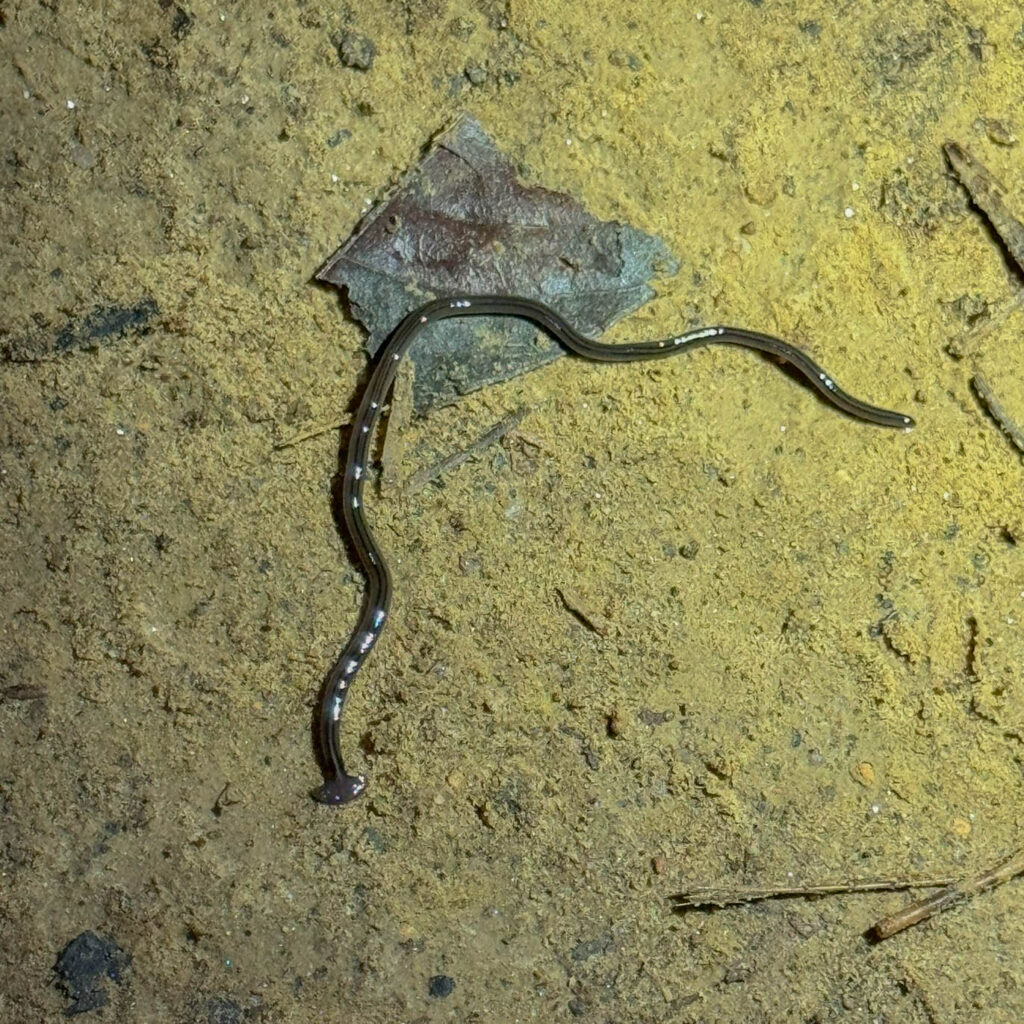
The rainforest also turned up a few creatures I’d never seen before, including a Javan hammerhead worm, a yellow-shelled semi-slug, a forest garden lizard, and a frog with a very pointed snout. It also turned up one very large huntsman spider that I would have been perfectly happy not meeting. I’d had my fill of those on previous jungle trips.
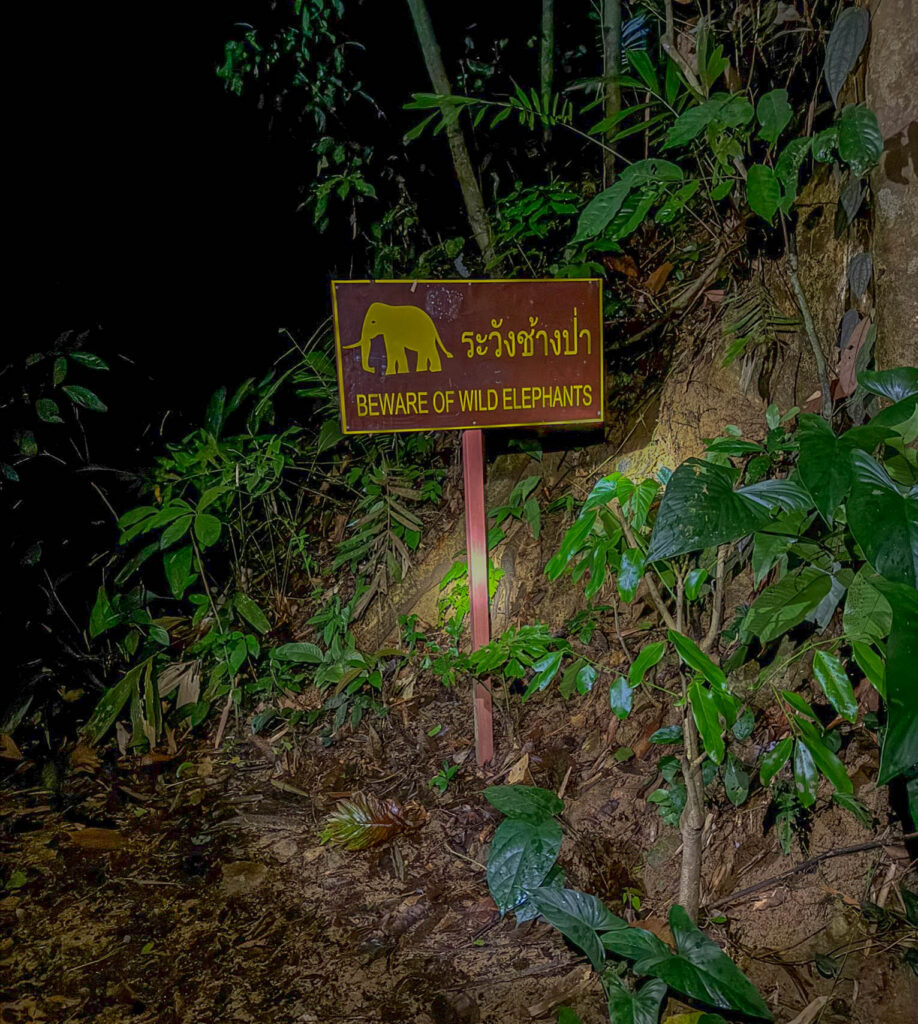
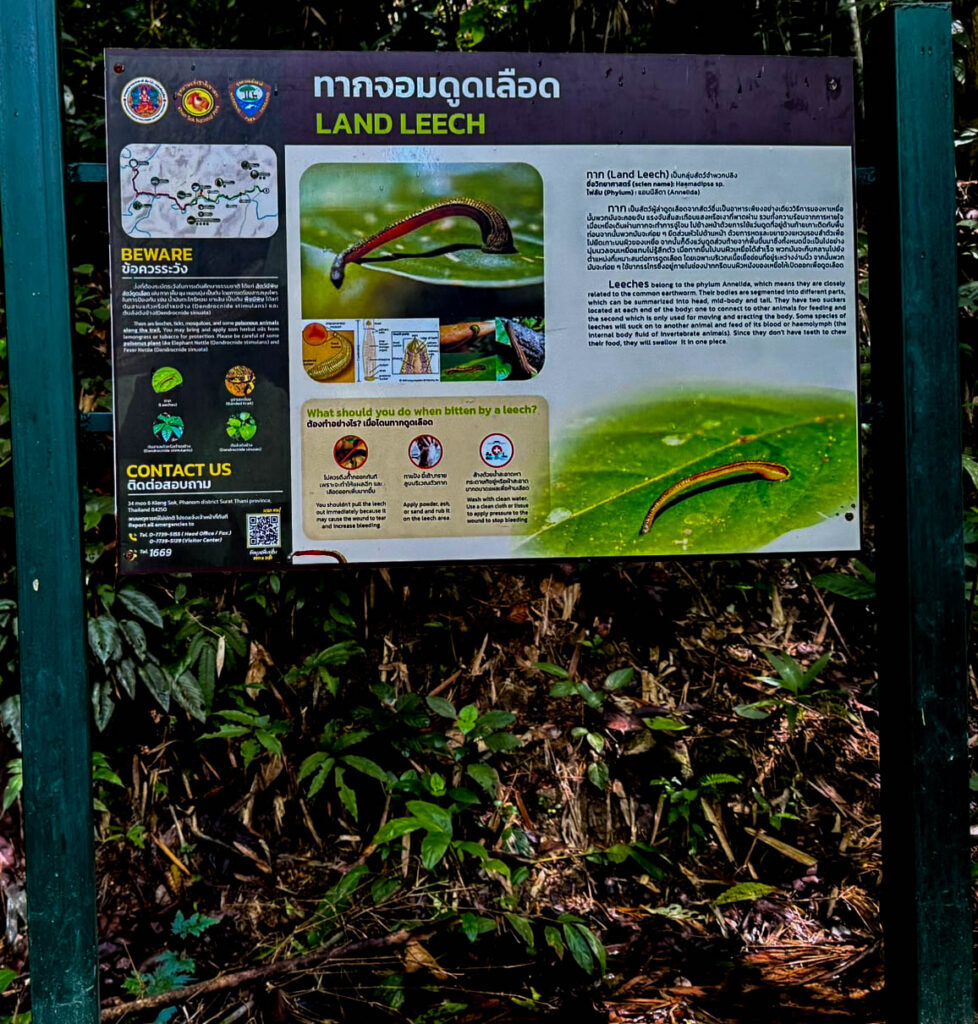
Leeches were part of the experience as well. We’d passed a warning sign about them near the trailhead, so it wasn’t exactly a surprise when our guide casually peeled one off his shirt before it had a chance to find skin. He showed it to us, flicked it into the forest, and kept walking.
After an early morning flight from Khon Kaen, a connection through Bangkok, a two-and-a-half-hour drive to Khao Sok, and three hours of herping through the rainforest, we’d seen plenty of wildlife and were ready to call it a night. Our guide, however, was still on a mission to find more snakes. We finally told him the trip had already exceeded our expectations and that we didn’t feel the need to add another snake to the list. About half an hour later, we made it back to the truck.
The truck dropped us back at Monkey Mansion around 10:30 p.m. Our alarm would be going off before sunrise for a four-hour birding tour. This was a scheduling decision that was exactly as bad as it sounds, but somehow suited us. We stumbled back to our non-air-conditioned jungalow as a sweaty mess, skipped the shower, crawled under the mosquito nets, and tried to get a few hours of sleep before doing it all over again at sunrise.
Birding with Jungle Jane
Our alarm went off far earlier than either of us would have preferred, but we managed to drag ourselves out of bed and meet our guide right on time.
Her name was Jane, although she joked that we could call her “Jungle Jane.” She had grown up in and around Khao Sok National Park and spent much of her life exploring its forests, so the nickname fit.
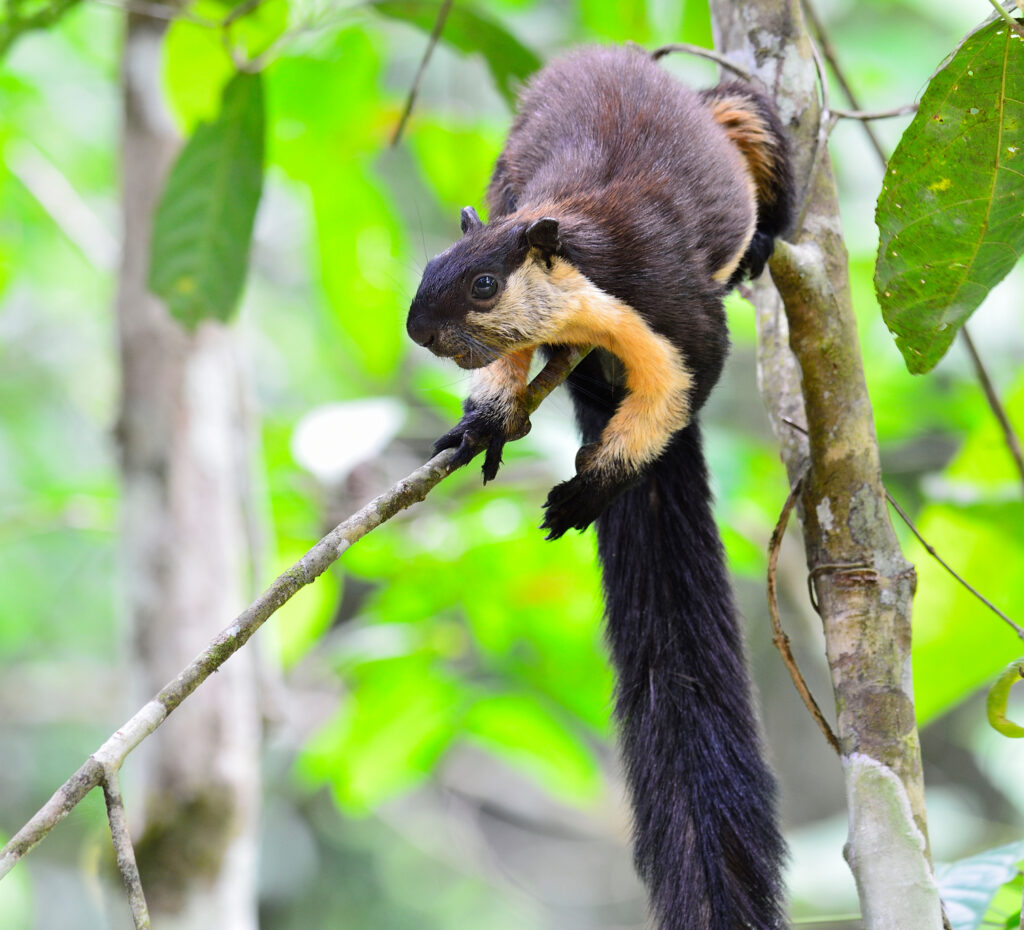
The three of us, plus a woman visiting from India, started birding around Monkey Mansion before making a few stops around Khao Sok village and eventually entering the national park. One of the unexpected highlights wasn’t a bird at all. Several Black Giant Squirrels (Ratufa bicolor) bounded through the trees, their enormous bushy tails making them almost impossible to mistake for ordinary squirrels.
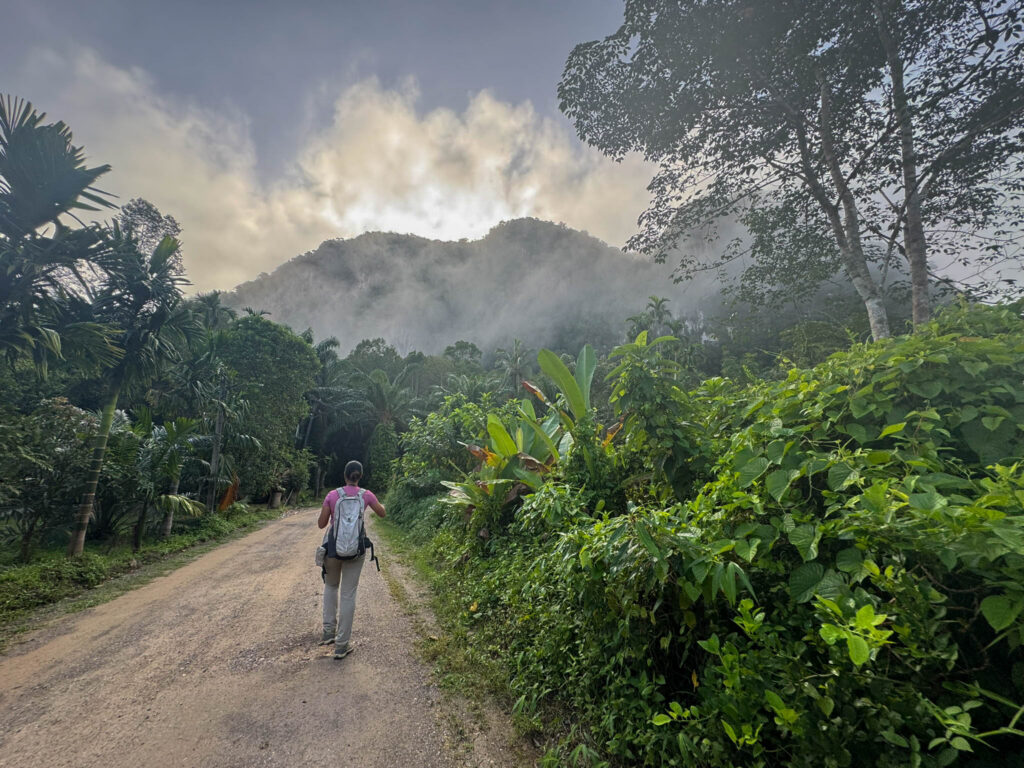
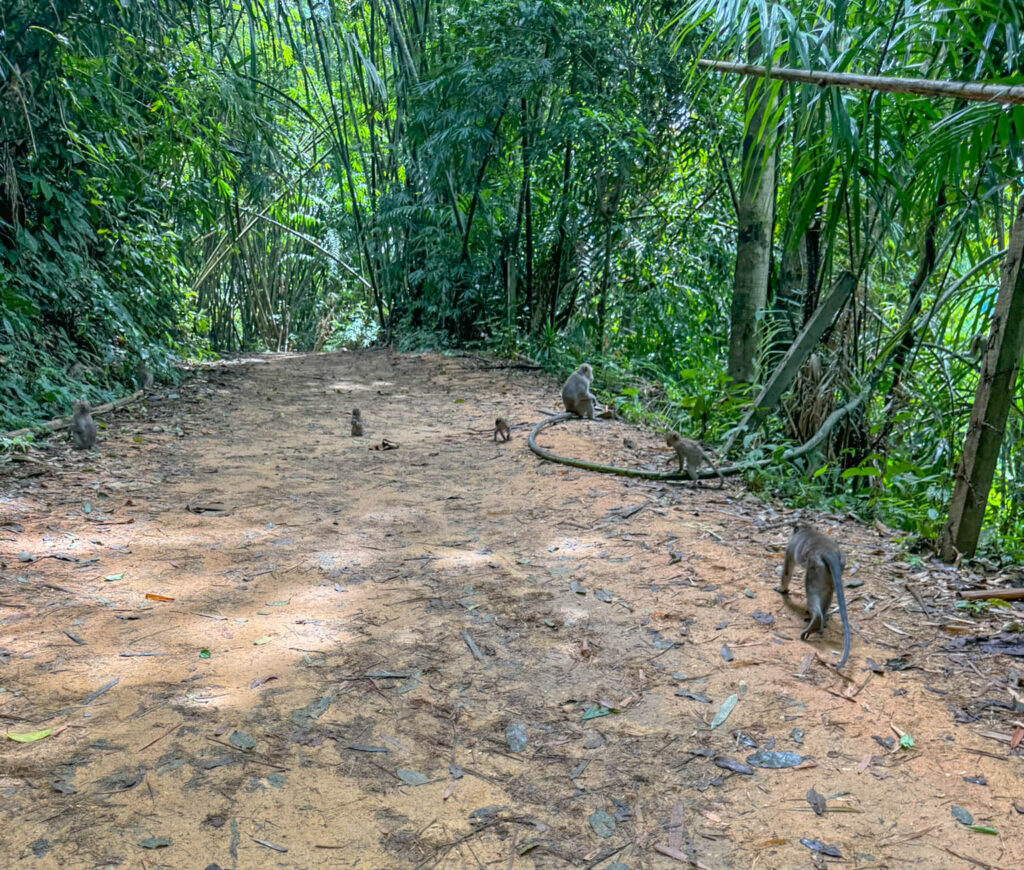
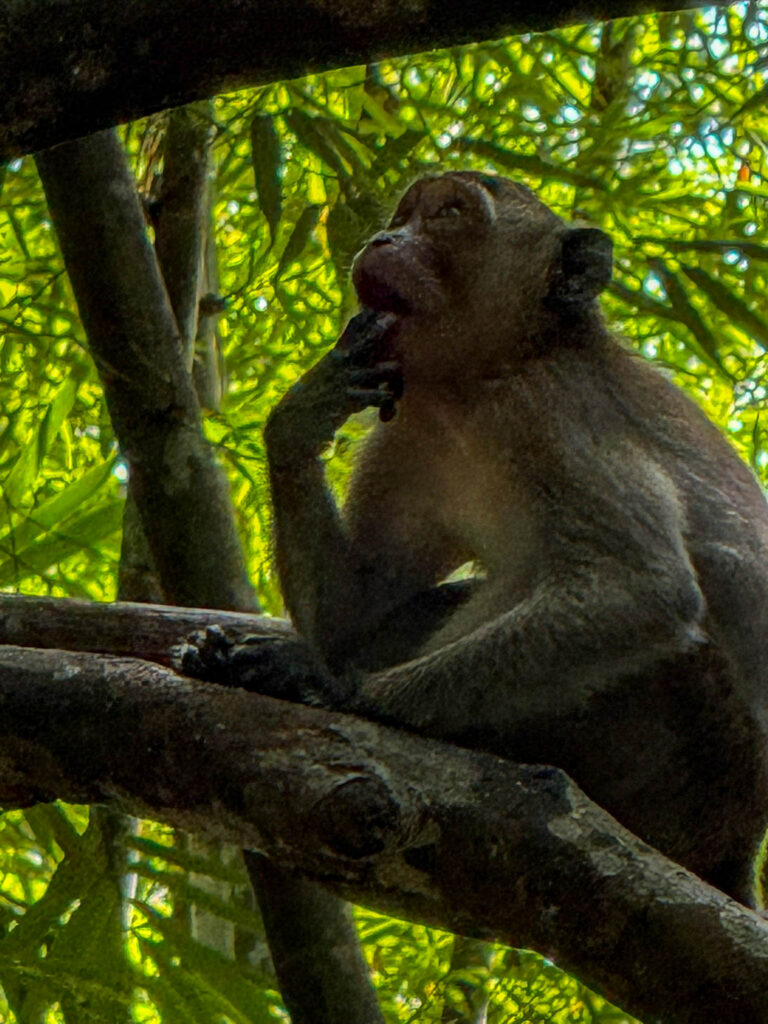
For part of the morning we retraced the same trail we’d walked only hours earlier during our night herping adventure. It looked completely different in daylight. The snakes had gone into hiding, while long-tailed macaques were already active and seemed completely unfazed by people, often watching us from just a few feet away.
Birding in tropical rainforests can be surprisingly challenging. You often hear birds long before you see them, and when you finally do get a glimpse, it may only last a few seconds before they disappear back into the canopy. Still, we’d found several memorable species before stopping for breakfast.
Kingfishers have always been among my favorite birds, so seeing both a White-throated Kingfisher and a Rufous-collared Kingfisher was one of the highlights of the morning. Other favorites included the brilliantly colored Blue-winged Pitta, Red-bearded Bee-eaters, Asian Fairy-bluebirds, and a Crested Serpent-Eagle. How could you not like a bird called a Crested Serpent-Eagle?
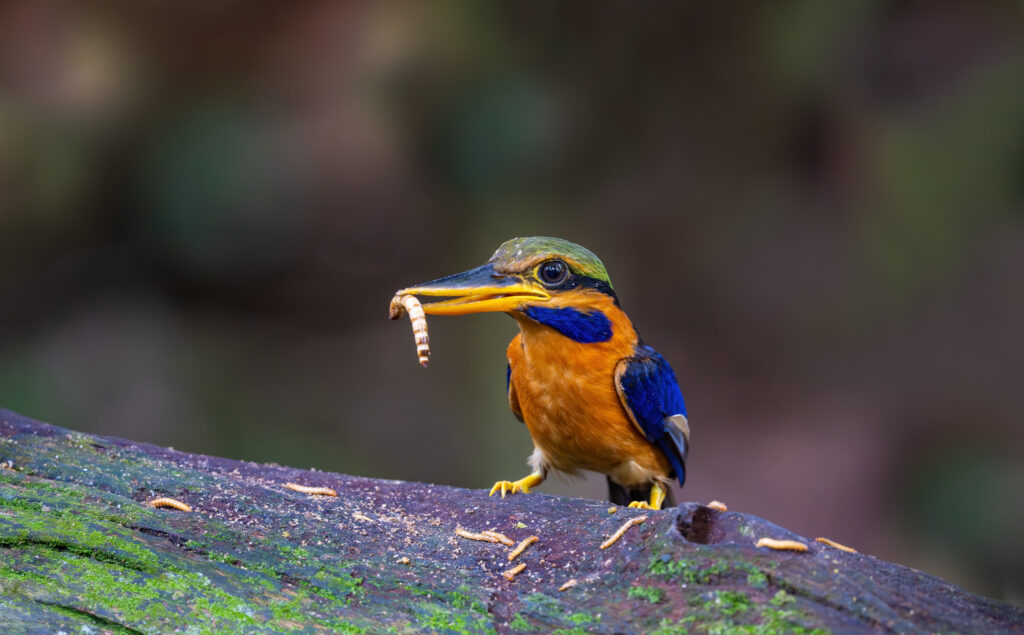
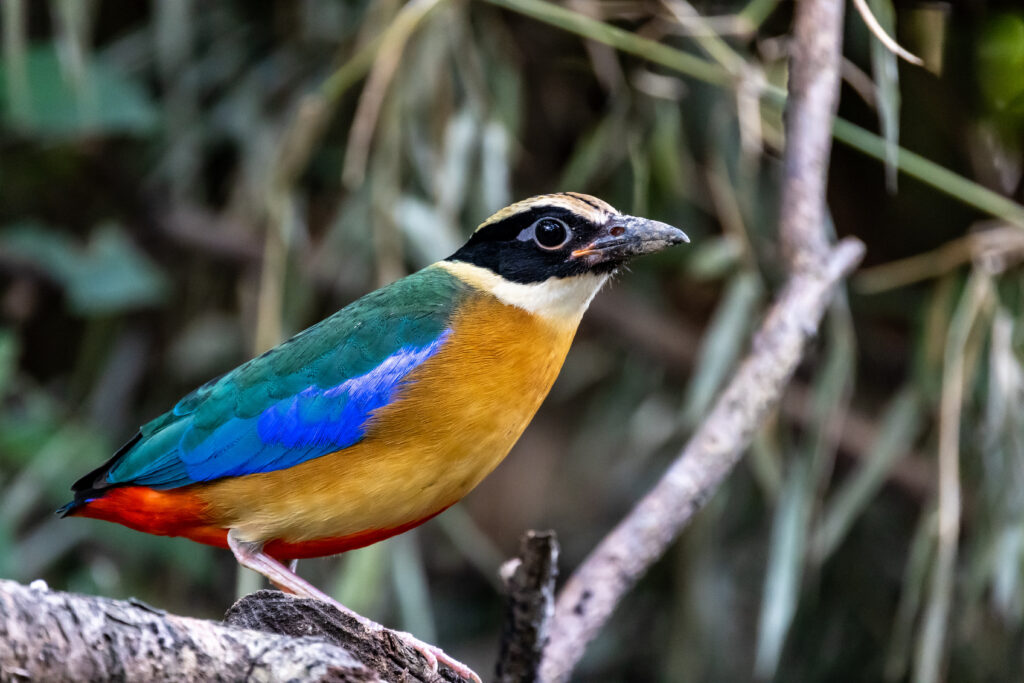
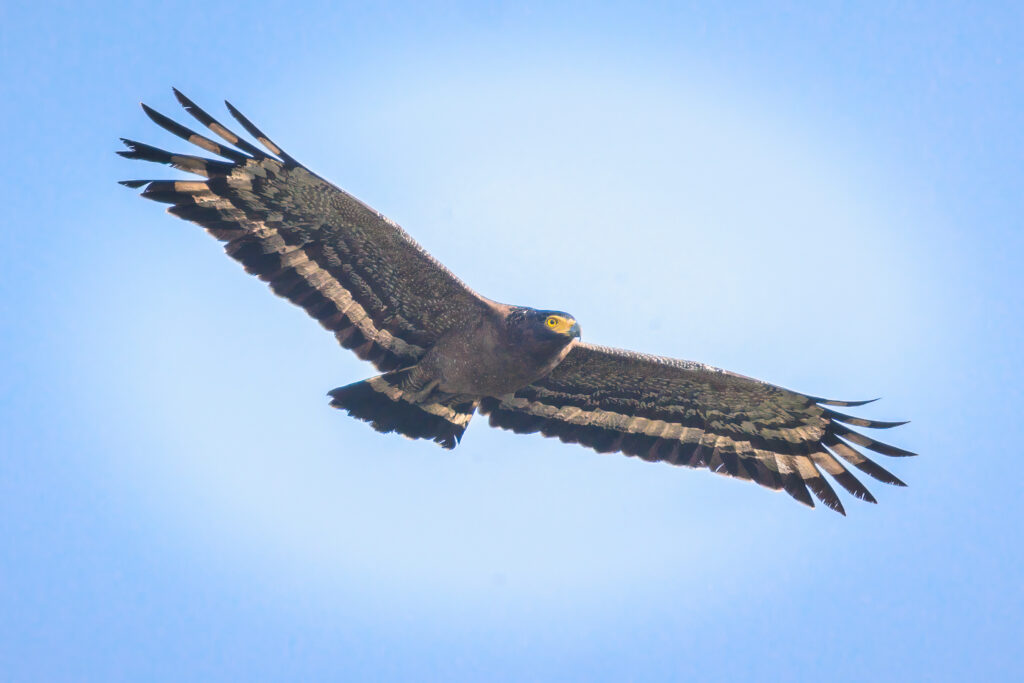
Breakfast consisted of fried rice and a hard-boiled egg wrapped in a banana leaf. I thought it was tasty. My son was less enthusiastic.
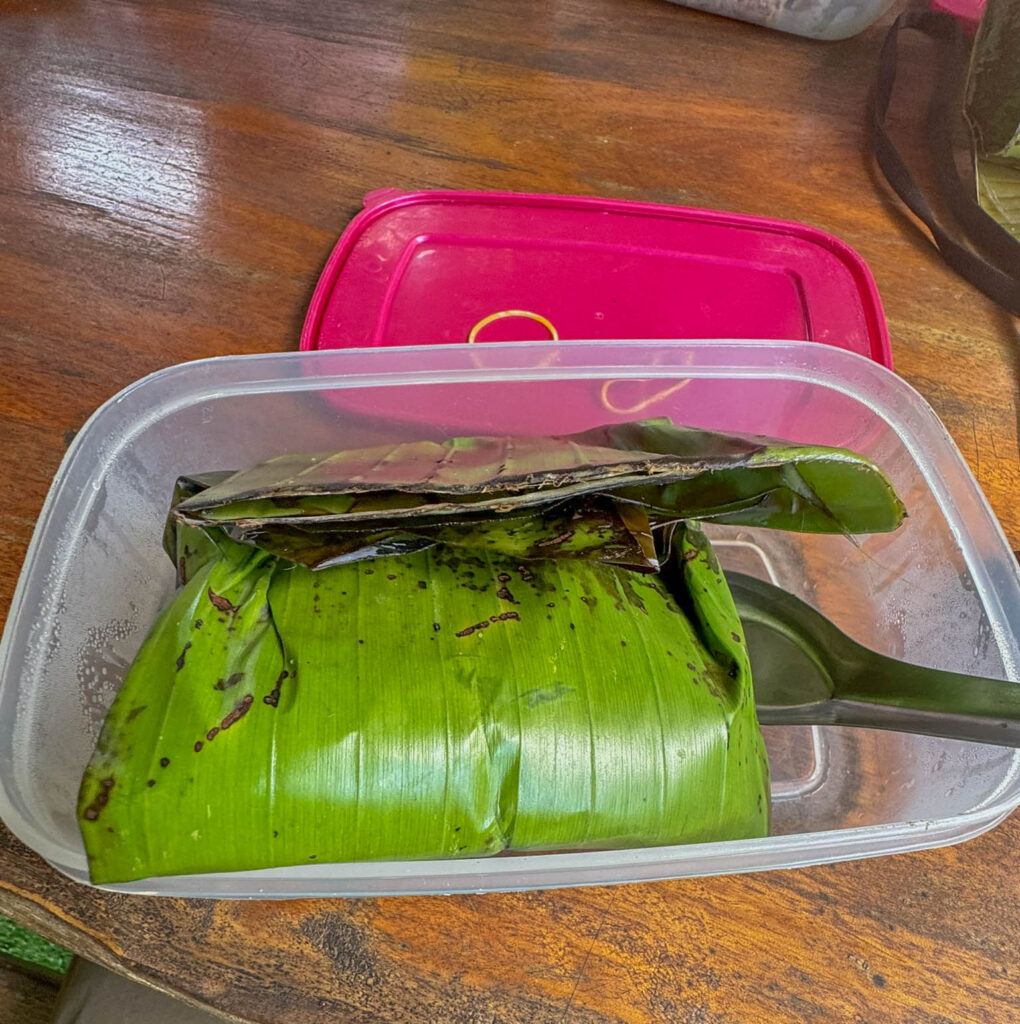
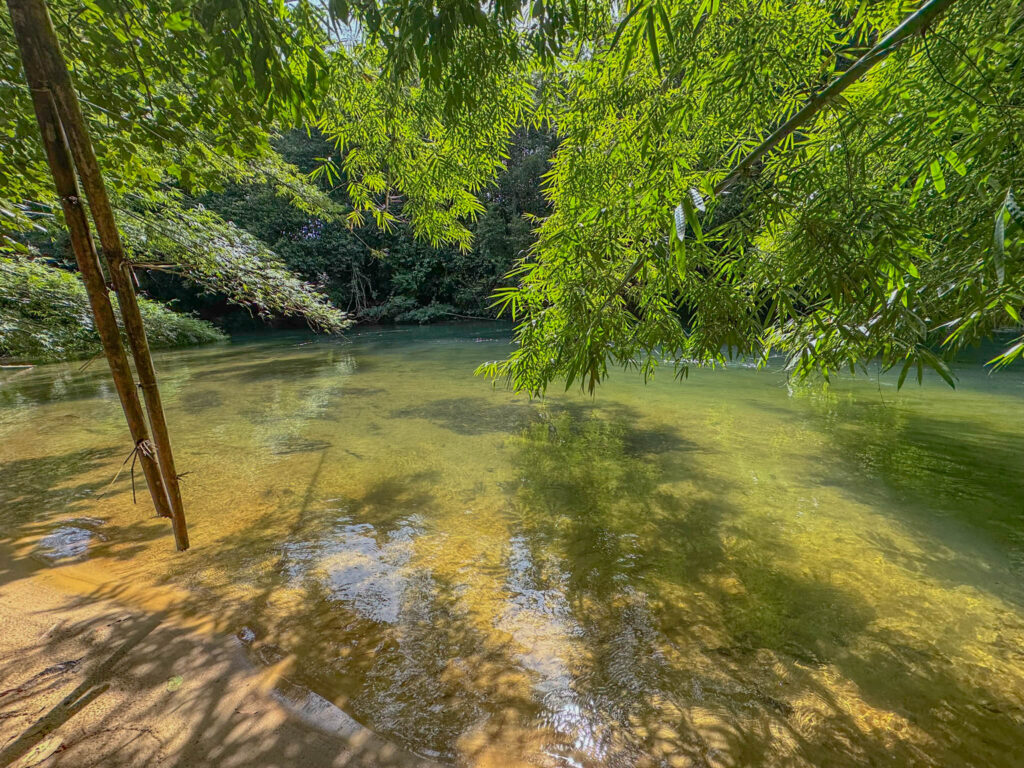
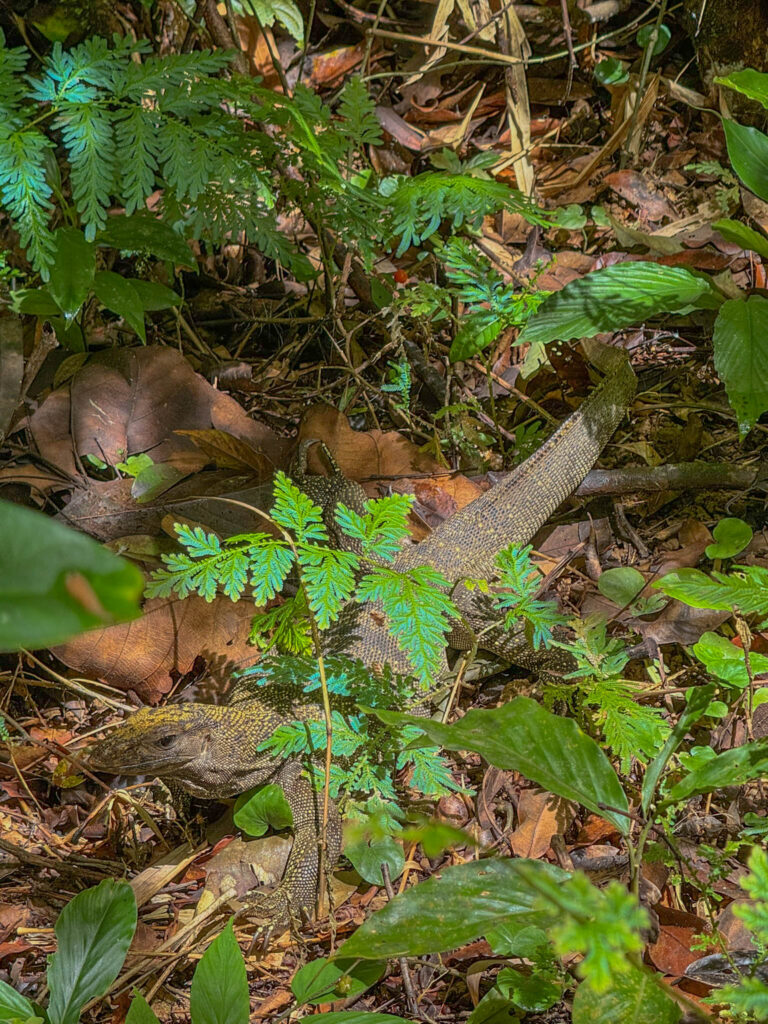
By the end of the third hour, our enthusiasm for birding was starting to fade. The combination of the previous evening’s herping and a short night’s sleep was catching up with us. Even so, we finished the morning with 30 bird species.
For the bird nerds in the audience, here’s the complete list. Everyone else has my permission to skip ahead to the elephants.
- Abbott’s Babbler (1)
- Asian Fairy-bluebird (6)
- Asian Palm Swift (4)
- Black-crested Bulbul (1)
- Black-headed Bulbul (3)
- Black-naped Monarch (1)
- Blue-winged Leafbird (1)
- Blue-winged Pitta (1)
- Brown-throated Sunbird (1)
- Common Iora (3)
- Common Tailorbird (1)
- Crested Serpent-Eagle (1)
- Flowerpecker sp. (1)
- Gray Wagtail (1)
- Greater Coucal (1)
- Little Pied Flycatcher (1)
- Ochraceous Bulbul (2)
- Oriental Magpie-Robin (1)
- Ornate Sunbird (1)
- Plain Flowerpecker (1)
- Red-bearded Bee-eater (2)
- Rufous-collared Kingfisher (1)
- Streak-eared Bulbul (1)
- Streaked Bulbul (3)
- Stripe-throated Bulbul (1)
- Vernal Hanging-Parrot (2)
- White-nest Swiftlet (1)
- White-throated Kingfisher (1)
- Yellow-browed Warbler (2)
- Yellow-vented Bulbul (1)
Bananas, Mud, and a Very Large Friend: An Elephant Encounter
We returned to Monkey Mansion from our birding tour around 11:15 a.m., inhaled a quick lunch (no time to experiment, so I went with Pad Prik Gaeng… again), and then climbed into another vehicle for our noon elephant encounter.
I arrived wearing my usual jungle uniform of a long-sleeved shirt and hiking pants, figuring they would help protect against mosquitoes and whatever other biting insects the rainforest might have in store. Fortunately, they never became an issue. Our guide took one look at me and politely suggested I change into the swimsuit I’d packed. He clearly knew what he was talking about, so I followed instructions and stepped back outside wearing a long-sleeved shirt and a swimsuit. I briefly considered warning him that he might need sunglasses once he saw my complete lack of a tan, but by that time, the damage was done. Fortunately for him, my shirt was still on.
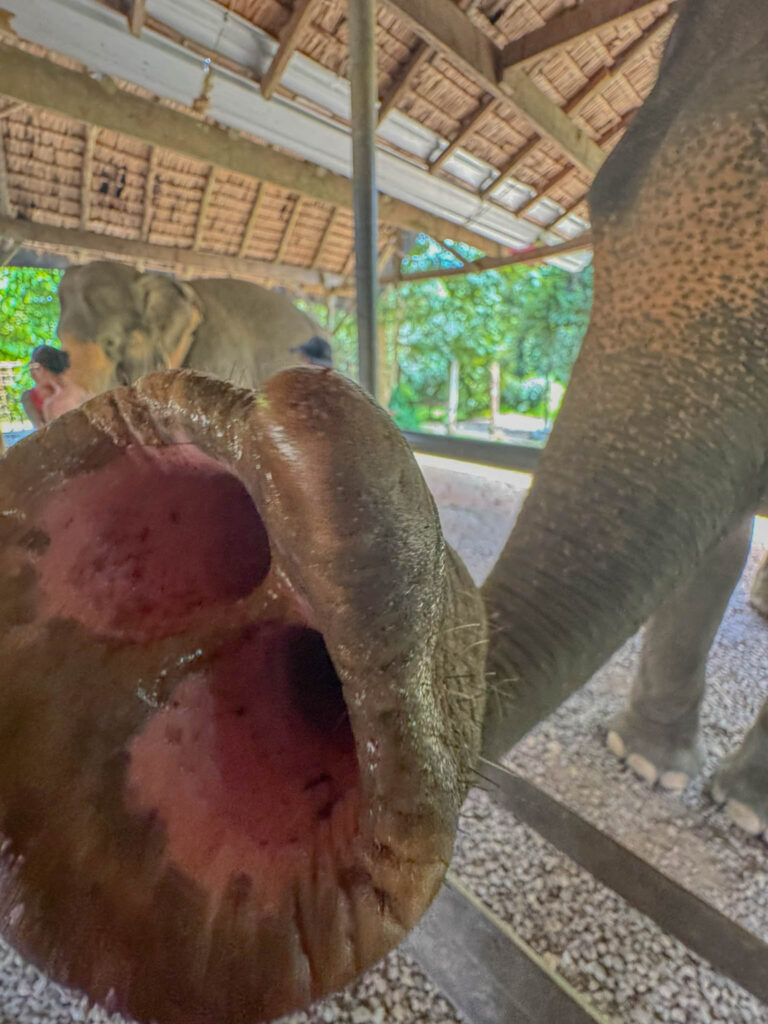
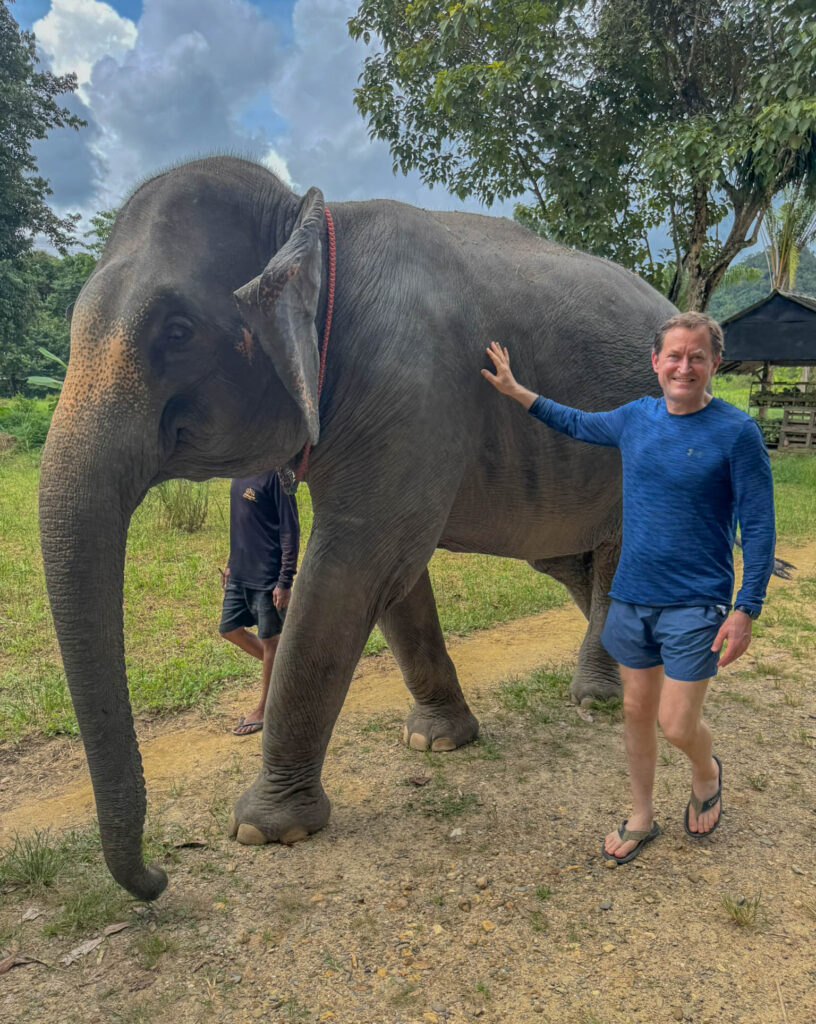
There were four participants altogether. My son and I were paired with our own elephant while the other two visitors were matched with another. Our elephant’s name was Wan-Dee, and at 2,700 kilograms (nearly 6,000 pounds), she outweighed both of us by more than 5,600 pounds, despite all the food we’d been eating in Thailand. Wan-Dee greeted us by placing her trunk first on my son and then on me, giving each of us a chance to cradle it while we posed for a few photos. I was surprised by how rough and hairy her trunk felt.
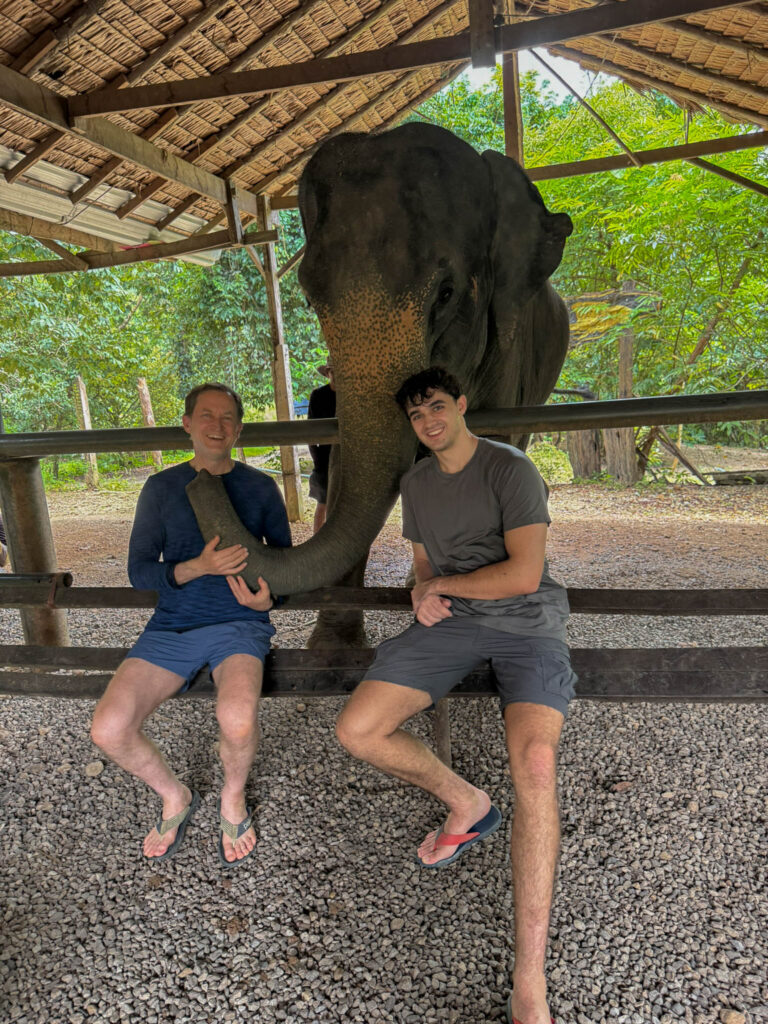
Our first job was feeding her. We were given a bucket of food that we rolled into bite-sized balls, which for Wan-Dee meant something about the size of a large snowball cupped in our hands. My son and I took turns offering them one at a time while Wan-Dee’s trunk swung back and forth between us. She eagerly accepted the large balls of food we placed directly into her mouth with about the same amount of effort it takes us to eat a single pea. Then came Wan-Dee’s favorite treat: bananas. Those disappeared even faster, if that was possible.
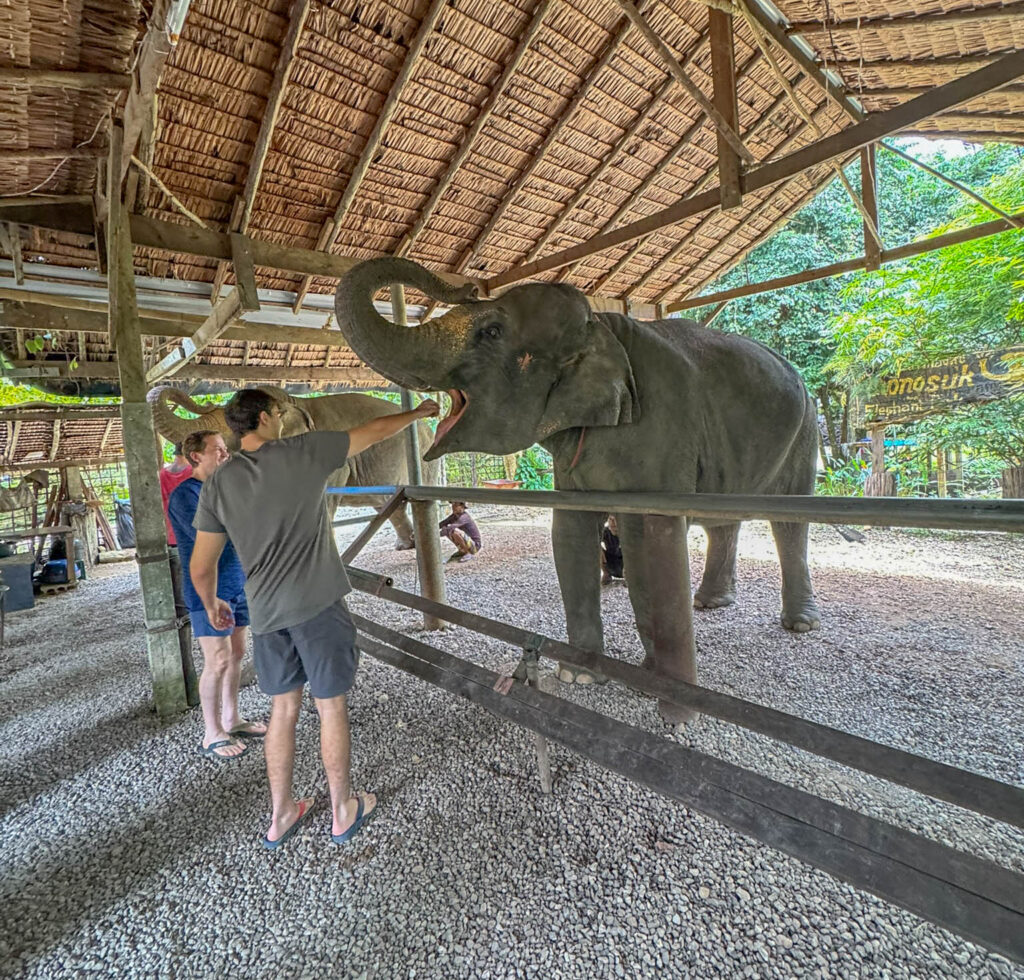
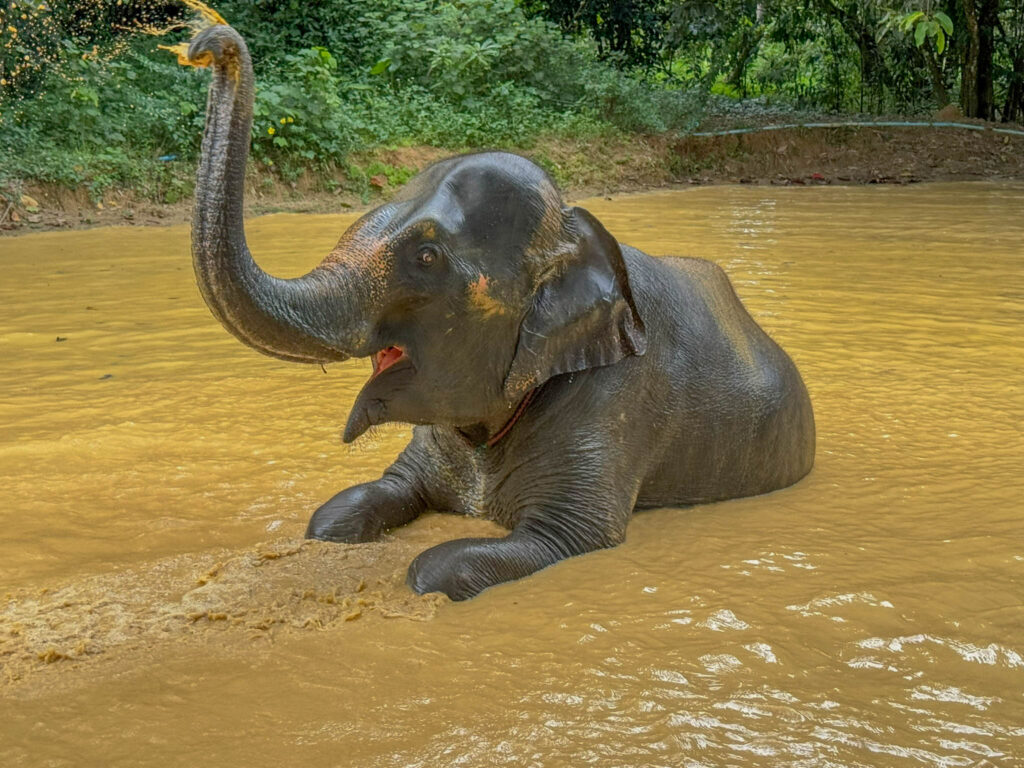
After feeding her, it was time for a mud bath. Wan-Dee clearly knew the routine and seemed eager to get into the river. Once she settled into the water, we filled half coconut shells with mud and spread it across her body. Wan-Dee helped by flinging mud onto herself with her trunk before rolling happily in the river. We then scrubbed her clean with brushes while standing beside her in the surprisingly cold water. Every now and then she rewarded our efforts by splashing us.
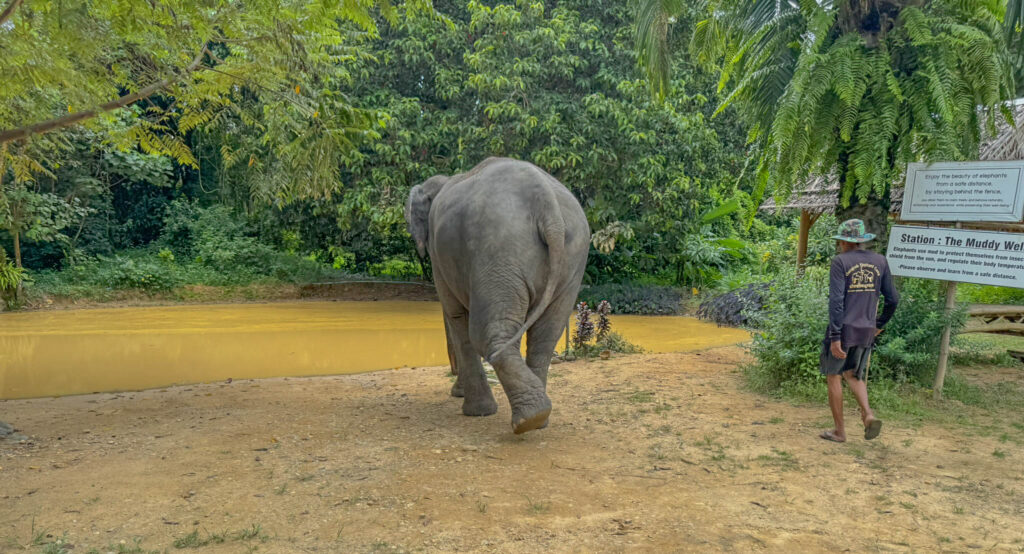
At one point Wan-Dee decided it was the perfect time to poop in the water. Our guide calmly gathered everything into one impressively large ball with his bare hands and floated it downstream without missing a beat. I was grateful our guide didn’t decide this would make for a good hands-on learning experience. I was also glad I’d stuck to my rule of never dunking my head under tropical freshwater. Between parasites, bacteria, and elephant poop floating downstream, it seemed like a sound policy.
Once she’d rinsed off, Wan-Dee’s skin changed from muddy brown back to its natural dark gray. We fed her a few more bananas while she gently rocked back and forth, her trunk swaying between us like a metronome. Being literally eye to eye with a 6,000-pound elephant was something I’ll never forget. I also couldn’t help noticing the size of her feet and being thankful they never landed on mine.
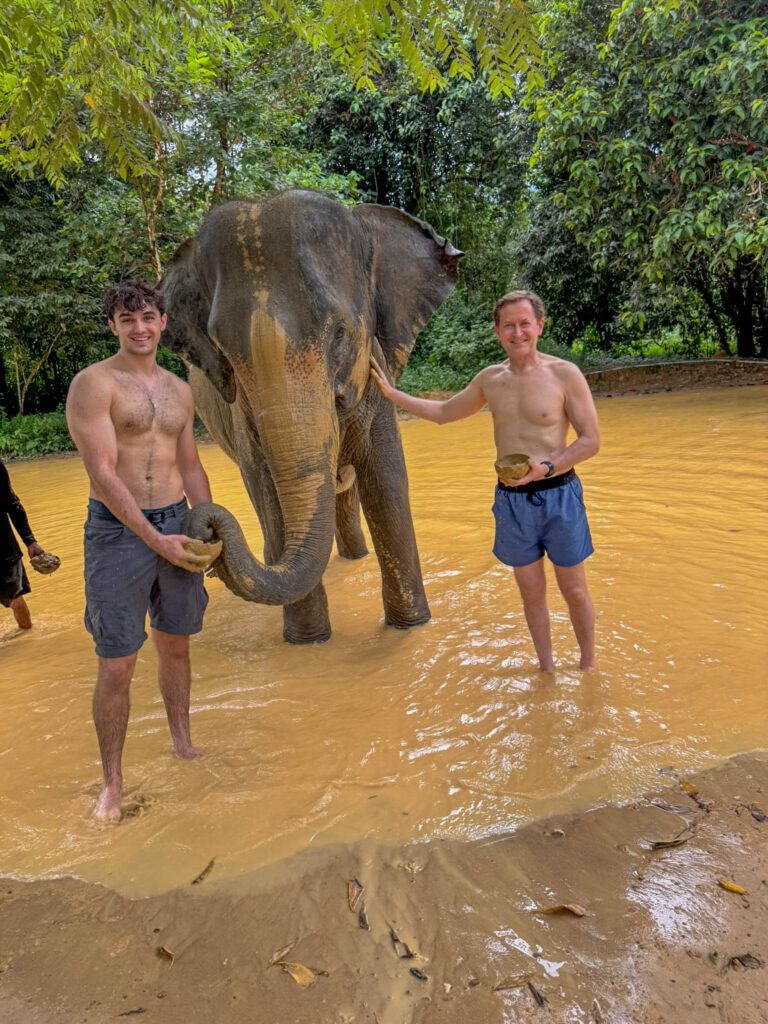
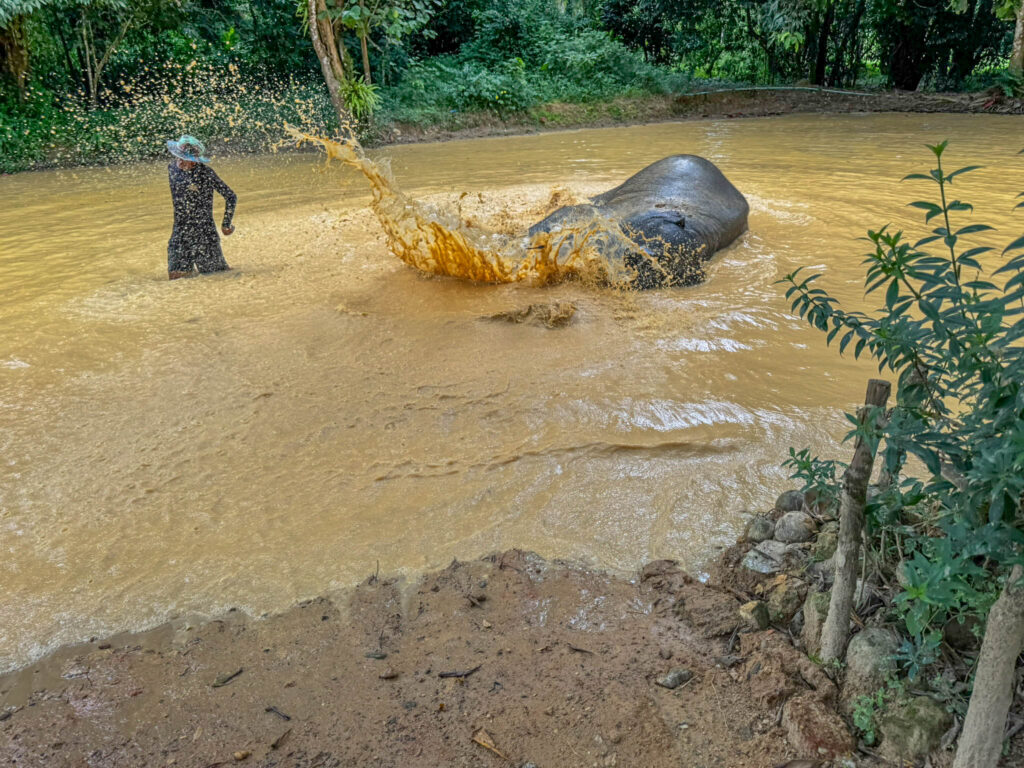
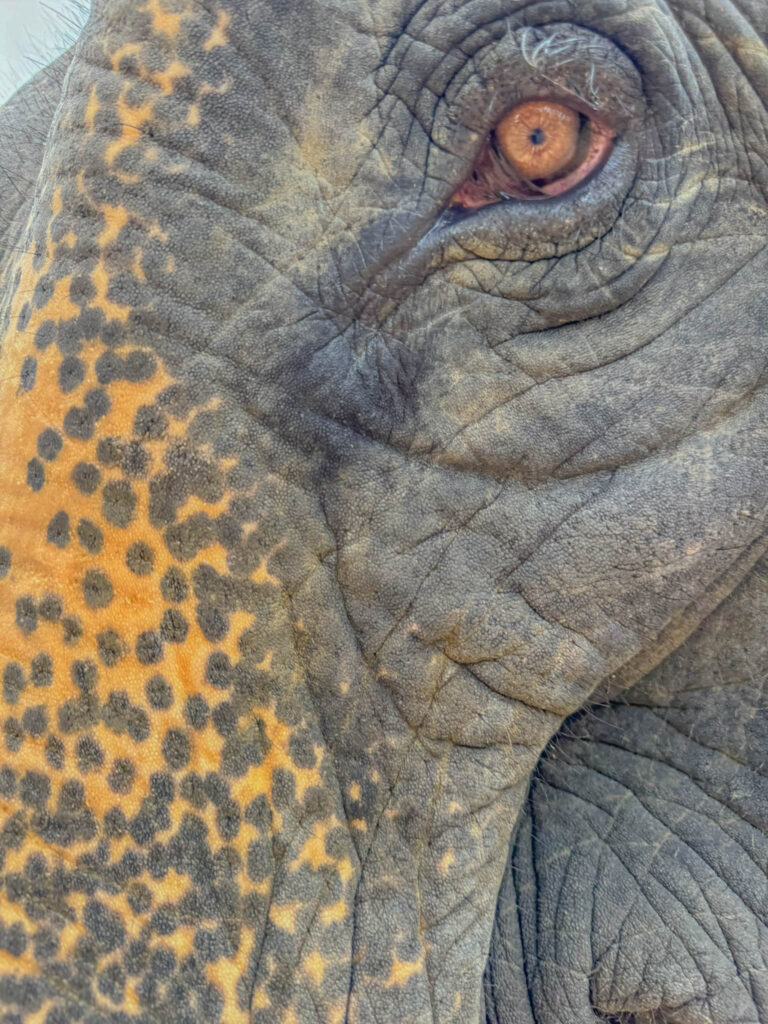
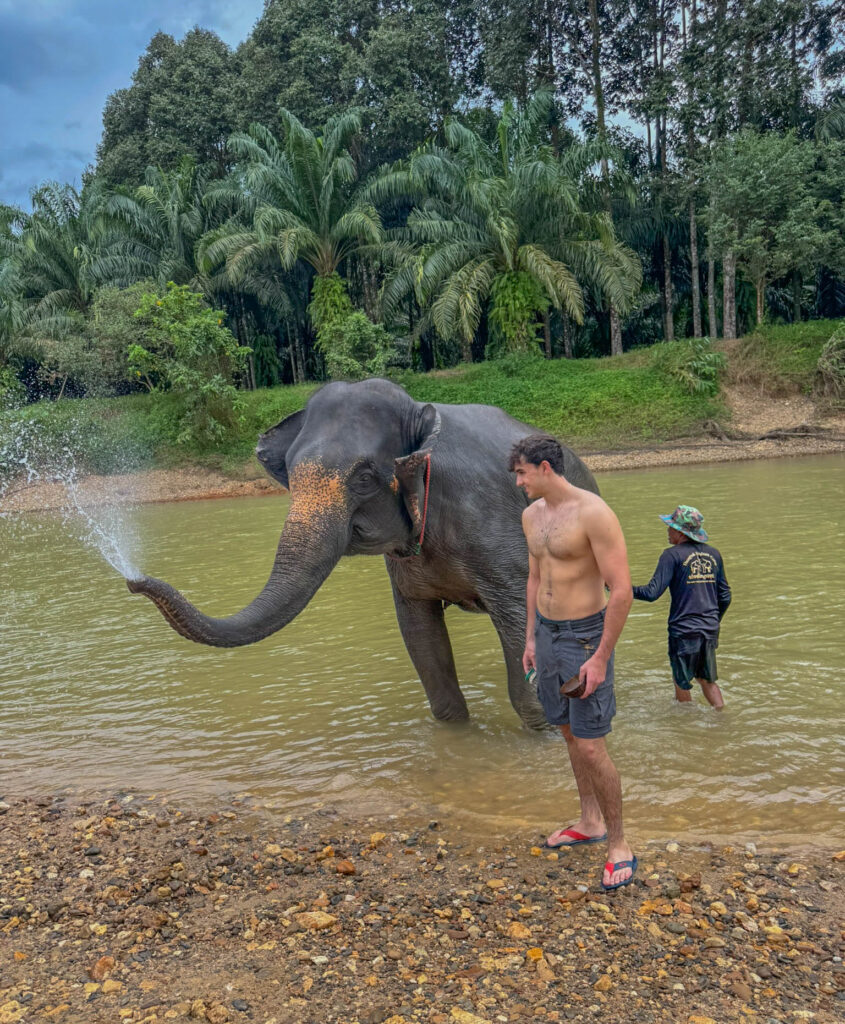
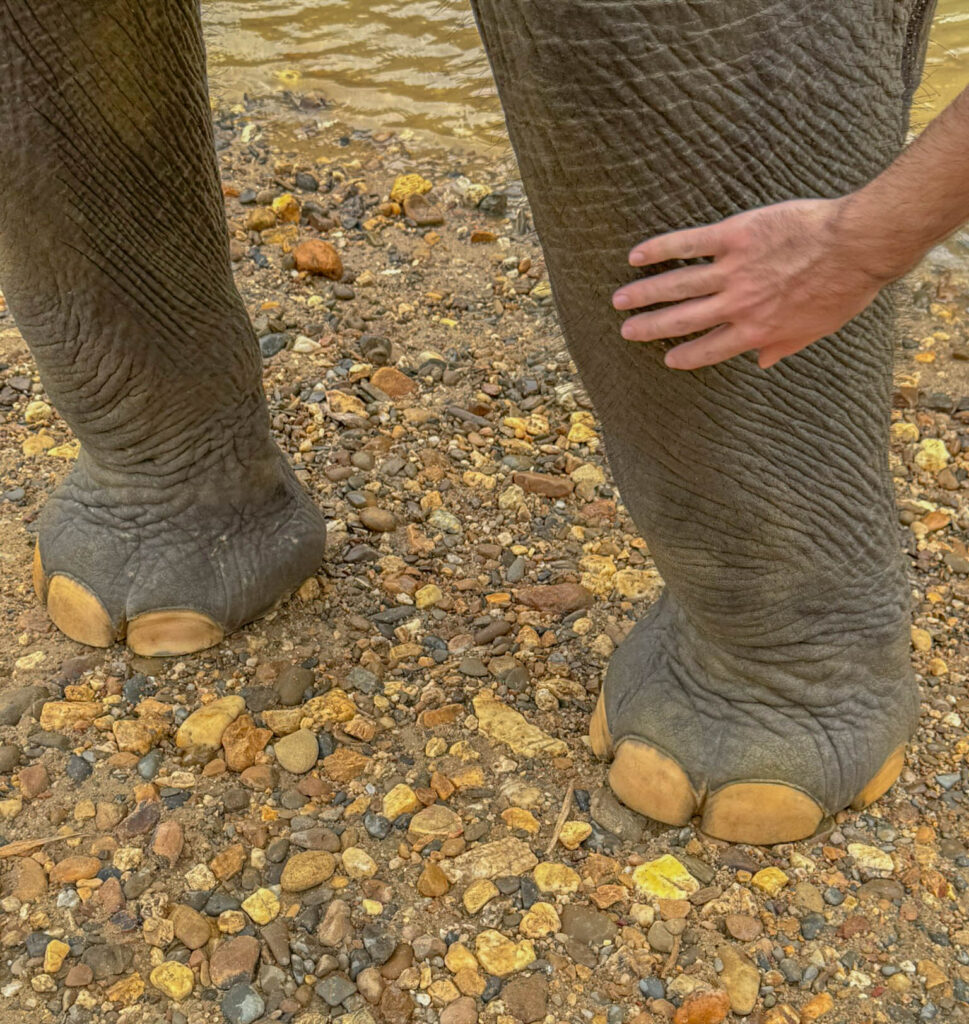
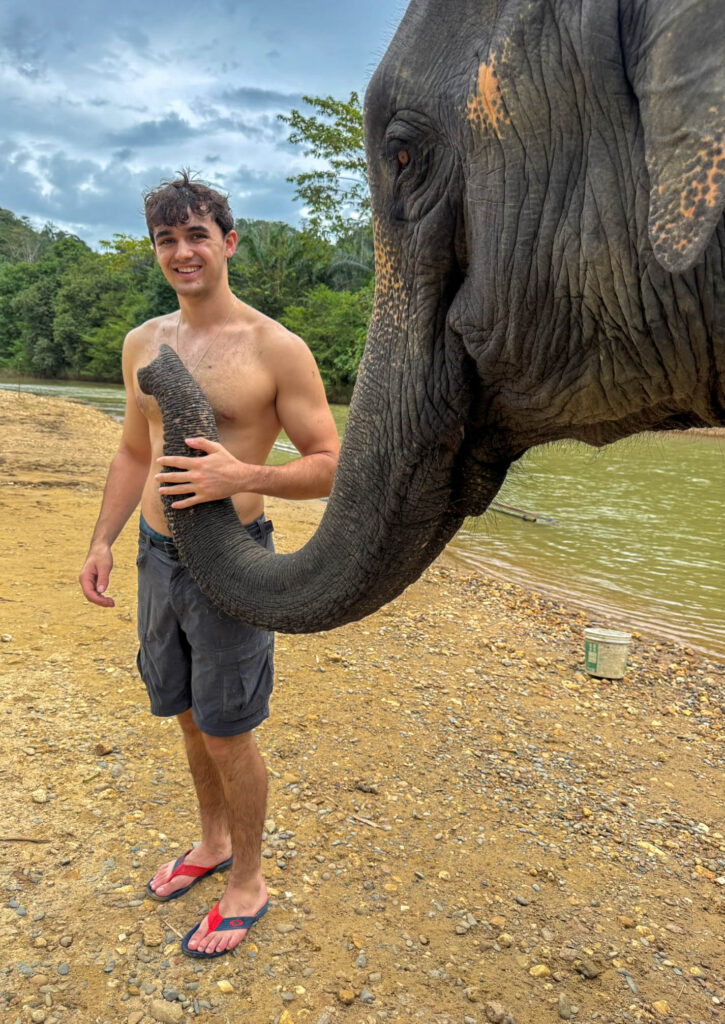
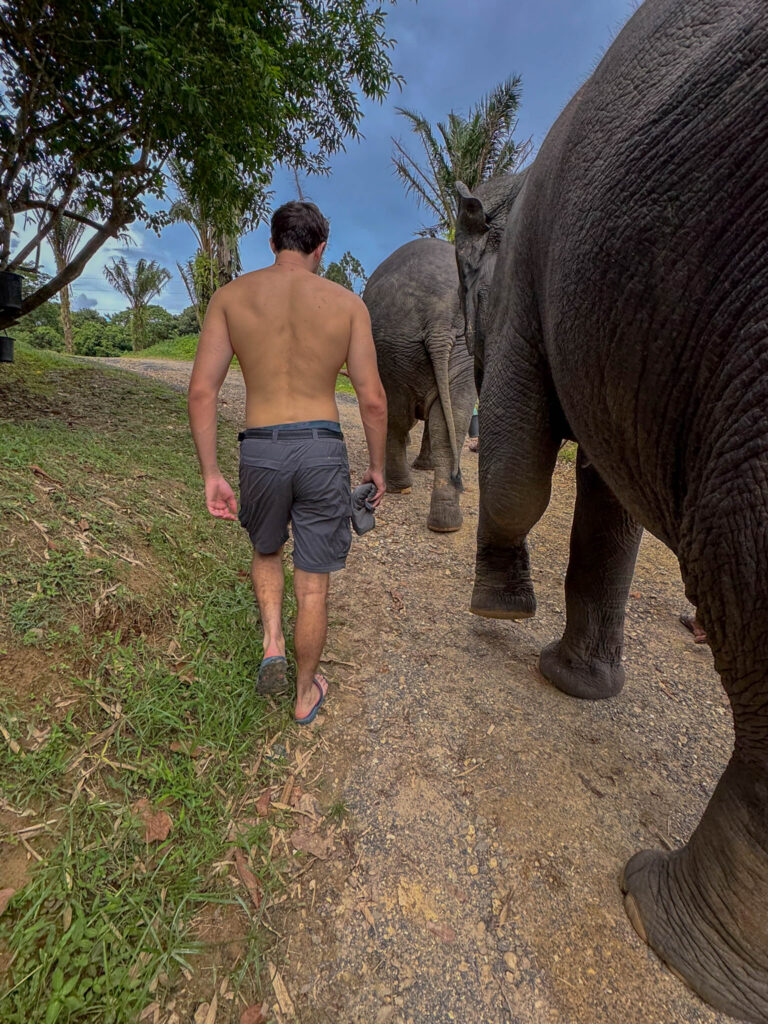
After a few more photos, it was time to say goodbye. Wan-Dee lifted her trunk and let out a surprisingly high-pitched call that our guide told us was her way of saying farewell.
I wasn’t sure what to expect from an elephant encounter, but it exceeded my expectations. It was one of the highlights of the trip. The warm shower afterward was a close second.
Reflections on Responsible Wildlife Tourism
Years ago, I probably wouldn’t have given much thought to elephant riding. It was simply one of those iconic experiences you saw in brochures and travel magazines.
As I planned this trip, though, I learned more about how elephants are often trained for riding and the broader welfare concerns surrounding elephant tourism. While elephants are incredibly strong animals, carrying people for hours with heavy saddles isn’t considered ideal for their long-term well-being. Many of the biggest concerns also involve how riding elephants are trained and cared for.
That’s why we intentionally chose a sanctuary that doesn’t allow riding.
Looking back, I don’t feel like we missed out on anything. Instead of riding Wan-Dee, we fed her, walked beside her, covered her with mud, and helped bathe her in the river.
What struck me most was that our entire interaction with Wan-Dee revolved around activities elephants naturally do: eating, walking, bathing, and covering themselves in mud. We were able to participate in those activities with her. Judging by how quickly she headed for the river, rolled around in the mud, and sprayed water into the air afterward, it certainly seemed like a better experience for her than carrying tourists on her back.
Wildlife tourism can be a wonderful thing when it’s done thoughtfully. As travelers, we have more influence than we sometimes realize. The places we choose to visit and the experiences we pay for help shape the kinds of wildlife encounters that continue to exist in the future.
Okay, sermon over.
Final Thoughts
Twenty-four hours wasn’t nearly enough time to experience everything Khao Sok National Park has to offer. There’s enough here to keep nature lovers busy for several days.
Even so, our 24-hour visit turned out to be one of the highlights of our Thailand trip. Yes, the itinerary was a little insane, but somehow it all worked. Between the birding, the night herping, and our afternoon with Wan-Dee, we made the most of every hour. Monkey Mansion turned out to be the perfect base for pulling it all off.
We slept very well the next night in Rawai, Phuket.
📚 Want to Learn More?
If you’d like to learn more about Khao Sok, Thailand’s wildlife, and Thai culture, here are a few books worth checking out:
- Waterfalls and Gibbon Calls: Exploring Khao Sok National Park by Thom Henley. Part guidebook and part natural history, with information about Khao Sok’s wildlife, geology, rainforest, and conservation. It’s a little dated and can be hard to find, but there aren’t many books devoted specifically to Khao Sok.
- Field Guide to the Birds of Thailand by Craig Robson. If you’re planning to do any birding in Khao Sok, this is a useful book to have with you. It covers 950 species, with color plates, range maps, and details on identification, habitat, behavior, and calls. The Merlin Bird ID app also covers Thailand and is worth downloading, although I found its identification capabilities to be a bit spotty during our trip.
- Beyond Words: What Animals Think and Feel by Carl Safina. Safina explores what science has learned about the minds, emotions, and social lives of elephants, wolves, and killer whales. The sections on elephants offer an especially interesting look at their behavior, relationships, and intelligence.
- The Elephant Lady of Thailand: A True Story by Dennis W. Shepherd. Tells the story of Lek Chailert, the Thai conservationist featured in this week’s “Thought for the Week,” and how she became one of Thailand’s leading advocates for the welfare of captive elephants.
- Very Thai: Everyday Popular Culture by Philip Cornwel-Smith and John Goss. A great way to make sense of the small details and cultural quirks you notice once you’re there.
Thought for the Week
This week’s “Thought for the Week” comes from Lek Chailert, one of Thailand’s best-known elephant conservationists and the founder of Elephant Nature Park. For decades, she has worked to rescue abused and retired elephants while helping shift Thailand’s tourism industry toward more ethical wildlife experiences.
Her work has also changed the way many travelers think about elephants. Instead of viewing them as rides or entertainers, she has encouraged people to appreciate elephants simply being elephants: feeding, walking, socializing, bathing, and covering themselves in mud.
Our afternoon with Wan-Dee reinforced something I already believed. The best wildlife experiences come from simply watching animals be themselves.
Which brings us to this week’s quote:
“You don’t need a bullhook to control an elephant. You can guide an elephant with love… and bananas.”
— Lek Chailert
Thanks for reading and happy travels!
Mark (The New Mexico Travel Guy)

Mark Aspelin, The New Mexico Travel Guy (www.newmexicotravelguy.com), is a travel writer, conservation biologist, project manager, and author of two books. He’s currently working on his third book, the upcoming Moon New Mexico travel guide (Fall 2027), published by Moon Travel Guides, and wrote the Northeastern New Mexico chapter for the 2026 edition of Fodor’s New Mexico. Mark has visited over 100 countries and all 50 U.S. states, just enough to land in the Travelers’ Century Club and make choosing a favorite place nearly impossible. He’s currently on a questionable mission to visit every town in New Mexico (there are over 500) and write a story about each one, with plans to wrap it up sometime before his early to mid 100s. Mark balances his writing with conservation and project work from his home base in the East Mountains near Albuquerque, New Mexico.

Leave a reply