

Racing ducks, throwing tortillas, and exploring Rockhound State Park in southwestern New Mexico
When I learned that Deming, New Mexico, hosts an annual event where you can race a duck, throw tortillas for distance, watch people race outhouses, and presumably do other things that seemed perfectly reasonable to someone in Deming, I knew it was something I needed to put on my calendar.
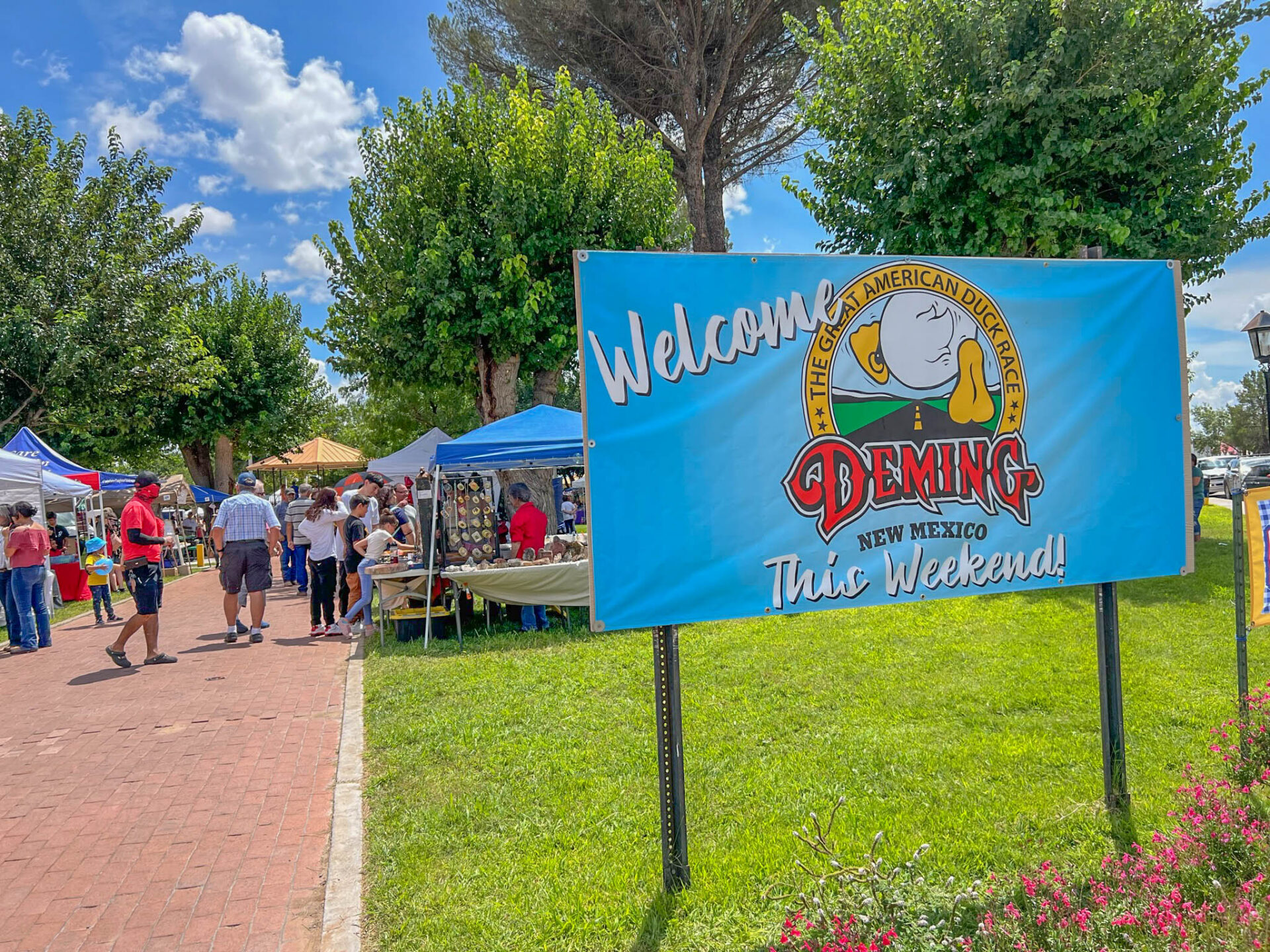
So, on a very hot Saturday afternoon in August, I pulled into Deming for the Great American Duck Race. It was around 12:30 p.m., already somewhere in the mid-90s, and the festival was getting crowded.
My plans for the afternoon were pretty simple. I wanted to race a duck and enter the tortilla toss. I had absolutely no experience racing ducks (shocking, I know), but I did have years of experience throwing corn tortillas off my deck for deer and the occasional raven, so I figured I had at least one of those events covered.
As it turned out, competitive tortilla tossing wasn’t quite what I expected. Neither was duck racing.
After spending a few sweaty hours at the festival, I briefly explored downtown Deming, stopped for a green chile burger at one of the more unusual restaurants I’ve visited in New Mexico, and finished the day at Rockhound State Park to find out how it earned its name.
Here’s what I found.
Table of Contents
Heads up: Some of the links in this post are affiliate links. If you buy something through them, it helps support this site, at no extra cost to you. I only recommend stuff I genuinely use and trust.
A Brief History of Deming
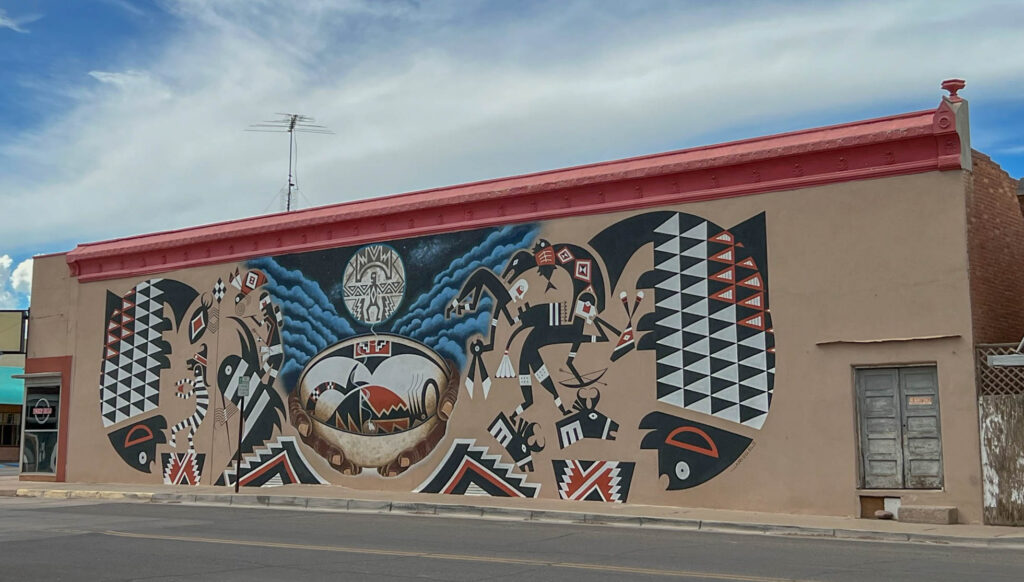
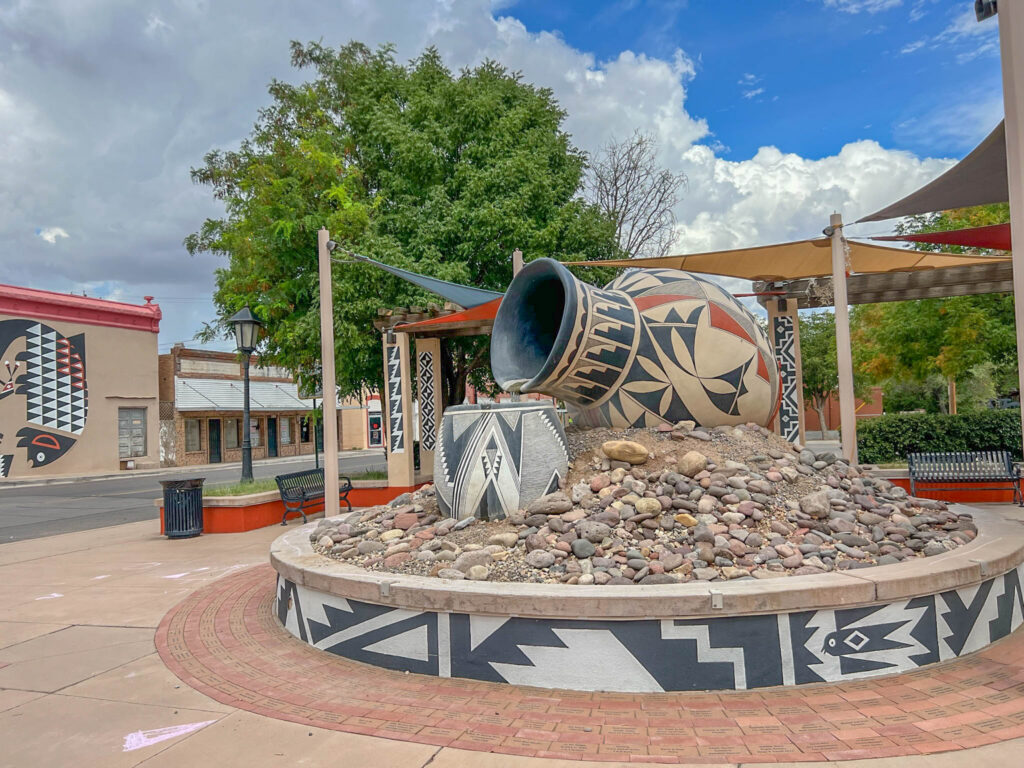
Long before there was a Deming, people had been living in southwestern New Mexico for centuries. The Mimbres culture, part of the broader Mogollon tradition, thrived in the region and became particularly well known for its distinctive black-on-white pottery. Later, this was Apache country. Permanent Spanish, Mexican, and early American settlement stayed sparse too, held back in part by how little water the area had to offer. By 1858, Butterfield Overland stagecoaches were passing through the region on their roughly 2,800-mile run between Missouri and California, part of a mail contract that had more to do with politics in Washington than conditions on the ground.
Like a lot of towns in New Mexico, Deming owes its existence to the railroad. Deming itself dates to 1881, when the Southern Pacific and Atchison, Topeka and Santa Fe railroads met here and drove a silver spike to mark the occasion, completing the nation’s second transcontinental railroad.
Deming wasn’t always Deming, or even in the same place. An earlier settlement called New Chicago was located about 10 miles east of present-day Deming, but was moved in search of better access to water. The new settlement took the family name of Mary Ann Deming Crocker, wife of railroad executive Charles Crocker. Mary wasn’t a railroad baron herself. She was known for her charitable work, and the new town was named in her honor.
Deming’s early years were pretty rough. In fact, according to the City of Deming, the town developed such a bad reputation that some outlaws rounded up in Arizona were given one-way tickets to Deming.
The railroad brought more people and business to Deming, which developed into an important shipping point for cattle. Mining and, later, irrigated agriculture also contributed to its growth. In 1902, Deming became the county seat of Luna County and was officially incorporated.
World War I brought a much bigger influx of people to Deming. Camp Cody, a military training camp established northwest of town, housed more than 30,000 soldiers during the war. For comparison, Deming itself had just 1,864 residents in 1910. For a few years, the military population outside town dwarfed the population of Deming itself.
After the war, Camp Cody found a very different second life as a tuberculosis sanatorium for former soldiers, operated by the Catholic Sisters of the Holy Cross. The sanatorium remained there until 1939, when Camp Cody was destroyed by fire.
The military returned during World War II. Deming Army Air Field was established at what is now the Deming Municipal Airport and trained bombardiers, with more than 5,000 men stationed at the base.
World War II also hit Deming close to home. Deming’s National Guard unit, the 200th Coast Artillery, was called into federal service and sent to the Philippines, commanded by C.G. Sage, who also published the town’s newspaper. About 246 men from Luna County served in the regiment. Most of them ended up on the Bataan Death March, where several Deming soldiers died, and most of the survivors spent the rest of the war as prisoners until 1945.
Today, about 15,000 people call Deming home. And once a year, some of them race ducks.
The Great American Duck Race
The Great American Duck Race got its start in 1980, when a group of local businessmen were looking for a way to attract visitors and drum up business in Deming during the summer. According to local accounts, the idea emerged during brainstorming sessions involving drinks and cigars. With plenty of ducks available on local farm ponds, somebody suggested racing them. Somehow, the idea stuck.
The inaugural event was billed as the “world’s richest duck race,” a reference to the All-American Futurity horse race in Ruidoso, which was then the world’s richest horse race. The idea generated more attention than you might expect from ducks running 16 feet across southern New Mexico. News of the race spread around the country, and organizers found themselves preparing for national media coverage and larger crowds than expected.
The races worked a little differently back then. Contestants brought their own ducks, gave them names, and crawled alongside the track trying to coax them toward the finish line. A duck from Las Cruces named Stratacaster covered the 16-foot course in 1.791 seconds. It wasn’t quite enough to win the finals, though. That honor went to Duc Andra, raced by Tommy Brdecko of Deming.
Another finalist was a man named Robert Duck, who had been born Robert Ricketts but apparently found his true calling in 1980. After entering two pet ducks in the inaugural Deming race, his ducks went on to dominate the sport, winning for 12 years and earning about $50,000 in prize money. He eventually turned duck racing into a business and became known as the “Chief Quacker” at the Great American Duck Race.
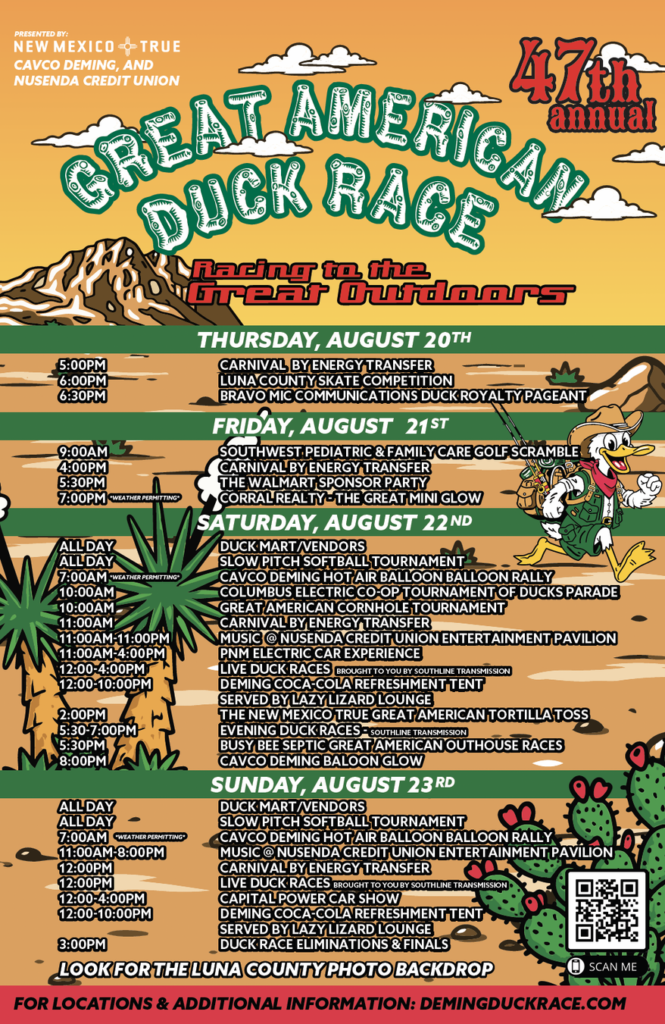
The event has grown considerably since 1980. Today, the Great American Duck Race stretches over four days and includes hot-air balloons, a parade, live music, vendors, a Duck Royalty Pageant, tortilla tossing, outhouse racing, and, of course, live duck races. The 2026 event will mark the 47th annual Great American Duck Race.
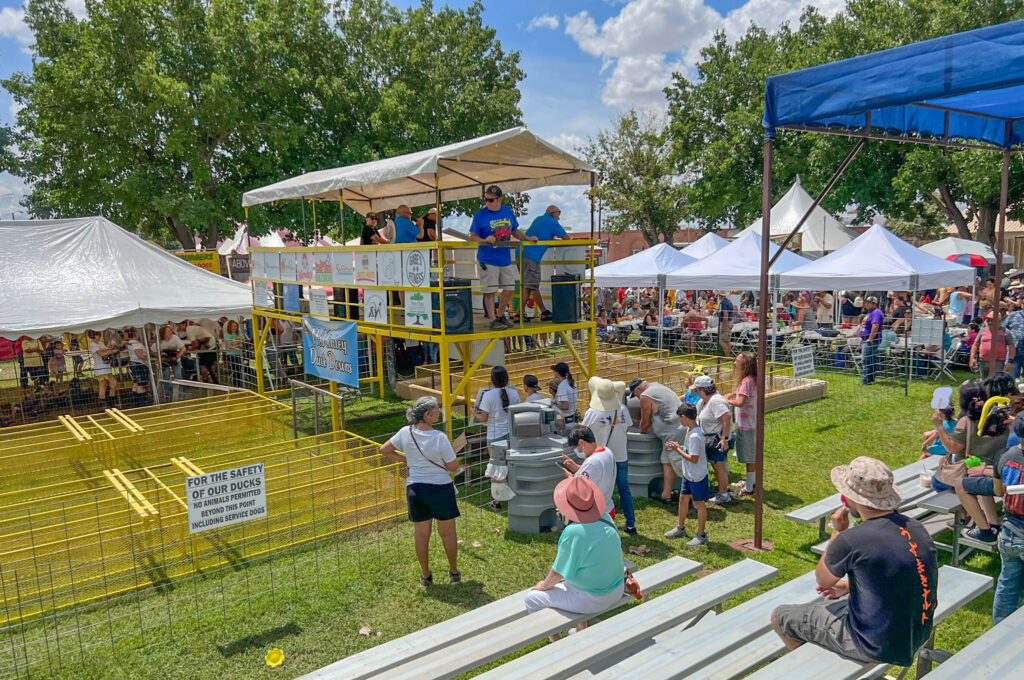
How to Race a Duck
Before arriving in Deming, I had never given much thought to the mechanics of racing a duck. As it turns out, you have two options: wet or dry.
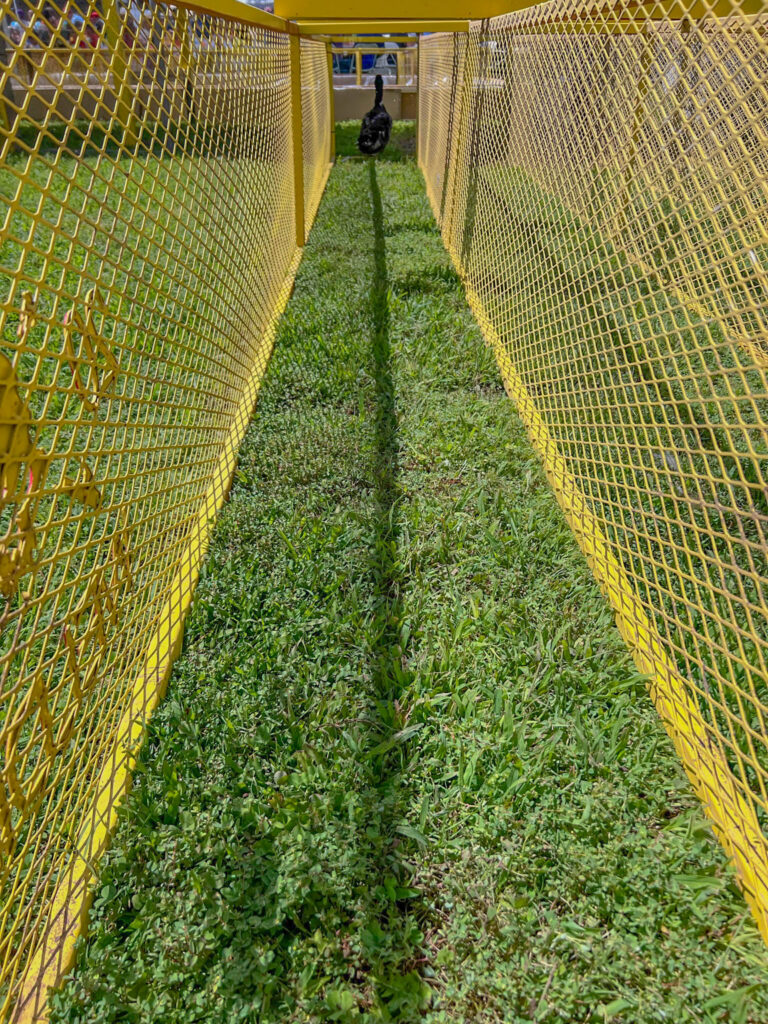
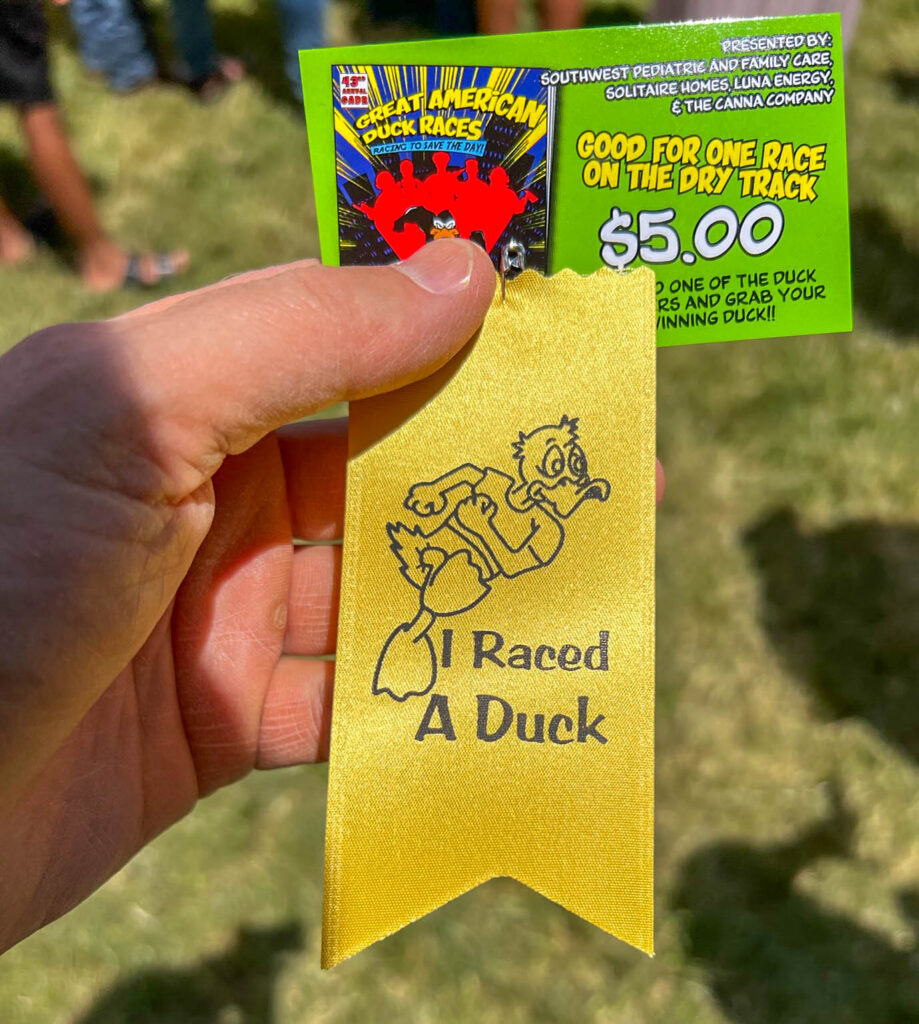
The dry races take place on a 16-foot track, where the goal is to get your duck to run from one end to the other faster than the ducks in the neighboring lanes. The wet races follow the same basic idea, except the ducks swim through narrow lanes of water while racers splash behind them to encourage them toward the finish line. And this isn’t just for bragging rights. The wet- and dry-track champions each take home a cash prize, which was at least $1,500 when I attended.
I chose the dry race. The line was considerably shorter, but there was another reason. As a bird nerd, ducks are my pals, and I wanted to race a duck, not annoy it.
Unfortunately, choosing the shorter line didn’t mean I would be racing anytime soon. There were far more people waiting to race on the wet track, so the announcer kept calling wet races while those of us waiting for the dry track stood around. I finally got my turn at about 1:45 p.m., which was cutting things a little close since the tortilla toss started at 2:00.
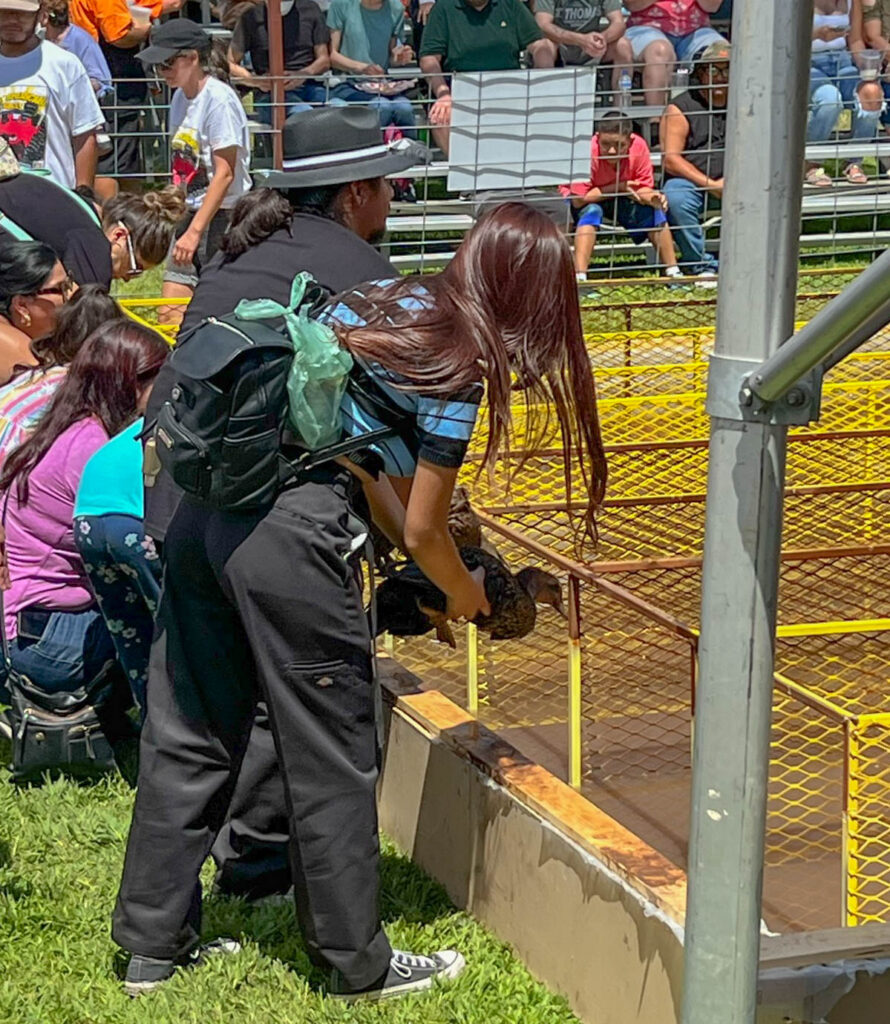
When my turn came, a volunteer handed me an impressive-looking male duck. This created an immediate problem. I wanted a photo, but holding a duck requires both hands if you want your shirt to stay relatively mud-free, and I hadn’t thought to ask someone to take a quick photo before the race.
I headed to lane five and waited for the start. My strategy was not particularly sophisticated. I was more interested in getting a good photo of the duck than actually winning the race. I simply put the duck down and immediately scrambled for my phone, hoping to get a photo before he took off.
The duck took off quickly and was making great progress toward victory. Then he suddenly stopped, looked around for a bit, and casually walked toward the finish line. So he was far enough away for me to miss the photo, but not far enough along to win the race. Oh well. It was still fun.
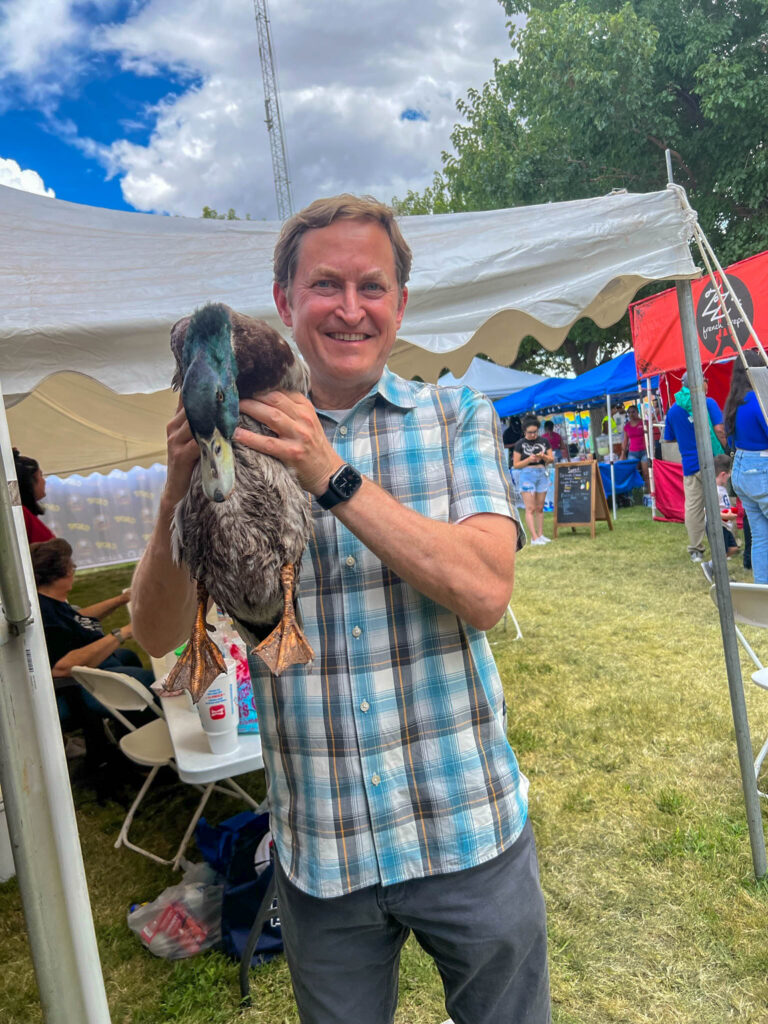
I wasn’t reunited with my prized duck after the race, so I walked back to the duck pen, explained that I was writing an article, and asked if I could get a photo with another duck. They obliged and handed me one that lacked the confident posture of my original duck and had absolutely no interest in posing for a photo.
But here’s the photo anyway.
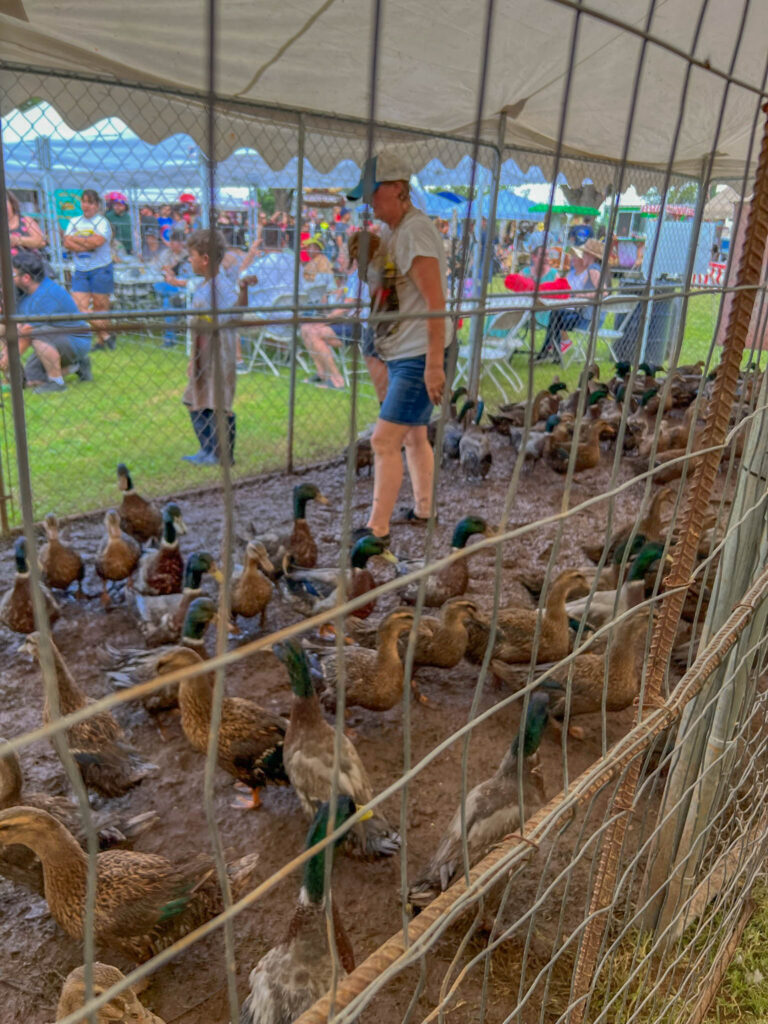
I did feel a little bad for the ducks. Between races, they were kept together in a large pen where the ground had become a soupy mixture of mud, water, and duck droppings. The ducks were pretty dirty, as were the volunteers handling them. Duck racing, I was learning, is not a particularly clean sport.
After the race, I did my best to wash my hands, which seemed particularly important since most of the festival food was designed to be eaten with them. But I didn’t have much time to dwell on that. After all, I had a tortilla to throw.
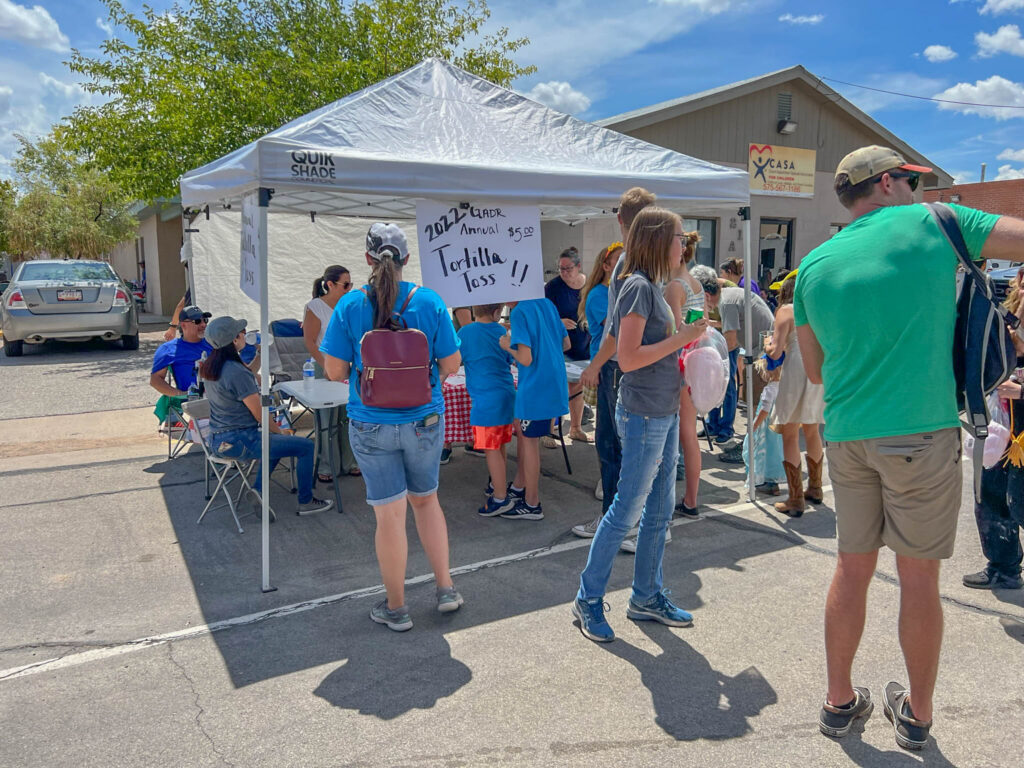
Tossing a Tortilla
Of the two events I planned to enter that afternoon, the tortilla toss was the one I felt reasonably well prepared for. I may not have had any previous duck-racing experience, but I’d thrown plenty of tortillas.
At home, I occasionally toss stale corn tortillas off my deck for the deer, with ravens sometimes swooping in to claim one for themselves. So when I saw that Deming had a tortilla-tossing competition, I figured my admittedly unusual experience might finally come in handy.
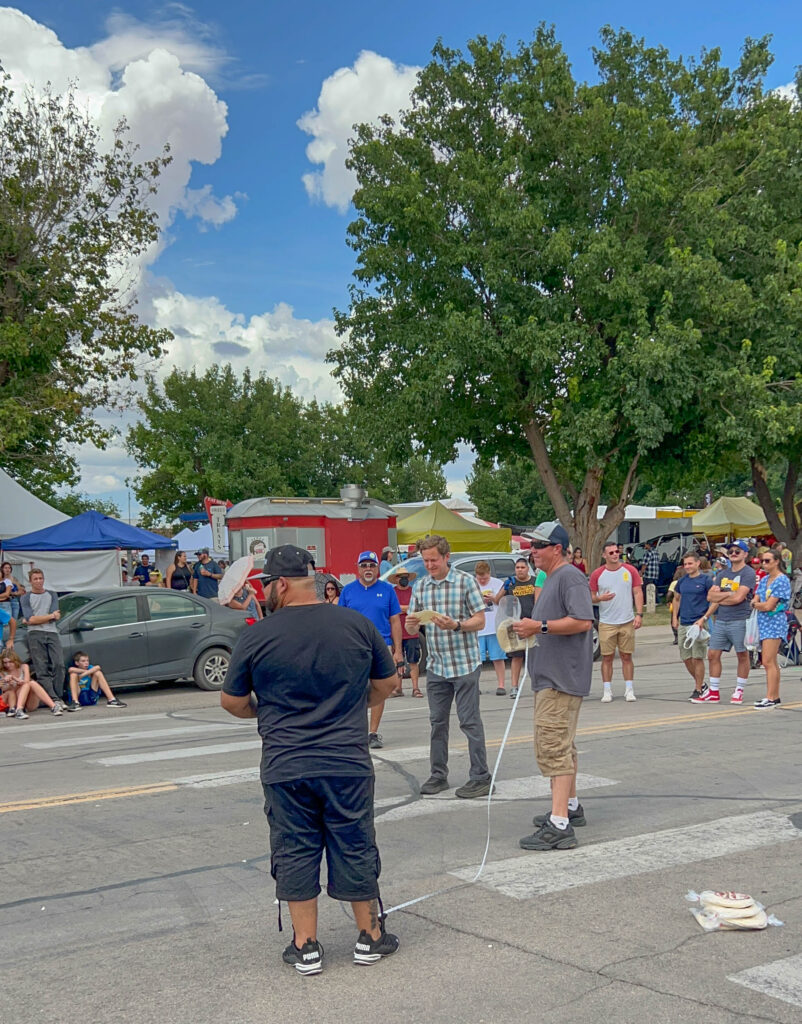
There was just one problem. The Great American Tortilla Toss uses flour tortillas.
I hadn’t really considered how much difference that would make until someone handed me one. A flour tortilla is larger, softer, and considerably floppier than the corn tortillas I was used to throwing. If you throw it too hard, there’s a good chance it will tear, and if the front edge folds downward in flight, your throw is pretty much doomed. Apparently, my experience feeding the local wildlife wasn’t going to give me quite the competitive advantage I’d imagined.
For a moment, I was tempted to crumple the tortilla into a tight ball and throw it that way, but after mentally calculating the reaction that might generate, I decided against it.
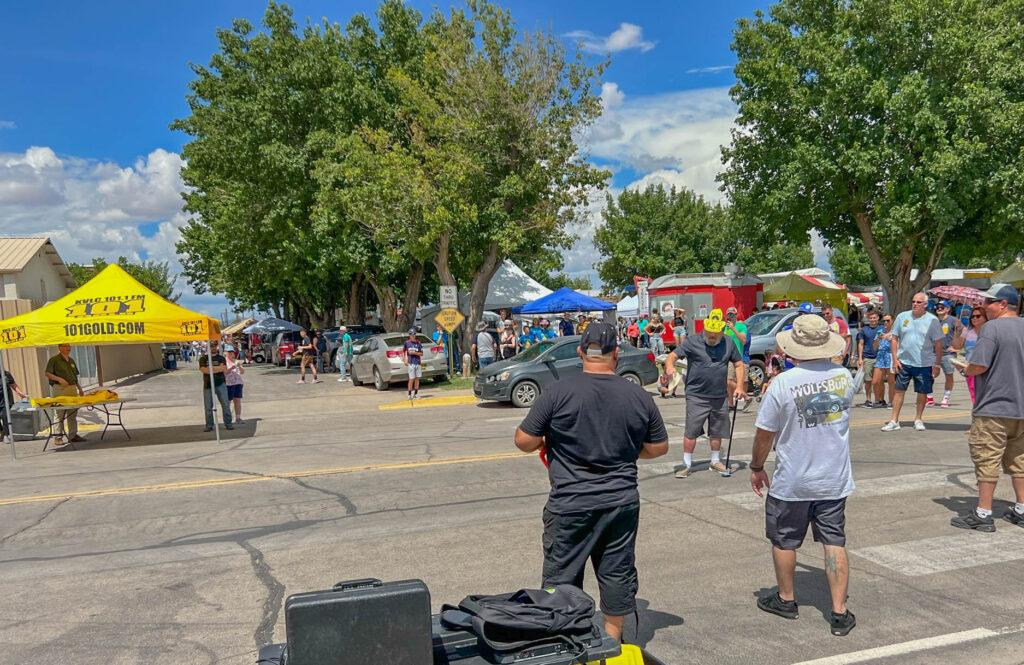
Wind was another major factor. We were actually trying to time our throws to catch a good gust, which made the whole thing an unpredictable combination of skill, strategy, and luck.
Each contestant got two throws. My first sailed 32 feet, which wasn’t bad. My second made it just 17 feet before flopping to the ground. Fortunately, only the better throw counted.
My 32-footer was good enough for fourth place in the 17-54 age division. The winning throw traveled 48.5 feet after catching a particularly helpful gust of wind, followed by throws of 40 and 36 feet. Only the winner received the $25 prize. As it turned out, my throw would’ve won the 55-and-over division, but I’d missed the age cutoff by one year. Not that I’m competitive or anything.
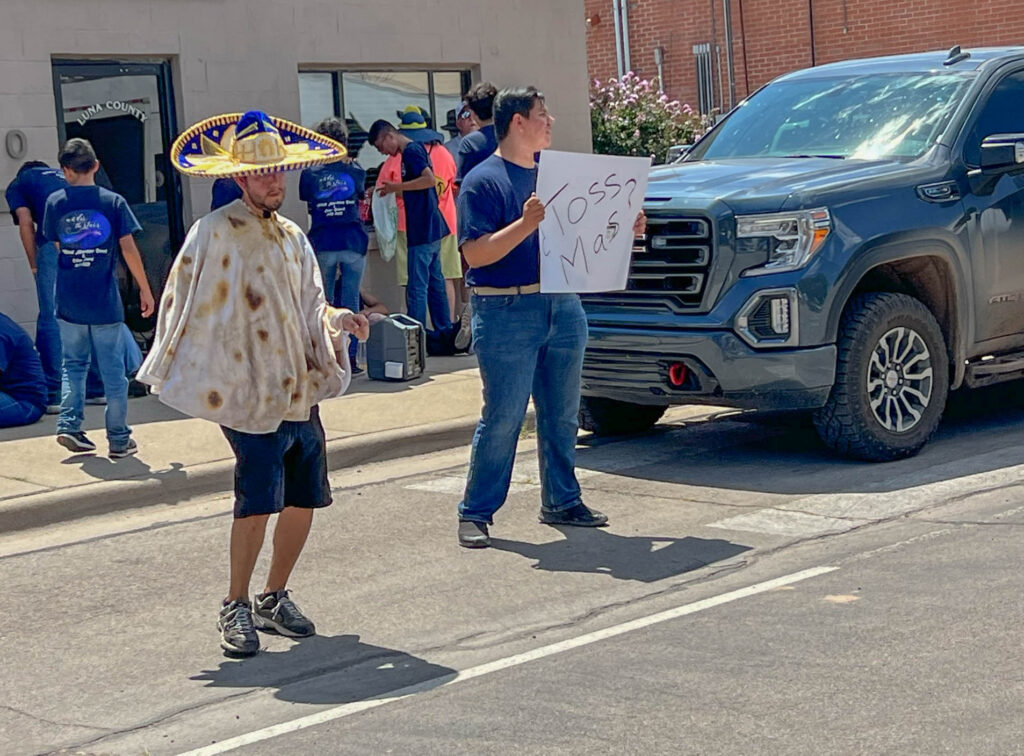
Food, Rides, and Racing Outhouses
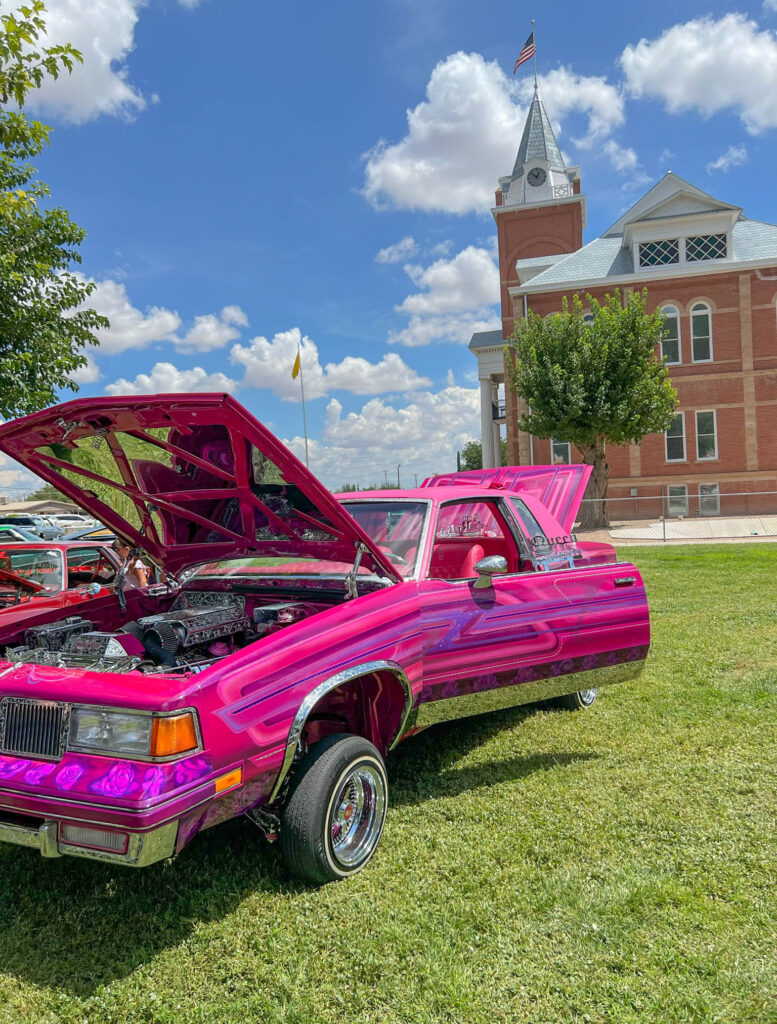
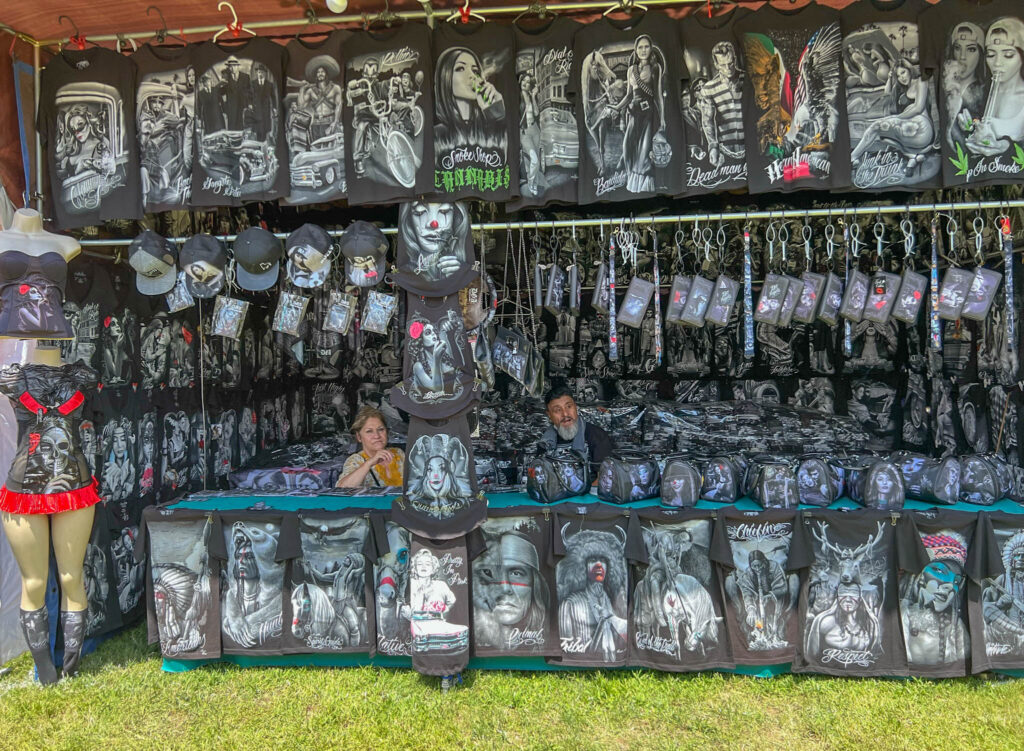
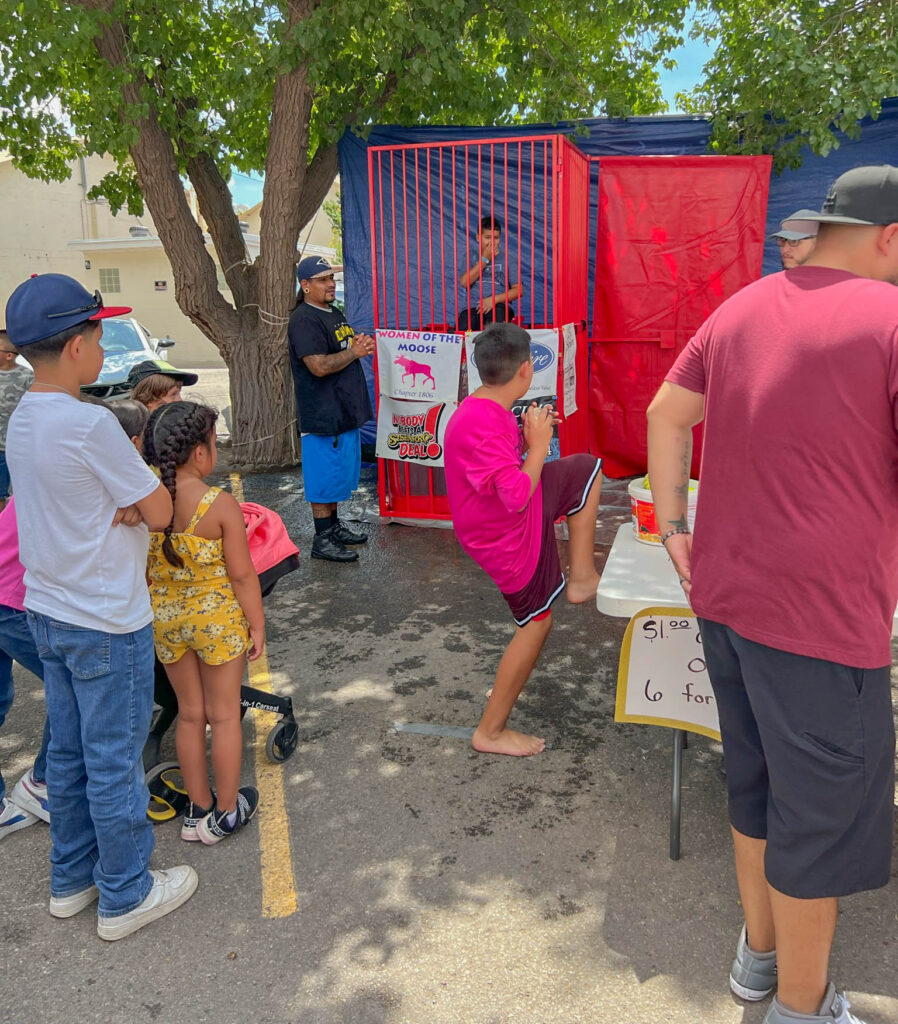
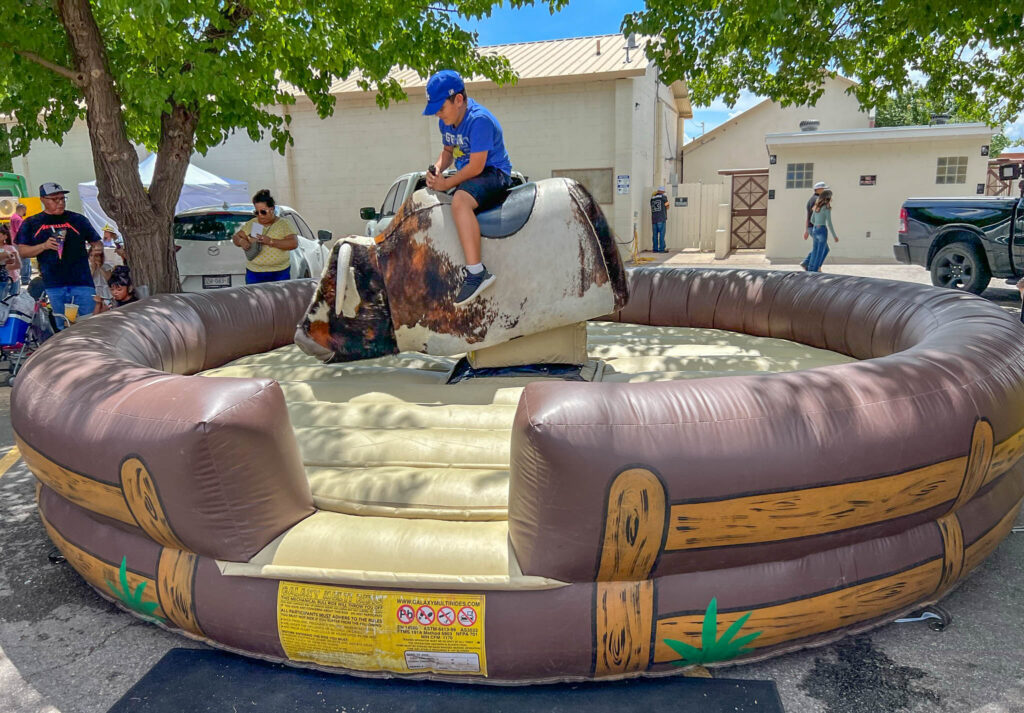
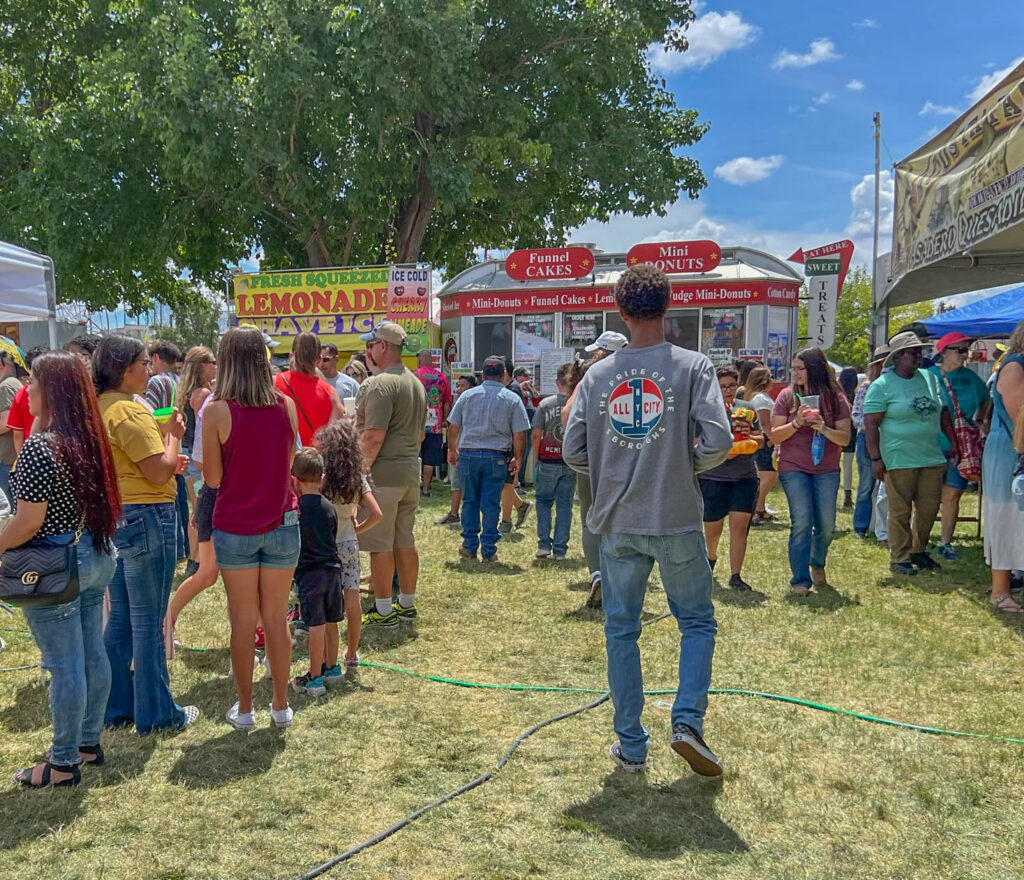
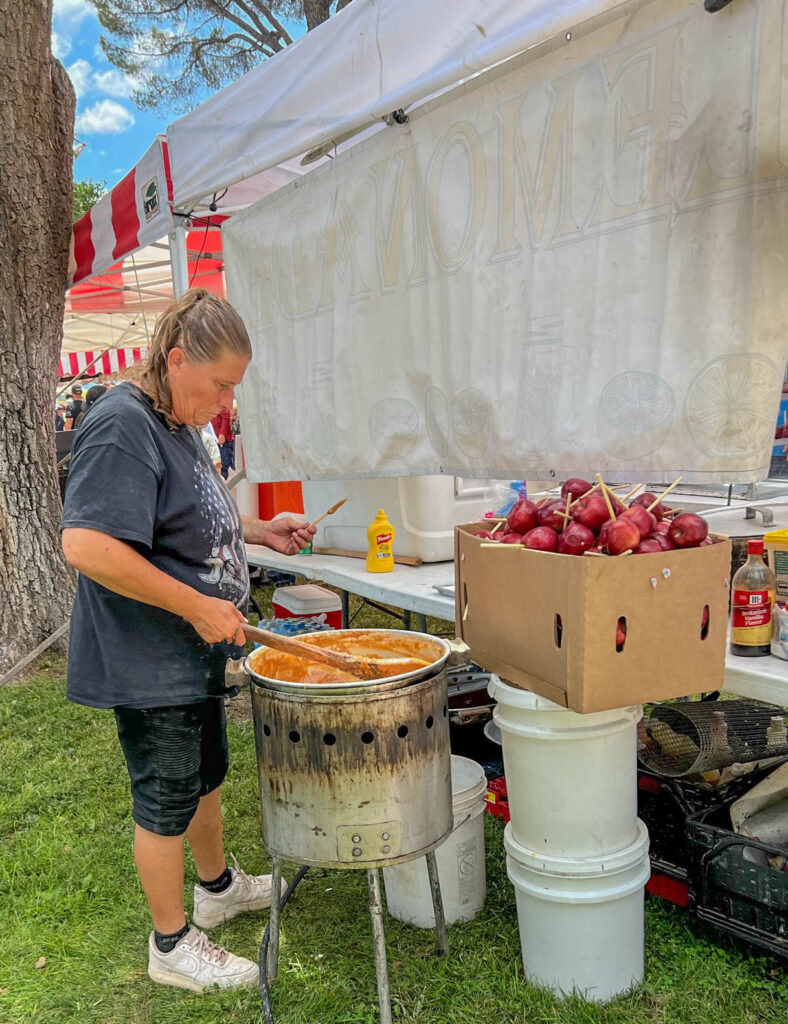
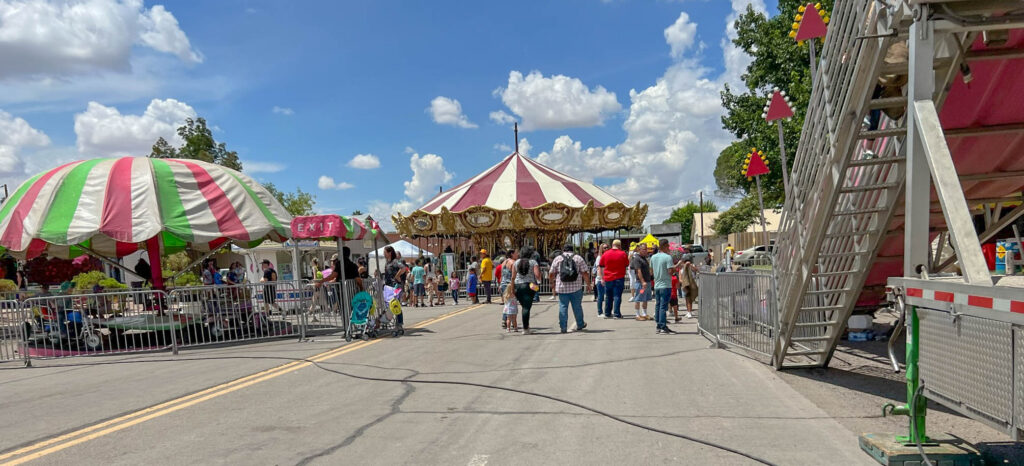
Despite the name, there’s a lot more going on at the Great American Duck Race than racing ducks. The festival takes over Luna County Courthouse Park for four days, with food stands, vendors selling all sorts of things, live music, and a small carnival area for kids with a merry-go-round, a mechanical bull, and a few other rides.
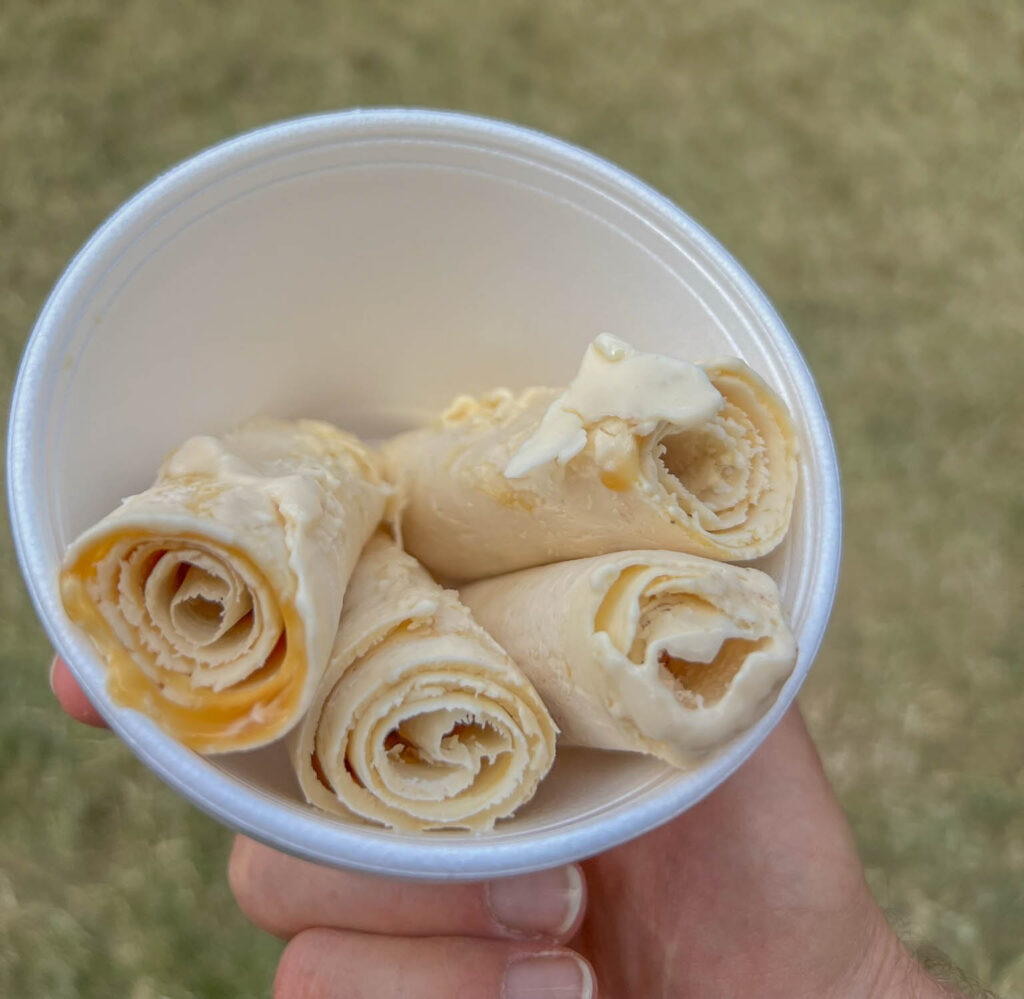
There were plenty of food options, and I did make room for some rolled ice cream, which was particularly welcome on a mid-90s afternoon.
The weekend schedule is fairly ambitious. There’s a Tournament of Ducks Parade, a Duck Royalty Pageant, a hot air balloon rally and balloon glow, a cornhole tournament, a car show, and, perhaps most importantly, the Great American Outhouse Races.
Unfortunately, I missed the outhouse races, which didn’t start until 5:30 p.m. I was tempted to stick around, but I still wanted to visit Adobe Deli and Rockhound State Park before heading home. The outhouses will have to wait until next time.
A Detour to Adobe Deli
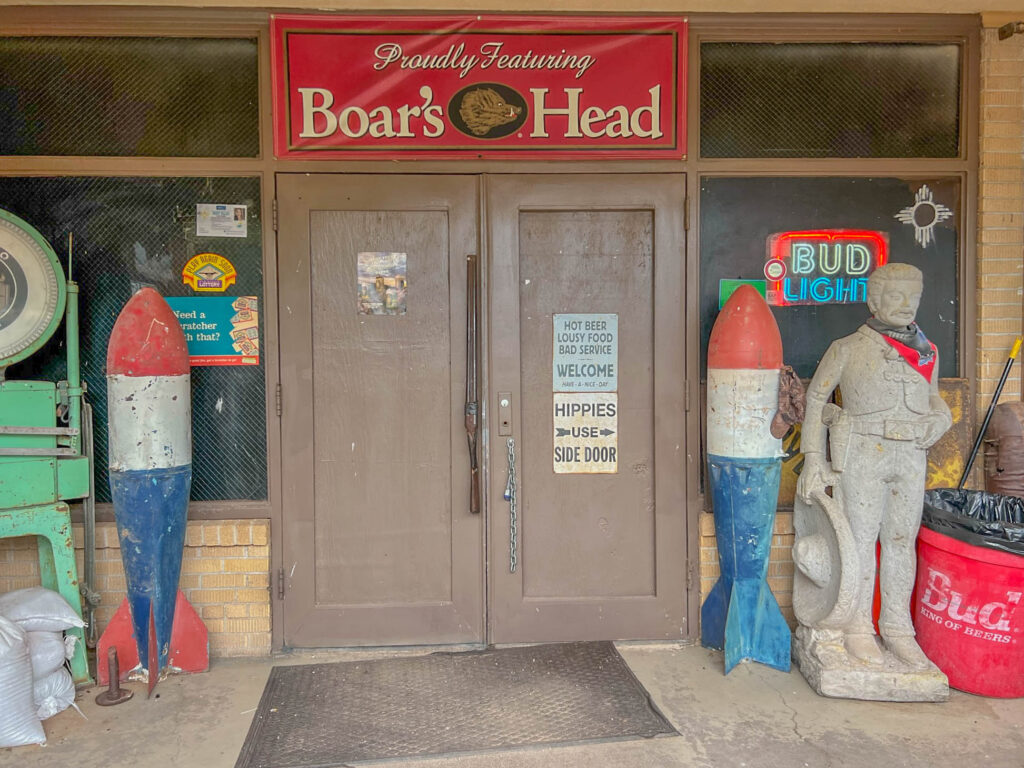
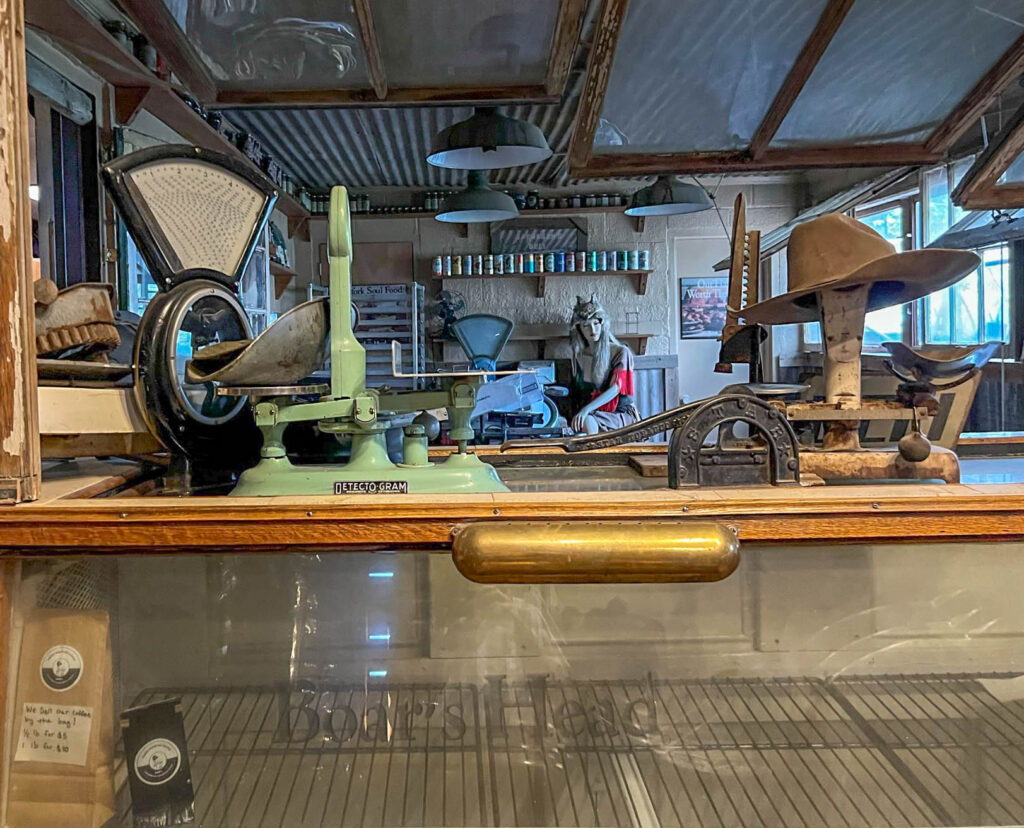
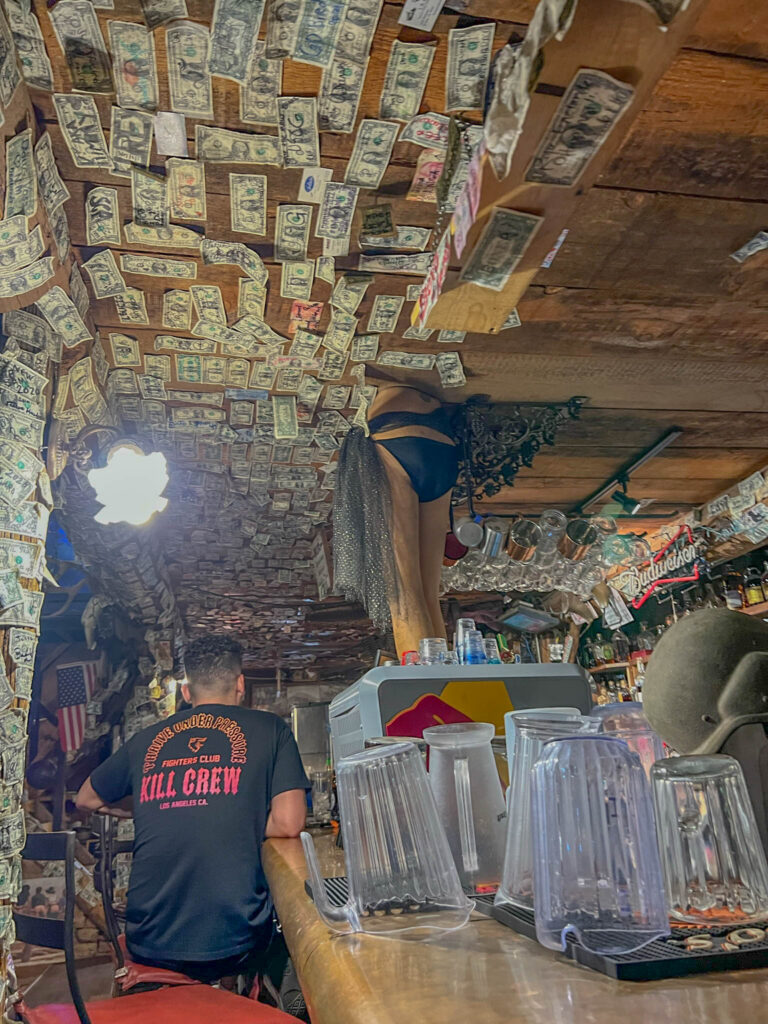
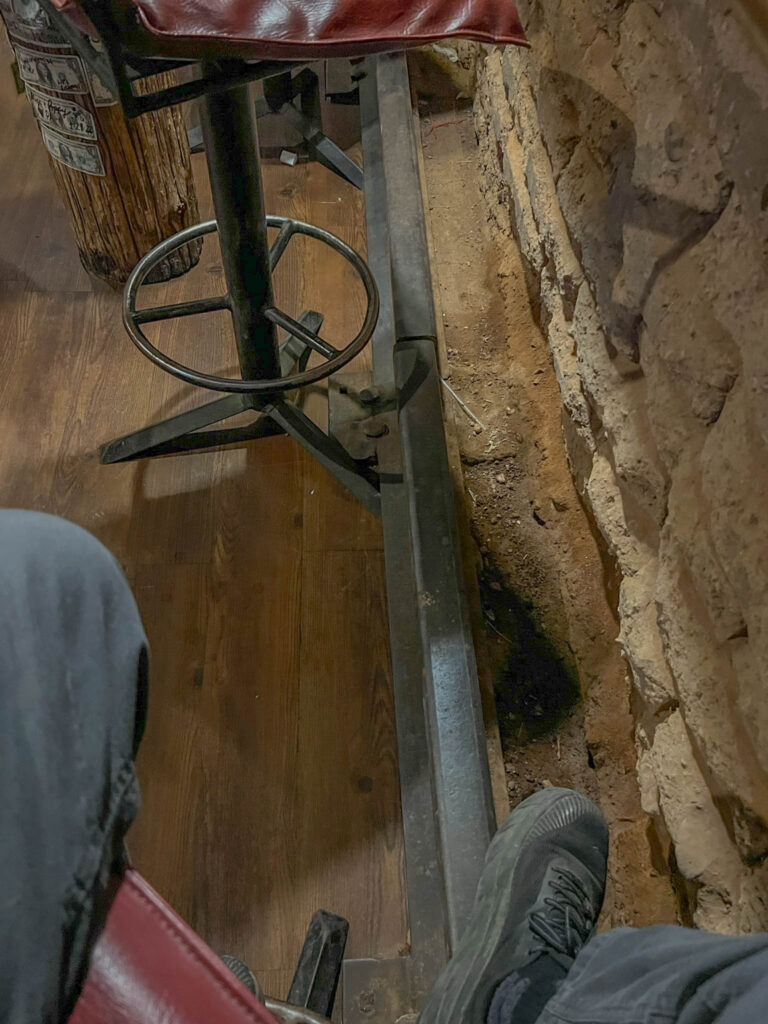
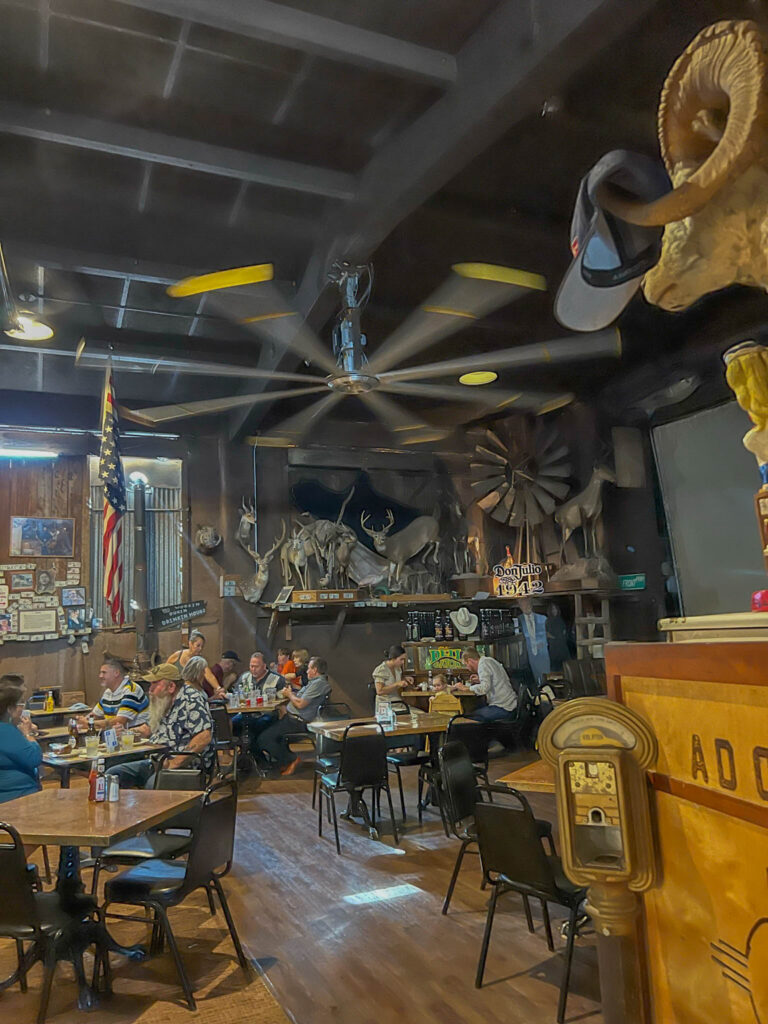
Before heading to Rockhound State Park, I made a detour about 10 miles east of Deming to The Adobe Deli. The restaurant is inside the former Lewis Flats School, which closed in 1977. The old school is now packed with taxidermy, Old West memorabilia, antiques, and all sorts of other oddities. The place also has a reputation for being haunted and was featured on Ghost Adventures in 2018.
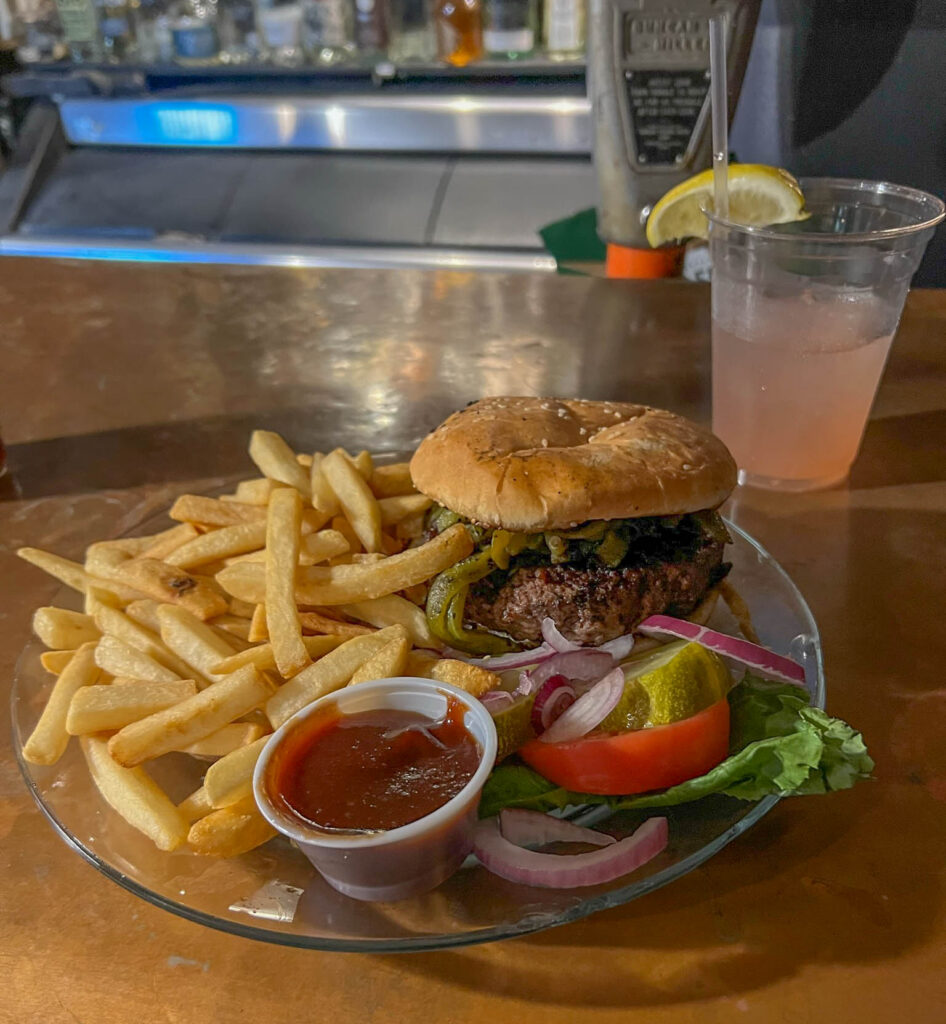
I grabbed a seat at the bar and ordered a green chile hamburger with fries and barbecue sauce on the side. Service was a little slow, but I wasn’t in a hurry, and Adobe Deli gives you plenty to look at while you wait.
At $18, the burger wasn’t cheap, but it was thick, with plenty of green chile and a generous pile of fries. More importantly, it was good.
I had apparently arrived a few hours too early for the full Adobe Deli experience. The Great American Duck Race schedule included a Duck Dance here at 8 p.m., when the tables would be cleared out and a DJ would take over. I still wanted to make it to Rockhound State Park before heading home, so I didn’t stick around. Too bad, because I was genuinely curious to see what a Duck Dance at a supposedly haunted former elementary school looks like.
Rockhound State Park
As I approached Rockhound State Park, I was immediately impressed by the jagged Little Florida Mountains rising out of the desert. The other thing I noticed was how few people were around. I pretty much had the place to myself.
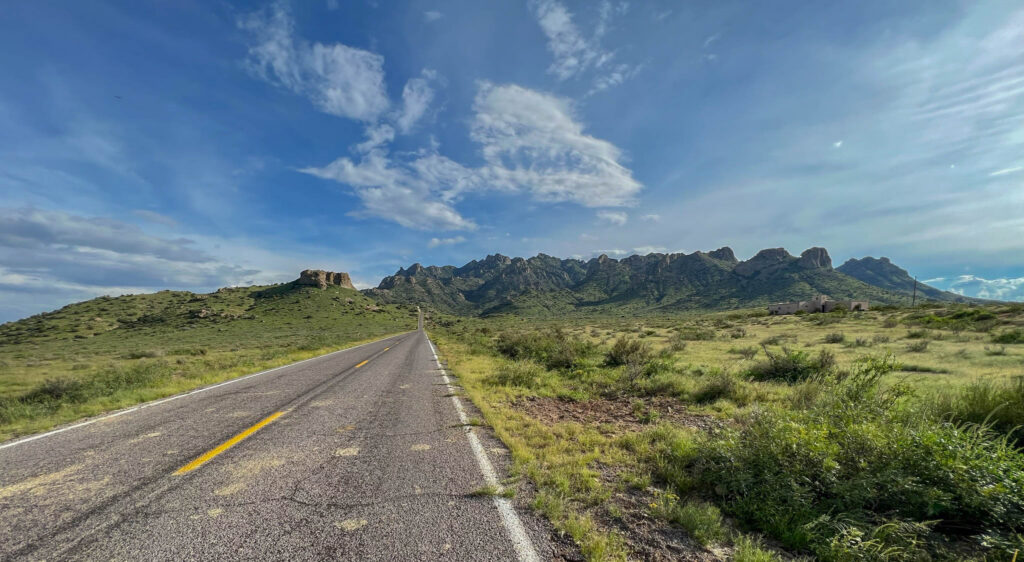
Rockhound State Park earned its name for a very literal reason. The park was established in 1966 with rock collectors in mind, and unlike most state parks, visitors are actually allowed to take some of what they find home. There are rules, of course. Collecting is limited to designated areas, anything you take is supposed to be a souvenir rather than something you resell, and you’re limited to small hand tools.
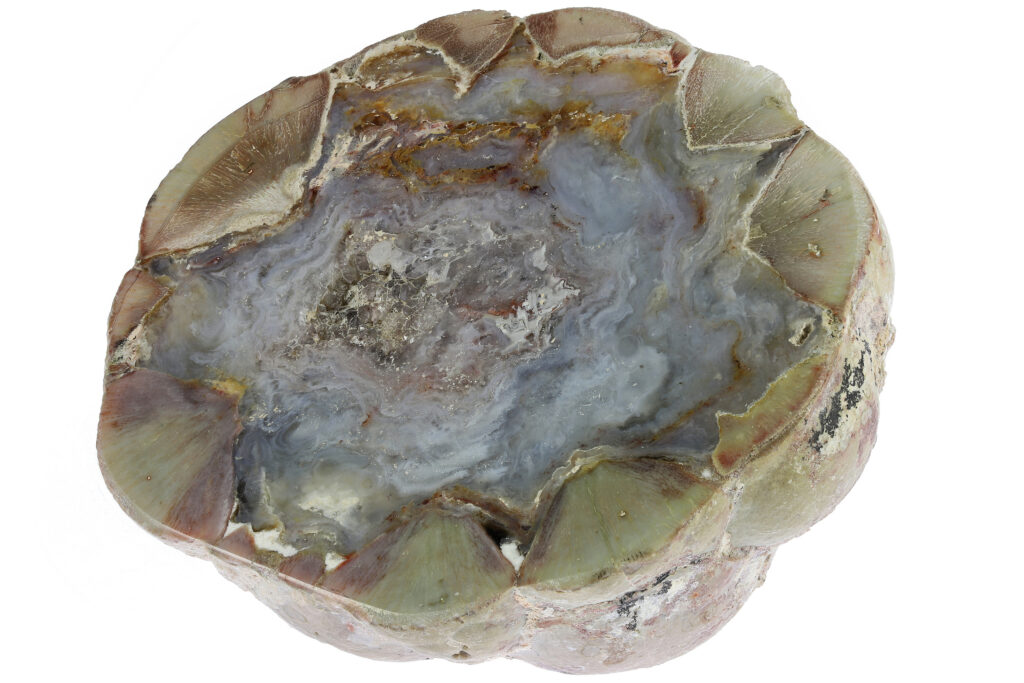
And there are plenty of rocks worth looking for. Agate, jasper, quartz crystals, geodes, onyx, and thundereggs can all be found here. I’d never heard of thundereggs before. They’re rounded masses that form in volcanic rock and can contain agate, chalcedony, or quartz inside. Unlike geodes, which are generally hollow, thundereggs are usually solid or nearly solid.
Even if you don’t know your jasper from your agate, there’s more to do than stare at the ground. Rockhound State Park has about 3 miles of hiking trails. The Jasper Trail starts near the visitor center and connects with the Thunder Egg Trail, which climbs onto the rocky slopes above the park.
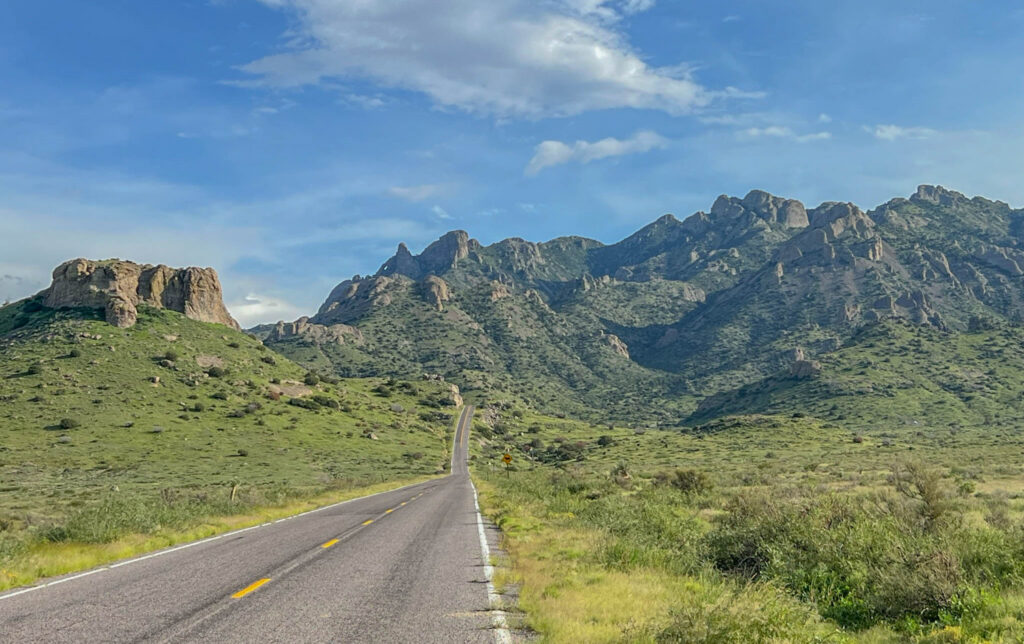
There’s also a separate Spring Canyon unit a few miles south in the Florida Mountains, which rise to 7,448 feet above sea level. Despite the familiar-looking name, florida is Spanish for “flowery,” a reference to the wildflowers that can cover the slopes after periods of rain. Spring Canyon is more about hiking and scenery than rock collecting. The Lovers’ Leap Trail switchbacks up the mountainside to a viewpoint overlooking the canyon and surrounding desert.
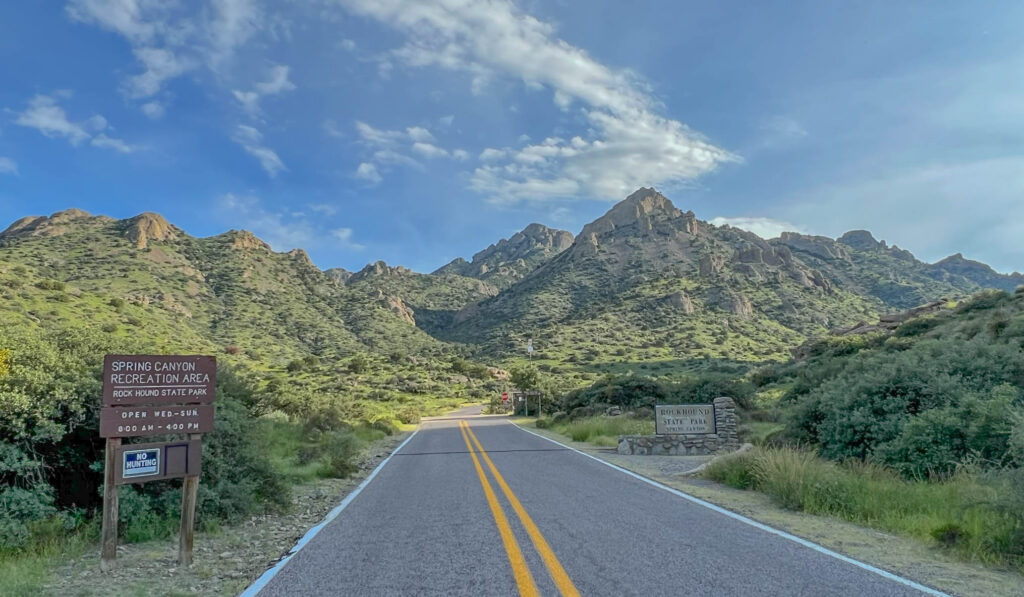
The Florida Mountains are also home to something I definitely wasn’t expecting to find outside Deming: Persian ibex. New Mexico released 15 of the wild goats from Iran into the mountains in 1970, followed by additional animals soon afterward. They apparently liked their new home. The population eventually grew to more than 1,000.
More recently, though, the population has crashed. Wildlife managers initially reduced the herd because there were too many ibex for the mountains to support, but the population continued falling for reasons that aren’t entirely understood. A 2024 thermal-imaging survey counted just 185 ibex, and surveys in 2026 found only around 100.
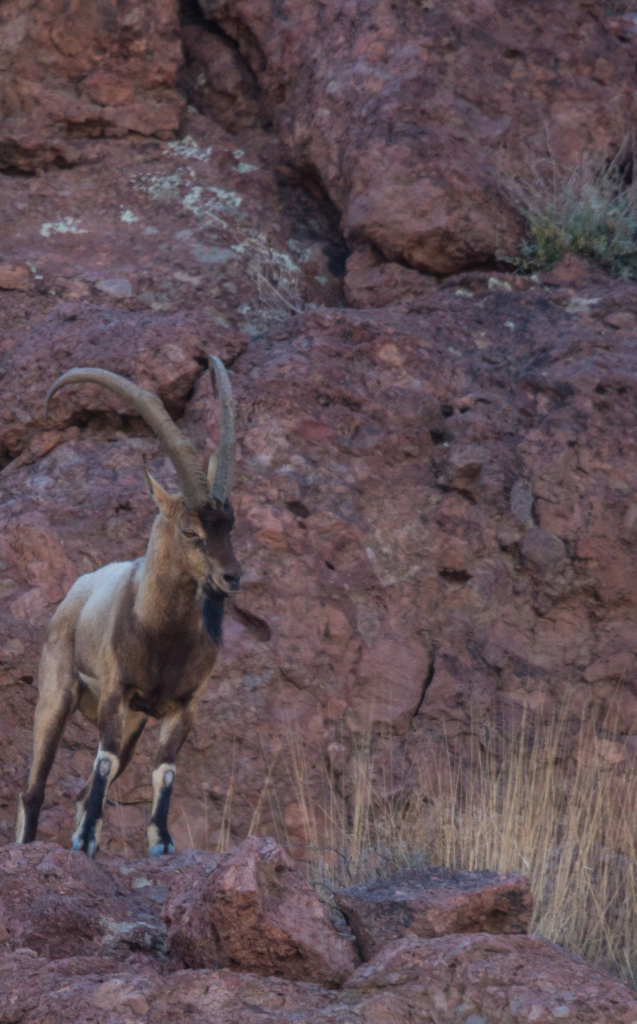
Ibex are well-equipped for these mountains. Their specially adapted hooves help them grip rock, allowing them to scramble across cliffs that would give most of us second thoughts. The Florida Mountains are the only place in the Western Hemisphere with a free-ranging, unfenced population of Persian ibex, so keep an eye on the slopes if you visit Spring Canyon. You might get lucky and spot one.
Rockhound State Park also has a campground with developed sites, including sites with electricity, along with restrooms and showers. The campsites sit right below the jagged Little Florida Mountains, with wide-open desert views in the other direction.
📚 Want to Learn More?
Deming has a surprisingly interesting mix of history, geology, and desert wildlife. If you’d like to dig a little deeper, here are a few books worth checking out:
- Rockhounding New Mexico by Martin Freed and Ruta Vaskys. If Rockhound State Park has you thinking about trying rockhounding yourself, this is a good place to start. It covers 140 rockhounding sites around New Mexico, with maps, directions, what you can find, and information on where and how to collect. New Mexico Bird Finding Guide by William H. Howe. Rather than just helping you identify birds, this guide tells you where to find them. The fourth edition covers nearly 400 birding sites across all 33 New Mexico counties, with maps, directions, and information on the species you might encounter.
- Deming (Images of America) by Laura V. Krol, part of the Images of America series. If you’re more interested in the town itself, this book uses historic photographs to tell Deming’s story, from the Butterfield Overland Mail and the arrival of the railroads to Camp Cody, Deming Army Air Field, and the highways that later brought travelers through town.
Thought for the Week
In the spirit of all the enthusiasm on display at the Great American Duck Race, this week’s thought comes from Ralph Waldo Emerson. Emerson was a 19th-century American writer and philosopher best known for works such as Nature and “Self-Reliance,” and for his ideas about individualism, self-reliance, nature, and the importance of thinking for yourself.
Enthusiasm matters. It gets people off the sidelines and actually doing things, whether that’s tackling something important or spending an afternoon racing ducks and hurling tortillas.
I’m sure plenty of great things have been achieved without enthusiasm, so Emerson may be overselling this one a bit. But whether you’re trying to accomplish something great or just get a duck to cross a finish line, the journey is a lot more fun when you bring some enthusiasm along for the ride.
Which brings us to this week’s quote:
“Nothing great was ever achieved without enthusiasm.”
— Ralph Waldo Emerson
Thanks for reading and happy travels!
Mark (The New Mexico Travel Guy)

Mark Aspelin, The New Mexico Travel Guy (www.newmexicotravelguy.com), is a travel writer, conservation biologist, project manager, and author of two books. He’s currently working on his third book, the upcoming Moon New Mexico travel guide (Fall 2027), published by Moon Travel Guides, and wrote the Northeastern New Mexico chapter for the 2026 edition of Fodor’s New Mexico. Mark has visited over 100 countries and all 50 U.S. states, just enough to land in the Travelers’ Century Club and make choosing a favorite place nearly impossible. He’s currently on a questionable mission to visit every town in New Mexico (there are over 500) and write a story about each one, with plans to wrap it up sometime before his early to mid 100s. Mark balances his writing with conservation and project work from his home base in the East Mountains near Albuquerque, New Mexico.


Leave a reply