

Visting “The Most Dangerous Town in America” for the Billy the Kid Pageant and Old Lincoln Days
Updated July 2026
A few years ago, I was rolling down the highway on a sunny Friday afternoon toward the Hondo Valley of New Mexico. My destination? The historic town of Lincoln, New Mexico, home of the annual Billy the Kid Pageant and Old Lincoln Days.
Never heard of it? Well, you’re not alone. I hadn’t either.
Earlier that summer, I stumbled across the event while looking through the Ruidoso tourism website. A three-day celebration in one of New Mexico’s most historic Old West towns, complete with reenactments of the Lincoln County War, live music, food, arts and crafts, a parade, and a pageant featuring Billy the Kid’s famous escape from the Lincoln County Courthouse?
Sold.
So I made the drive to Lincoln to check it out for myself. As it turns out, plenty of other people had the same idea.
Here’s what you can expect at the Billy the Kid Pageant and Old Lincoln Days, along with a look at the history that made this tiny New Mexico town famous in the first place.
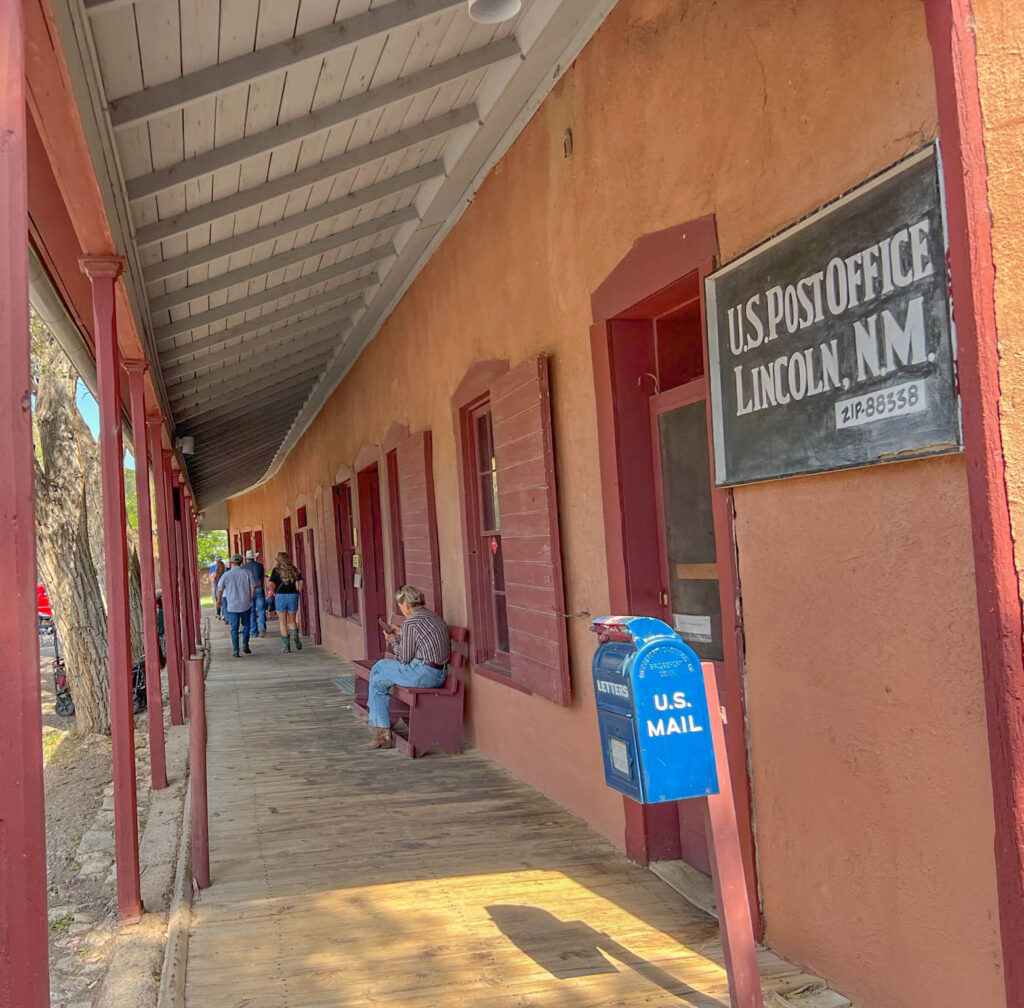
Table of Contents
Heads up: Some of the links in this post are affiliate links. If you buy something through them, it helps support this site, at no extra cost to you. I only recommend stuff I genuinely use and trust.
A Brief History of Lincoln, New Mexico
Lincoln is an unincorporated village located between the towns of Capitan and Hondo, New Mexico. You’ve probably never heard of those towns either, so let’s just say that Lincoln is about an hour west of Roswell and 40 minutes east of Ruidoso.
You won’t have to worry much about getting lost once you arrive. After all, there’s basically one street. U.S. Route 380 runs straight through town and, no surprise, it’s also known as the “Billy the Kid Trail.”

Lincoln has fewer than 200 residents, but it has a surprising amount of history packed along that one road. Many of its 19th-century buildings are still standing, so it feels less like an Old West attraction built for tourists and more like an actual town where a bunch of crazy stuff happened. And yes, quite a bit of that crazy stuff involved Billy the Kid. We’ll get to him soon enough.
Long before Billy showed up, the Hondo Valley was home to the Mescalero Apache. Spanish-speaking settlers began establishing communities in the area during the 1800s, and the settlement that became Lincoln was known as La Placita del Río Bonito, or “the little place by the pretty river.” I have a hard time picturing a group of rugged frontier settlers sitting around the fire and coming up with “the little place by the pretty river,” but I’ll go with it. The Río Bonito still flows near town today, so you can decide if the name fits.
The settlers frequently came into conflict with the Mescalero Apache. To protect themselves during attacks, they built El Torreón, a round stone defensive tower that you can still see today. The original structure is believed to have been four stories tall, with openings around the walls for defenders. During attacks, women and children reportedly sheltered on the ground floor while armed men occupied the upper levels. A roughly 10-foot-high wall surrounded the tower so livestock could be brought inside too. Standing next to El Torreón today, it’s difficult to picture an entire village, plus livestock, crammed inside those walls while an attack was taking place.


By 1869, La Placita del Río Bonito was about to trade its poetic name for one with a bit more historical weight. Lincoln County was created that year and named for President Abraham Lincoln, who had been assassinated four years earlier. The town became Lincoln and served as the county seat until 1909, when the county offices moved to Carrizozo.
But the “little place by the pretty river” wasn’t destined to have a particularly peaceful history. By the late 1870s, Lincoln had become the center of a violent feud involving rival merchants, cattlemen, lawyers, lawmen, hired guns, and a young outlaw named William H. Bonney, better known as Billy the Kid.
To understand how Lincoln ended up with a reputation as “the most dangerous town in America,” we need to know a little about the Lincoln County War.
The Lincoln County War
Rest assured, I’m not going to break down the Lincoln County War in excruciating detail. You can get the full scoop when you visit the museum in the Lincoln Courthouse and other historic sites around town. But to understand how Billy the Kid fits into Lincoln’s history, you need to know the basics.
The very short version is that two rival factions were fighting for control of business in Lincoln County. On one side were Lawrence Murphy and James Dolan, whose mercantile and banking operation dominated local trade. They could charge high prices for the goods they sold while paying low prices for cattle from local ranchers. As you might imagine, this arrangement worked considerably better for Murphy and Dolan than it did for everyone else.
That arrangement began to change in 1877, when English cattleman John Tunstall and lawyer Alexander McSween opened a rival store and banking operation, with backing from cattleman John Chisum, who reportedly controlled more than 100,000 head of cattle. Suddenly, Murphy and Dolan weren’t the only game in town.
Needless to say, the two sides did not become friendly competitors. Their business dispute escalated into legal battles, threats, and eventually violence. In February 1878, a posse acting under Lincoln County Sheriff William Brady set out to seize some of Tunstall’s horses as part of a legal dispute. On February 18, members of the posse encountered Tunstall and shot and killed him, turning a business rivalry into the Lincoln County War.
Enter Billy the Kid
To understand what happened next, it helps to know how Billy the Kid ended up in Lincoln in the first place.
Born Henry McCarty, Billy lost his mother as a teenager and soon started getting into trouble with the law. After escaping arrest for theft in New Mexico, he fled to Arizona, where he began using the name William H. Bonney. In 1877, he killed a blacksmith during a fight and returned to New Mexico as a wanted man.
Somewhere along the way, William H. Bonney became better known as Billy the Kid. By December 1880, the name was official enough that a $500 reward notice published in the Las Vegas Gazette referred to him as “Billy the Kid,” along with “William Bonny,” an incorrect spelling of Bonney.
Billy eventually went to work for John Tunstall and apparently developed a lot of respect for him. So when Tunstall was murdered in February 1878, Billy didn’t exactly shrug it off.
Billy joined a group known as the Regulators, who set out to bring Tunstall’s killers to justice. Unfortunately, “bringing them to justice” in 1878 Lincoln County sometimes looked a lot like killing them. The Regulators tracked down and killed two men accused of participating in Tunstall’s murder and later ambushed and killed Sheriff William Brady on the main street in Lincoln.
The violence continued for months, culminating in a five-day battle in Lincoln in July 1878. By the time the Lincoln County War finally burned itself out, around 19 people had been killed. Billy survived the war, but his story in Lincoln wasn’t finished.
In 1880, Lincoln County Sheriff Pat Garrett captured Billy, who was eventually tried, convicted of murdering Sheriff Brady, and sentenced to hang. Billy was brought back to Lincoln and locked up on the second floor of the courthouse under the watch of deputies James Bell and Bob Olinger.
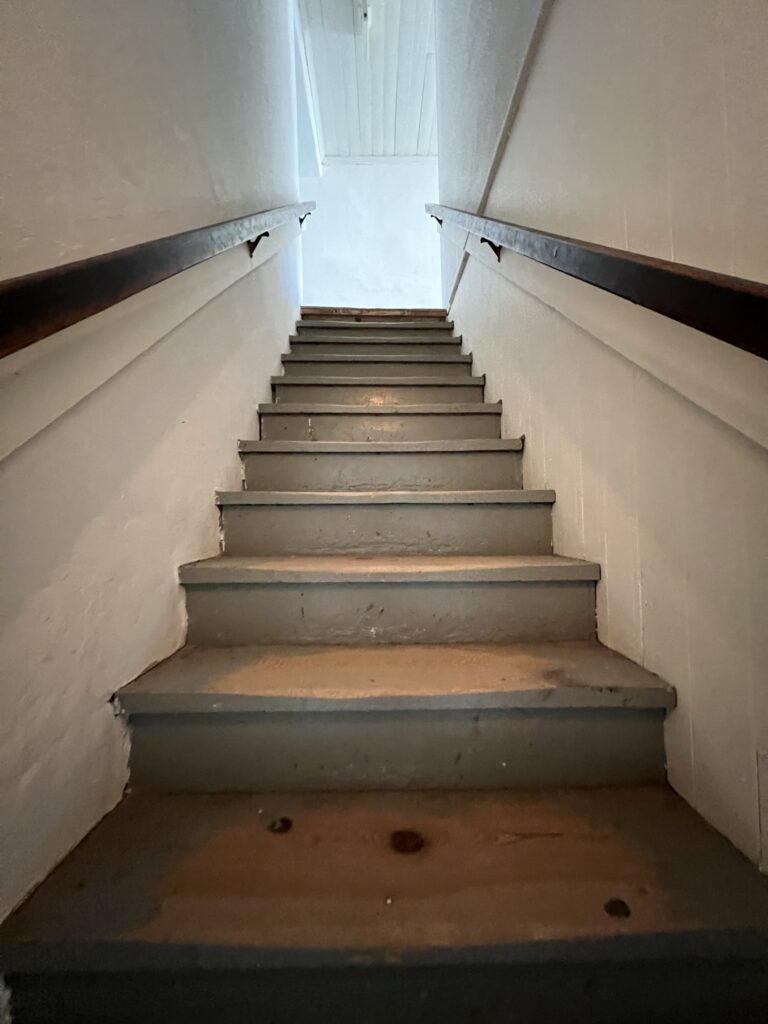
On April 28, 1881, with Garrett out of town, Billy made his escape. Exactly how he managed to get hold of a gun is still debated, but Billy shot Bell as the deputy fled down the courthouse stairs. Billy then found Olinger’s double-barreled shotgun inside the courthouse and waited for Olinger, who was across the street having dinner with the other prisoners. When Olinger heard the gunshot and came running back, Billy shot and killed him from an upstairs window with Olinger’s own shotgun.
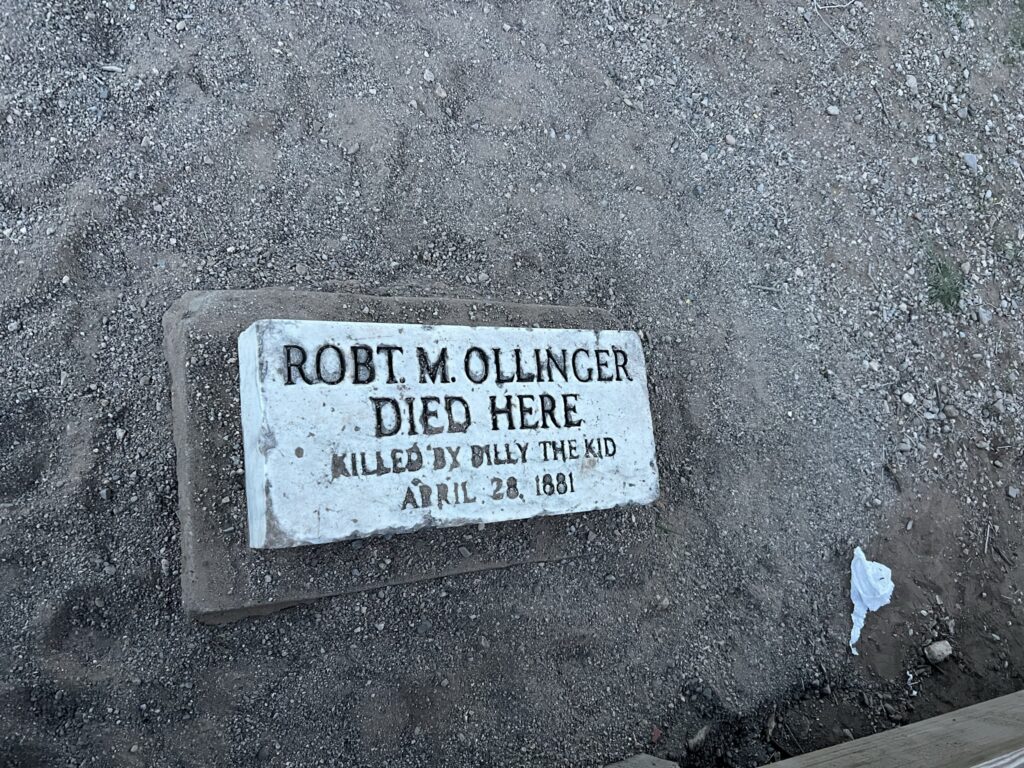
Billy still had shackles around his legs, which he reportedly broke with a pickaxe before finding a horse and riding out of Lincoln. Surprisingly, he didn’t seem to be in much of a hurry. He reportedly spent close to an hour around the courthouse before finally leaving town.
Garrett caught up with Billy a few months later at Fort Sumner, where, according to the generally accepted version of events, he shot and killed him on July 14, 1881. There are plenty of stories claiming Billy somehow survived and lived under another identity, but the historical evidence points pretty strongly toward Garrett actually killing him.
Billy’s courthouse escape became one of the most famous episodes of his short life, and you can still visit the building where it happened today.
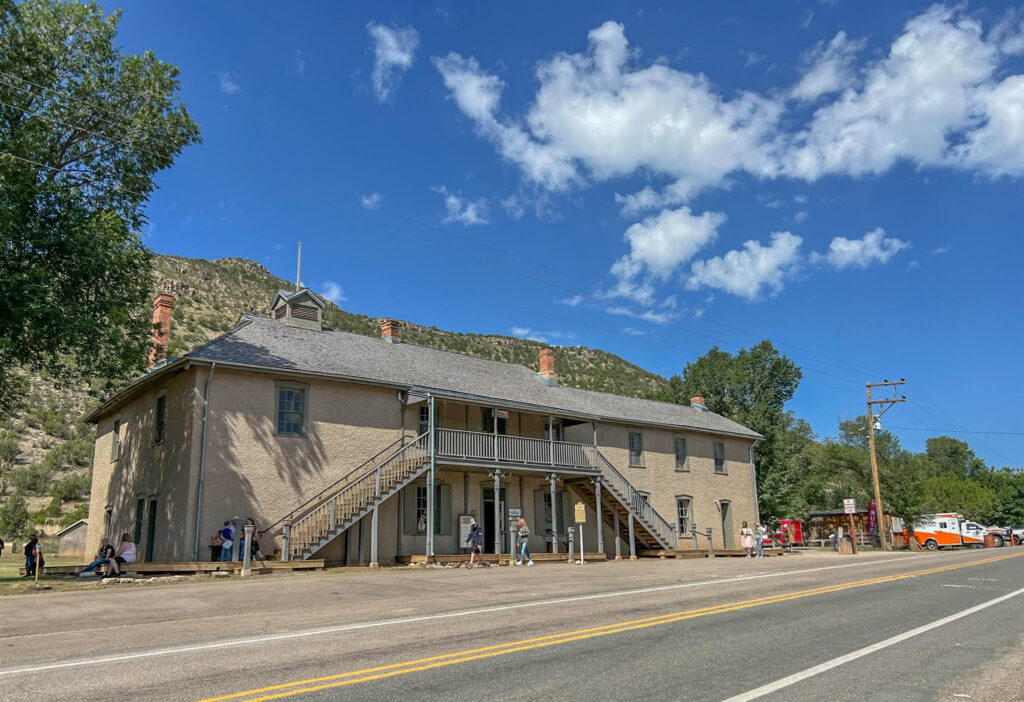
Lincoln County Courthouse
After reading about the Lincoln County War and Billy the Kid, the Lincoln County Courthouse is probably the one building in town you won’t want to skip. Better yet, it’s the actual building where much of the story happened, not a reconstruction.
The building started out as the Murphy-Dolan store, putting it right in the middle of the business rivalry that helped start the Lincoln County War. It later became the Lincoln County Courthouse, and in 1881, Billy the Kid was held prisoner upstairs while waiting to be hanged for the murder of Sheriff William Brady.
As we now know, the waiting-to-be-hanged part didn’t exactly go according to plan.
Billy escaped from the courthouse on April 28, 1881, killing deputies James Bell and Robert Olinger before riding out of Lincoln. Today, you can walk through the same building and see exhibits covering Billy the Kid, the Lincoln County War, and the history of Lincoln.


What’s the Billy the Kid Pageant Really Like?
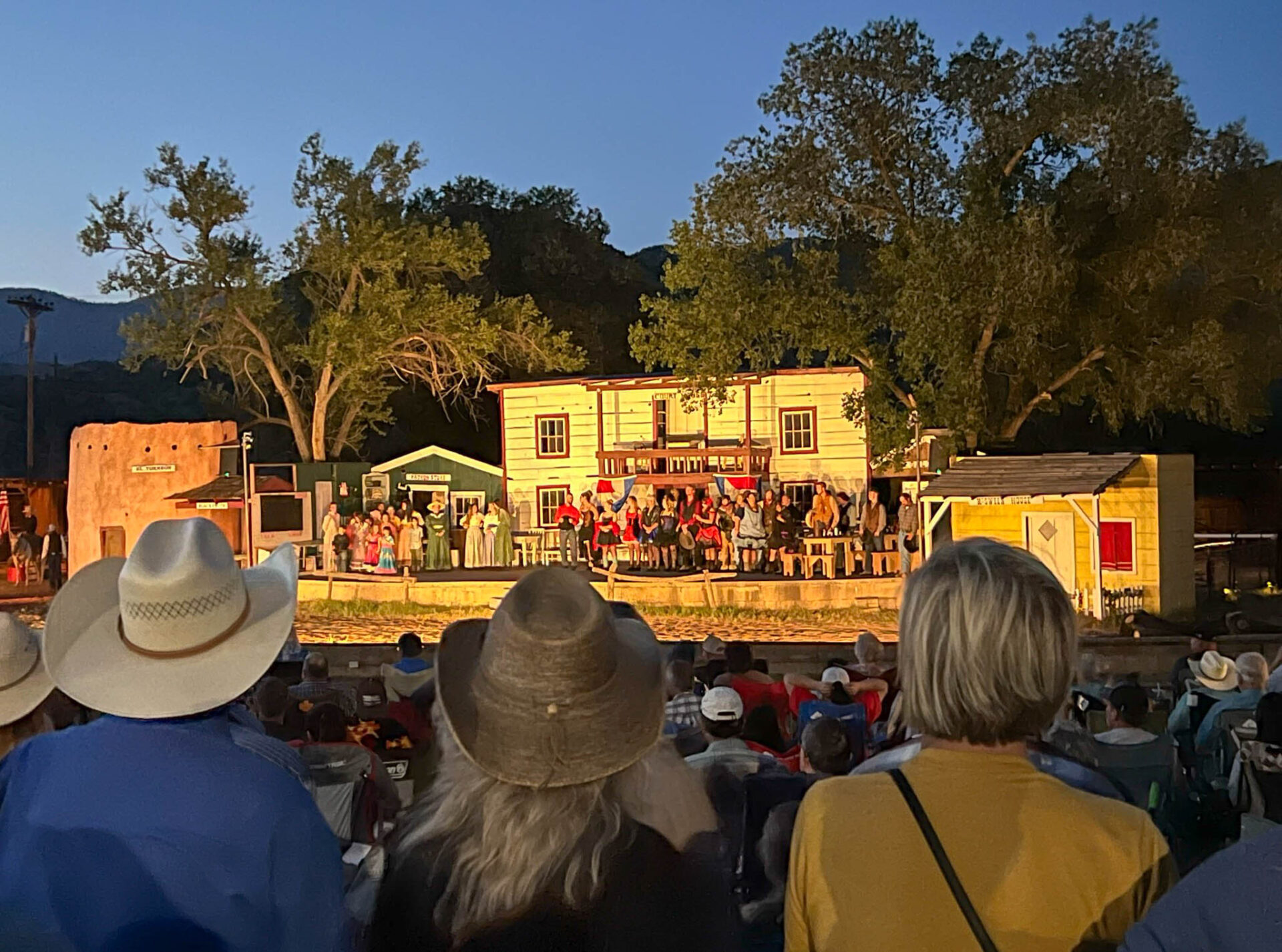
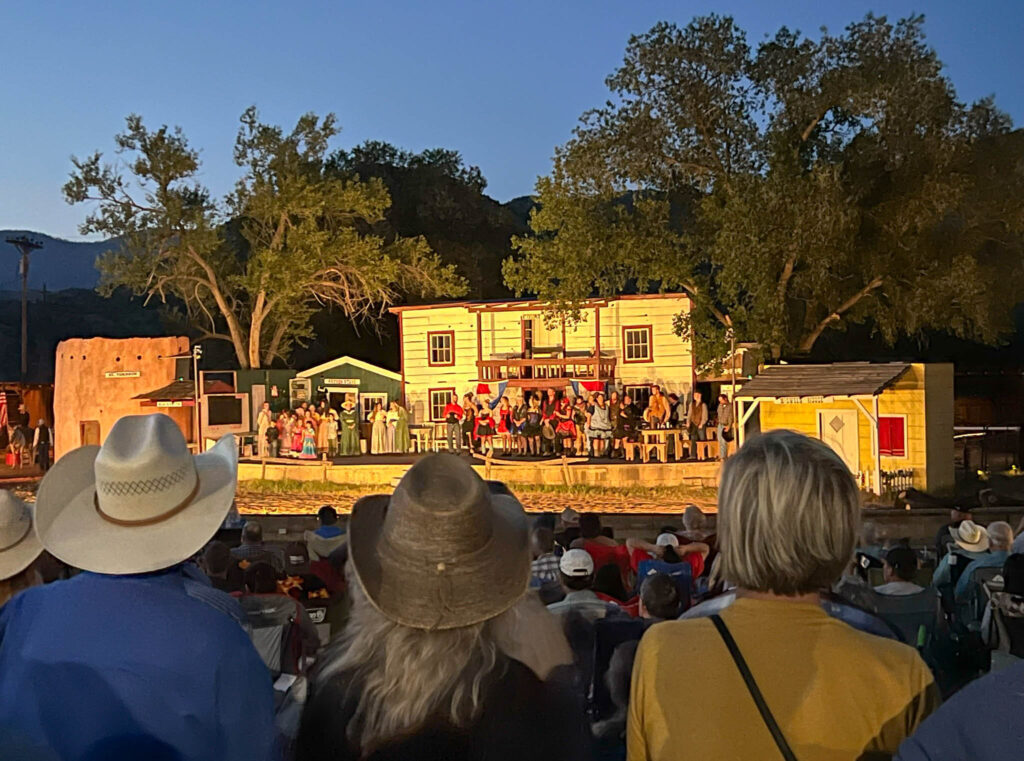
The Billy the Kid Pageant is performed once a day during the three days of Old Lincoln Days. It has been a Lincoln tradition for more than 80 years.
Before you start envisioning massive crowds, remember, this is rural New Mexico. The photos below should give you a pretty good sense of the seating capacity and crowds, although plenty of people bring their own chairs. As you can see, this isn’t Wembley Stadium.
Another thing that makes the Pageant interesting is that the performers are volunteers. For some, participating has become a family tradition passed down through generations, and I was told that some people had been involved with the Pageant for nearly 50 years.
So what did I think? I’m glad I made the trip. Part of the fun was simply seeing the local scene. There were plenty of farmers and ranchers there with their families, and I saw a lot of cowboy hats and boots that I’m pretty sure weren’t purchased for a country two-step class.
When I attended, I was able to buy a ticket at the gate about 30 minutes before the show started, but I wouldn’t necessarily count on that. There are only two performances scheduled for 2026, and tickets are available in advance online. If you know which night you want to attend, I’d probably buy your ticket ahead of time. I’d still bring some cash to Lincoln, though. Cell service can be pretty sketchy, so I wouldn’t count on being able to use a credit card everywhere.
Know Before You Go: 2026 Billy the Kid Pageant
Dates: Friday, August 7 and Saturday, August 8, 2026
Time: 8:30 p.m.
Tickets: $11 for adults; $6.89 for children ages 6–12; free for children 5 and under. Children 5 and under still need a ticket.
Pets: No pets except service animals
Heads up: The performance includes gunfire, so expect some loud bangs.


Old Lincoln Days
The Billy the Kid Pageant may get top billing, but there’s plenty going on in Lincoln during the day too. Old Lincoln Days runs from Friday through Sunday, with gunfight reenactments, live music, historical presentations, food and other vendors, children’s activities, and plenty of people wandering around town looking considerably more comfortable in cowboy boots than I ever will.
Lincoln Historic Site also hosts lectures and other activities throughout the weekend. In 2026, that includes presentations on Billy the Kid’s courthouse escape, the Lincoln County War, and even some new research into Billy’s actual age. There will also be screenings of Young Guns inside the Lincoln County Courthouse, which seems like about as appropriate a place to watch it as you’re going to find.
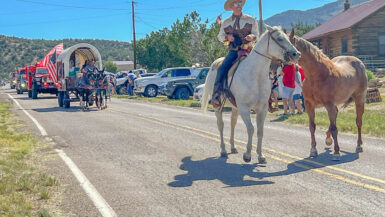
The Old Lincoln Days Parade starts at 10 a.m. on Saturday, August 8. When I attended, it was a very New Mexico mix of horses, farm equipment, Old West costumes, local politicians, realtors, and assorted other entries making their way down Lincoln’s one main road.
One helpful tip if you’re planning to watch the parade: pay attention to where you park. US 380 through Lincoln closes for about an hour during the parade, and if your car is parked in the middle of town, you’re not going anywhere until it reopens. If you know you’ll need to leave early, park toward the outskirts of Lincoln, beyond the parade route in the direction you need to travel. You may have to walk three-quarters of a mile or so, but at least you won’t spend an hour staring at your car while being completely unable to drive it.
If you’re in no hurry, ignore everything I just said and park as close to the center of town as you can.


Know Before You Go: Old Lincoln Days 2026
Dates: Friday, August 7 through Sunday, August 9, 2026
Hours: 10 a.m. to 4 p.m.
Old Lincoln Days: Many community events and outdoor activities are free. The Old Lincoln Days Parade starts at 10 a.m. on Saturday, August 8.
Lincoln Historic Site: $7 for adults; free for children 16 and younger and several other qualifying groups
Billy the Kid Pageant: Separate admission required
Friday and Saturday: Historical lectures are scheduled at 11 a.m. and 2 p.m. inside the courthouse
Also happening: Gunfight reenactments, live music, vendors, children’s activities, Young Guns screenings, and other special activities
Visiting Lincoln Outside of Old Lincoln Days
Even if you visit Lincoln outside of Old Lincoln Days, it’s still worth a stop. Many of the town’s 19th-century buildings are remarkably well preserved, so you can get a pretty good sense of what Lincoln looked like during the days of the Lincoln County War.
And unlike some other historic Wild West towns, Lincoln doesn’t feel overly touristy. There aren’t souvenir shops and Old West attractions everywhere you look. For the most part, you’re walking along the same road and past the same buildings where all of this history actually happened. That’s a big part of Lincoln’s appeal.
Lincoln Historic Site buildings are generally open Thursday through Monday from 10 a.m. to 4 p.m. and closed Tuesday and Wednesday. Check the New Mexico Historic Sites website before you go for current hours, admission prices, and any closures.
📚 Want to Learn More?
If this post left you wanting to know more about Billy the Kid and the Lincoln County War, here are a few places to continue down the rabbit hole:
- In the Shadow of Billy the Kid: Susan McSween and the Lincoln County War by Kathleen P. Chamberlain. The story of Susan McSween, wife of Alexander McSween, who was killed during the Lincoln County War. She went on to become a successful rancher known as the “Cattle Queen of New Mexico.” If you only know the Lincoln County War through Billy the Kid, this book gives you a very different perspective.
- Billy the Kid: A Short and Violent Life by Robert M. Utley. If Billy is the part of the story that interests you most, this is a good place to start. As the title suggests, he packed quite a bit into 21 years.
- The Lincoln County War: A Documentary History by Frederick W. Nolan. For those who read my “I’m not going to break down the Lincoln County War in excruciating detail” comment and thought, Why not? This one’s for you.
Thought for the Week
This week’s “Thought for the Week” comes from Billy the Kid, the outlaw whose name will probably be forever linked with Lincoln, New Mexico, and seemingly every other town in New Mexico too.
Born Henry McCarty and also known as William H. Bonney, Billy became one of the most famous figures of the American West despite dying at just 21 years old.
By the end of his short life, newspapers had already helped turn Billy into a larger-than-life character. In December 1880, while a prisoner in Las Vegas, New Mexico, Billy reportedly spoke with a reporter from the Las Vegas Gazette about some of the stories that had been written about him.
His comment is an interesting reminder that there’s often a difference between a person and the reputation that grows around them. More than 140 years later, historians are still trying to separate the real Billy the Kid from the legend.
Which brings us to this week’s quote:
“I don’t blame you for writing of me as you have. You had to believe other stories, but then I don’t know if any one would believe anything good of me anyway.”
— Billy the Kid
Thanks for reading and happy travels!
Mark (The New Mexico Travel Guy)

Mark Aspelin, The New Mexico Travel Guy (www.newmexicotravelguy.com), is a travel writer, conservation biologist, project manager, and author of two books. He’s currently working on his third book, the upcoming Moon New Mexico travel guide (Fall 2027), published by Moon Travel Guides, and wrote the Northeastern New Mexico chapter for the 2026 edition of Fodor’s New Mexico. Mark has visited over 100 countries and all 50 U.S. states, just enough to land in the Travelers’ Century Club and make choosing a favorite place nearly impossible. He’s currently on a questionable mission to visit every town in New Mexico (there are over 500) and write a story about each one, with plans to wrap it up sometime before his early to mid 100s. Mark balances his writing with conservation and project work from his home base in the East Mountains near Albuquerque, New Mexico.

Leave a reply