
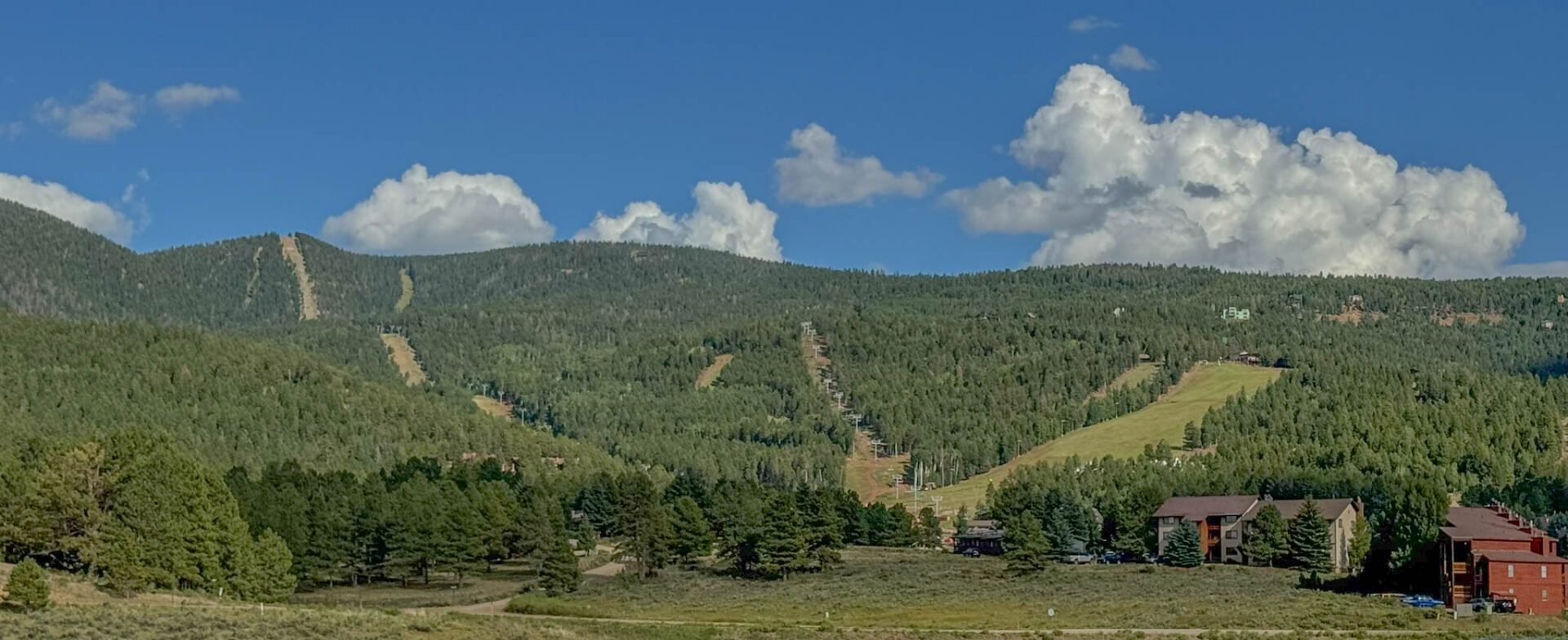

A four-season mountain destination with outdoor recreation, the Vietnam Veterans Memorial, live summer music, and a memorable breakfast.
Angel Fire is best known as a ski town, but skiing is only part of the story. This small village of around 1,200 people sits at roughly 8,400 feet in the Moreno Valley, which helps explain its appeal when temperatures start climbing elsewhere. In fact, one local told me it’s the busiest time of year, when visitors from Texas and Oklahoma head to the mountains to escape the heat. When I visited in July, the chairlifts were carrying mountain bikes instead of skiers, the 6th Annual Monte Verde Lake Regatta was underway, and that evening I found myself listening to a well-known New Mexico Latin band perform at one of the town’s free summer concerts. Granted, I didn’t see anyone dancing salsa, but everyone seemed perfectly content enjoying the music from the comfort of their lawn chairs.
The trip also included a stop at the Vietnam Veterans Memorial, which ended up being one of the highlights of my visit. My dad served as a fighter pilot during the Vietnam War, so visiting the memorial was already high on my list. After learning the story behind its creation and exploring the museum, I left with an even deeper appreciation for the sacrifices made by veterans and their families. Whether you have a personal connection to the Vietnam War or not, it’s a worthwhile stop.
Oh, and I finally tried a green chile pancake. After living in New Mexico for nearly 25 years and putting green chile on just about everything, you’d think I’d have checked that one off my list by now. Somehow, I never had. Angel Fire turned out to be a good place to check that box.
Skiing may still be what Angel Fire is best known for, but its award-winning bike park and other summer activities give you plenty of reasons to visit after the snow melts.
Here’s what you’ll find if you visit.
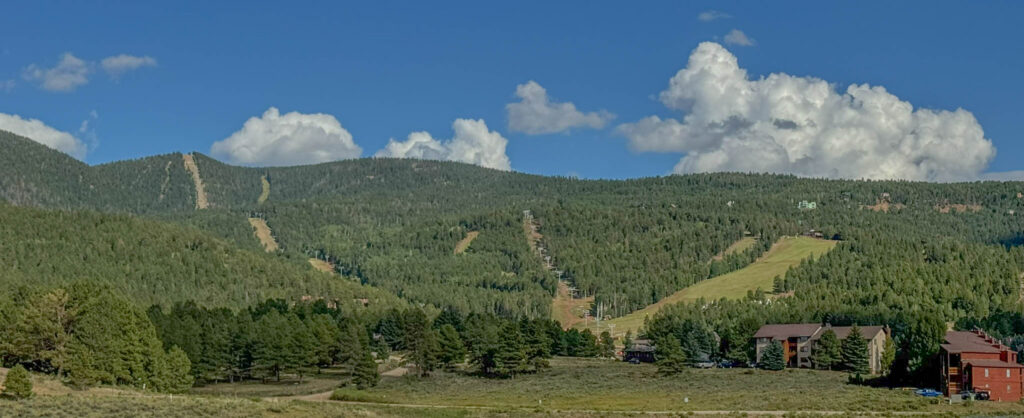
Table of Contents
Heads up: Some of the links in this post are affiliate links. If you buy something through them, it helps support this site, at no extra cost to you. I only recommend stuff I genuinely use and trust.
A New Town in an Old Valley
Angel Fire has surprisingly little history, at least as a town. The Moreno Valley, on the other hand, has a story that stretches back centuries.
Long before ski lifts, golf courses, and mountain bike trails, the Mouache Ute and Jicarilla Apache spent part of the year in the Moreno Valley, hunting and gathering throughout its forests, streams, and grasslands. Exactly how Angel Fire got its name is unclear, but one story traces it back to the Mouache Utes. According to that account, lightning started a fire on the mountain that threatened a Ute camp. Just as the group was preparing to leave, the wind shifted and a rainstorm extinguished the fire. The Utes reportedly began referring to the mountain by a name translated as “breath of spirits.” Franciscan friars later interpreted the story through a Christian lens, turning it into “breath of angels” and, eventually, Angel Fire.
Another explanation is less dramatic, attributing the name to the reddish glow that sometimes lights up the mountain at dawn and dusk. With different versions of the story passed down over the years, the exact origin of the name is difficult to pin down.
During the mid-1800s, the Moreno Valley became part of the Maxwell Land Grant, which eventually covered nearly 1.7 million acres and became one of the largest private landholdings in American history. Much of present-day Angel Fire and the surrounding mountains fell within its boundaries.
Everything changed in 1867 when gold was discovered on nearby Baldy Mountain. Thousands of prospectors poured into the area and, within a year, the boomtown of Elizabethtown had sprung up north of present-day Angel Fire. While the Moreno Valley itself remained primarily ranchland, the surrounding region became one of New Mexico’s busiest mining districts during the late 1800s.
The valley returned to its quieter ranching roots after the gold boom faded. In the 1950s, Texas ranchers Roy and George LeBus purchased the Monte Verde and Cieneguilla ranches, eventually assembling more than 23,000 acres. About a decade later, they decided to turn part of the property into a year-round mountain resort.
Construction began in 1966, and within less than two years, ski trails had been carved into the mountainside, Monte Verde Lake had been created, and a nine-hole golf course was ready for play. Word spread quickly, especially across New Mexico, Texas, Oklahoma, and Kansas, and the former ranchland began its transformation into the resort community of Angel Fire.
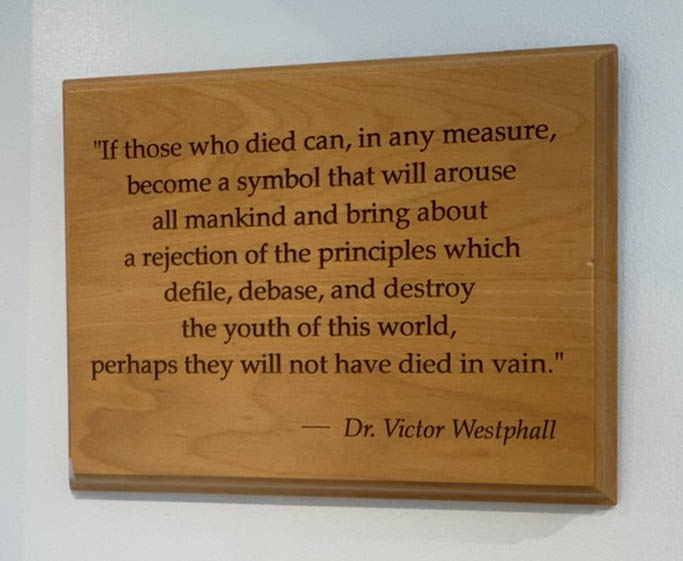
As Angel Fire was taking shape as a resort community, another important piece of its identity was beginning just a few miles away. In 1968, Victor and Jeanne Westphall began work on a memorial to their son David and other veterans of the Vietnam War, a project that would eventually become the Vietnam Veterans Memorial at Angel Fire.
Vietnam Veterans Memorial
If you’re only planning one stop in Angel Fire beyond the resort, I’d make it the Vietnam Veterans Memorial.
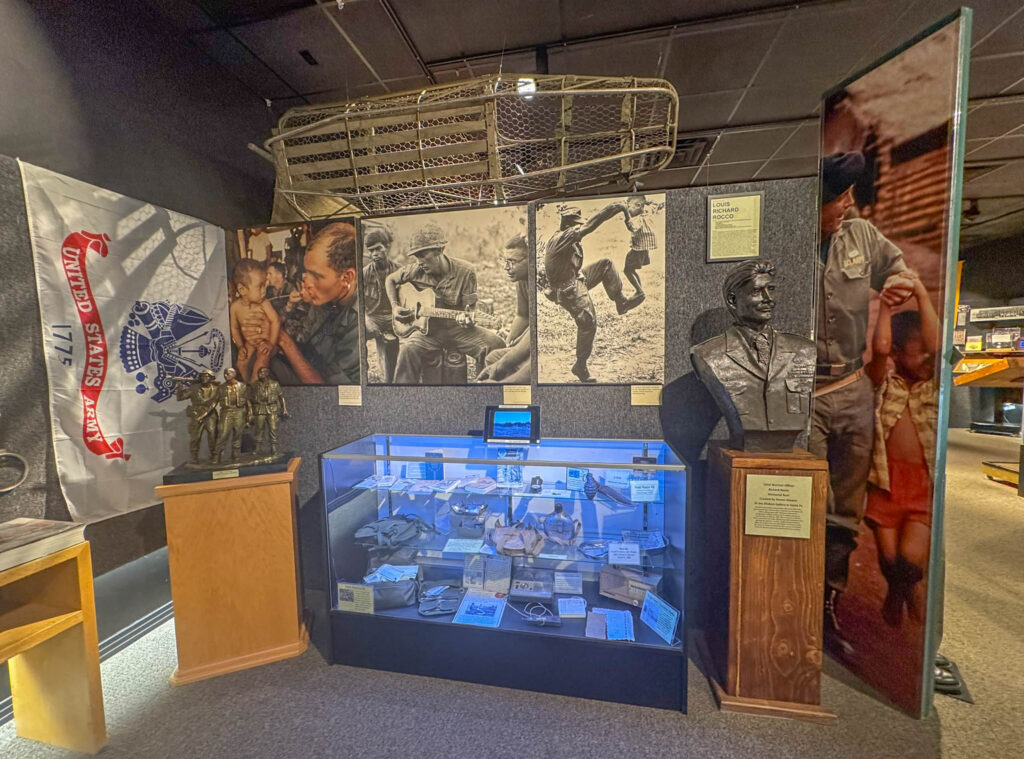
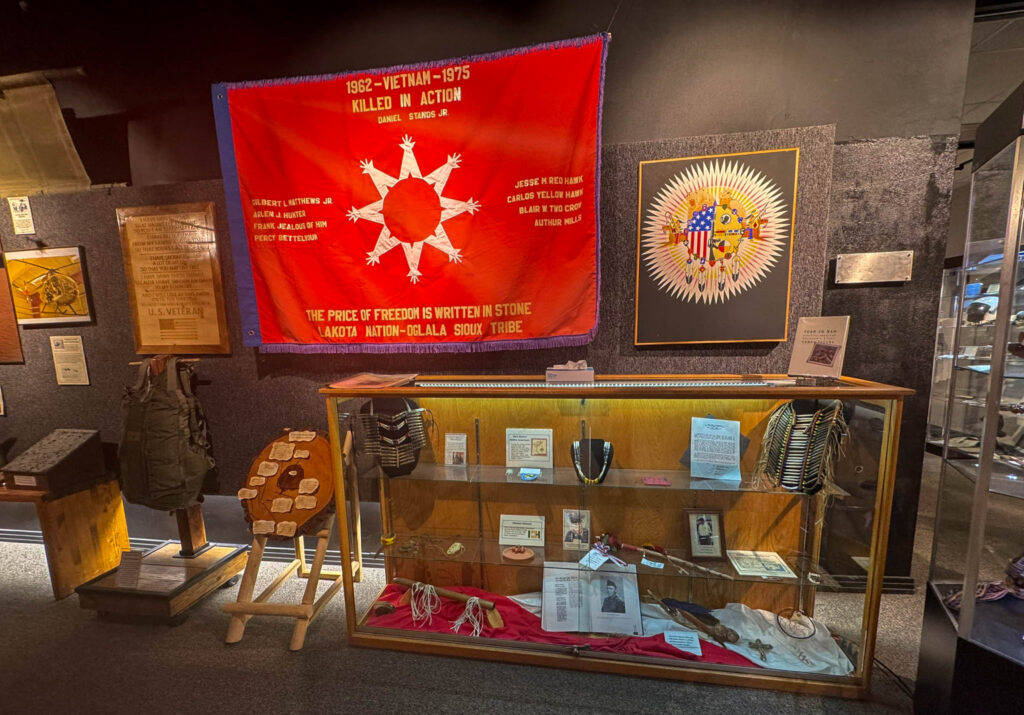
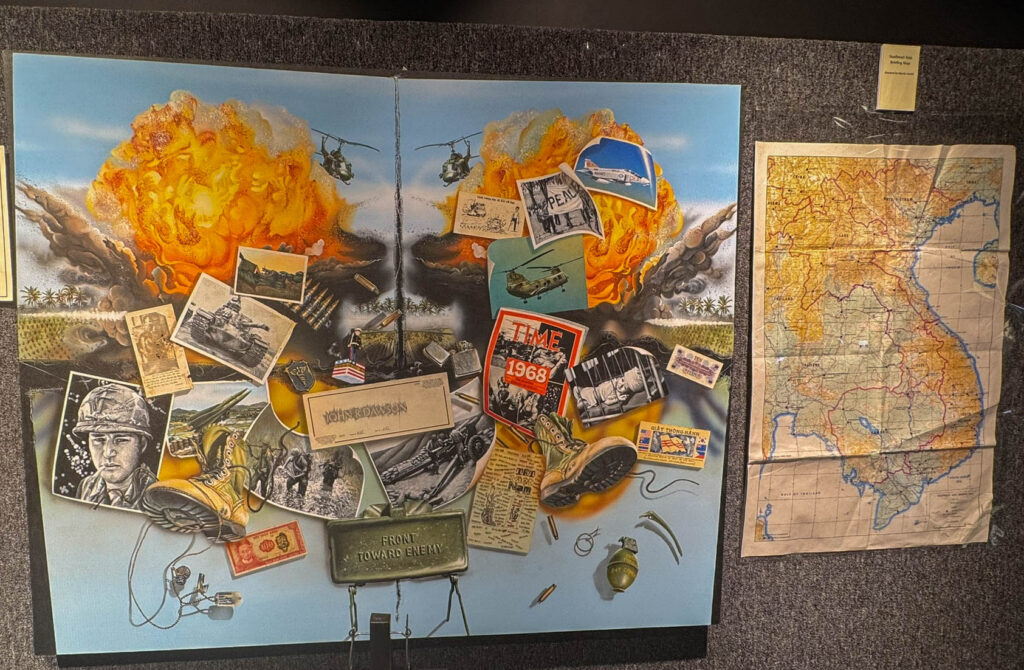
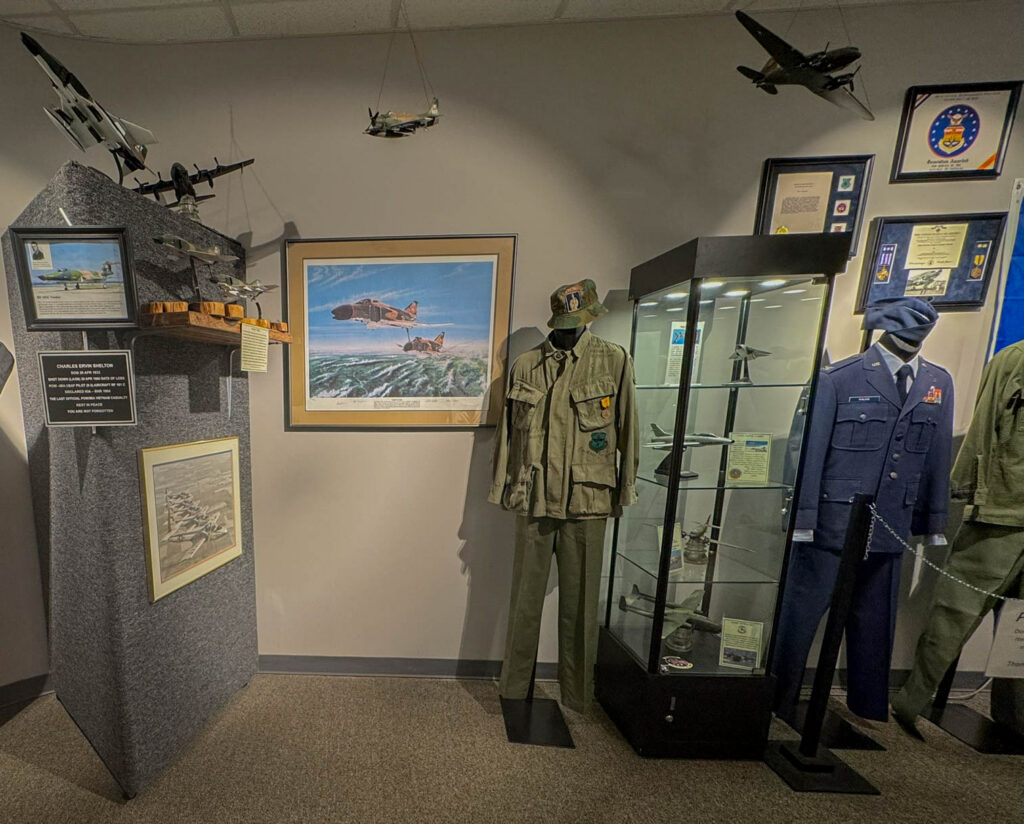
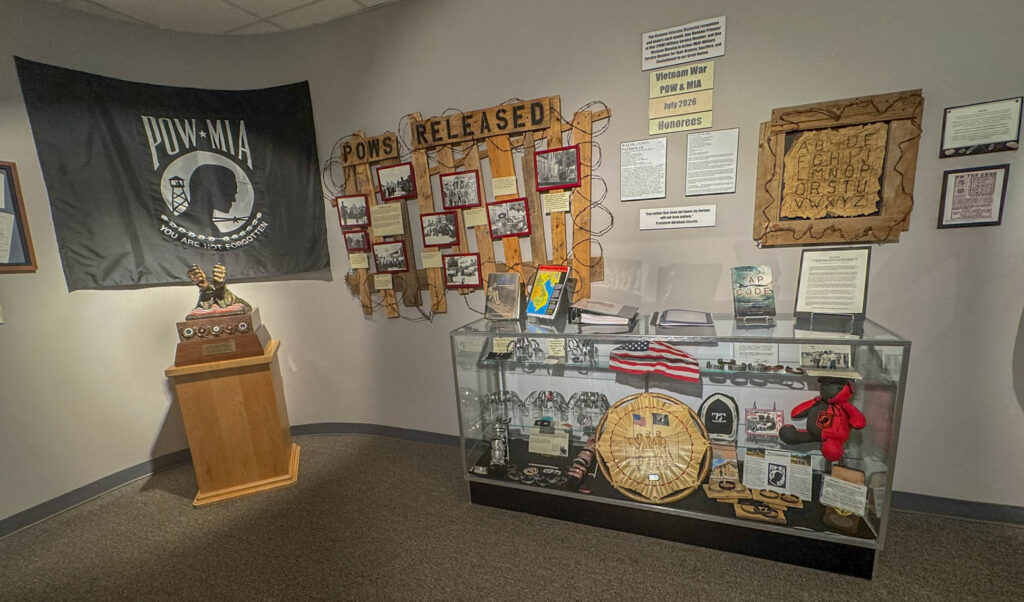
I expected to see a memorial honoring those who served. What I didn’t expect was a museum filled with uniforms, medals, photographs, letters, patches, and hundreds of personal artifacts donated by veterans and their families.
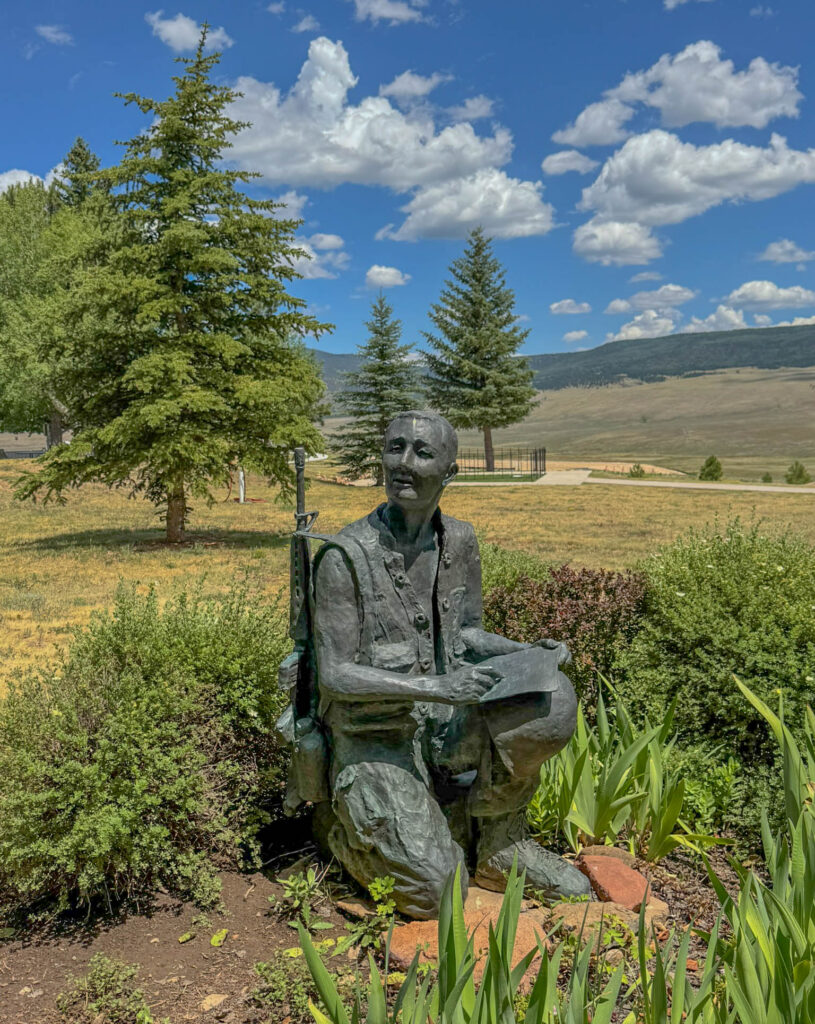
The memorial grounds include the Peace and Brotherhood Chapel, memorial walkways, a restored Huey helicopter, sculptures, and the museum. Give yourself enough time to explore both the indoor exhibits and the grounds.
The memorial exists because of one family and one young Marine named David Westphall. Once you know that story, you’ll probably see the memorial a little differently.
The Story Behind the Memorial
The Vietnam Veterans Memorial is an impressive place even if you know nothing about its history, but I think it’s much more meaningful once you know the story of the Westphall family and why the memorial is here.
David Westphall was an accomplished athlete growing up and went on to play football at the University of New Mexico. After repeated frustrations with the football program, he decided to leave UNM and enlist in the Marine Corps. Once his initial military service was complete, he returned to college and eventually studied at the University of Montana, where languages became one of his major interests. He was offered a graduate assistantship that would have allowed him to continue toward an advanced degree in Spanish and Russian, but instead chose to return to military service. David believed he had an obligation to do his part, writing, “My fellow citizens pay the taxes to support me, and I intend to be worth the pay.”
When it came time for David to leave for Vietnam, his parents, Victor and Jeanne Westphall, drove him 25 miles to Taos to catch his bus. As he prepared to board, he embraced his mother while his father held his other hand and told him, “Take care of yourself and your men.” David replied, “I will,” and boarded the bus. Victor and Jeanne never saw him again.
While in Vietnam, David wrote regularly to his parents and younger brother, Walter Douglas Westphall. His letters covered everything from military bureaucracy and the frustrations of being a platoon commander to his plans for R&R and what he might do after returning home.
On May 22, 1968, David’s unit was operating near Con Thien, a few miles south of the Demilitarized Zone separating North and South Vietnam. As Bravo Company moved through rolling terrain covered with tall grass, brush, and hedgerows, it was ambushed by a large North Vietnamese force.
The Marines suddenly came under machine-gun, mortar, and grenade fire, with David’s 1st Platoon taking much of the initial attack. During the fighting, David rushed forward to bring more of his Marines into position and strengthen the firing line in an effort to stop the enemy assault. As he advanced, he was struck by machine-gun fire and killed. He was 28 years old.
Thirteen Marines from Bravo Company died as a result of the fighting that day, and another 27 were wounded.
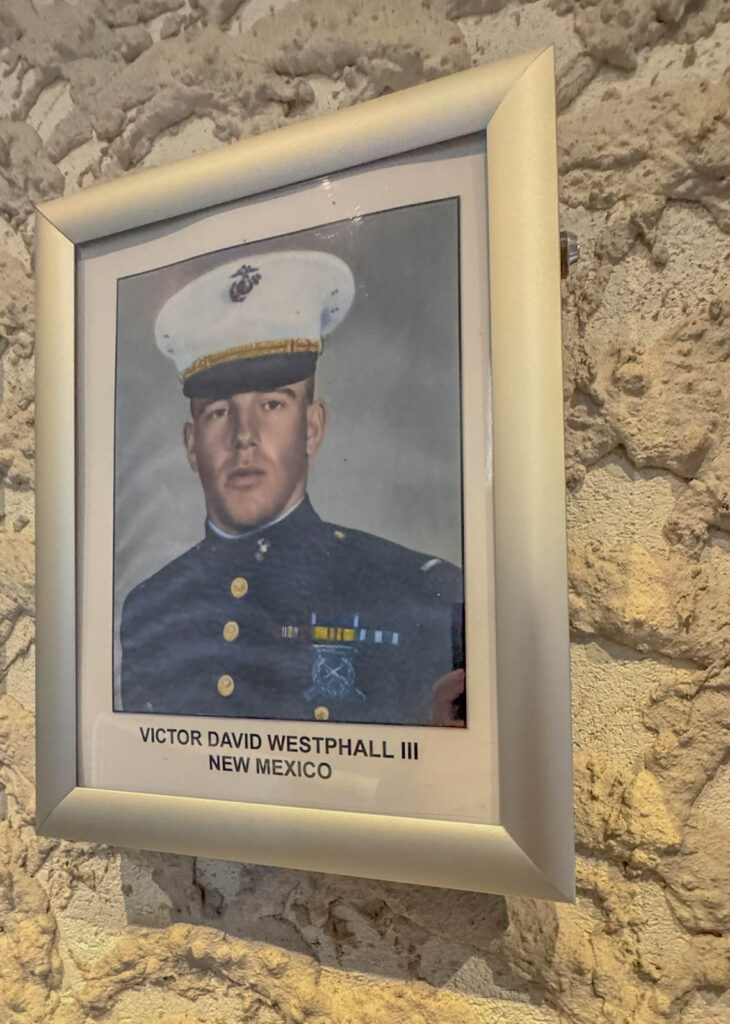
Five days later, on May 27, 1968, two Marine officers arrived at the Westphalls’ Val Verde Ranch in the Moreno Valley to tell Victor and Jeanne that their son had been killed. David’s body arrived in Albuquerque on June 6, and four days later he was buried at Santa Fe National Cemetery.
Just two days after the funeral, Jeanne Westphall suggested using David’s life insurance money to create a Vietnam Veterans Peace and Brotherhood Chapel on family land near Angel Fire. The Westphalls soon contacted Santa Fe architect Ted Luna, approved his design, and by September 1968, excavation was underway.
Victor and Jeanne did not envision the chapel simply as a memorial to their son. They wanted it to be a place dedicated to Vietnam veterans and to the idea of peace and reconciliation. Victor later described the memorial as honoring Vietnam veterans “the living, the dead, and the maimed in body and spirit.”
In 1969, Victor wrote a letter to North Vietnamese president Ho Chi Minh explaining what the family was building and invited North Vietnam to send photographs of its own soldiers who had been killed in the war so they could also be displayed in the chapel. Victor learned before sending the letter that Ho Chi Minh had died, but he decided to mail it anyway. For Victor, the idea of peace and reconciliation wasn’t limited to one side of the war.
Actually getting the chapel built was another matter. The Westphalls spent several years raising money and dealing with construction delays and other setbacks. Victor later wrote about his grief, his discouragement, and a series of dreams involving David that he believed helped keep him going when he was tempted to give up on the project.
The chapel was finally dedicated on May 22, 1971, exactly three years after David and the other Marines were killed in Vietnam. It wasn’t completely finished at the time, but the Westphalls had succeeded in turning their original idea into something tangible on a hillside overlooking the Moreno Valley.
Over the following decades, the site continued to grow. A visitor center and other memorial features were added, and in 1987 Congress and President Ronald Reagan recognized the chapel as a memorial of national significance. In 2005, the property was transferred to the State of New Mexico and became the Vietnam Veterans Memorial State Park.
That wasn’t the end of the story, though. In 2017, New Mexico transferred management of the memorial to the New Mexico Department of Veterans Services, and it’s no longer part of the state park system. Today it’s officially the Vietnam Veterans Memorial at Angel Fire, operated by the Department of Veterans Services. The original Peace and Brotherhood Chapel remains at the heart of the site, along with the visitor center, memorials, exhibits, and grounds honoring those who served in Vietnam.
Knowing the Westphalls’ story made the memorial much more meaningful to me. It’s one thing to read the name Victor David Westphall III on a memorial. It’s another to read his letters, learn what happened to him in Vietnam, and then stand inside the chapel his parents began planning just days after burying him.
David’s brother, Walter Westphall, is still actively involved with the memorial, helping to keep his family’s story and the history of the site alive.
Visiting the Veterans Memorial Today
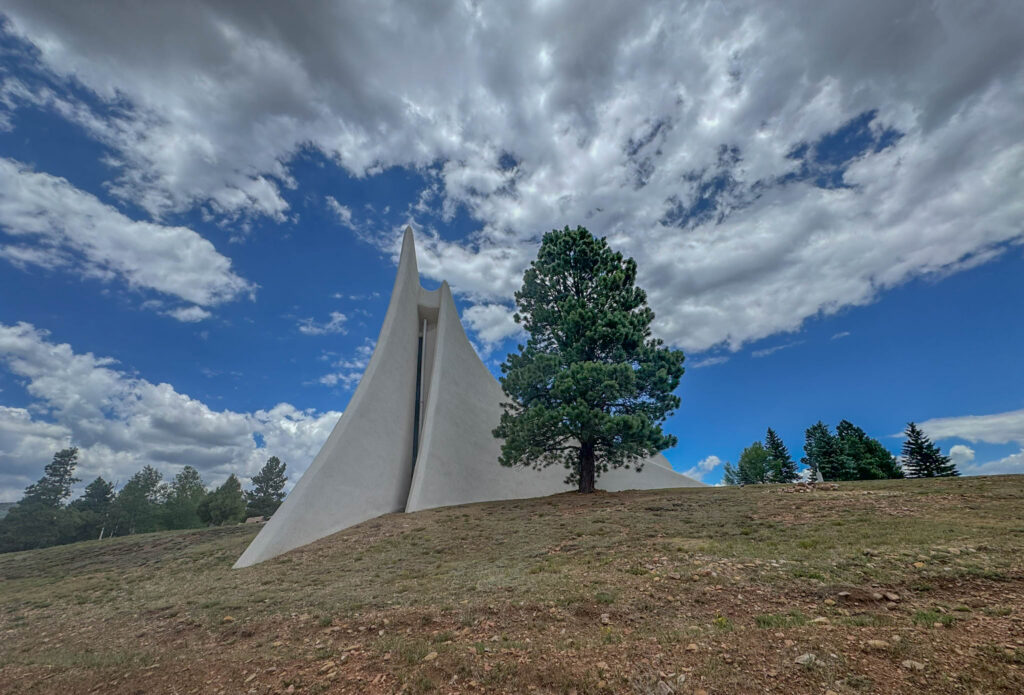
Today, the Vietnam Veterans Memorial is free to visit and includes the original Peace and Brotherhood Chapel, a museum and visitor center, memorial walkways, a Huey helicopter, and several outdoor exhibits. Give yourself at least an hour to explore the site, and longer if you’re someone who likes to stop and read museum exhibits.
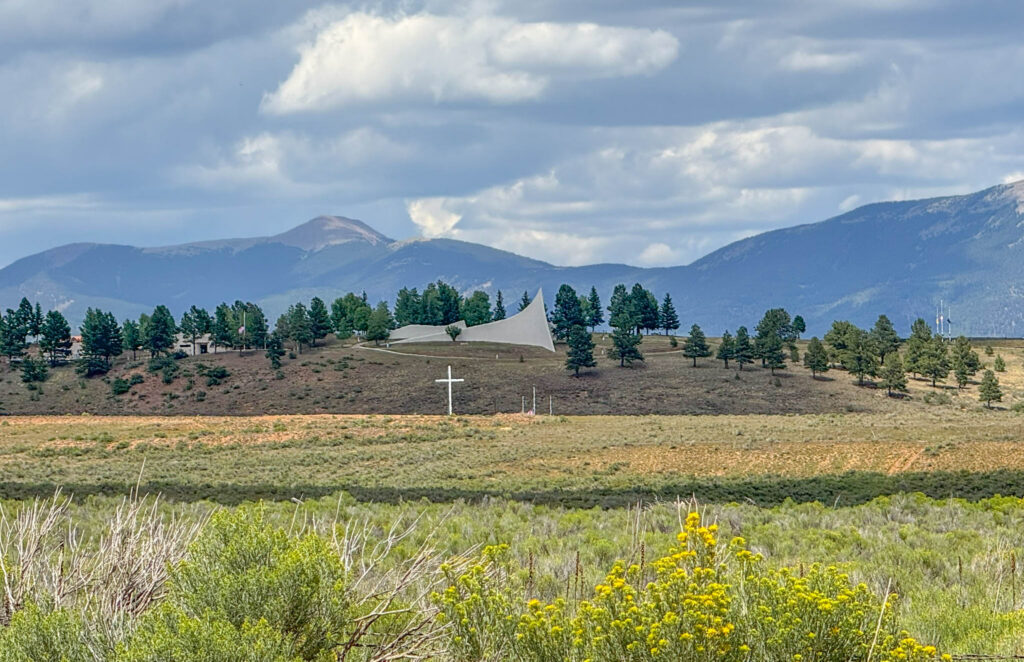
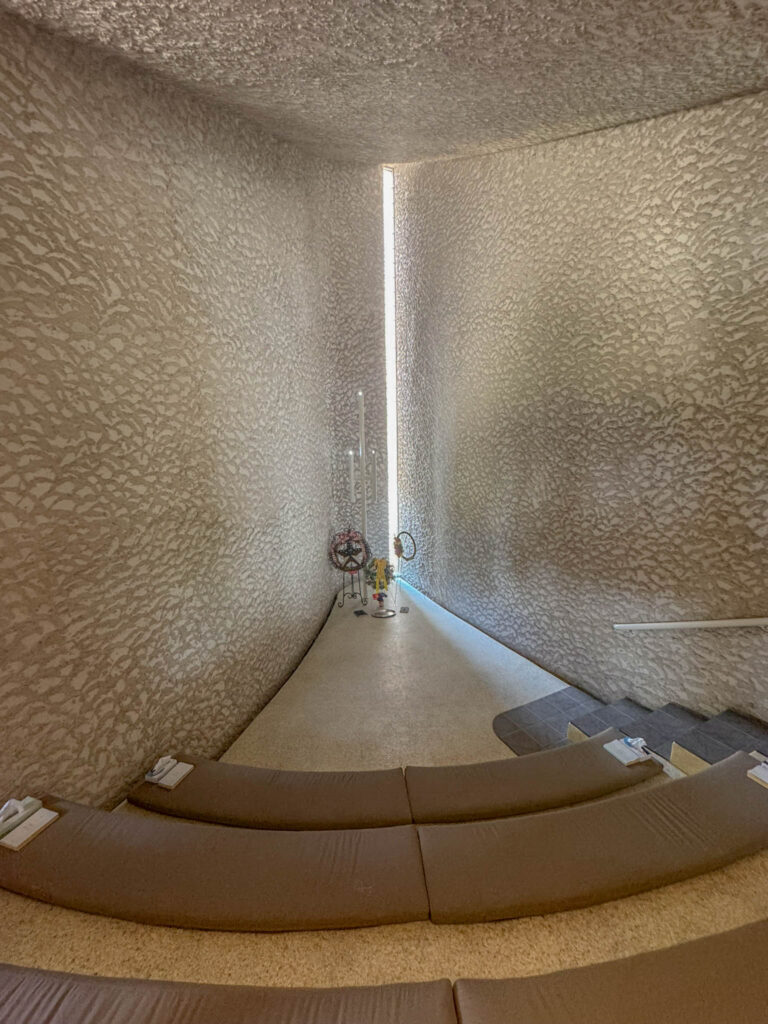
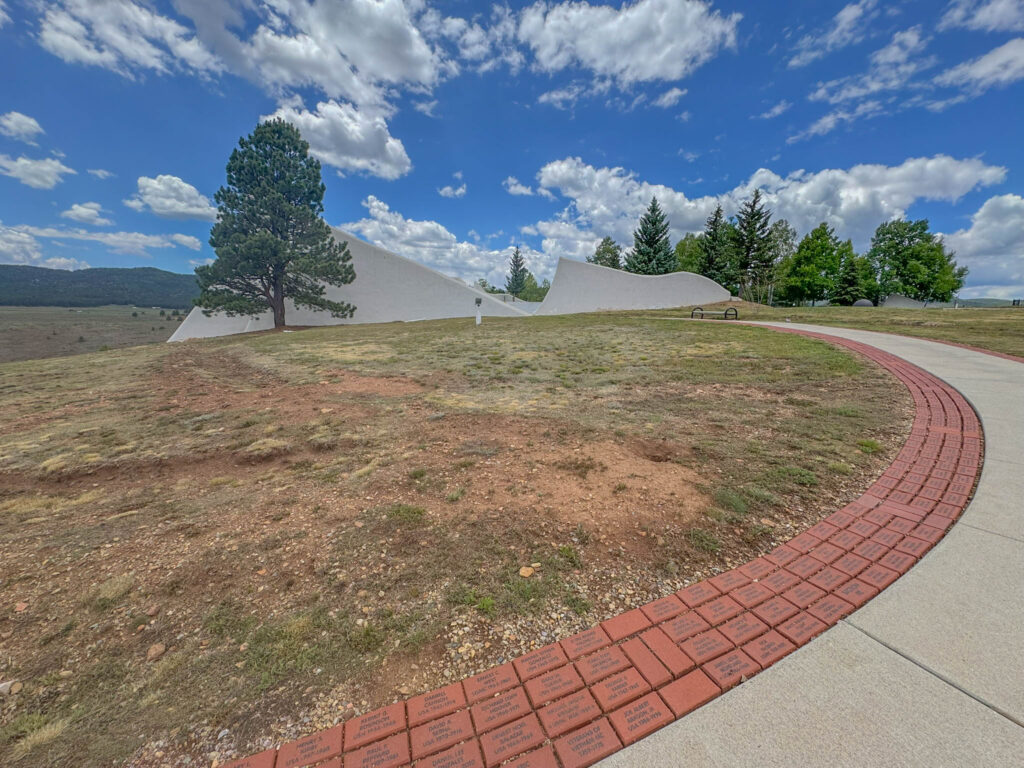
The Peace and Brotherhood Chapel is hard to miss. Its distinctive white, curved walls overlook the Moreno Valley, while the interior is surprisingly simple, with curved rows of seating facing a small memorial display and a narrow vertical opening that lets in natural light. Photographs of David Westphall and the other members of his unit who were killed on May 22, 1968, are displayed inside.
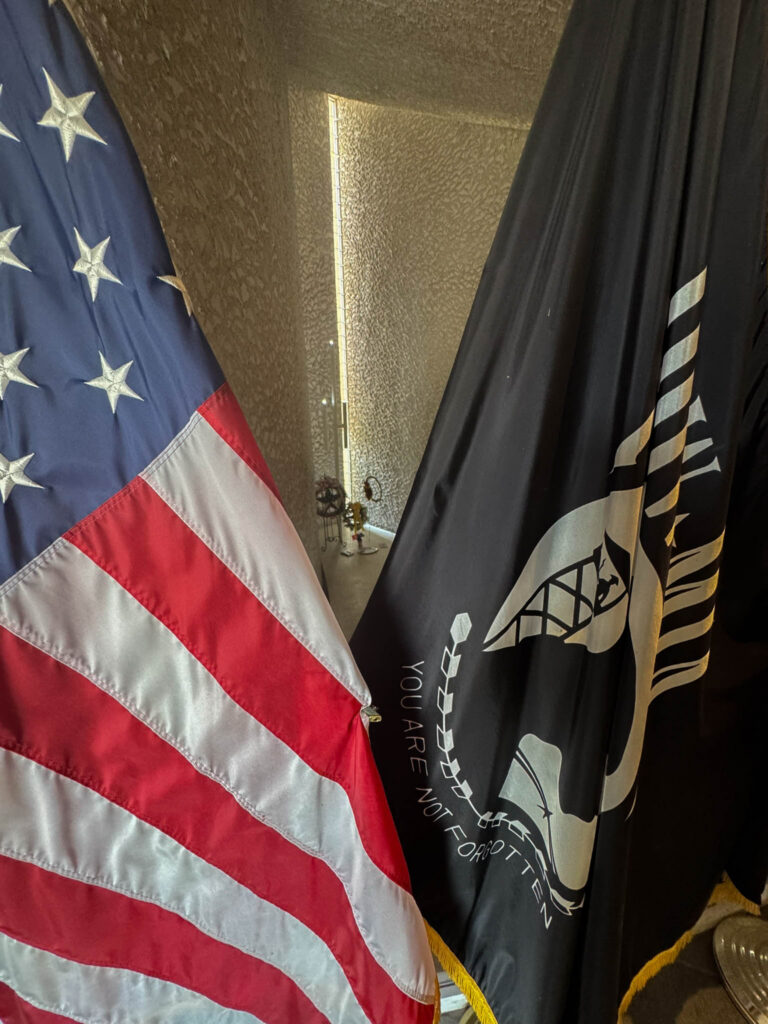
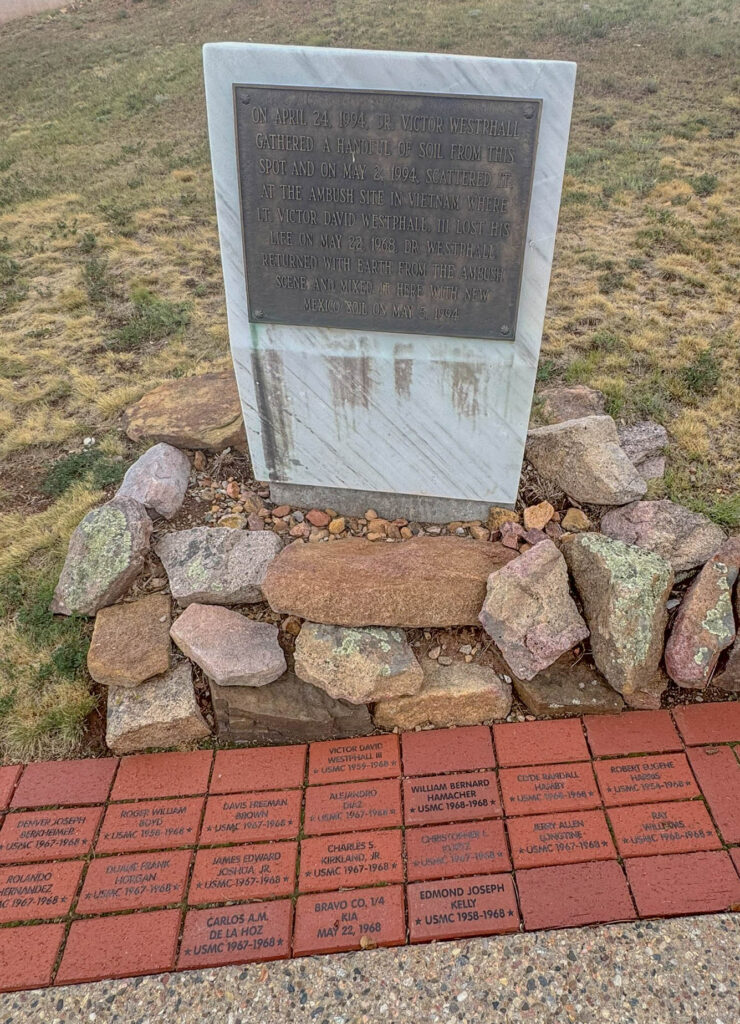
The museum is also an important part of the experience. Much of its collection came directly from veterans and their families, including uniforms, medals, photographs, letters, patches, equipment, and other personal items representing different branches of the military.
Outside, it’s hard to miss the restored UH-1 Huey helicopter on display. If you’ve seen much footage from the Vietnam War, you’ll recognize the silhouette immediately. Hueys became closely associated with the war, transporting troops, evacuating wounded soldiers, and performing a variety of other missions.
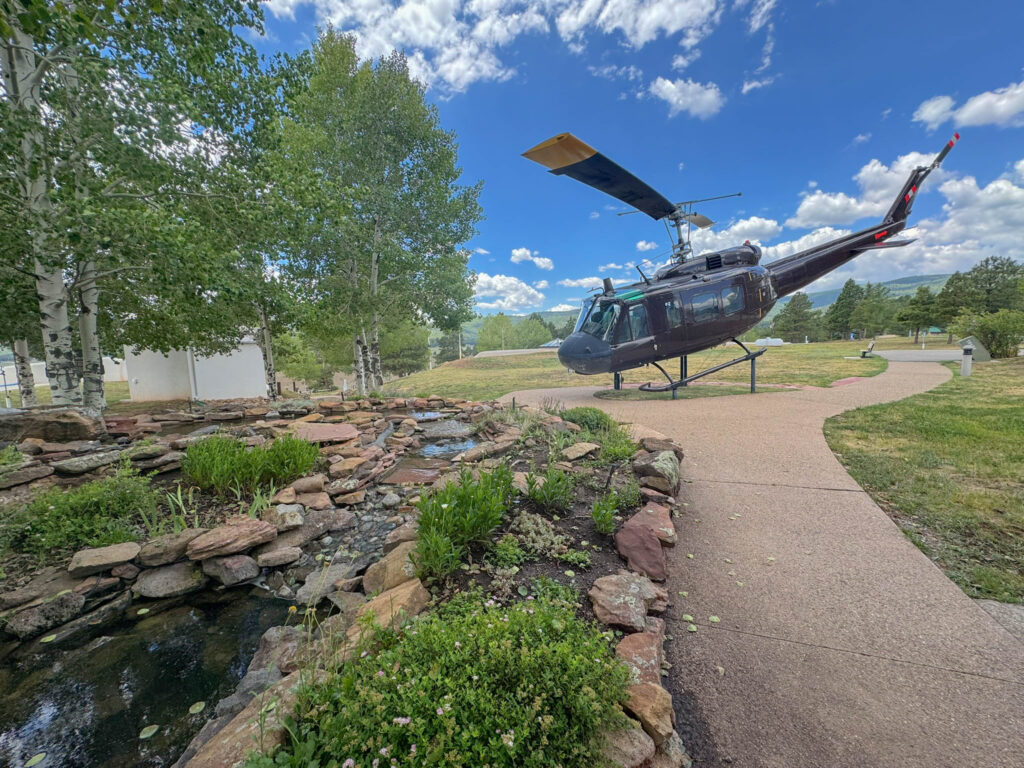
You’ll also find the Veterans Memorial Walkway, lined with bricks honoring individual U.S. veterans, both living and deceased. If you have a family member or other veteran you’d like to honor, you can purchase a personalized brick to be added to the walkway. Take some time to wander the grounds rather than going directly from the museum to the chapel and back to your car. There are memorials and smaller details throughout the property that are easy to miss if you’re in a hurry.
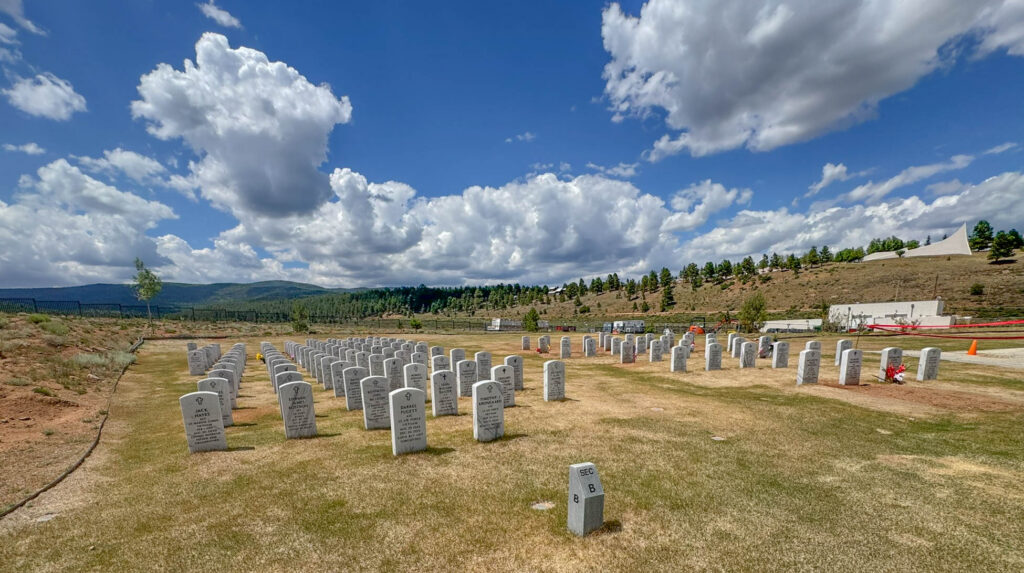
Adjacent to the memorial is the State Veterans Cemetery at Angel Fire, which opened in 2020 and provides a final resting place for eligible veterans and their family members. The cemetery sits just below the memorial grounds, with the Peace and Brotherhood Chapel visible on the hillside above.
Admission to the Veteran Memorial is free, although donations are accepted. Before visiting, I’d check the current hours, particularly if you’re traveling outside the summer season.
I’d also like to give special thanks to Walter Westphall, Ernie Sutliff, and Franchesca Zoppe for answering my questions, helping me make the most of my visit, and giving me several books to help me better understand David’s story and the history of the Vietnam Veterans Memorial at Angel Fire.
Angel Fire Resort
For many visitors, Angel Fire means one thing: Angel Fire Resort. The resort is the town’s recreational hub, drawing skiers and snowboarders in winter and mountain bikers, hikers, golfers, and other outdoor enthusiasts once the snow melts.
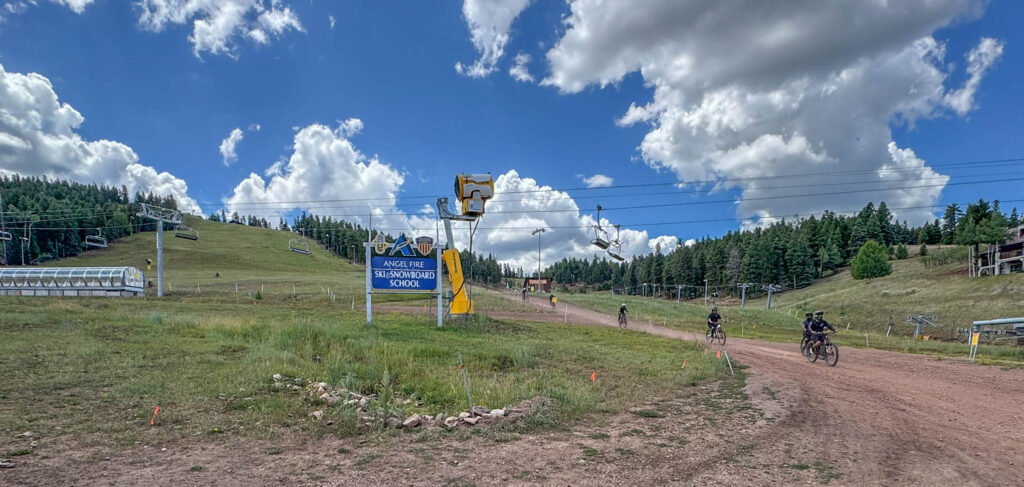
I visited in July, when the ski slopes had traded snow for mountain-bike trails and chairlifts were carrying bikes uphill instead of skiers. Angel Fire may be best known as a ski destination, but in summer it becomes one of the Southwest’s premier mountain biking destinations.
Angel Fire Bike Park
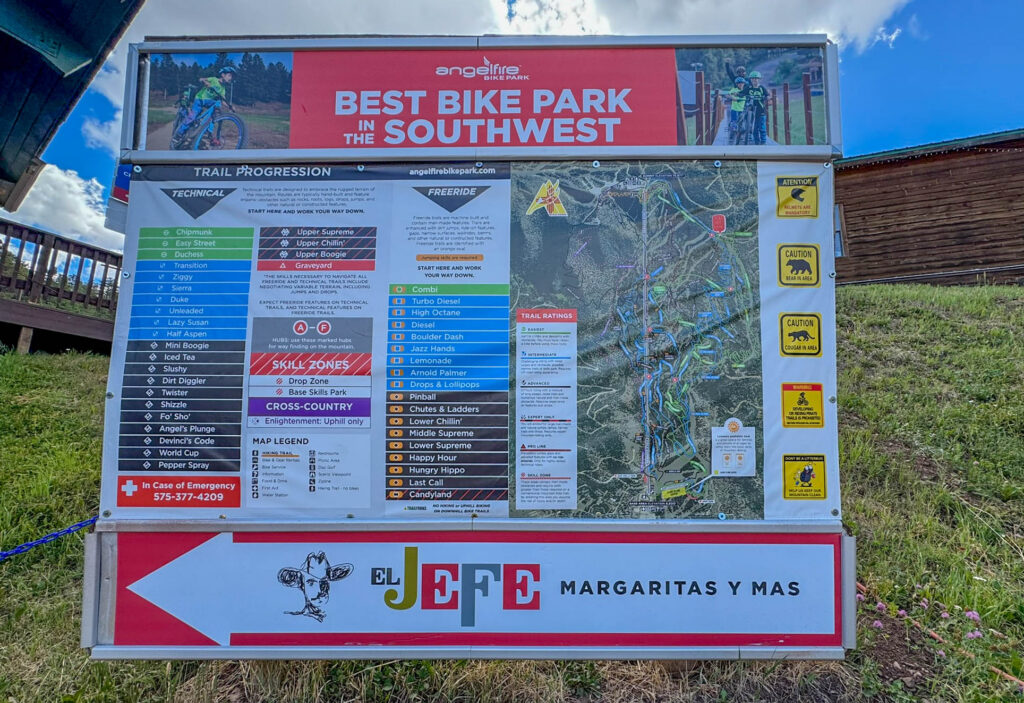
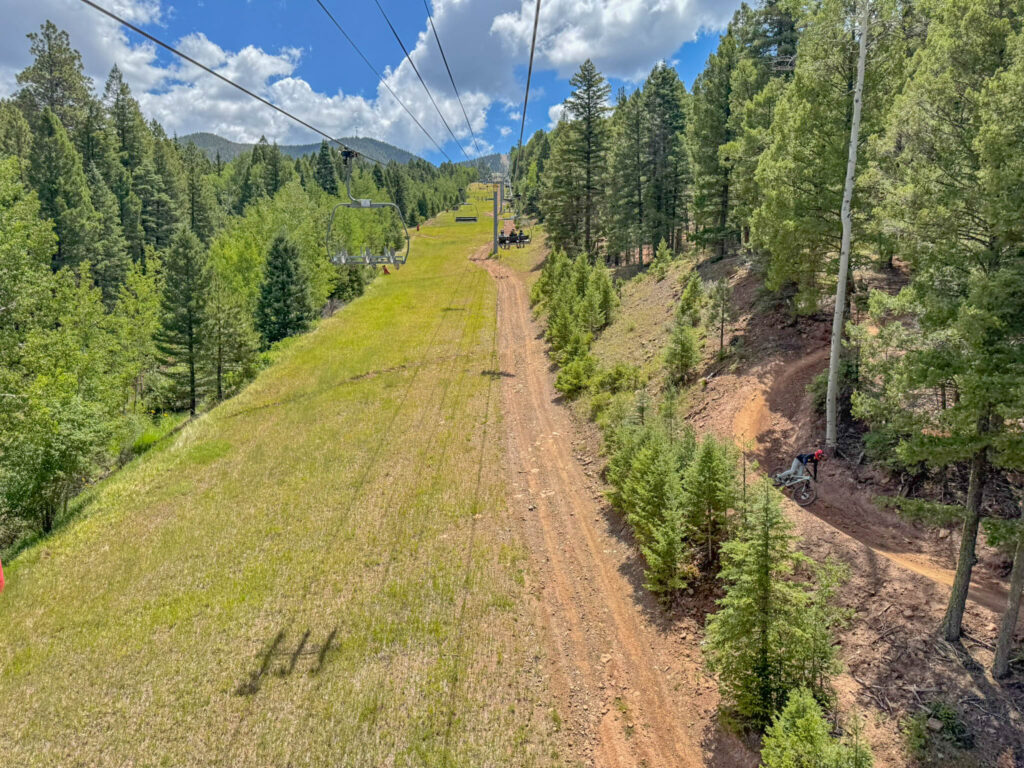
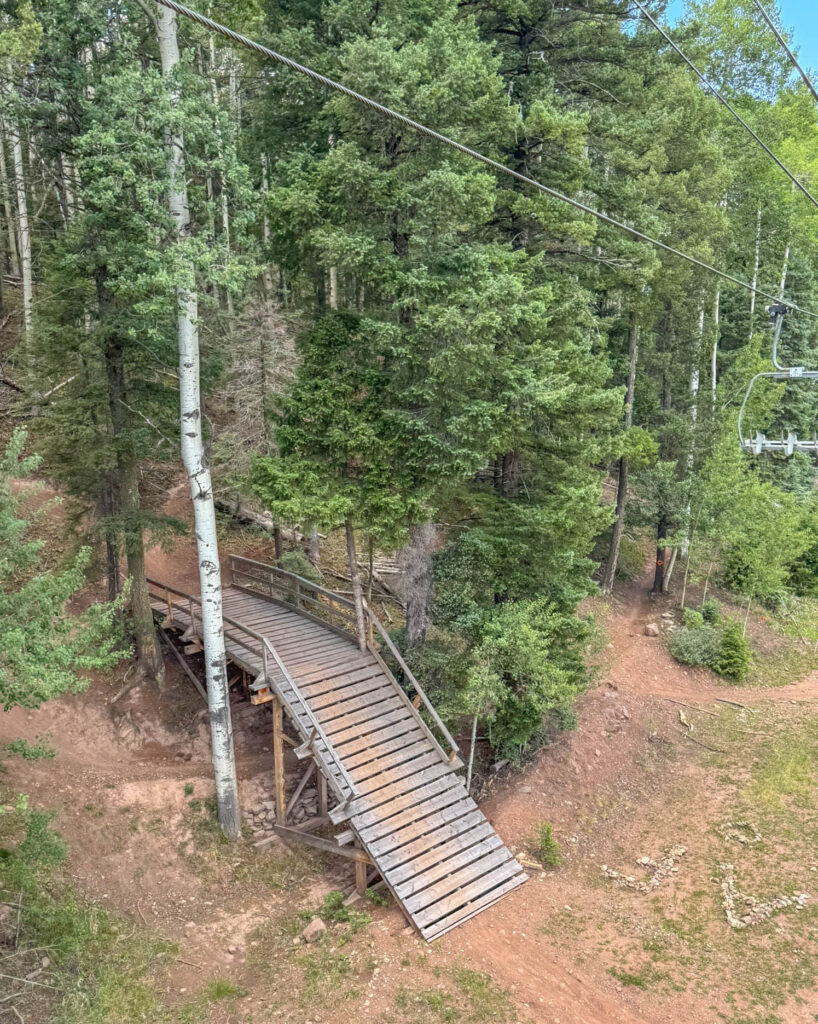
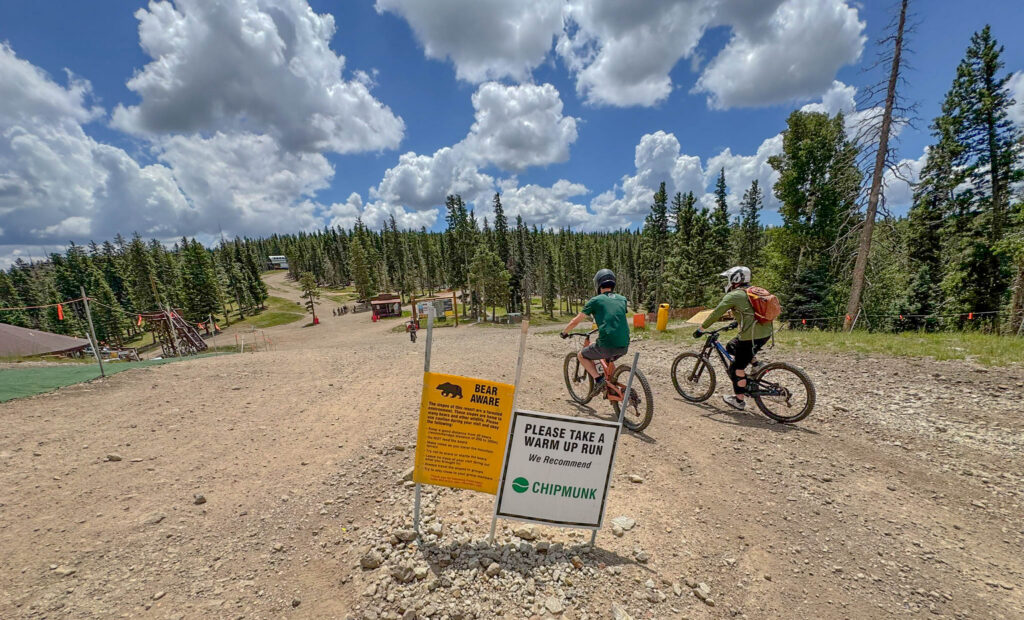
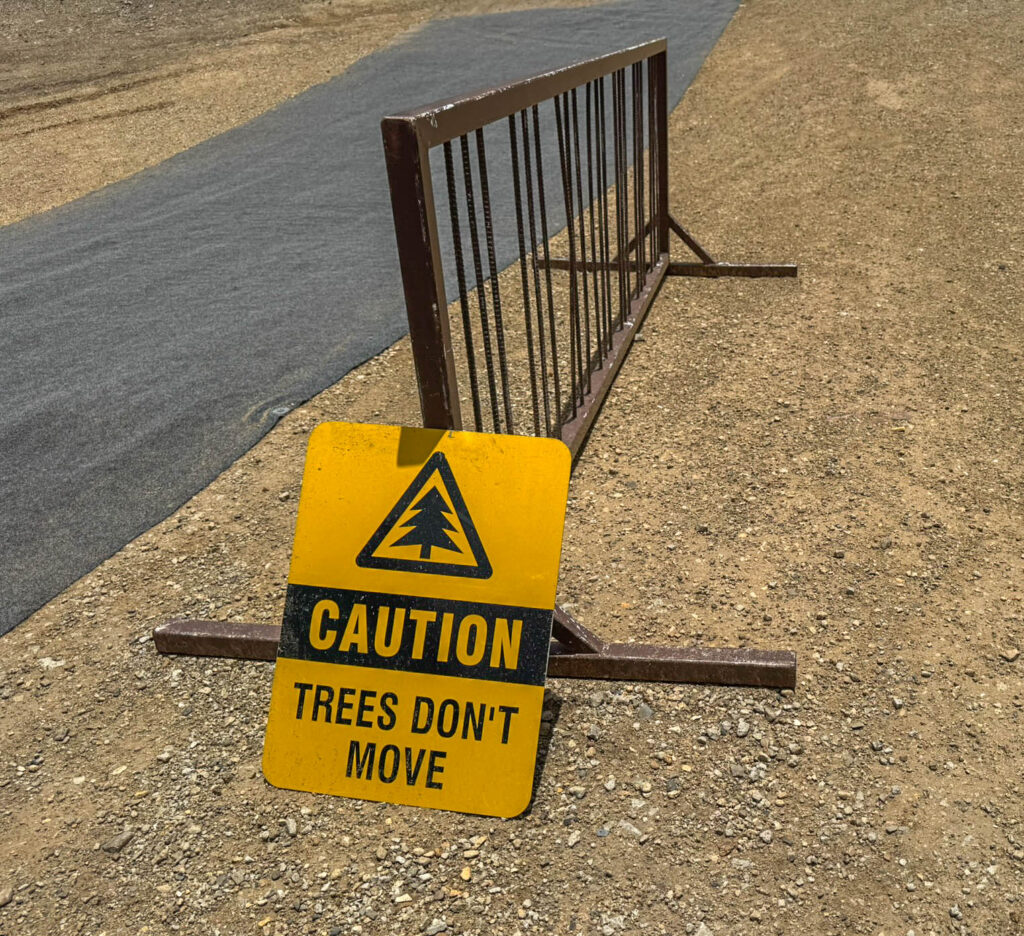
Mountain biking has become a major part of Angel Fire Resort’s summer identity. Today, Angel Fire Bike Park is the largest lift-served bike park in the Southwest, with more than 60 miles of purpose-built terrain, over 40 trails, and more than 2,000 vertical feet of riding.
And it has the accolades to back that up. MTBparks.com named Angel Fire Best Bike Park in the Southwest seven years in a row, and the park has also appeared on lists of the top bike parks in the country. Angel Fire has been a serious downhill mountain biking destination for years, not simply a ski resort looking for something to do with its lifts during the summer.
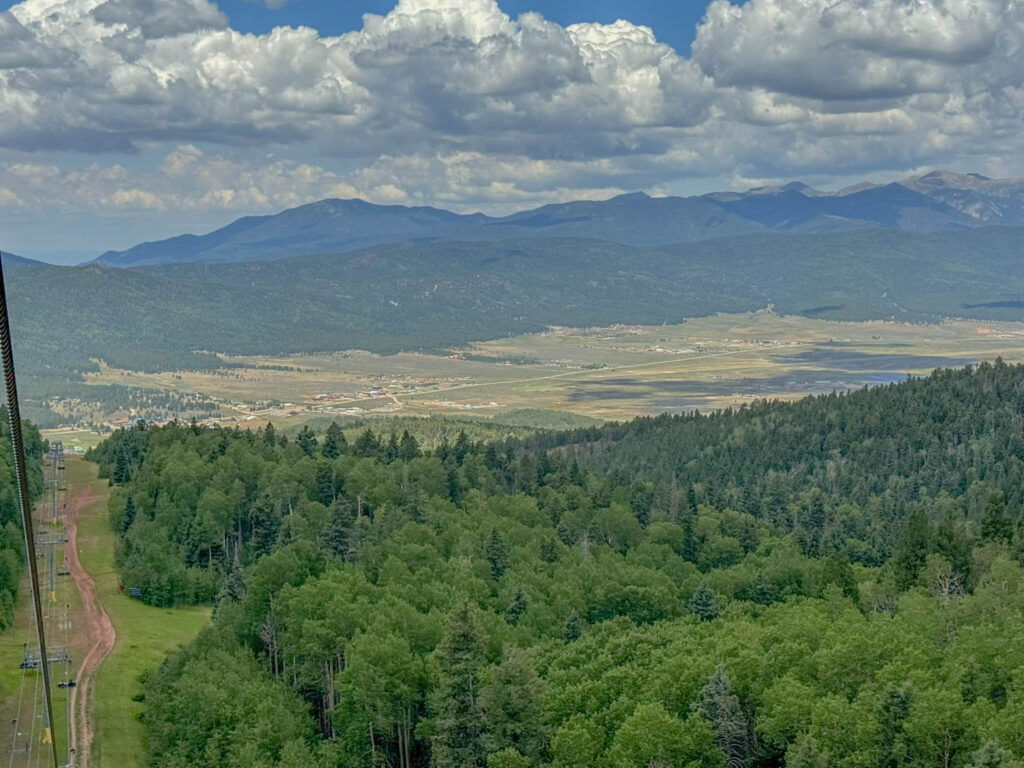
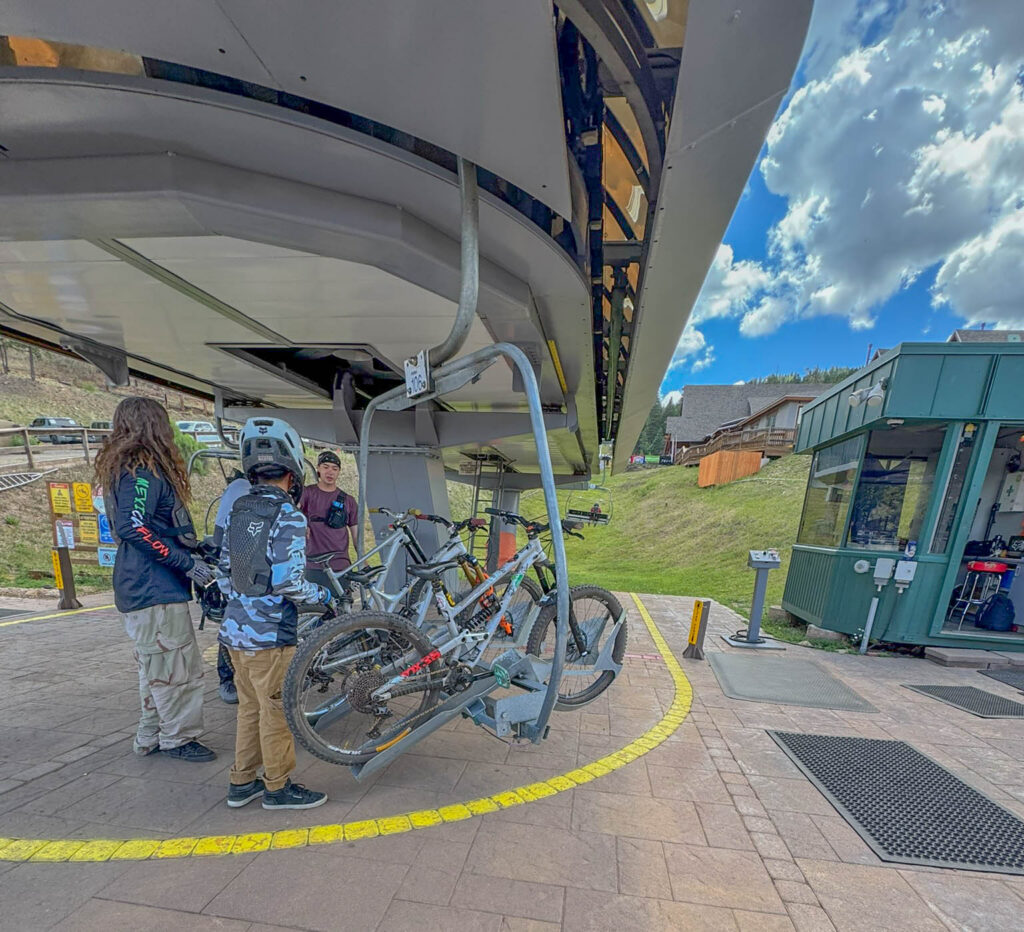
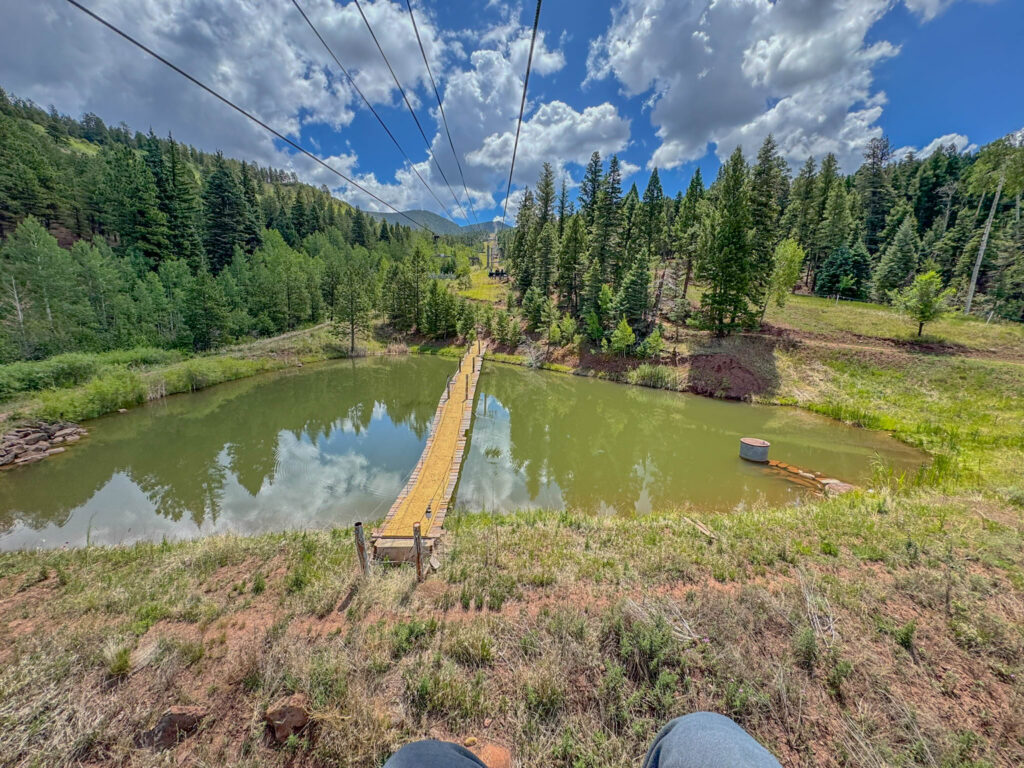
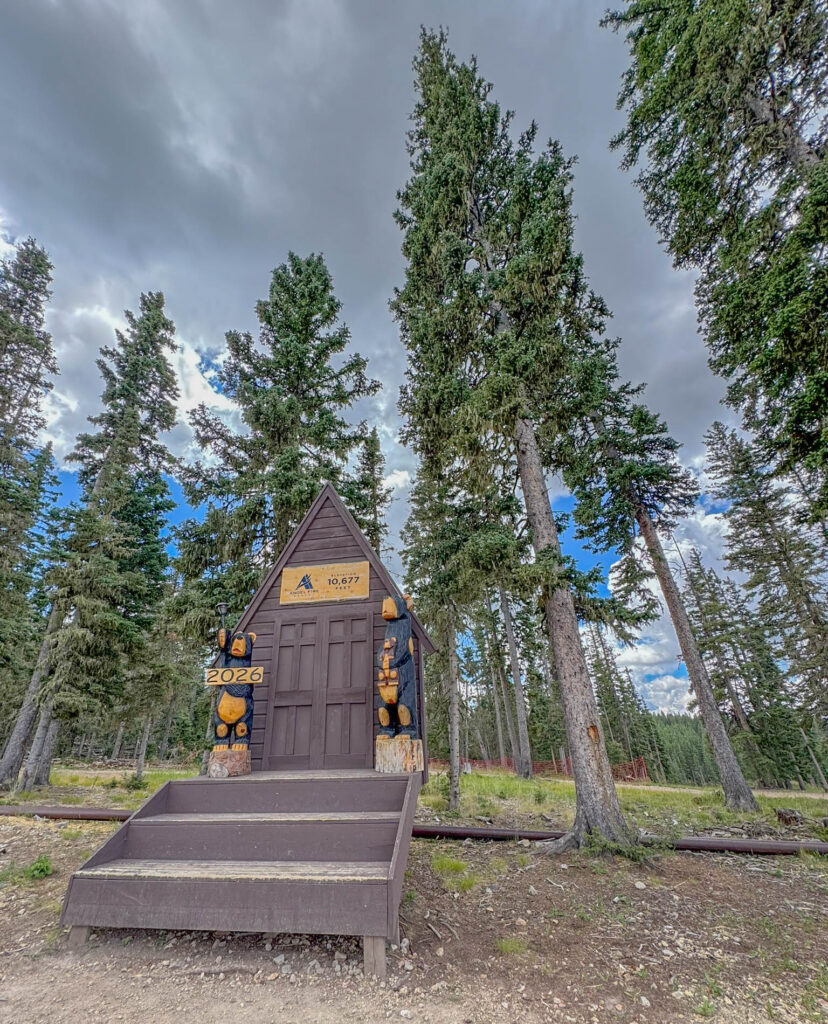
The concept is pretty simple, even if you’ve never tried downhill mountain biking. You load your bike onto the Chile Express, ride the chairlift to the 10,677-foot summit, and then let gravity do most of the work on the way back down. There’s terrain for just about every skill level, from beginner trails to intermediate and advanced runs, expert-only terrain, and even a pro line.
For the 2026 season, the Bike Park operates from mid-May into early November, weather permitting, with daily operations during the heart of summer and weekend operations during portions of the shoulder season. Bikes and gear are available to rent at the base, and lessons are available if hurtling down a mountain on two wheels isn’t already part of your skill set.
Hiking in Angel Fire
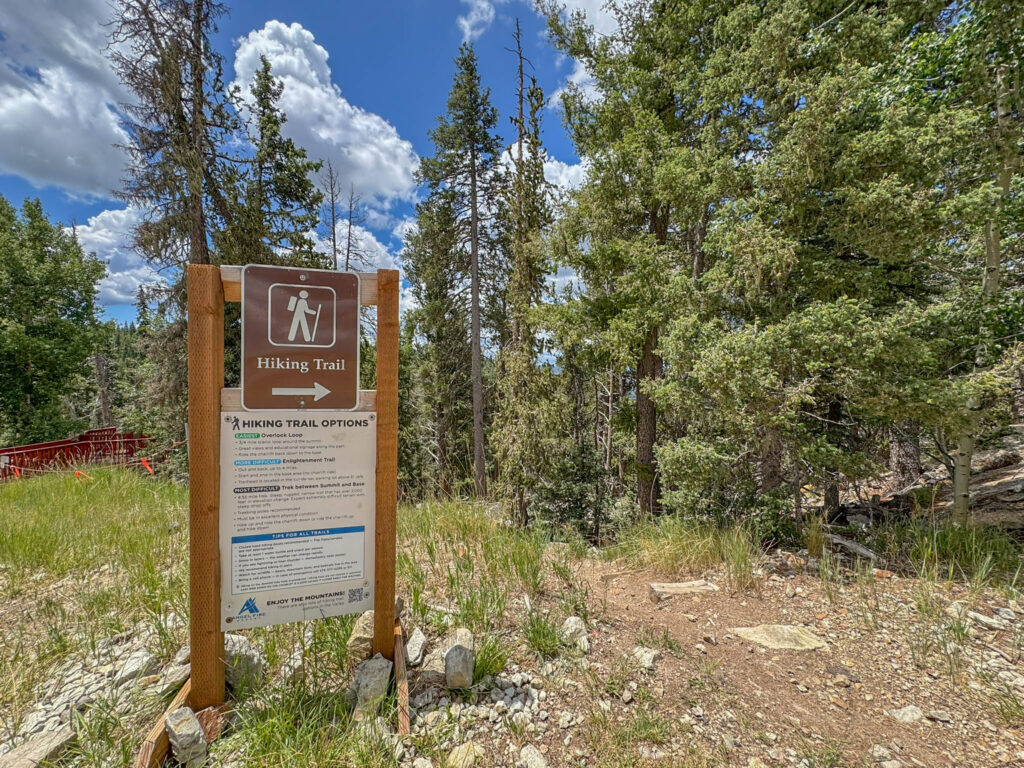
You don’t need a mountain bike to explore Angel Fire in summer. The village has a network of free Greenbelt trails through forests and meadows and around Monte Verde Lake. Local favorites include the Oeste Vista, Monte Verde, and Lady Slipper trails.
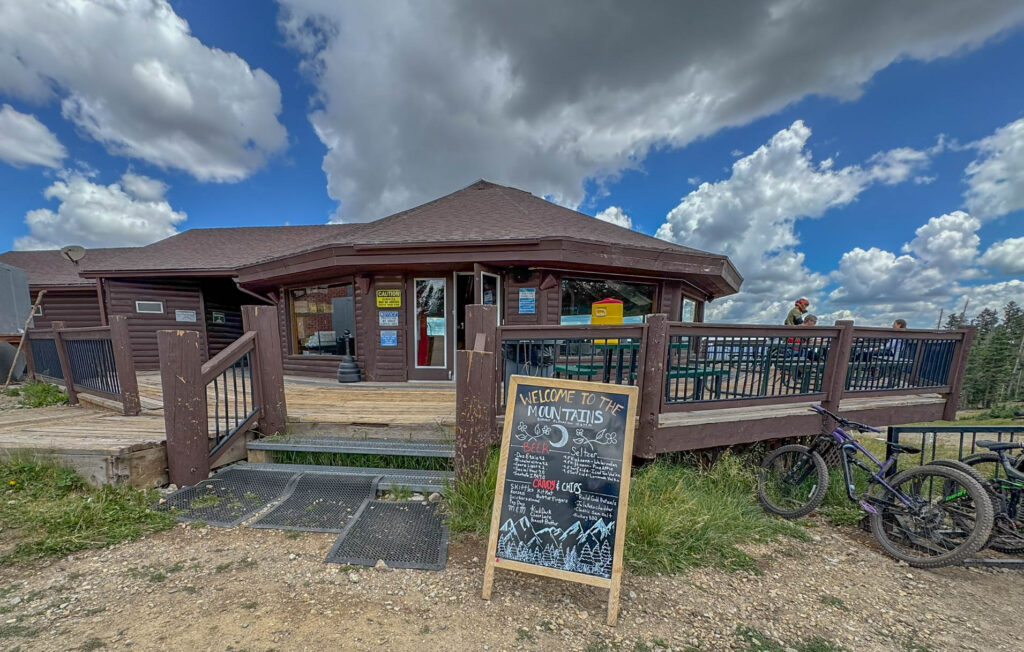
If hiking uphill isn’t your idea of a relaxing vacation, the Chile Express offers another way to enjoy the mountain. During the summer, hikers, sightseers, and mountain bikers all share the lift to the top. You can ride up simply for the views, explore the hiking trails from the summit, or ride the chairlift back down.
Disc Golf at the Summit
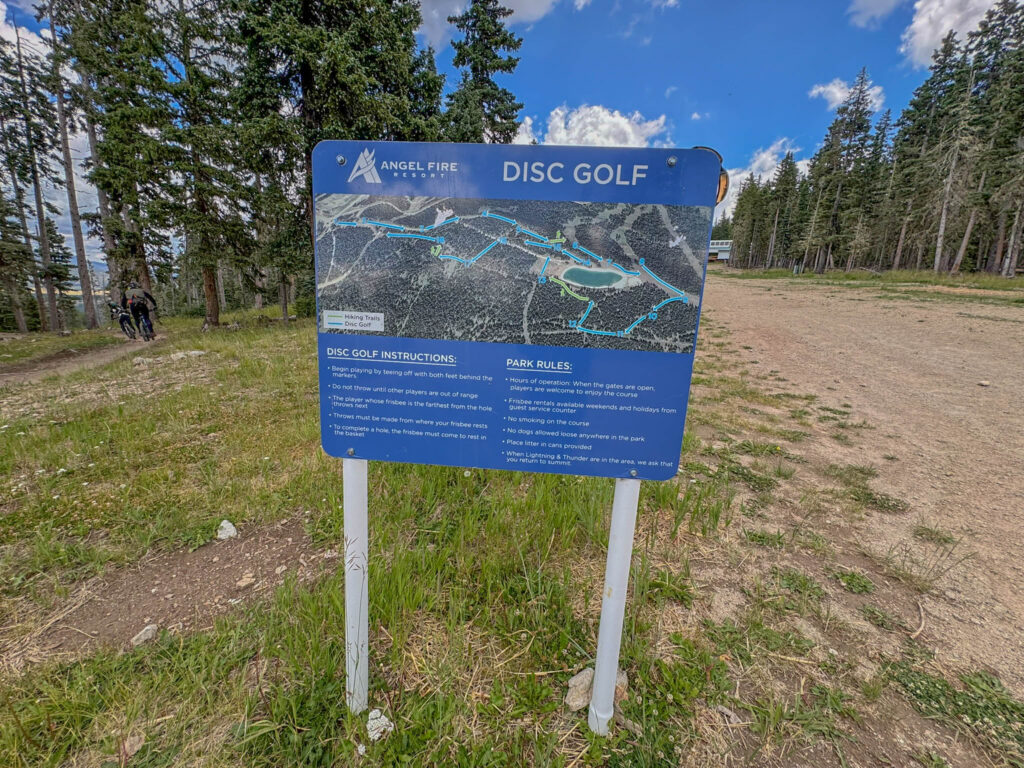
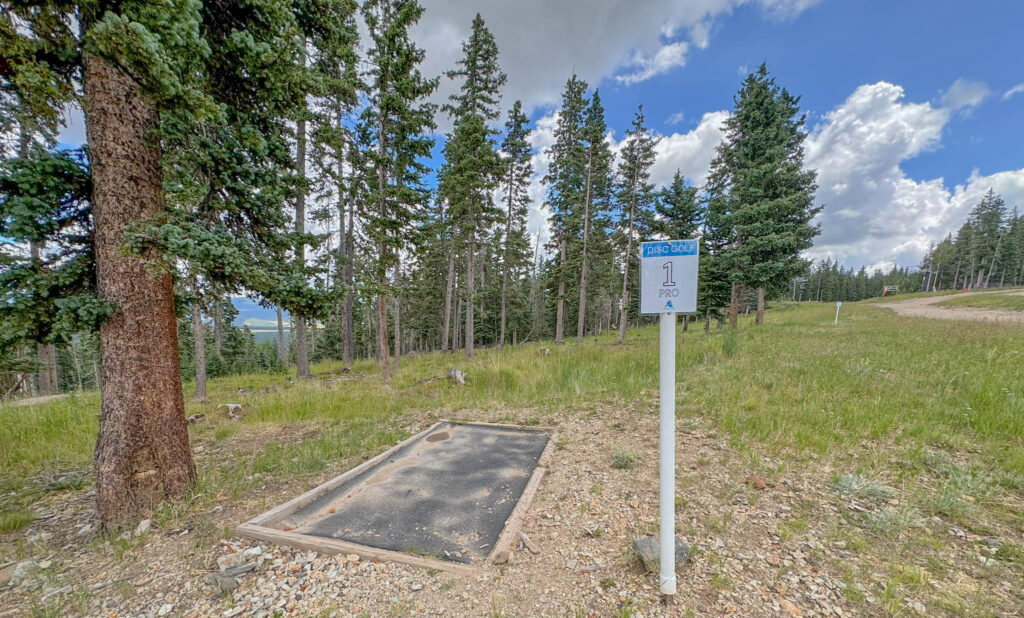
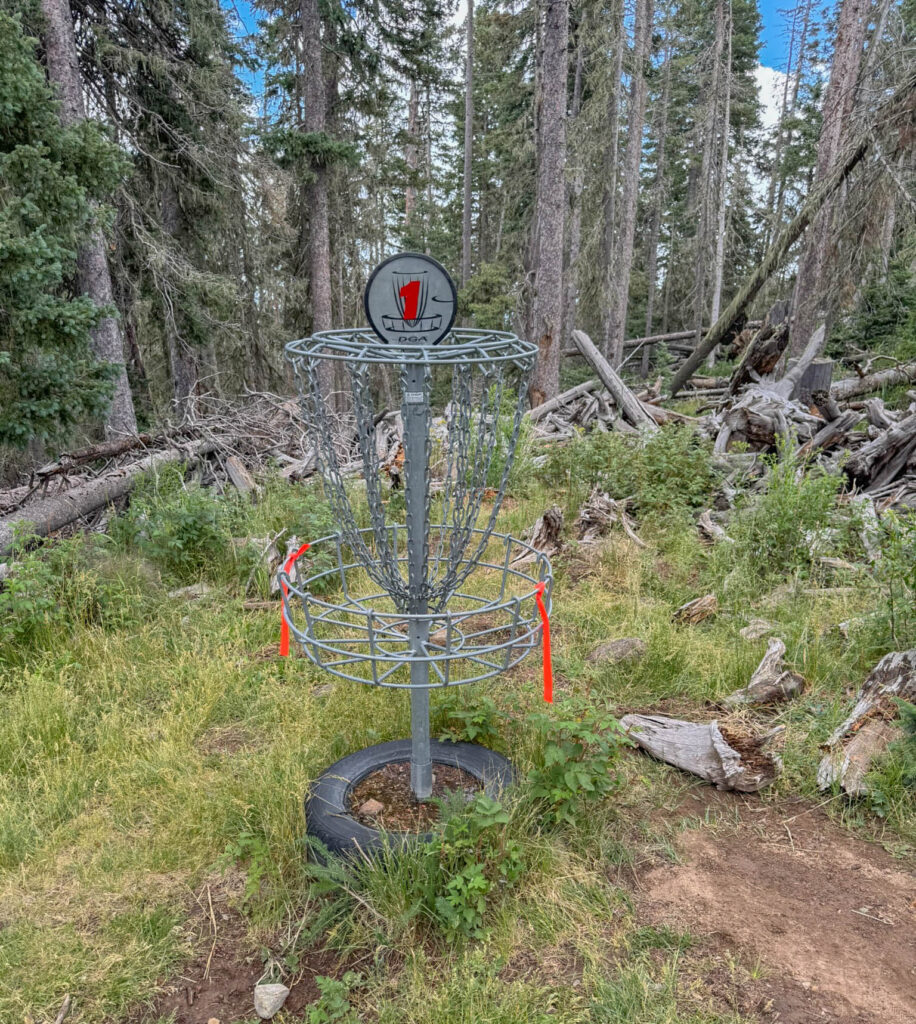
For something completely different, there’s also a disc golf course at the summit, with both amateur and pro tee pads winding through the mountain terrain at more than 10,000 feet. The course itself is free to play, although you’ll need a lift ticket or season pass to ride the Chile Express to the top. Disc rentals are available at the ticket office at the base of the lift, and the final hole brings you back to the central summit area.
Downhill Skiing, Snowboarding and Nordic Skiing
Winter is what originally put Angel Fire Resort on the map. The mountain offers downhill skiing and snowboarding for a range of ability levels, along with lessons, equipment rentals, terrain parks, and night skiing on select dates.
If cross-country skiing is more your speed, Angel Fire also has Nordic trails for cross-country skiing and snowshoeing. I visited in July, so I didn’t get to see the resort in winter. I’ll have to come back when there’s snow on the ground and update this section after I’ve had a chance to check it out for myself.
Golfing at Angel Fire Country Club
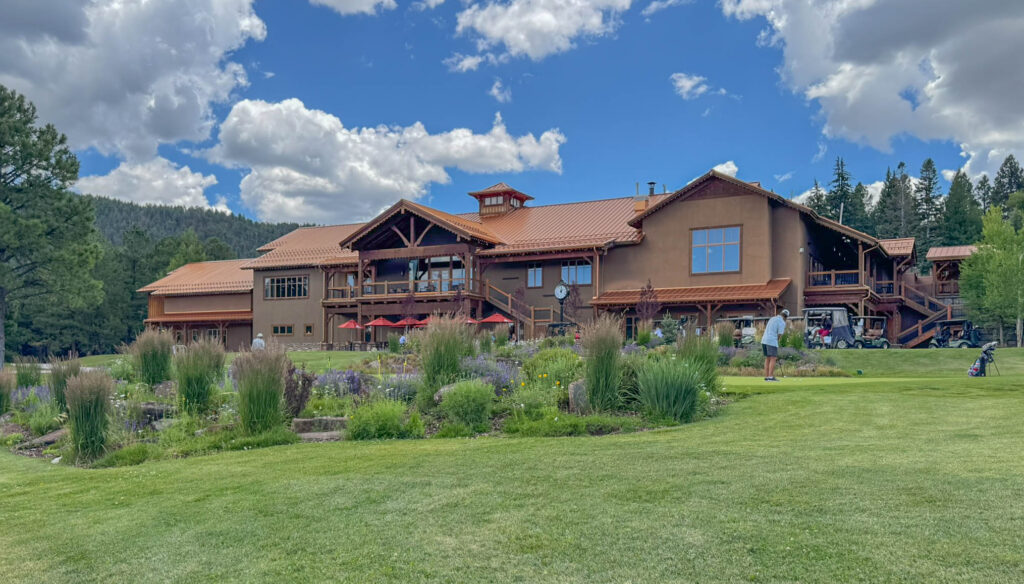
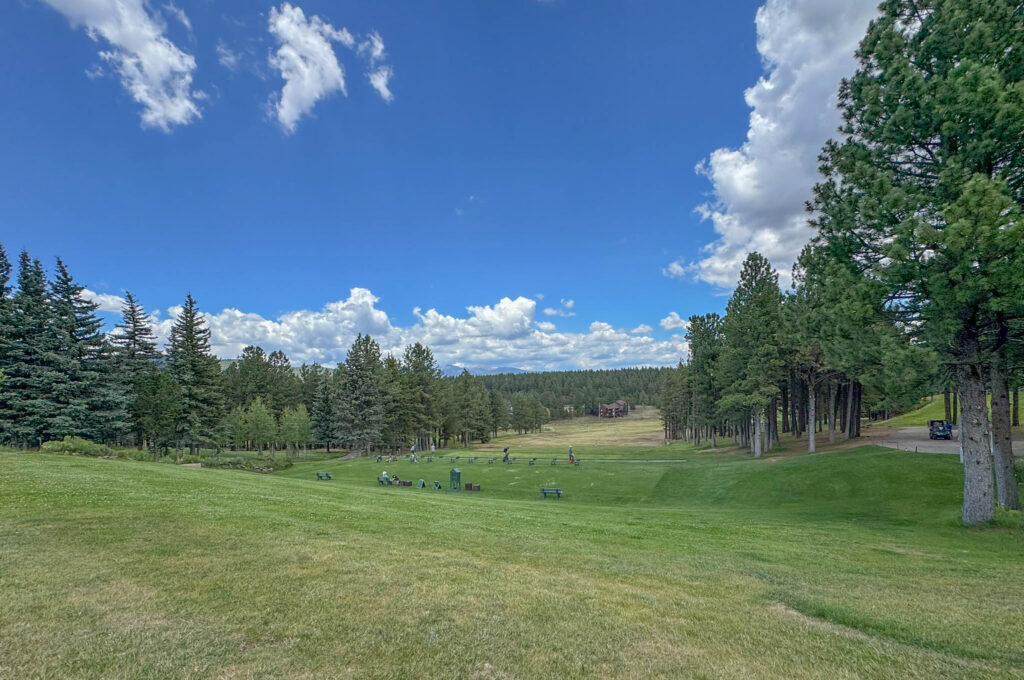
Golf is another option once the snow is gone. Angel Fire Country Club has an 18-hole course that sits at roughly 8,500 feet, with mountain and Moreno Valley views throughout the course. The high elevation also means your golf ball will travel farther than it does at lower elevations, which might help your score, or at least give you one less thing to blame it on.
The course is open seasonally and available to resort guests and the public, with a driving range, putting green, lessons, and club rentals available.
Monte Verde Lake
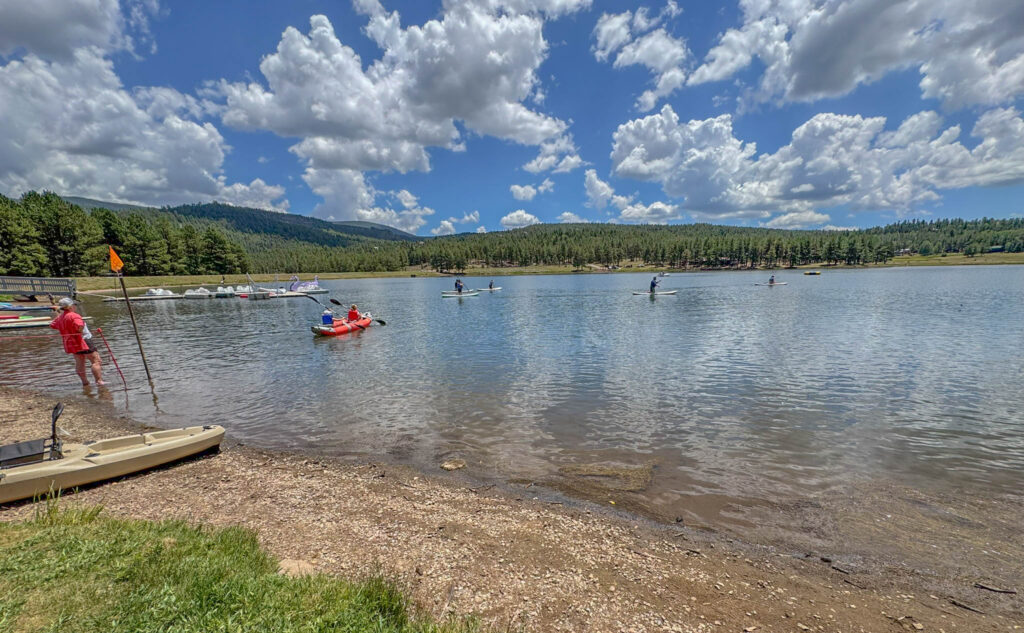
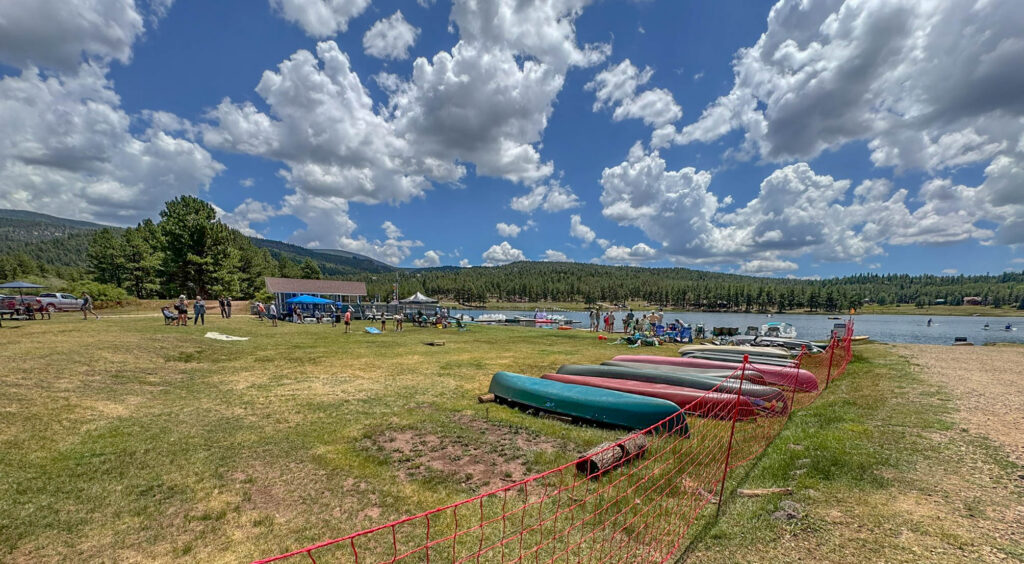
Monte Verde Lake is a small recreational lake at Angel Fire Resort, with fishing and watercraft rentals during the summer, including kayaks, paddleboards, and pedal boats.
I happened to stop by on the day of the Sixth Annual Monte Verde Lake Regatta, although my timing wasn’t exactly impeccable. I arrived just as the event was wrapping up, so I missed the kayak, paddleboard, and pedal boat races, along with the “Ski Boot Marathon,” which despite the name is really just a short race in ski boots.
And yes, someone has actually run a full marathon in ski boots, finishing in 6 hours and 50 minutes but reportedly losing all but two of his toenails in the process. So maybe Angel Fire has the right idea keeping it very short.
Summer Music Nights
Live music is a regular part of summer in Angel Fire. In addition to smaller performances around the resort, the Summer Music Series brings outdoor concerts and special music weekends to town throughout the season.
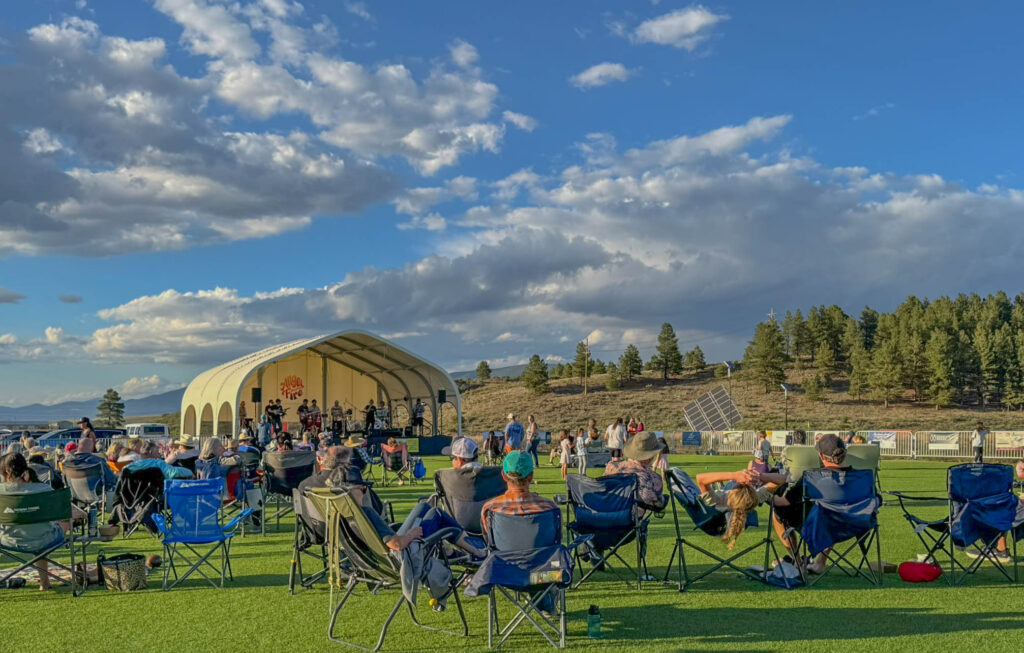
I happened to be in Angel Fire when Nosotros was performing. The popular New Mexico Latin band got its start in Las Cruces in 1994 before eventually relocating to the Albuquerque/Santa Fe area. Today, the band combines Latin rhythms with rock, salsa, jazz, and cumbia.
I’ve seen Nosotros perform many times over the years in Las Cruces, Albuquerque, and Santa Fe, but it was a novelty to see them play in Angel Fire. Usually the dance floor is packed at their shows, but this time I didn’t see a single couple attempt salsa, bachata, or any other Latin dance moves. Plenty of people were enjoying the music, but mostly from the comfort of the chairs they’d brought with them.
At several points, the band encouraged people to come closer to the stage and dance. No takers. It was as if someone had dug an invisible moat around the front of the stage. Apparently, Angel Fire needs a few salsa classes. Still, everyone seemed to be enjoying themselves, dancing or not.
Green Chile Pancakes, Naked Enchiladas, and Local Brews
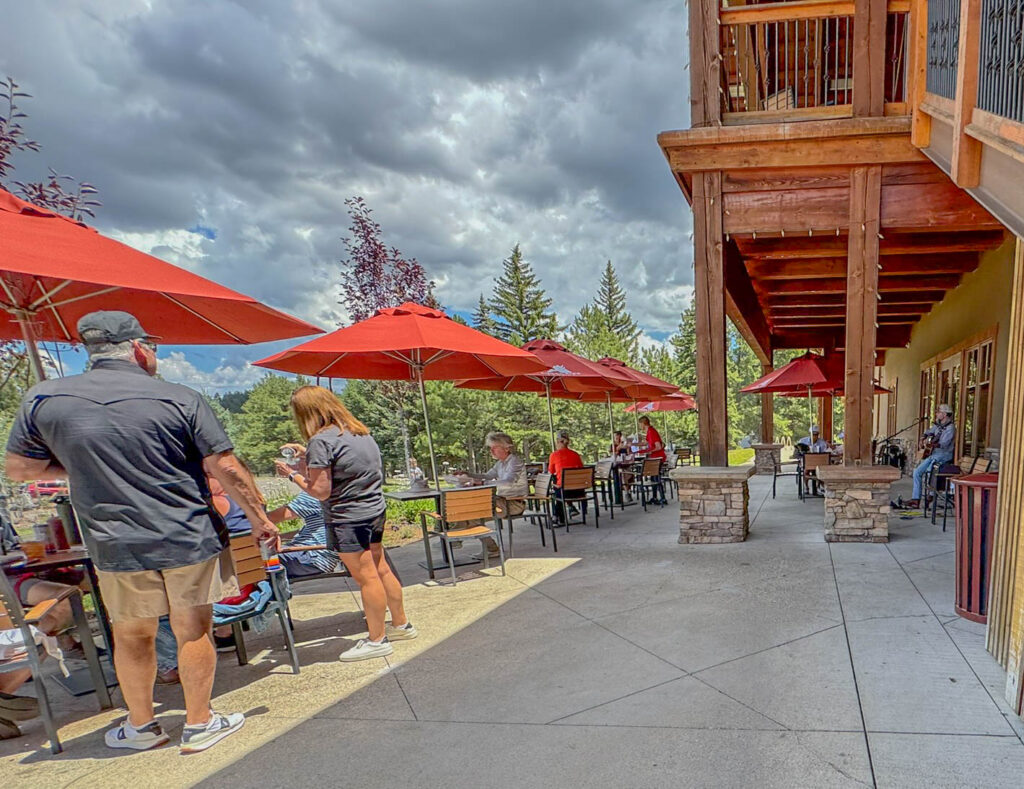
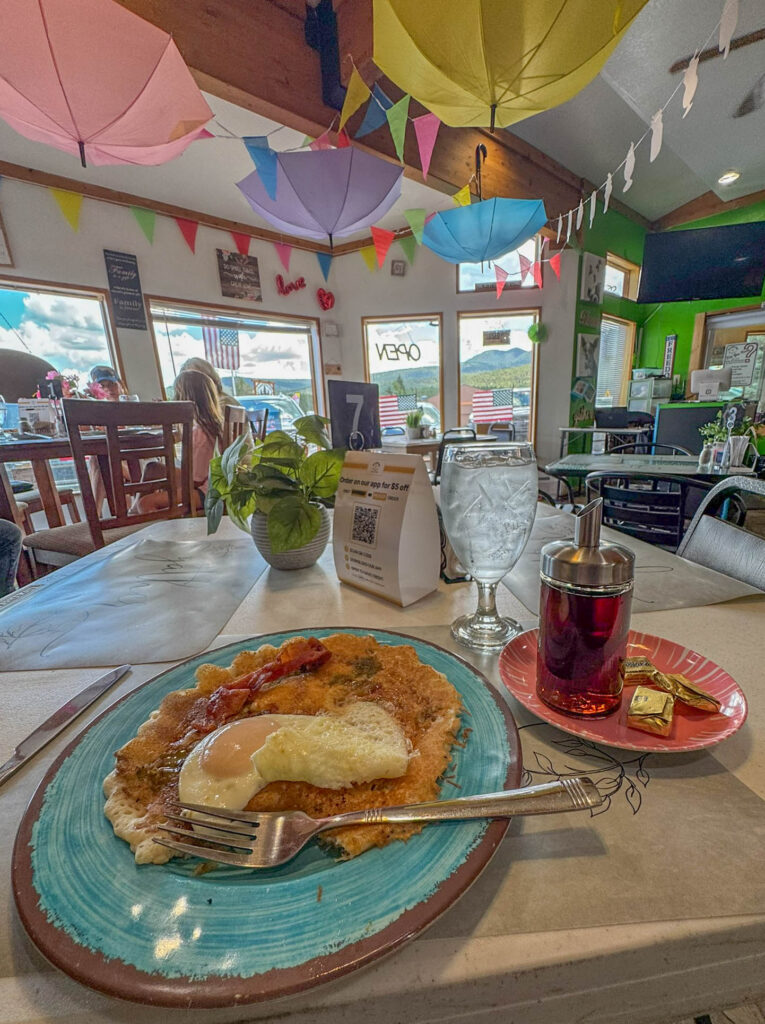
For breakfast, I stopped at Morning Star Restaurant. Before my trip, I’d done some research and discovered they served green chile pancakes, which I was determined to finally try after more than 20 years of living in New Mexico. The problem was that Angel Fire is about a three-hour drive from my house, and Morning Star stops serving breakfast at 11 a.m. I was sweating it, but managed to get there just in time to place my order and correct this glaring deficiency in my New Mexico résumé.
While I waited for my food, I had fun chatting with the owner and learning a little about the restaurant’s history. Morning Star originally opened in 1985 and operated until 1995, before returning to its original location inside the Elk Horn Lodge in 2021. The owners have been part of the Angel Fire community for nearly four decades, and some of their customers today still remember the original restaurant.
My breakfast consisted of one large green chile pancake topped with bacon and an egg. It wasn’t nearly as spicy as I expected, although I’ll admit my definition of “spicy” may be a little warped. Still, it tasted good, and everything seemed fresh without leaving me feeling like I’d just eaten a week’s worth of calories for breakfast. I could see why Morning Star gets such good reviews. I’ll definitely come back and try some of the other things on the menu the next time I’m in town.
Morning Star is open for breakfast and lunch from 8 a.m. to 3 p.m., Monday through Saturday, and closes during April and November.
Nuckolls Brewing Company is another popular stop in Angel Fire, particularly if you’re looking for a local beer. I drank my lifetime quota of alcohol by the age of 43 and no longer drink, so I can’t offer much insight into the beer, but I’d heard good things about the place. I stopped in for a completely different reason. I was trying to find somewhere showing the World Cup third-place match between England and France.
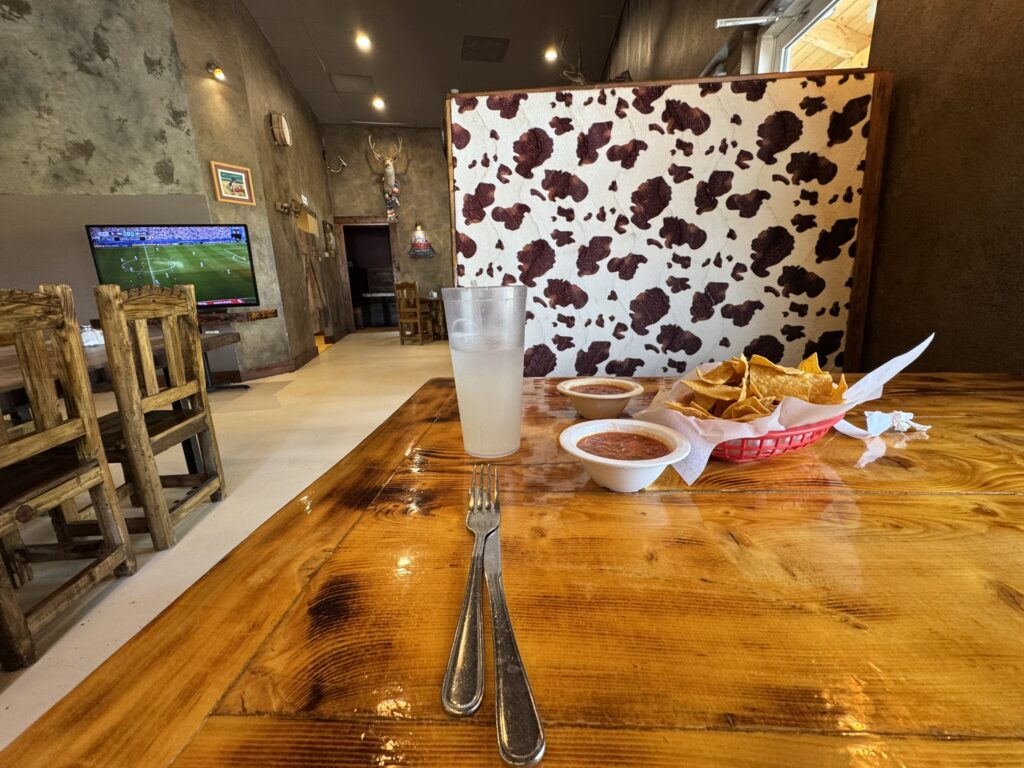
That turned out to be harder than I expected. Nuckolls wasn’t showing it. Then I remembered seeing a sign for a Mexican restaurant and figured that might be a good bet, since people from Mexico tend to share my enthusiasm (aka fanaticism) for World Cup soccer. I was right. La Finca de Villa had the game on, albeit in Spanish. Good enough for me.
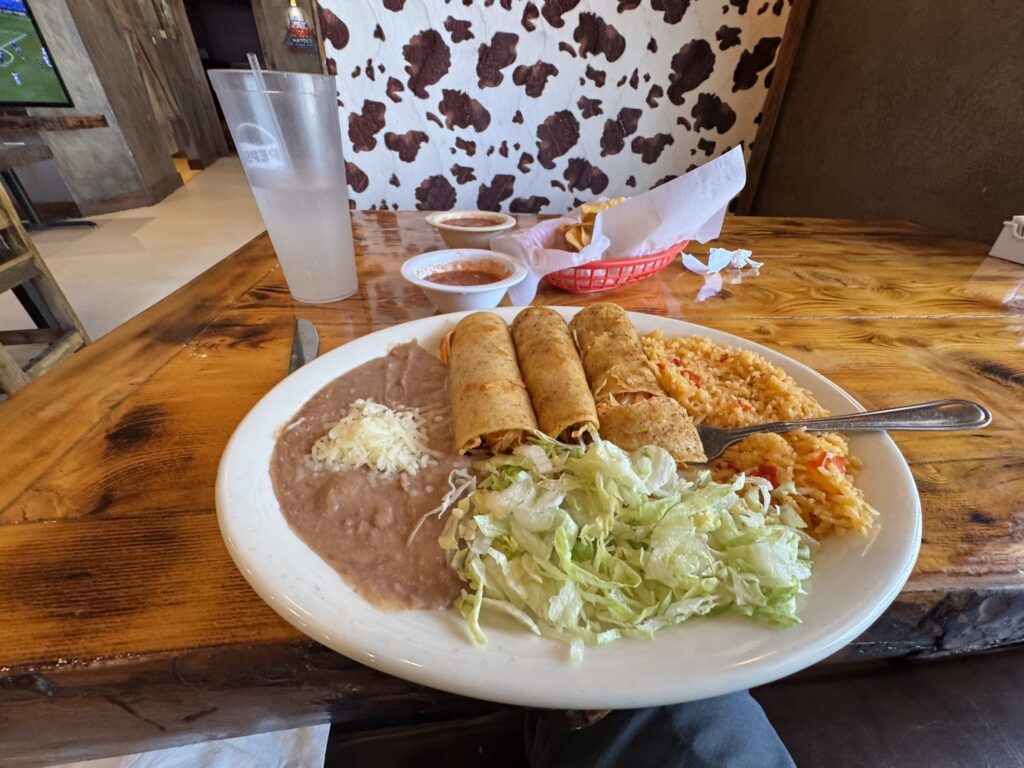
The food was good and the staff were friendly, although I apparently forgot that I was eating at a traditional Mexican restaurant rather than a New Mexican one. I ordered chicken enchiladas and wasn’t asked the official State Question: “Red or green?” Instead, I had the option of sour cream, which I detest, so I ended up with naked enchiladas. Another first for me. After more than two decades in New Mexico, enchiladas without green and/or red chile felt almost sacrilegious. Fortunately, the salsa that came with my chips had some heat, so I added some to my enchiladas. Problem solved. And the World Cup game was pretty amazing, so La Finca de Villa earned my eternal gratitude for having it on that afternoon.
Parting Thoughts
Before this trip, I mostly thought of Angel Fire as a ski resort. After spending a summer weekend here, I realized there’s quite a bit more going on once the snow melts. Between the mountain biking, hiking, golf, disc golf, Monte Verde Lake, live music, and other activities, there’s plenty to keep you busy during the summer.
The Vietnam Veterans Memorial and riding the Chile Express to the summit were both highlights of the trip, but I also enjoyed some of the less serious discoveries, from finally correcting my green chile pancake deficiency to watching Nosotros perform for a dance-resistant crowd who seemed perfectly content to enjoy the music from their chairs.
My next trip to Angel Fire will probably be in winter so I can experience the ski-season vibe. But I could also see myself coming back with a mountain bike and meandering down one of the easier trails. I’m admittedly a bit of a wimp on a mountain bike, so you won’t find me anywhere near the pro trails. Regardless of the season, I look forward to my next visit to Angel Fire.
📚 Want to Learn More?
If you want to dig deeper into the story behind the Vietnam Veterans Memorial at Angel Fire, here are a few books worth checking out:
- The Vietnam Veterans Memorial at Angel Fire: War, Remembrance, and an American Tragedy by Steven Trout. If you’re looking for a comprehensive history of the memorial, I’d start here. Trout traces the Westphall family story, the creation of the memorial, and how it evolved over the years.
- David’s Story: A Casualty of Vietnam by Victor Westphall. For a more personal perspective, this account was written by David Westphall’s father, Victor. It tells David’s story and the events surrounding his death in Vietnam through the eyes of the father whose loss ultimately led to the creation of the memorial. You can likely get a better version of the book through the Veteran’s Memorial Gift Shop.
- The Longest Rescue: The Life and Legacy of Vietnam POW William A. Robinson by Glenn Robins. This one isn’t specifically about Angel Fire, but it has a connection to the Vietnam Veterans Memorial. William A. Robinson spent nearly eight years as a prisoner of war in North Vietnam and later gave a presentation at the memorial. Ernie told me he was particularly struck by Robinson’s positive outlook on life despite everything he’d been through as a POW. During my visit, Ernie gave me a copy of the book signed by Robinson himself as a thoughtful gift. I’m looking forward to reading it.
Thought for the Week
This week’s “Thought for the Week” comes from David Westphall, whose death in Vietnam ultimately led his parents, Victor and Jeanne Westphall, to create what is now the Vietnam Veterans Memorial at Angel Fire.
David’s writings provide a glimpse into how he thought about duty, faith, war, and the way people should treat one another. In an essay titled “The Prophets and Their Times,” David reflected on the biblical story of Ezekiel. When Ezekiel saw the glory of God, he fell on his face, but God commanded him to stand on his feet. David took that image and turned it into a broader observation about human dignity.
If a person is expected to stand with dignity even in the presence of God, what right does another human being have to diminish that dignity?
Which brings us to this week’s quote:
“If we are to stand on our feet in the presence of God, what, then is one man that he should debase the dignity of another?”
— David Westphall
Thanks for reading and happy travels!
Mark (The New Mexico Travel Guy)
Mark Aspelin, The New Mexico Travel Guy (www.newmexicotravelguy.com), is a travel writer, conservation biologist, project manager, and author of two books. He’s currently working on his third book, the upcoming Moon New Mexico travel guide (Fall 2027), published by Moon Travel Guides, and wrote the Northeastern New Mexico chapter for the 2026 edition of Fodor’s New Mexico. Mark has visited over 100 countries and all 50 U.S. states, just enough to land in the Travelers’ Century Club and make choosing a favorite place nearly impossible. He’s currently on a questionable mission to visit every town in New Mexico (there are over 500) and write a story about each one, with plans to wrap it up sometime before his early to mid 100s. Mark balances his writing with conservation and project work from his home base in the East Mountains near Albuquerque, New Mexico.


As the surviving Founder of the Vietnam Veterans Memorial at Angel Fire, I wish to thank Mark for the wonderful article that he wrote about Angel Fire and the Memorial. He covered the origins, history, and features of the Memorial extremely well. The many photos of the Memorial and grounds complemented the article extremely well. I hope that readers enjoy the article as much as I and others associated with the Memorial have. I know that Mark’s coverage of other features in Angel Fire will be well received as well.
Walter, thank you very much for the kind words. It means a great deal to hear that from you, particularly given your connection to the Memorial and its history. I’m grateful I had the opportunity to visit and share the story of such a meaningful place. Thanks again for taking the time to comment.